Paul Steinhardt – författare
Visar alla böcker från författaren Paul Steinhardt. Handla med fri frakt och snabb leverans.
5 produkter
5 produkter
Häftad, Engelska, 2020
261 kr
Skickas inom 3-6 vardagar
E-bok
Engelska, 2019234 kr
Läs direkt efter köp
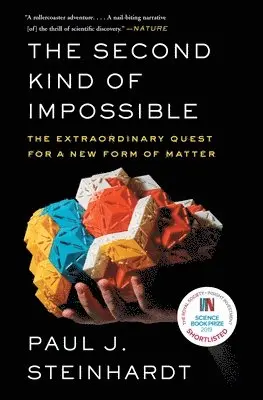
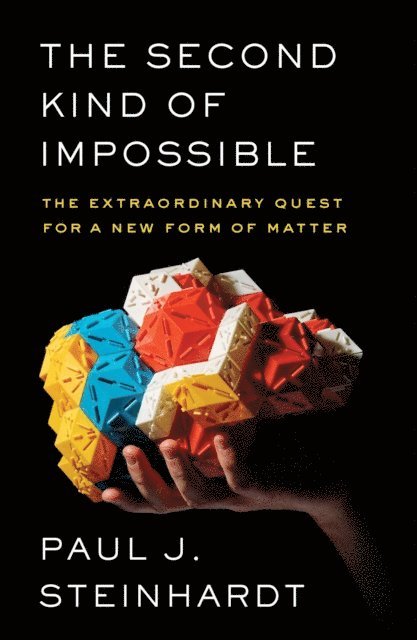
*Shortlisted for the 2019 Royal Society Insight Investment Science Book Prize* One of the most fascinating scientific detective stories of the last fifty years, an exciting quest for a new form of matter. “A riveting tale of derring-do” (Nature), this book reads like James Gleick’s Chaos combined with an Indiana Jones adventure.When leading Princeton physicist Paul Steinhardt began working in the 1980s, scientists thought they knew all the conceivable forms of matter. The Second Kind of Impossible is the story of Steinhardt’s thirty-five-year-long quest to challenge conventional wisdom. It begins with a curious geometric pattern that inspires two theoretical physicists to propose a radically new type of matter—one that raises the possibility of new materials with never before seen properties, but that violates laws set in stone for centuries. Steinhardt dubs this new form of matter “quasicrystal.” The rest of the scientific community calls it simply impossible. The Second Kind of Impossible captures Steinhardt’s scientific odyssey as it unfolds over decades, first to prove viability, and then to pursue his wildest conjecture—that nature made quasicrystals long before humans discovered them. Along the way, his team encounters clandestine collectors, corrupt scientists, secret diaries, international smugglers, and KGB agents. Their quest culminates in a daring expedition to a distant corner of the Earth, in pursuit of tiny fragments of a meteorite forged at the birth of the solar system. Steinhardt’s discoveries chart a new direction in science. They not only change our ideas about patterns and matter, but also reveal new truths about the processes that shaped our solar system. The underlying science is important, simple, and beautiful—and Steinhardt’s firsthand account is “packed with discovery, disappointment, exhilaration, and persistence...This book is a front-row seat to history as it is made” (Nature).
Del 2722 - edition suhrkamp
Gescheiterte Globalisierung
Häftad, Tyska, 2018
230 kr
Skickas inom 3-6 vardagar
209 kr
Läs direkt efter köp
"Geld regiert die Welt", lautet eine Redewendung. Dieser Spruch, so Paul Steinhardt, lässt sich mit Blick auf das Finanzwesen durchaus bestätigen. Denn dort hat sich eine politische Entscheidungsmacht konzentriert, die unter Umgehung demokratischer Prozeduren agiert und das Gemeinwohlinteresse missachtet. Es gilt daher, den Blick auf die Geldmacher und ihre damit verbundene Macht zu lenken. Einer der wichtigsten Geldmacher ist die Europäische Zentralbank (EZB), um deren Tätigkeit es in diesem Buch geht. Laut Steinhardt erweist sich die Politik der EZB zunehmend als Form einer Herrschaft, die man mit dem Begriff des "autoritären Liberalismus" kennzeichnen sollte.Diese These wird durch das Urteil des deutschen Bundesverfassungsgerichts im Jahr 2015 zu den Staatsanleihekaufprogrammen der EZB bestätigt. Die "unkonventionelle Geldpolitik" der EZB habe Verteilungswirkungen, die sich demokratisch nicht legitimieren lassen, lautete der Vorwurf. Ihre Beendigung im Zuge der Zinswende ist allerdings nicht als Fortschritt zu werten. Denn damit wird die Finanzstabilität gefährdet, wie der Zusammenbruch der Silicon Valley Bank belegte. Geldpolitik erweist sich bei genauerem Hinsehen als eine Form des Klassenkampfs, bei dem sich Zentralbanken eindeutig auf die Seite des Kapitals schlagen. Steinhardt plädiert deshalb für eine Reform des Geldsystems, die seiner Marktkonformität einen Riegel vorschiebt und die Geldmacher zwingt, sich stärker am Gemeinwohlinteresse zu orientieren.
Inbunden, Engelska, 2020
1 374 kr
Skickas inom 3-6 vardagar
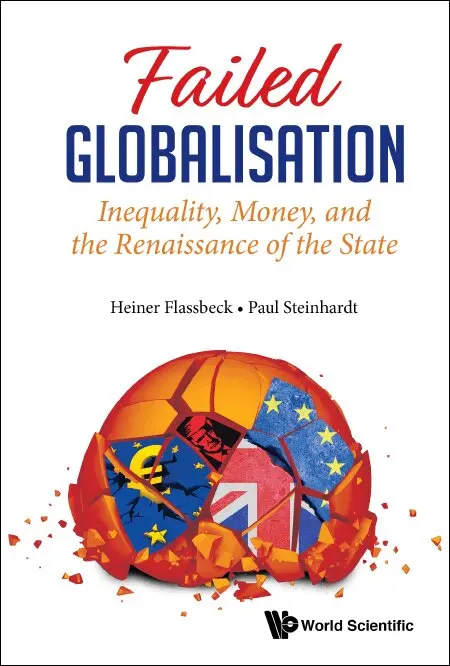
Globalisation is considered a success story. Following the fall of the Berlin Wall and the dissolution of the political divides between East and West Germany, nothing seemed to stand in the way of peaceful cooperation between people everywhere. Under the precepts of economic liberalism, by removing institutional obstacles to international trade and capital flows, a spontaneous global order would emerge, and the dream of a world populated by free and prosperous global citizens would eventually come true.But in the wake of the worldwide financial crisis that began in 2007-2008, in the world of an ongoing Euro-Crisis, Trump and Brexit, it has become apparent that the great liberal project has failed. Neoclassical liberal economic theory has shown itself to be fundamentally incapable of explaining the dynamics of a market economy and in guiding economic policy in developed as well as in developing countries.Given the continuing dominance of that discredited theory today, the world lacks a viable conceptual framework for global cooperation among nations, and appropriate national economic policies. With this book, the authors show how such a framework can be built on the basis of a modern and empirically sound economic theory.