Heinz-Gerhard Justenhoven - Böcker
Visar alla böcker från författaren Heinz-Gerhard Justenhoven. Handla med fri frakt och snabb leverans.
3 produkter
3 produkter
1 029 kr
Skickas inom 7-10 vardagar
The 20th century was influenced profoundly by the experience of two world wars. It was also characterized, however, by the attempt to replace armed conflict with non-violent conflict management. As the United Nations Charter preamble declares: The “People of the United Nations are determined to save succeeding generations from the scourge of war.” International law and international institutions have made considerable progress toward this goal, but the world is still a long way from effectively banning major organized violence between or within states.Current governance theories are grappling with the reality of today’s complex international relations. What lessons do these theories hold for overcoming violent conflict? What do theories about global governance tell us about international public authority? Is such an authority desirable at all? What would the ideal international society look like from the perspective of global governance theory? What is the role of law, authority, and international institutions in realizing the ideal?The aim of this book is to offer an interdisciplinary debate on these normative responses to the problem of war: law, authority, governance, and constitution.
1 440 kr
Skickas inom 5-8 vardagar
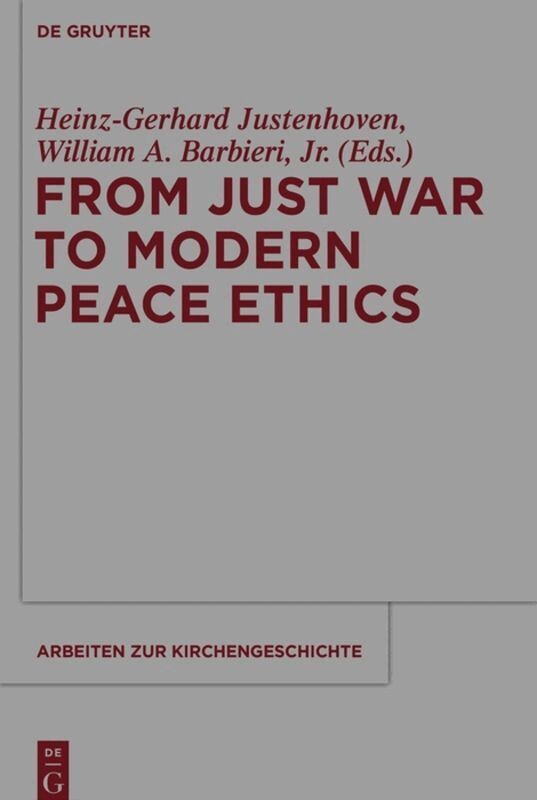
This book rewrites the history of Christian peace ethics. Christian reflection on reducing violence or overcoming war has roots in ancient Roman philosophy and eventually grew to influence modern international law. This historical overview begins with Cicero, the source of Christian authors like Augustine and Thomas Aquinas. It is highly debatable whether Augustine had a systematic interest in just war or whether his writings were used to develop a systematic just war teaching only by the later tradition. May Christians justifiably use force to overcome disorder and achieve peace? The book traces the classical debate from Thomas Aquinas to early modern-age thinkers like Vitoria, Suarez, Martin Luther, Hugo Grotius and Immanuel Kant. It highlights the diversity of the approaches of theologians, philosophers and lawyers. Modern cosmopolitianism and international law-thinking, it shows, are rooted in the Spanish Scholastics, where Grotius and Kant each found the inspiration to inaugurate a modern peace ethic. In the 20th century the tradition has taken aim not only at reducing violence and overcoming war but at developing a constructive ethic of peace building, as is reflected in Pope John Paul II’s teaching.
250 kr
Skickas inom 3-6 vardagar
This book rewrites the history of Christian peace ethics. Christian reflection on reducing violence or overcoming war has roots in ancient Roman philosophy and eventually grew to influence modern international law. This historical overview begins with Cicero, the source of Christian authors like Augustine and Thomas Aquinas. It is highly debatable whether Augustine had a systematic interest in just war or whether his writings were used to develop a systematic just war teaching only by the later tradition. May Christians justifiably use force to overcome disorder and achieve peace? The book traces the classical debate from Thomas Aquinas to early modern-age thinkers like Vitoria, Suarez, Martin Luther, Hugo Grotius and Immanuel Kant. It highlights the diversity of the approaches of theologians, philosophers and lawyers. Modern cosmopolitianism and international law-thinking, it shows, are rooted in the Spanish Scholastics, where Grotius and Kant each found the inspiration to inaugurate a modern peace ethic. In the 20th century the tradition has taken aim not only at reducing violence and overcoming war but at developing a constructive ethic of peace building, as is reflected in Pope John Paul II’s teaching.