Helen Deutsch - Böcker
Visar alla böcker från författaren Helen Deutsch. Handla med fri frakt och snabb leverans.
4 produkter
4 produkter
810 kr
Skickas
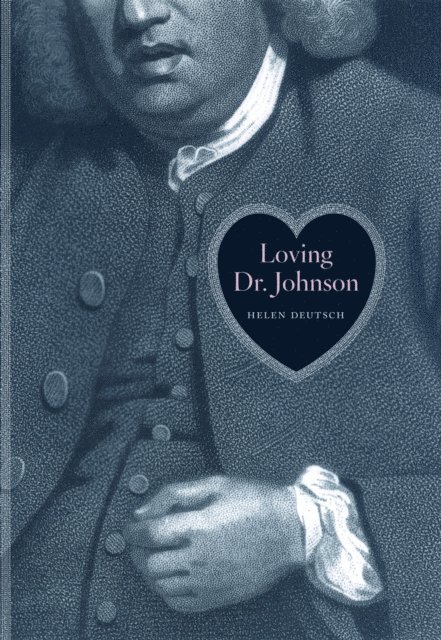
The autopsy of Samuel Johnson (1709-84) initiated two centuries of Johnsonian anatomy - both in medical speculation about his famously unruly body and in literary devotion to his anecdotal remains. Even today, Johnson is an enduring symbol of individuality, authority, masculinity, and Englishness, ultimately lending a style and a name - the Age of Johnson - to the eighteenth-century English literary canon. "Loving Dr. Johnson" uses the enormous popularity of Johnson to understand a singular case of author love and to reflect upon what the love of authors has to do with the love of literature. Helen Deutsch's work is driven by several impulses, among them her affection for both Johnson's work and Boswell's biography of him, and her own distance from the largely male tradition of Johnsonian criticism - a tradition to which she remains indebted and to which Loving Dr. Johnson is ultimately an homage. Limning sharply Johnson's capacious oeuvre, Deutsch's study is also the first of its kind to examine the practices and rituals of Johnsonian societies around the world, wherein Johnson's literary work is now dwarfed by the figure of the writer himself.An absorbing look at one iconic author and his afterlives, "Loving Dr. Johnson" will be of enormous value to students of English literature and literary scholars keenly interested in canon formation.
1 544 kr
Kommande
Joining the unfinished conversation between the satirist Jonathan Swift and the critic Edward Said, The Last Amateur argues for the transformative potential of literature.What does “Swiftian” mean to you? For many, the name is synonymous with ingenious satire and an acid, clarifying mix of decorum and outrage. Jonathan Swift was, of course, the author of not only Gulliver’s Travels but also A Modest Proposal, which the columnist Gene Lyons recently called “perhaps the most penetrating anti-racist essay in the English language.” Small wonder, then, that the Anglo-Irish satirist was a lifelong inspiration to the great Palestinian American critic Edward Said, who for many years worked on an unfinished book about Swift and cultivated a Swiftian voice across his career.Helen Deutsch’s highly personal book explores what Said’s love of Swift—and hers of both—tells us about not only these authors but also the powers of criticism itself. The Last Amateur is about how one comes to love one writer through another. Deutsch scrutinizes Said in relationship to Swift to raise questions of her own about the profession of literary studies. At a time when many in the field have lost faith in critique, Deutsch shows how passion and a refusal of professional propriety—the hallmarks of the amateur—can enliven critique again. What, then, does it mean to be a Swiftian? The Swiftian hears Swift’s animus and uses it as an incentive for their own freedom of thought. Said was a Swiftian because the experience of reading Swift freed him to speak out, to have something serious to say. Deutsch’s revelatory book is an exercise in hearing Swift’s voice and speaking in her own.
376 kr
Kommande
Joining the unfinished conversation between the satirist Jonathan Swift and the critic Edward Said, The Last Amateur argues for the transformative potential of literature.What does “Swiftian” mean to you? For many, the name is synonymous with ingenious satire and an acid, clarifying mix of decorum and outrage. Jonathan Swift was, of course, the author of not only Gulliver’s Travels but also A Modest Proposal, which the columnist Gene Lyons recently called “perhaps the most penetrating anti-racist essay in the English language.” Small wonder, then, that the Anglo-Irish satirist was a lifelong inspiration to the great Palestinian American critic Edward Said, who for many years worked on an unfinished book about Swift and cultivated a Swiftian voice across his career.Helen Deutsch’s highly personal book explores what Said’s love of Swift—and hers of both—tells us about not only these authors but also the powers of criticism itself. The Last Amateur is about how one comes to love one writer through another. Deutsch scrutinizes Said in relationship to Swift to raise questions of her own about the profession of literary studies. At a time when many in the field have lost faith in critique, Deutsch shows how passion and a refusal of professional propriety—the hallmarks of the amateur—can enliven critique again. What, then, does it mean to be a Swiftian? The Swiftian hears Swift’s animus and uses it as an incentive for their own freedom of thought. Said was a Swiftian because the experience of reading Swift freed him to speak out, to have something serious to say. Deutsch’s revelatory book is an exercise in hearing Swift’s voice and speaking in her own.
868 kr
Skickas inom 7-10 vardagar
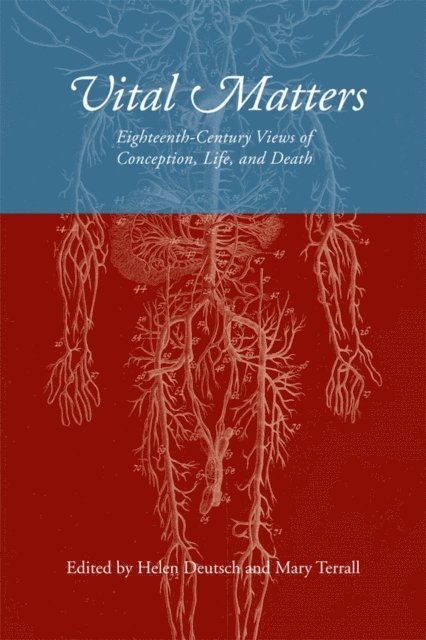
Eighteenth-century questions about the properties essential to life often explored the boundary between the physical world of the body and the immaterial world of the mind and soul. Locating materialism within the larger history of ideas, Vital Matters examines how and why eighteenth-century scientists, philosophers, writers, and artists questioned nature and its animating principles.In this volume, interdisciplinary essays by premier scholars in literary studies, art history, and the history of science and medicine analyse a wide range of subjects, including ghosts and funerary practices, dissection and digestion, automata, and monstrous births. Featuring new approaches to literary texts such as Lawrence Sterne's Tristram Shandy and paintings such as Girodet's Eternal Sleep, as well as new research on cases from the history of medicine and the history of science, Vital Matters reconsiders Enlightenment oppositions between body and mind, brain and soul, life and death, and the physical and the abstract.