Mary Terrall – författare
Visar alla böcker från författaren Mary Terrall. Handla med fri frakt och snabb leverans.
8 produkter
8 produkter
Inbunden, Engelska, 2002
871 kr
Skickas inom 5-8 vardagar
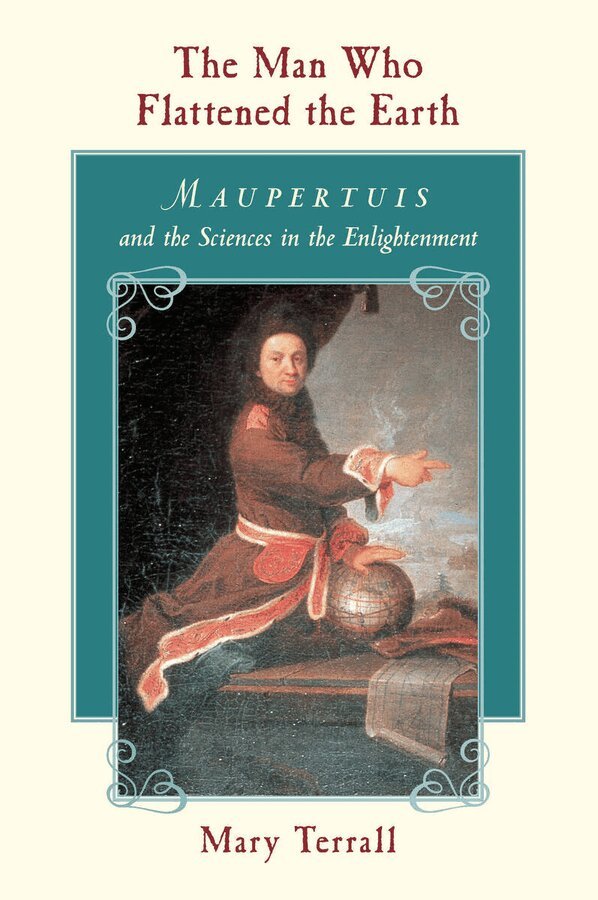
Self-styled adventurer, literary wit, and statesman of science, Pierre-Louis Moreau de Maupertuis (1698 - 1759) stood at the center of Enlightenment science and culture. With "The Man Who Flattened the Earth", Mary Terrall offers an elegant portrait of this remarkable man, revealing just how his private life and public works made him a man of science in eighteenth-century Europe. Maupertuis entered the public eye with a much-discussed expedition to Lapland and went on to make significant and often intentionally controversial contributions to physics, life science, and astronomy. Equally at ease in cafes and royal courts, Maupertuis used his social connections and his printed works to enhance a carefully constructed reputation as both a man of letters and a man of science. Terrall not only illuminates the life and work of Maupertuis but also delves into larger Enlightenment issues, including the development of scientific institutions, the impact of print culture on science, and the often vexed interactions of science and government.
Häftad, Engelska, 2006
391 kr
Skickas inom 5-8 vardagar
Self-styled adventurer, literary wit, and statesman of science, Pierre-Louis Moreau de Maupertuis (1698 - 1759) stood at the center of Enlightenment science and culture. With "The Man Who Flattened the Earth", Mary Terrall offers an elegant portrait of this remarkable man, revealing just how his private life and public works made him a man of science in eighteenth-century Europe. Maupertuis entered the public eye with a much-discussed expedition to Lapland and went on to make significant and often intentionally controversial contributions to physics, life science, and astronomy. Equally at ease in cafes and royal courts, Maupertuis used his social connections and his printed works to enhance a carefully constructed reputation as both a man of letters and a man of science. Terrall not only illuminates the life and work of Maupertuis but also delves into larger Enlightenment issues, including the development of scientific institutions, the impact of print culture on science, and the often vexed interactions of science and government.
E-bok
PDF, Engelska, 2006829 kr
Läs direkt efter köp
Self-styled adventurer, literary wit, philosopher, and statesman of science, Pierre-Louis Moreau de Maupertuis (1698-1759) stood at the center of Enlightenment science and culture. Offering an elegant and accessible portrait of this remarkable man, Mary Terrall uses the story of Maupertuis''s life, self-fashioning, and scientific works to explore what it meant to do science and to be a man of science in eighteenth-century Europe. Beginning his scientific career as a mathematician in Paris, Maupertuis entered the public eye with a much-discussed expedition to Lapland, which confirmed Newton''s calculation that the earth was flattened at the poles. He also made significant, and often intentionally controversial, contributions to physics, life science, navigation, astronomy, and metaphysics. Called to Berlin by Frederick the Great, Maupertuis moved to Prussia to preside over the Academy of Sciences there. Equally at home in salons, cafés, scientific academies, and royal courts, Maupertuis used his social connections and his printed works to enhance a carefully constructed reputation as both a man of letters and a man of science. His social and institutional affiliations, in turn, affected how Maupertuis formulated his ideas, how he presented them to his contemporaries, and the reactions they provoked. Terrall not only illuminates the life and work of a colorful and important Enlightenment figure, but also uses his story to delve into many wider issues, including the development of scientific institutions, the impact of print culture on science, and the interactions of science and government. Smart and highly readable, Maupertuis will appeal to anyone interested in eighteenth-century science and culture. “Terrall’s work is scholarship in the best sense. Her explanations of arcane 18th-century French physics, mathematics, astronomy, and biology are among the most lucid available in any language.”—Virginia Dawson, American Historical Review Winner of the 2003 Pfizer Award from the History of Science Society
Inbunden, Engelska, 2012
888 kr
Skickas inom 5-8 vardagar
Eighteenth-century questions about the properties essential to life often explored the boundary between the physical world of the body and the immaterial world of the mind and soul. Locating materialism within the larger history of ideas, Vital Matters examines how and why eighteenth-century scientists, philosophers, writers, and artists questioned nature and its animating principles.In this volume, interdisciplinary essays by premier scholars in literary studies, art history, and the history of science and medicine analyse a wide range of subjects, including ghosts and funerary practices, dissection and digestion, automata, and monstrous births. Featuring new approaches to literary texts such as Lawrence Sterne's Tristram Shandy and paintings such as Girodet's Eternal Sleep, as well as new research on cases from the history of medicine and the history of science, Vital Matters reconsiders Enlightenment oppositions between body and mind, brain and soul, life and death, and the physical and the abstract.
E-bok
PDF, Engelska, 20121 001 kr
Läs direkt efter köp
Eighteenth-century questions about the properties essential to life often explored the boundary between the physical world of the body and the immaterial world of the mind and soul. Locating materialism within the larger history of ideas, Vital Matters examines how and why eighteenth-century scientists, philosophers, writers, and artists questioned nature and its animating principles.In this volume, interdisciplinary essays by premier scholars in literary studies, art history, and the history of science and medicine analyse a wide range of subjects, including ghosts and funerary practices, dissection and digestion, automata, and monstrous births. Featuring new approaches to literary texts such as Lawrence Sterne's Tristram Shandy and paintings such as Girodet's Eternal Sleep, as well as new research on cases from the history of medicine and the history of science, Vital Matters reconsiders Enlightenment oppositions between body and mind, brain and soul, life and death, and the physical and the abstract.
Inbunden, Engelska, 2019
740 kr
Skickas inom 5-8 vardagar
With contributions from historians, literary critics, and geographers, Curious Encounters uncovers a rich history of global voyaging, collecting, and scientific exploration in the long eighteenth century. Leaving behind grand narratives of discovery, these essays collectively restore a degree of symmetry and contingency to our understanding of encounters between European and Indigenous people. To do this the essays consider diverse agents of historical change, both human and inanimate: commodities, curiosities, texts, animals, and specimens moved through their own global circuits of knowledge and power. The voyages and collections rediscovered here do not move from a European center to a distant periphery, nor do they position European authorities as the central agents of this early era of globalization. Long distance voyagers from Greenland to the Ottoman Empire crossed paths with French, British, Polynesian, and Spanish travelers across the world, trading objects and knowledge for diverse ends. The dynamic contact zones of these curious encounters include the ice floes of the Arctic, the sociable spaces of the tea table, the hybrid material texts and objects in imperial archives, and the collections belonging to key figures of the Enlightenment, including Sir Hans Sloane and James Petiver.
E-bok
PDF, Engelska, 20191 076 kr
Läs direkt efter köp
With contributions from historians, literary critics, and geographers, Curious Encounters uncovers a rich history of global voyaging, collecting, and scientific exploration in the long eighteenth century. Leaving behind grand narratives of discovery, these essays collectively restore a degree of symmetry and contingency to our understanding of encounters between European and Indigenous people. To do this the essays consider diverse agents of historical change, both human and inanimate: commodities, curiosities, texts, animals, and specimens moved through their own global circuits of knowledge and power. The voyages and collections rediscovered here do not move from a European center to a distant periphery, nor do they position European authorities as the central agents of this early era of globalization. Long distance voyagers from Greenland to the Ottoman Empire crossed paths with French, British, Polynesian, and Spanish travelers across the world, trading objects and knowledge for diverse ends. The dynamic contact zones of these curious encounters include the ice floes of the Arctic, the sociable spaces of the tea table, the hybrid material texts and objects in imperial archives, and the collections belonging to key figures of the Enlightenment, including Sir Hans Sloane and James Petiver.
E-bok
Engelska, 20191 076 kr
Läs direkt efter köp
With contributions from historians, literary critics, and geographers, Curious Encounters uncovers a rich history of global voyaging, collecting, and scientific exploration in the long eighteenth century. Leaving behind grand narratives of discovery, these essays collectively restore a degree of symmetry and contingency to our understanding of encounters between European and Indigenous people. To do this the essays consider diverse agents of historical change, both human and inanimate: commodities, curiosities, texts, animals, and specimens moved through their own global circuits of knowledge and power. The voyages and collections rediscovered here do not move from a European center to a distant periphery, nor do they position European authorities as the central agents of this early era of globalization. Long distance voyagers from Greenland to the Ottoman Empire crossed paths with French, British, Polynesian, and Spanish travelers across the world, trading objects and knowledge for diverse ends. The dynamic contact zones of these curious encounters include the ice floes of the Arctic, the sociable spaces of the tea table, the hybrid material texts and objects in imperial archives, and the collections belonging to key figures of the Enlightenment, including Sir Hans Sloane and James Petiver.