Helen Thaventhiran – författare
Visar alla böcker från författaren Helen Thaventhiran. Handla med fri frakt och snabb leverans.
4 produkter
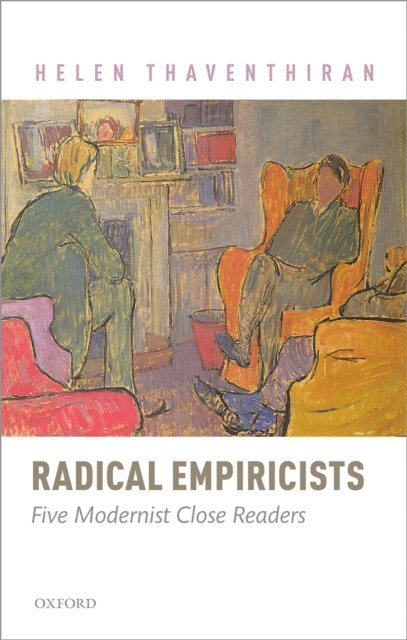
Radical Empiricists
Five Modernist Close Readers
E-bok, 2015
1645 kr
Lägg i varukorg
Radical Empiricists presents a new history of criticism in the first half of the twentieth-century, against the backdrop of the modernist crisis of meaning. Our received idea of modernist criticism is that its novelty lay in being very empirical: critics believed in looking closely at words on the …
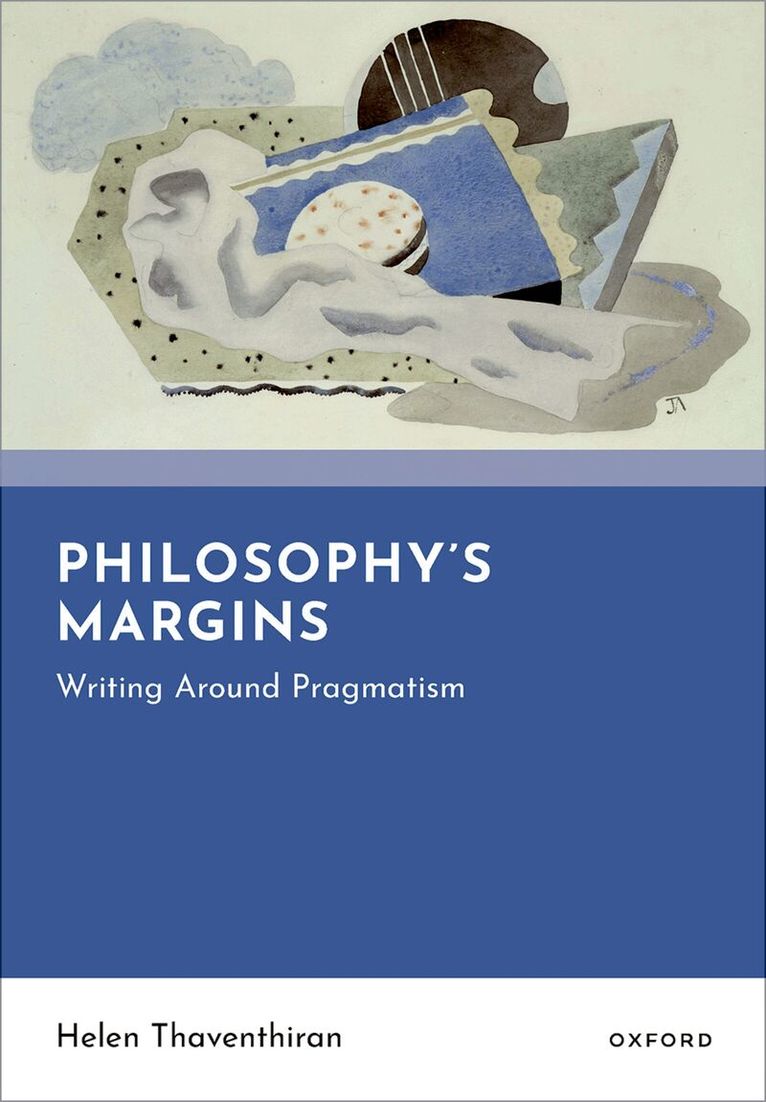
Philosophy's Margins
Writing Around Pragmatism
Inbunden, 2026
1402 kr
Kommande
Philosophy's Margins draws together neglected texts from philosophy's archive to argue for close attention, within intellectual history, to how thought takes form. The book's particular focus is on an alternative intellectual history for philosophy's development in the first half of the twentieth …
Radical Empiricists
Five Modernist Close Readers
Inbunden, 2015
1976 kr
Lägg i varukorg
Radical Empiricists presents a new history of criticism in the first half of the twentieth-century, against the backdrop of the modernist crisis of meaning. Our received idea of modernist criticism is that its novelty lay in being very empirical: critics believed in looking closely at words on the …
William Empson: The Structure of Complex Words
Av William Empson, Helen Thaventhiran m. fl.
Inbunden, 2020
3023 kr
Lägg i varukorg
This is the first scholarly edition of one of the classics of literary criticism. William Empson was among the two or three most important and influential literary critics and theorists of the twentieth century. He has long been celebrated as one of the most fertile (as well as one of the funniest) …