Henk Nellen – författare
Visar alla böcker från författaren Henk Nellen. Handla med fri frakt och snabb leverans.
4 produkter
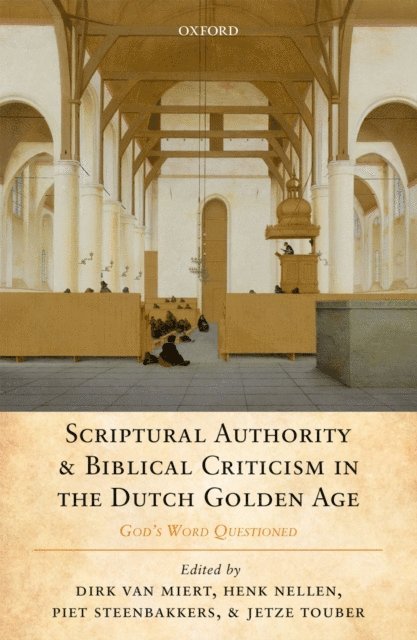
Scriptural Authority and Biblical Criticism in the Dutch Golden Age
God's Word Questioned
Av Henk Nellen, Jetze Touber m. fl.
E-bok, 2017
1940 kr
Lägg i varukorg
Scriptural Authority and Biblical Criticism in the Dutch Golden Age explores the hypothesis that in the long seventeenth century humanist-inspired biblical criticism contributed significantly to the decline of ecclesiastical truth claims. Historiography pictures this era as one in which the …
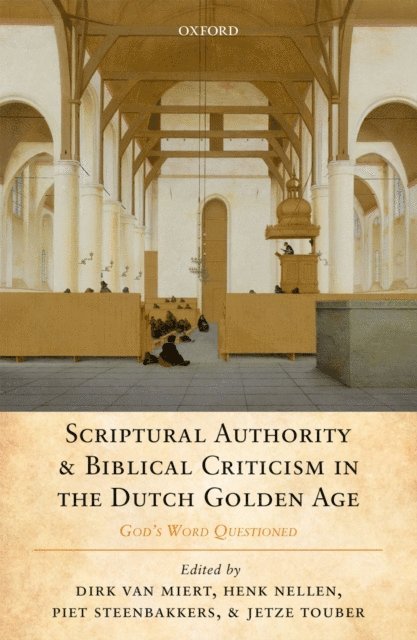
Scriptural Authority and Biblical Criticism in the Dutch Golden Age
God's Word Questioned
Av Henk Nellen, Jetze Touber m. fl.
E-bok, 2017
1940 kr
Lägg i varukorg
Scriptural Authority and Biblical Criticism in the Dutch Golden Age explores the hypothesis that in the long seventeenth century humanist-inspired biblical criticism contributed significantly to the decline of ecclesiastical truth claims. Historiography pictures this era as one in which the …
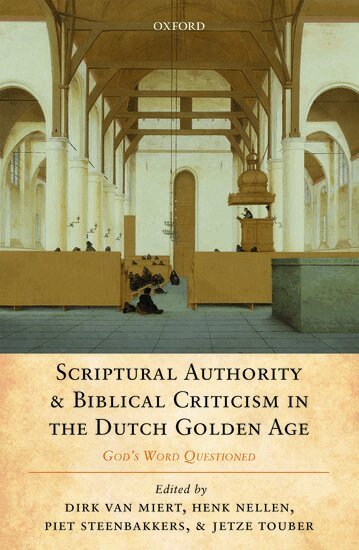
Scriptural Authority and Biblical Criticism in the Dutch Golden Age
God's Word Questioned
Av Henk Nellen, Dirk van Miert m. fl.
Inbunden, 2017
3021 kr
Lägg i varukorg
Scriptural Authority and Biblical Criticism in the Dutch Golden Age explores the hypothesis that in the long seventeenth century humanist-inspired biblical criticism contributed significantly to the decline of ecclesiastical truth claims. Historiography pictures this era as one in which the …
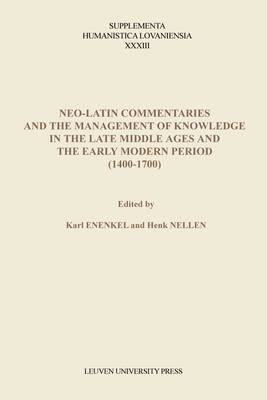
Neo-Latin Commentaries and the Management of Knowledge in the Late Middle Ages and the Early Modern Period (1400–1700)
Häftad, 2013
1021 kr
Tillfälligt slut
Profound study of one of the most important genres within Humanist scholarshipBetween 1400 and 1700 the political, religious, intellectual, and even geographic landscape was profoundly changed by the Reformation, Humanism, the rise of empirical science, the invention of printing technology, and the …