Herbert H. T. Prins – författare
665 kr
Läs direkt efter köp
665 kr
Läs direkt efter köp
547 kr
Skickas inom 7-10 vardagar
1 325 kr
Skickas inom 7-10 vardagar
1 124 kr
Läs direkt efter köp
1 124 kr
Läs direkt efter köp
1 151 kr
Skickas inom 7-10 vardagar
Ecology of Browsing and Grazing II
1 122 kr
Skickas inom 5-8 vardagar
2 524 kr
Läs direkt efter köp
Domestic and wild large mammalian herbivores occur on every continent except Antarctica. Through their browsing and grazing, they affect the structure and distribution not only of vegetation, but also of associated fauna. Consequently, the interactions between management practices and herbivore populations influence the biodiversity, structure and dynamics of ecosystems across vast expanses around the globe: signs of human activity that will be detectable for epochs to come.
As a follow-up work to The Ecology of Browsing and Grazing, published in 2008, this new volume presents cutting-edge research on the behaviour, distribution, movement, and direct and indirect impacts of domestic and wild herbivores on terrestrial ecosystems. The respective chapters highlight strategic and applied research on cross-cutting issues in palaeontology and ecology, and provide concrete recommendations on the management of large herbivores to integrate production andconservation in terrestrial systems. Given its scope, the book will appeal to students, researchers and anyone interested in understanding these fascinating wild animals and how they shape the natural world.
Ecology of Browsing and Grazing II
1 122 kr
Skickas inom 5-8 vardagar
1 299 kr
Skickas inom 10-15 vardagar
1 733 kr
Läs direkt efter köp
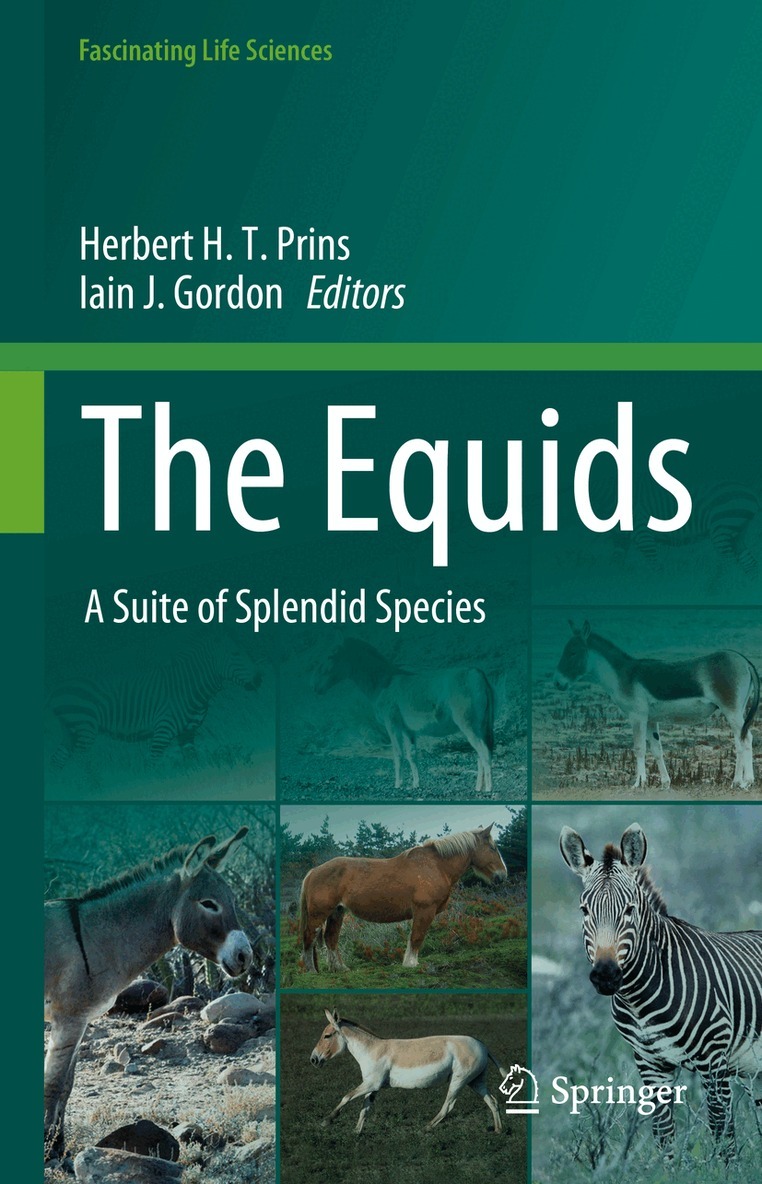
The narrative of the progression of the ‘horse family’ through geological time, from dog-sized fruit-eating animals with four toes on their front and three toes on their hind legs, to the valiant long-legged, single-toed modern grazing horses, beloved by racing enthusiasts, is the poster child of evolution. However, like the rhinos or tapirs, the horse-like zebras, wild asses, kulans, kiangs, onagers, and the real horses are often portrayed as being past their evolutionary peak as compared to the more recently evolved ruminants (especially bovids and deer) which now dominate the grazing niche. That story of a species group over its evolutionary zenith is compelling, but anyone who has travelled in the remote savannas of Africa or the cold wild deserts of Central Asia is awed with herds of glorious animals that clearly do not ruminate. It appears as though these, so-named ‘hind-gut fermenters’, are perhaps much better adapted to these environments than one is led to believe. The purpose of this book is to dispel the myth of the inferior Equidae by describing, and investigating, the evolutionary and ecological journey of the horse family in all its glory.
648 kr
Skickas inom 5-8 vardagar
1 299 kr
Skickas inom 10-15 vardagar
962 kr
Tillfälligt slut