• Fri frakt över 249 kr
  • •
  • Snabba leveranser
  • •
  • Billiga böcker
Kundservice

Du är på sajten för privatpersoner.

Företag, bibliotek eller offentlig verksamhet?

Du handlar på classic.bokus.com, där alla dina funktioner finns intakta.
Till classic.bokus.com
Bokus logotyp. Gå till startsidan.
  • Erbjudanden
  • Nyheter
  • Student
  • Topplistor
  • Barn & ungdom
  • Bokus Play
  • E-böcker
  • Pocketböcker
  • Spel & pussel

10% rabatt på allt med kod: NYSTART10 →

Sidfot

Mina sidor

    Hjälp

    • Kundservice
    • Vanliga frågor och svar
    • Frakt och leverans
    • Retur vid ångerrätt
    • Reklamera vara
    • Betalning
    • Köpvillkor
    • Allmänna villkor
    • Information om webbplatsens tillgänglighet

    Om Bokus

    • Om oss
    • Pressrum
    • För studenter
    • För företag
    • För bibliotek och offentlig verksamhet
    • För leverantörer
    • Hållbarhet

    Populärt

    • Aktuella erbjudanden
    • Presentkort
    • Studentlitteratur
    • Nya böcker
    • Topplistor
    • Signerade böcker
    • Engelska böcker

    Inspiration

    • Boktips
    • BookTok
    • Populära bokserier
    • Barnbokskaraktärer
    • Populära författare
    Logotyp för Bokus
    Följ oss på Facebook (extern länk)Följ oss på Instagram (extern länk)Följ oss på YouTube (extern länk)Följ oss på TikTok (extern länk)
    bokus @ CookiesAnpassa cookiesIntegritetspolicyKöpvillkor
    Till Citymail hemsida (extern länk)Till Budbee hemsida (extern länk)Till Postnord hemsida (extern länk)Till Schenker hemsida (extern länk)Till Early Bird hemsida (extern länk)Till Walleys hemsida (extern länk)
    1. Naturvetenskap och teknik
    2. Geovetenskap
    3. Miljövetenskap och miljöpolitik

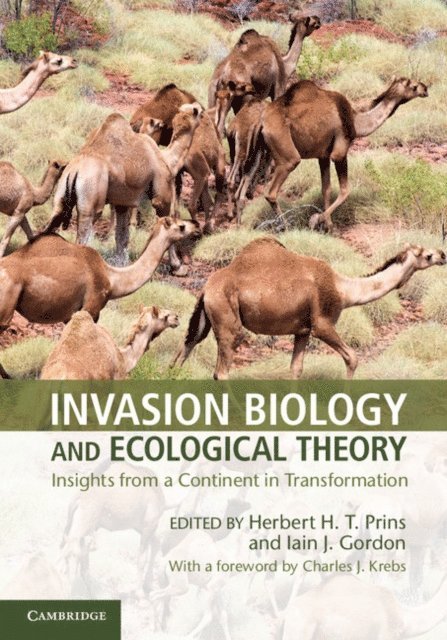
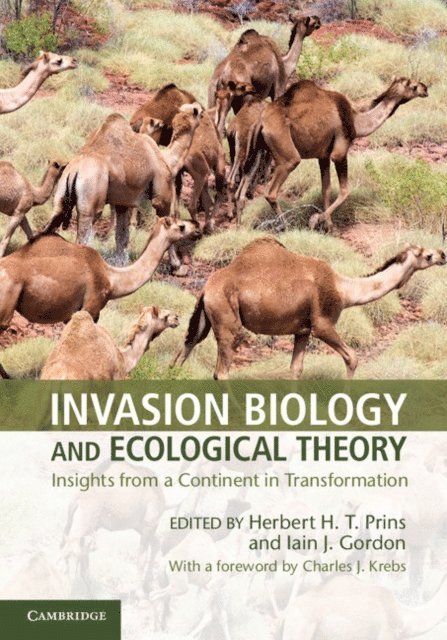
    Invasion Biology and Ecological Theory

    Insights from a Continent in Transformation

    AvHerbert H. T. Prins,Iain J. Gordon

    Inbunden, Engelska, 2014

    959 kr

    Tillfälligt slut

    Beskrivning

    Many conservationists argue that invasive species form one of the most important threats to ecosystems the world over, often spreading quickly through their new environments and jeopardising the conservation of native species. As such, it is important that reliable predictions can be made regarding the effects of new species on particular habitats. This book provides a critical appraisal of ecosystem theory using case studies of biological invasions in Australasia. Each chapter is built around a set of eleven central hypotheses from community ecology, which were mainly developed in North American or European contexts. The authors examine the hypotheses in the light of evidence from their particular species, testing their power in explaining the success or failure of invasion and accepting or rejecting each hypothesis as appropriate. The conclusions have far-reaching consequences for the utility of community ecology, suggesting a rejection of its predictive powers and a positive reappraisal of natural history.

    Produktinformation

    • Utgivningsdatum:2014-01-23
    • Mått:180 x 253 x 33 mm
    • Vikt:1 110 g
    • Format:Inbunden
    • Språk:Engelska
    • Antal sidor:540
    • Förlag:Cambridge University Press
    • ISBN:9781107035812

    Utforska kategorier

    • Miljövetenskap och miljöpolitik inom Naturvetenskap och teknik

    Mer om författaren

    Herbert H. T. Prins is Professor of Resource Ecology at Wageningen University. He was twice visiting professor with CSIRO and a Foundation Fellow of the Royal Melbourne Institute of Technology. He has conducted extensive fieldwork in environments ranging from savannas and rainforests, to mountains and the high arctic. Iain J. Gordon is Chief Executive and Director of the James Hutton Institute. He has an international reputation for scientific leadership and research excellence in interdisciplinary approaches to understanding socio-ecological system dynamics. He worked for CSIRO for seven years, managing major research portfolios on land management to protect the Great Barrier Reef and conserving Australia's biodiversity.

    Recensioner i media

    'This book represents a novel and exciting approach to testing some fundamental ecological ideas such as the niche concept, competition, disturbance, and life history strategy. It does so using invasive alien species, with Australia as both the invaded environment, as well as the source of the invasives. The approach taken is to propose a series of ecological hypotheses and test these against invader case studies ranging from the failed (finches) to the downright spectacular (water buffalo in Northern Australia). A series of specialist authors tackles each case study, before the editors, Prins and Gordon, conclude with a synthesis chapter that reviews the evidence for and against each hypothesis, drawing on each author's findings in a structured way. The principal intent of this book is to inform the science of ecology, but it is rich in valuable insights to those grappling with the management of this great threat to global biodiversity.' Mark Lonsdale, Commonwealth Scientific and Industrial Research Organisation, Canberra

    Innehållsförteckning

    • List of contributors; Foreword Charles J. Krebs; 1. Testing hypotheses about biological invasions and Charles Darwin's two-creators rumination Herbert H. T. Prins and Iain J. Gordon; Part I. Ancient Invaders: 2. Australia's Acacia: unrecognized convergent evolution Joseph T. Miller and Martin Burd; 3. The mixed success of Mimosoideae clades invading into Australia Kyle W. Tomlinson; 4. Perspectives from parrots on biological invasions Leo Joseph; 5. Invasion ecology of honeyeaters Janette A. Norman and Leslie Christidis; 6. The invasion of terrestrial fauna into marine habitat: birds in mangroves David Luther; 7. Biological invasions of Sirenia in relation to ecosystem theory Hans H. de Iongh and Daryl P. Domning; 8. Flying-foxes and drifting continents David A. Westcott and Adam McKeown; 9. Invasion ecology of Australasian marsupials Christopher R. Dickman; 10. Murine rodents - late but highly successful invaders Ken Aplin and Fred Ford; 11. Drift of a continent - broken connections Carol Ann Stannard; 12. The development of a climate - an arid continent with wet fringes Sandra McLaren, Malcolm W. Wallace, Stephen J. Gallagher, Barbara E. Wagstaff and Anne-Marie P. Tosolini; Part II. Modern Invaders: 13. Invasion of woody shrubs and trees Kris French, Ben Gooden and Tanya Mason; 14. Modern tree colonisers from Australia into the rest of the world Trevor H. Booth; 15. Failed introductions - finches from outside Australia Jan Komdeur and Martijn Hammers; 16. The skylark Judit K. Szabo; 17. Why Northern Hemisphere waders did not colonise the south Ken Kraaijeveld; 18. Weak migratory interchange by birds between Australia and Asia David Roshier and Leo Joseph; 19. Introducing a new top predator, the dingo Christopher N. Johnson and Mike Letnic; 20. The European rabbit - Australia's worst mammalian invader Steven R. McLeod and Glen Saunders; 21. The rise and fall of the Asian water buffalo in the monsoonal tropics of Northern Australia Patricia A. Werner; 22. A critique of community ecology and a salute to natural history Herbert H. T. Prins and Iain J. Gordon; Index.