Iain J. Gordon – författare
Visar alla böcker från författaren Iain J. Gordon. Handla med fri frakt och snabb leverans.
13 produkter
13 produkter
Invasion Biology and Ecological Theory
Insights from a Continent in Transformation
Inbunden, Engelska, 2014
902 kr
Skickas inom 7-10 vardagar
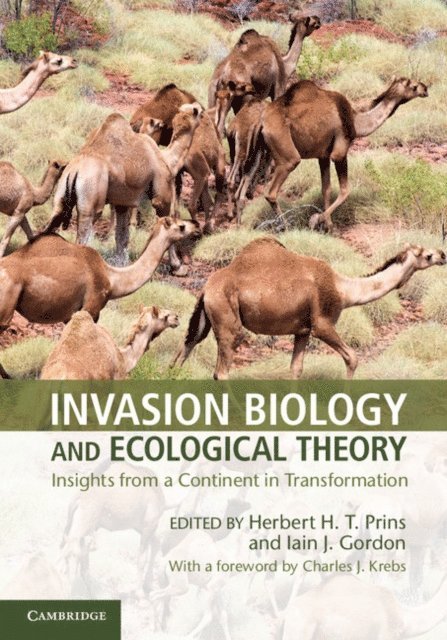
Many conservationists argue that invasive species form one of the most important threats to ecosystems the world over, often spreading quickly through their new environments and jeopardising the conservation of native species. As such, it is important that reliable predictions can be made regarding the effects of new species on particular habitats. This book provides a critical appraisal of ecosystem theory using case studies of biological invasions in Australasia. Each chapter is built around a set of eleven central hypotheses from community ecology, which were mainly developed in North American or European contexts. The authors examine the hypotheses in the light of evidence from their particular species, testing their power in explaining the success or failure of invasion and accepting or rejecting each hypothesis as appropriate. The conclusions have far-reaching consequences for the utility of community ecology, suggesting a rejection of its predictive powers and a positive reappraisal of natural history.
1 406 kr
Skickas inom 7-10 vardagar
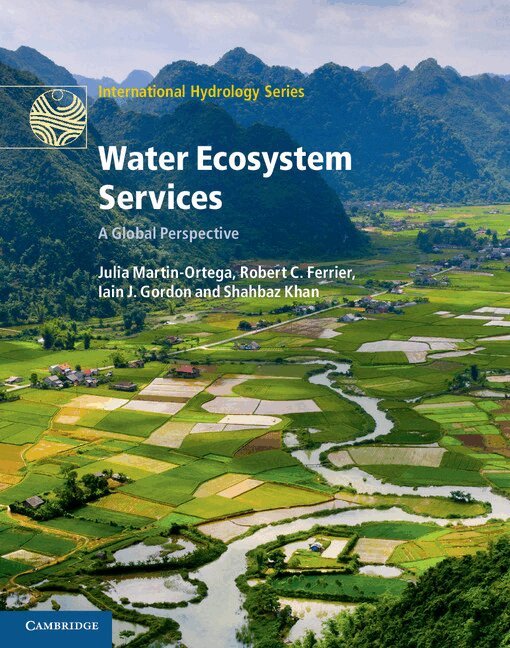
This comprehensive volume describes how ecosystem services-based approaches can assist in addressing major global and regional water challenges, such as climate change, biodiversity loss, and water security in the developing world, by integrating scientific knowledge from different disciplines, such as hydrological modelling, environmental economics, psychology and international law. Empirical assessments at the national, catchment and regional levels are used to critically appraise this systemic approach, and the merits and potential limitations are presented. The practicalities of this approach with regard to water resources management, nature conservation, and sustainable business practices are discussed, and the role of society in underpinning the concept of ecosystem services is explored. Presenting new insights and perspectives on how to shape future strategies, this contributory volume is a valuable reference for researchers, academics, students and policy makers, in environmental studies, hydrology, water resource management, ecology, environmental law, policy and economics, and conservation biology.
548 kr
Skickas inom 7-10 vardagar
This comprehensive volume describes how ecosystem services-based approaches can assist in addressing major global and regional water challenges, such as climate change, biodiversity loss, and water security in the developing world, by integrating scientific knowledge from different disciplines, such as hydrological modelling, environmental economics, psychology and international law. Empirical assessments at the national, catchment and regional levels are used to critically appraise this systemic approach, and the merits and potential limitations are presented. The practicalities of this approach with regard to water resources management, nature conservation, and sustainable business practices are discussed, and the role of society in underpinning the concept of ecosystem services is explored. Presenting new insights and perspectives on how to shape future strategies, this contributory volume is a valuable reference for researchers, academics, students and policy makers, in environmental studies, hydrology, water resource management, ecology, environmental law, policy and economics, and conservation biology.
2 113 kr
Skickas inom 10-15 vardagar
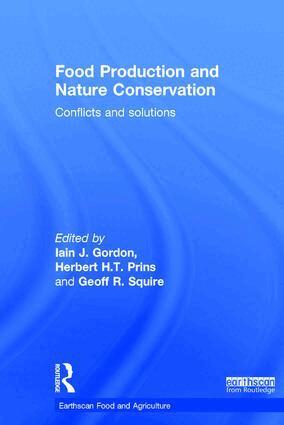
Feeding the world's growing human population is increasingly challenging, especially as more people adopt a western diet and lifestyle. Doing so without causing damage to nature poses an even greater challenge. This book argues that in order to create a sustainable food supply whilst conserving nature, agriculture and nature must be reconnected and approached together.The authors demonstrate that while the links between nature and food production have, to some extent, already been recognized, until now the focus has been to protect one from the impacts of the other. Instead, it is argued that nature and agriculture can, and should, work together and ultimately benefit from one another. Chapters describe efforts to protect nature through globally connected protected area systems and illustrate how farming methods are being shaped to protect nature within agricultural systems. The authors also point to many ways in which nature benefits agriculture through the ecosystem services it provides.Overall, the book shows that nature conservation and food production must be considered as equally important components of future solutions to meet the global demand for food in a manner that is sustainable for both the human population and the planet as a whole.
754 kr
Skickas inom 10-15 vardagar
Feeding the world's growing human population is increasingly challenging, especially as more people adopt a western diet and lifestyle. Doing so without causing damage to nature poses an even greater challenge. This book argues that in order to create a sustainable food supply whilst conserving nature, agriculture and nature must be reconnected and approached together.The authors demonstrate that while the links between nature and food production have, to some extent, already been recognized, until now the focus has been to protect one from the impacts of the other. Instead, it is argued that nature and agriculture can, and should, work together and ultimately benefit from one another. Chapters describe efforts to protect nature through globally connected protected area systems and illustrate how farming methods are being shaped to protect nature within agricultural systems. The authors also point to many ways in which nature benefits agriculture through the ecosystem services it provides.Overall, the book shows that nature conservation and food production must be considered as equally important components of future solutions to meet the global demand for food in a manner that is sustainable for both the human population and the planet as a whole.
Del 126 - Burleigh Dodds Science: Instant Insights
Instant Insights: Rewilding in Agriculture
Häftad, Engelska, 2026
702 kr
Kommande
This book features three peer-reviewed reviews on rewilding in agriculture.The first chapter highlights the diversity of best practices used to rewild grasslands and rangelands, including those used to restore biological soil crusts, apply prescribed fire, increase stand establishment and persistence, overcome soil limitations, rectify nutrient pollution, and sequester soil carbon. The chapter also provides a case study on the restoration of sagebrush-steppe rangelands in the state of Utah, USA.The second chapter provides an overview of the trade-offs related to animal rewilding in agroecosystems (e.g. ecosystem services versus disservices). The chapter also discusses three key management trends the authors foresee will facilitate net positive outcomes in animal rewilding: capturing wild provisioning services, coordinating broad spatial heterogeneity in land use and employing coexistence conservation tactics.The final chapter outlines the benefits and challenges of rewilding in Australia and New Zealand and references four case studies to study this. The first two describe rewildings on formerly degraded agricultural land (Tiritiri Matangi Island, Scotia Sanctuary), while the third posits a conceptual rewilding program using a continental top predator, the dingo. The fourth case study describes a digitally-enabled survey and monitoring system on a mixed-agriculture farm that provides a step towards rewilding such landscapes in future.
1 099 kr
Skickas inom 5-8 vardagar
Domestic and wild large mammalian herbivores occur on every continent except Antarctica. Through their browsing and grazing, they affect the structure and distribution not only of vegetation, but also of associated fauna. Consequently, the interactions between management practices and herbivore populations influence the biodiversity, structure and dynamics of ecosystems across vast expanses around the globe: signs of human activity that will be detectable for epochs to come.As a follow-up work to The Ecology of Browsing and Grazing, published in 2008, this new volume presents cutting-edge research on the behaviour, distribution, movement, and direct and indirect impacts of domestic and wild herbivores on terrestrial ecosystems. The respective chapters highlight strategic and applied research on cross-cutting issues in palaeontology and ecology, and provide concrete recommendations on the management of large herbivores to integrate production andconservation in terrestrial systems. Given its scope, the book will appeal to students, researchers and anyone interested in understanding these fascinating wild animals and how they shape the natural world.
1 099 kr
Skickas inom 5-8 vardagar
Domestic and wild large mammalian herbivores occur on every continent except Antarctica. Through their browsing and grazing, they affect the structure and distribution not only of vegetation, but also of associated fauna. Consequently, the interactions between management practices and herbivore populations influence the biodiversity, structure and dynamics of ecosystems across vast expanses around the globe: signs of human activity that will be detectable for epochs to come.As a follow-up work to The Ecology of Browsing and Grazing, published in 2008, this new volume presents cutting-edge research on the behaviour, distribution, movement, and direct and indirect impacts of domestic and wild herbivores on terrestrial ecosystems. The respective chapters highlight strategic and applied research on cross-cutting issues in palaeontology and ecology, and provide concrete recommendations on the management of large herbivores to integrate production andconservation in terrestrial systems. Given its scope, the book will appeal to students, researchers and anyone interested in understanding these fascinating wild animals and how they shape the natural world.
1 273 kr
Skickas inom 10-15 vardagar
The narrative of the progression of the ‘horse family’ through geological time, from dog-sized fruit-eating animals with four toes on their front and three toes on their hind legs, to the valiant long-legged, single-toed modern grazing horses, beloved by racing enthusiasts, is the poster child of evolution.
634 kr
Skickas inom 5-8 vardagar
1 273 kr
Skickas inom 10-15 vardagar
The narrative of the progression of the ‘horse family’ through geological time, from dog-sized fruit-eating animals with four toes on their front and three toes on their hind legs, to the valiant long-legged, single-toed modern grazing horses, beloved by racing enthusiasts, is the poster child of evolution.
1 589 kr
Skickas inom 10-15 vardagar
Extensive grazing and browsing by domestic and wild herbivores shape the vegetation composition, structure and dynamics of many terrestrial ecosystems. This volume investigates how large herbivores not only influence the structure and distribution of the vegetation, but also affect nutrient flows and the responses of associated fauna. The mechanisms and processes underlying the herbivores' behaviour, distribution, movement and direct impact on the vegetation, and the dynamics of nutrients, plant species, and vegetation composition in terrestrial ecosystems are discussed in detail. It is shown that an understanding of plant/animal interactions can provide practical advice on the management of large herbivores to integrate production and conservation in terrestrial systems, particularly in the face of environmental and climate change.
1 589 kr
Skickas inom 10-15 vardagar
Extensive grazing and browsing by domestic and wild herbivores shape the vegetation composition, structure and dynamics of many terrestrial ecosystems. This volume investigates how large herbivores not only influence the structure and distribution of the vegetation, but also affect nutrient flows and the responses of associated fauna. The mechanisms and processes underlying the herbivores' behaviour, distribution, movement and direct impact on the vegetation, and the dynamics of nutrients, plant species, and vegetation composition in terrestrial ecosystems are discussed in detail. It is shown that an understanding of plant/animal interactions can provide practical advice on the management of large herbivores to integrate production and conservation in terrestrial systems, particularly in the face of environmental and climate change.