• Fri frakt över 249 kr
  • •
  • Snabba leveranser
  • •
  • Billiga böcker
Kundservice

Du är på sajten för privatpersoner.

Företag, bibliotek eller offentlig verksamhet?

Du handlar på classic.bokus.com, där alla dina funktioner finns intakta.
Till classic.bokus.com
Bokus logotyp. Gå till startsidan.
  • Erbjudanden
  • Nyheter
  • Student
  • Topplistor
  • Barn & ungdom
  • Bokus Play
  • E-böcker
  • Pocketböcker
  • Spel & pussel

10% rabatt på allt med kod: NYSTART10 →

Sidfot

Mina sidor

    Hjälp

    • Kundservice
    • Vanliga frågor och svar
    • Frakt och leverans
    • Retur vid ångerrätt
    • Reklamera vara
    • Betalning
    • Köpvillkor
    • Allmänna villkor
    • Information om webbplatsens tillgänglighet

    Om Bokus

    • Om oss
    • Pressrum
    • För studenter
    • För företag
    • För bibliotek och offentlig verksamhet
    • För leverantörer
    • Hållbarhet

    Populärt

    • Aktuella erbjudanden
    • Presentkort
    • Studentlitteratur
    • Nya böcker
    • Topplistor
    • Signerade böcker
    • Engelska böcker

    Inspiration

    • Boktips
    • BookTok
    • Populära bokserier
    • Barnbokskaraktärer
    • Populära författare
    Logotyp för Bokus
    Följ oss på Facebook (extern länk)Följ oss på Instagram (extern länk)Följ oss på YouTube (extern länk)Följ oss på TikTok (extern länk)
    bokus @ CookiesAnpassa cookiesIntegritetspolicyKöpvillkor
    Till Citymail hemsida (extern länk)Till Budbee hemsida (extern länk)Till Postnord hemsida (extern länk)Till Schenker hemsida (extern länk)Till Early Bird hemsida (extern länk)Till Walleys hemsida (extern länk)
    1. Djur och Natur
    2. Djurböcker
    3. Vilda djur
    4. Fågelböcker

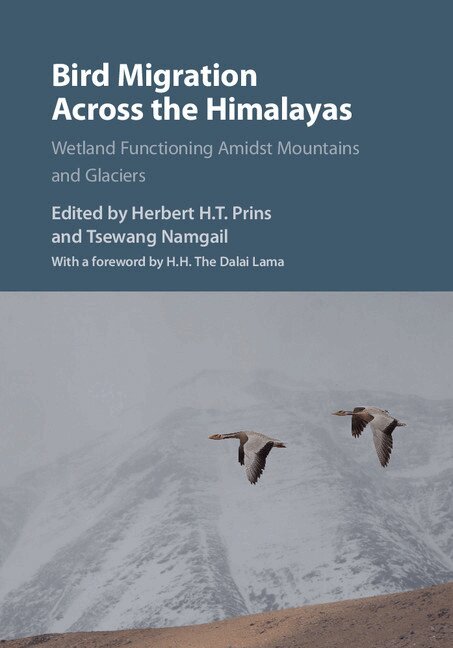
    Bird Migration across the Himalayas

    Wetland Functioning amidst Mountains and Glaciers

    AvHerbert H. T. Prins,Tsewang Namgail

    Inbunden, Engelska, 2017

    1 321 kr

    Beställningsvara. Skickas inom 10-15 vardagar. Fri frakt över 249 kr.

    Beskrivning

    Birds migrating across the Himalayan region fly over the highest peaks in the world, facing immense physiological and climatic challenges. The authors show the different strategies used by birds to cope with these challenges. Many wetland avian species are seen in the high-altitude lakes of the Himalayas and the adjoining Tibetan Plateau, such as Bar-Headed Geese. Ringing programmes have generated information about origins and destinations, and this book is the first to present information on the bird's exact migratory paths. Capitalising on knowledge generated through satellite telemetry, the authors describe the migratory routes of a multitude of birds flying over or skirting the Himalayas. The myriad of threats to migratory birds and the wetland system in the Central Asian Flyway are discussed, with ways to mitigate them. This volume will inform and persuade policy-makers and conservation practitioners to take appropriate measures for the long-term survival of this unique migration.

    Produktinformation

    • Utgivningsdatum:2017-04-06
    • Mått:179 x 256 x 27 mm
    • Vikt:1 120 g
    • Format:Inbunden
    • Språk:Engelska
    • Antal sidor:458
    • Förlag:Cambridge University Press
    • Medarbetare:Dalai lama
    • ISBN:9781107114715

    Utforska kategorier

    • Fågelböcker inom Djur och Natur
    • Miljövetenskap och miljöpolitik inom Naturvetenskap och teknik
    • Biovetenskap inom Naturvetenskap och teknik

    Mer om författaren

    Herbert H. T. Prins is professor in Resource Ecology at Wageningen University, The Netherlands. He is known for savanna ecology and has investigated wild goose ecology in Europe, on Spitsbergen and in Siberia. For his conservation efforts, he received the Aldo Leopold Award from the American Society of Mammalogists, and was appointed Officer in the Order of Oranje Nassau and Officer in the Order of the Golden Ark. Tsewang Namgail heads the Snow Leopard Conservancy India Trust. After his higher education in Europe, he moved to the USA and worked on migratory birds. He has done pioneering ecological work on mammals in the Himalayas and serves on the editorial board of Ecological Research and Pastoralism journals.

    Recensioner i media

    'In this remarkable book, the authors describe the immense variety of adaptations of migratory birds in the Himalayas. The volume is beautifully designed, replete with highly informative figures, text boxes, graphs, and tables of original data suitable for meta-analyses.' Gabor L. Lovei, Conservation Biology

    Innehållsförteckning

    • Forward; Preface; Introduction; Part I. Migratory Routes and Movement Ecology: 1. Goose migration across the Himalayas: migratory routes and movement patterns of bar-headed geese; 2. Himalayan thoroughfare: migratory routes of ducks over the rooftop of the world; 3. Migratory routes across the Himalayas used by Demoiselle Cranes; 4. Passerine migration across the Himalayas; 5. Wader migration across the Himalayas; 6. Raptor migration across and around the Himalayas; 7. Steppe Eagle migration from Mongolia to India; 8. Peregrine Falcons crossing the 'Roof of the World'; Part II. Physiography of the Highest Barrier on Earth: 9. Geological origin and evolution of the Himalayas; 10. Late Quaternary glacier fluctuations in the Himalayas and adjacent mountains; 11. The influence of hydrology and glaciology on wetlands in the Himalayas; 12. The Himalayan vegetation along horizontal and vertical gradients; 13. Assessing the evidence for changes in vegetation phenology in high altitude wetlands of Ladakh (2002–2015); Part III. High-Altitude Migration Strategies: 14. The wind system in the Himalayas: from a bird's-eye view; 15. Birds, gliders and uplift systems over the Himalayas; 16. Goose migration over the Himalayas: physiological adaptations; 17. Distance-altitude trade off may explain why some migratory birds fly over and not around the Himalayas; 18. Refuelling stations for waterbirds: macroinvertebrate biomass in relation to altitude in the Trans-Himalayas; 19. The Himalayas as an ecological barrier for avian migrants: high and dry, but also dangerous?; 20. Bird species diversity on an elevational gradient between the Greater Himalaya and the Tibetan Plateau; Part IV. People and their Effects on the Himalayas: 21. Evidence of human presence in the Himalayan mountains: new insights from petroglyphs; 22. Pastoralism and wetland resources in Ladakh's Changthang plateau; 23. Impacts of tourism and military presence on wetlands and their avifauna in the Himalayas; 24. Birds in relation to farming and livestock grazing in the Indian Trans-Himalaya; 25. Migratory ducks and protected wetlands in India; 26. A network of small, dispersed Himalayan wetlands suitable for designation under the Ramsar Convention; Part V. Conclusions: 27. Bird migration across the Himalayas and beyond: the need for better conservation and management of a natural wonder; Appendix. Locations (places, mountains, rivers, etc.) mentioned in the chapters and their geographic coordinates.