Herman H. Shugart - Böcker
Visar alla böcker från författaren Herman H. Shugart. Handla med fri frakt och snabb leverans.
5 produkter
5 produkter
2 121 kr
Skickas inom 10-15 vardagar
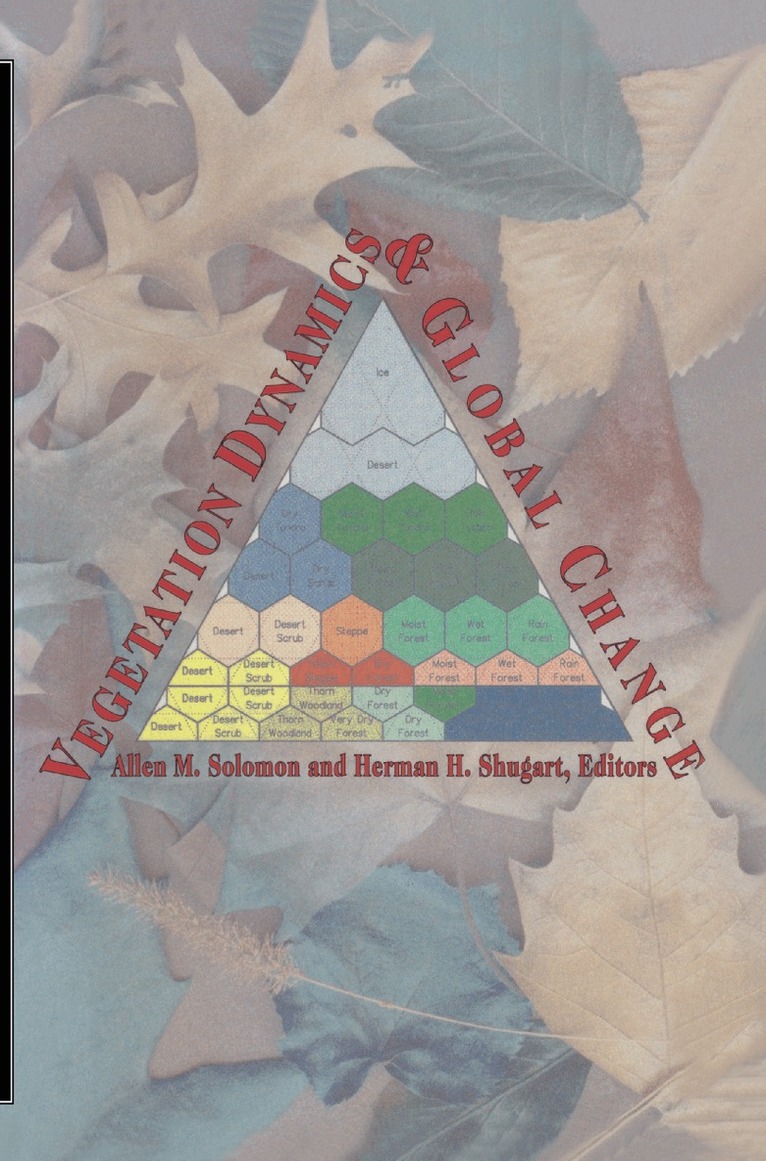
The response of forests to global climate change is one of the most hotly contested issues in the greenhouse effect debate. Much effort is being devoted to the construction of models which describe the function of the forests and their rate of change. There are a wealth of techniques available to project large-scale vegetation patterns, all based on different underlying models that contain fundamental biological and ecological mechanisms. This book introduces both students and professionals in ecology, environmental science, biomathematics, forestry, and the earth sciences to the sophisticated mathematical and computational tools used to predict the rate of change in the world's forests. It emphasizes the importance of scale in global studies. Leaders in the field of vegetation modelling cover physiological phenomena typically measured at small time and space scales; the stand dynamics of forests; large-scale models of forest dynamics; the reconstruction of forest vegetation of past climates as a way to understand current global changes; and the role of forests in the global carbon cycle.Several themes run through the book, including the need to understand how processes important at one time and space scale can be conceptualized at larger scales; the need to optimize the conceptual benefits of representing processes in detail and the attendant difficulties of estimating parameters and designing tests for elaborate models; and the need to identify the most appropriate system variables. This book should be of interest to students and professionals in the field of ecology; earth science; forestry and biomathematics.
1 593 kr
Skickas inom 10-15 vardagar
The response of forests to global climate change is one of the most hotly contested issues in the greenhouse effect debate. Much effort is being devoted to the construction of models which describe the function of the forests and their rate of change. There are many techniques available to project large-scale vegetation patterns, all based on different underlying models that contain fundamental biological and ecological mechanisms. This text introduces both students and professionals to the sophisticated mathematical and computational tools used to predict the rate of change in the world's forests. It emphasizes the importance of scale in global studies. Leaders in the field of vegetation modelling cover physiological phenomena typically measured at small time and space scales; the stand dynamics of forests; large-scale models of forest dynamics; the reconstruction of forest vegetation of past climates as a way to understand current global changes; and the role of forests in the global carbon cycle. This book should be of interest to students and professionals in the fields of ecology; earth science; forestry and biomathematics.
1 001 kr
Skickas inom 7-10 vardagar
Predicting how terrestrial ecosystems might respond in the future to large-scale human-generated changes is a major challenge for ecologists. In Terrestrial Ecosystems in Changing Environments, Herman H. Shugart describes the fundamental ecological concepts, theoretical developments, and quantitative analyses involved in understanding the responses of natural systems to change. The key ecological concepts described include the ecosystem paradigm, niche theory, vegetation/climate relationships, landscape ecology and ecological modelling. A variety of ecological models are presented, and their applications in predicting responses to change are considered. The challenge of producing ecological models capable of predicting long-term and large-area ecosystem dynamics is reviewed and several examples are provided. Finally, some of the exciting findings regarding terrestrial landscapes and their feedback with their climatic setting are discussed in the context of human land-use and global change.
718 kr
Skickas inom 7-10 vardagar
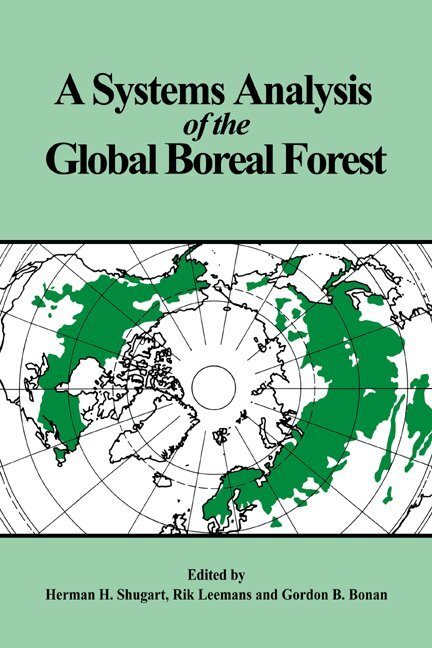
The boreal forests of the world, geographically situated to the south of the Arctic and generally north of latitude 50 degrees, are considered to be one of the earth's most significant terrestrial ecosystems in terms of their potential for interaction with other global scale systems, such as climate and anthropologenic activity. This book, developed by an international panel of ecologists, provides a synthesis of the important patterns and processes which occur in boreal forests and reviews the principal mechanisms which control the forests' pattern in space and time. The effects of cold temperatures, soil ice, insects, plant competition, wildfires and climatic change on the boreal forests are discussed as a basis for the development of the first global scale computer model of the dynamical change of a biome, able to project the change of the boreal forest over timescales of decades to millennia, and over the global extent of this forest.
2 121 kr
Skickas inom 10-15 vardagar
During the summer of 1987, a series of discussions I was held at the International Institute for Applied Systems Analysis (nASA) in Laxenburg, Austria, to plan a study of global vegetation change. The work was aimed at promoting the Interna tional Geosphere-Biosphere Programme (IGBP), sponsored by the International Council of Scientific Unions (lCSU), of which nASA is a member. Our study was designed to provide initial guidance in the choice of approaches, data sets and objectives for constructing global models of the terrestrial biosphere. We hoped to provide substantive and concrete assistance in formulating the working plans of IGBP by involving program planners in the development and application of models which were assembled from available data sets and modeling ap proaches. Recent acceptance of the "nASA model" as the starting point for endeavors of the Global Change and Terrestrial Ecosystems Core Project of the IGBP suggests we were successful in that aim. The objective was implemented by our initiation of a mathematical model of global vegetation, including agriculture, as defined by the forces which control and change vegetation. The model was to illustrate the geographical consequences to vegetation structure and functioning of changing climate and land use, based on plant responses to environmental variables. The completed model was also expected to be useful for examining international environmental policy responses to global change, as well as for studying the validity of IIASA's experimental approaches to environmental policy development.