Rik Leemans – författare
Visar alla böcker från författaren . Handla med fri frakt och snabb leverans.
6 produkter
6 produkter
Häftad, Engelska, 2005
774 kr
Skickas inom 7-10 vardagar
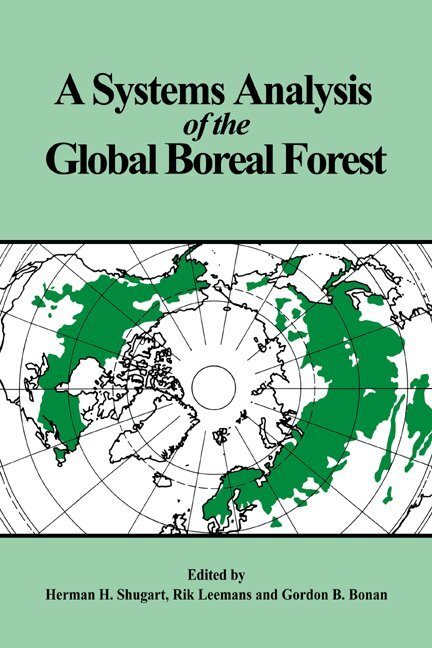
The boreal forests of the world, geographically situated to the south of the Arctic and generally north of latitude 50 degrees, are considered to be one of the earth's most significant terrestrial ecosystems in terms of their potential for interaction with other global scale systems, such as climate and anthropologenic activity. This book, developed by an international panel of ecologists, provides a synthesis of the important patterns and processes which occur in boreal forests and reviews the principal mechanisms which control the forests' pattern in space and time. The effects of cold temperatures, soil ice, insects, plant competition, wildfires and climatic change on the boreal forests are discussed as a basis for the development of the first global scale computer model of the dynamical change of a biome, able to project the change of the boreal forest over timescales of decades to millennia, and over the global extent of this forest.
Inbunden, Engelska, 2012
1 596 kr
Skickas inom 10-15 vardagar
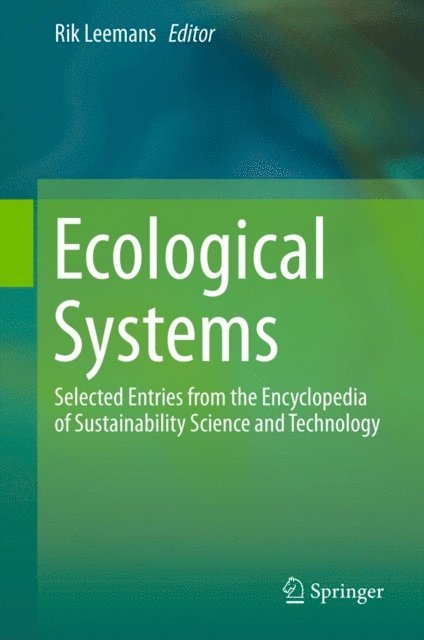
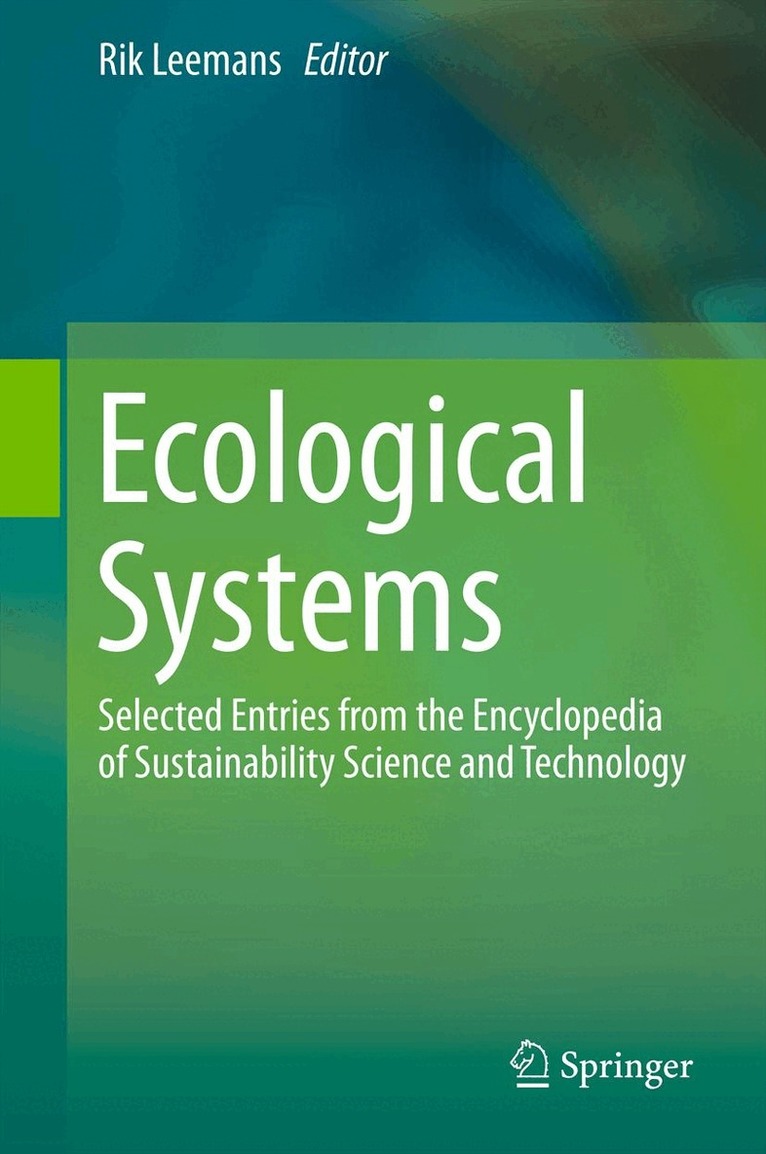
Earth is home to an estimated 8 million animal species, 600,000 fungi, 300,000 plants, and an undetermined number of microbial species. Of these animal, fungal, and plant species, an estimated 75% have yet to be identified. Moreover, the interactions between these species and their physical environment are known to an even lesser degree. At the same time, the earth’s biota faces the prospect of climate change, which may manifest slowly or extremely rapidly, as well as a human population set to grow by two billion by 2045 from the current seven billion. Given these major ecological changes, we cannot wait for a complete biota data set before assessing, planning, and acting to preserve the ecological balance of the earth. This book provides comprehensive coverage of the scientific and engineering basis of the systems ecology of the earth in 15 detailed, peer-reviewed entries written for a broad audience of undergraduate and graduate students as well as practicing professionals in government, academia, and industry. The methodology presented aims at identifying key interactions and environmental effects, and enabling a systems-level understanding even with our present state of factual knowledge.
E-bok
PDF, Engelska, 20122 049 kr
Läs direkt efter köp
Earth is home to an estimated 8 million animal species, 600,000 fungi, 300,000 plants, and an undetermined number of microbial species. Of these animal, fungal, and plant species, an estimated 75% have yet to be identified. Moreover, the interactions between these species and their physical environment are known to an even lesser degree. At the same time, the earth’s biota faces the prospect of climate change, which may manifest slowly or extremely rapidly, as well as a human population set to grow by two billion by 2045 from the current seven billion. Given these major ecological changes, we cannot wait for a complete biota data set before assessing, planning, and acting to preserve the ecological balance of the earth. This book provides comprehensive coverage of the scientific and engineering basis of the systems ecology of the earth in 15 detailed, peer-reviewed entries written for a broad audience of undergraduate and graduate students as well as practicing professionals in government, academia, and industry. The methodology presented aims at identifying key interactions and environmental effects, and enabling a systems-level understanding even with our present state of factual knowledge.
Häftad, Engelska, 2015
1 596 kr
Skickas inom 10-15 vardagar
Earth is home to an estimated 8 million animal species, 600,000 fungi, 300,000 plants, and an undetermined number of microbial species. Of these animal, fungal, and plant species, an estimated 75% have yet to be identified. Moreover, the interactions between these species and their physical environment are known to an even lesser degree. At the same time, the earth’s biota faces the prospect of climate change, which may manifest slowly or extremely rapidly, as well as a human population set to grow by two billion by 2045 from the current seven billion. Given these major ecological changes, we cannot wait for a complete biota data set before assessing, planning, and acting to preserve the ecological balance of the earth. This book provides comprehensive coverage of the scientific and engineering basis of the systems ecology of the earth in 15 detailed, peer-reviewed entries written for a broad audience of undergraduate and graduate students as well as practicing professionals in government, academia, and industry. The methodology presented aims at identifying key interactions and environmental effects, and enabling a systems-level understanding even with our present state of factual knowledge.
Inbunden, Engelska, 2008
1 345 kr
Skickas inom 10-15 vardagar
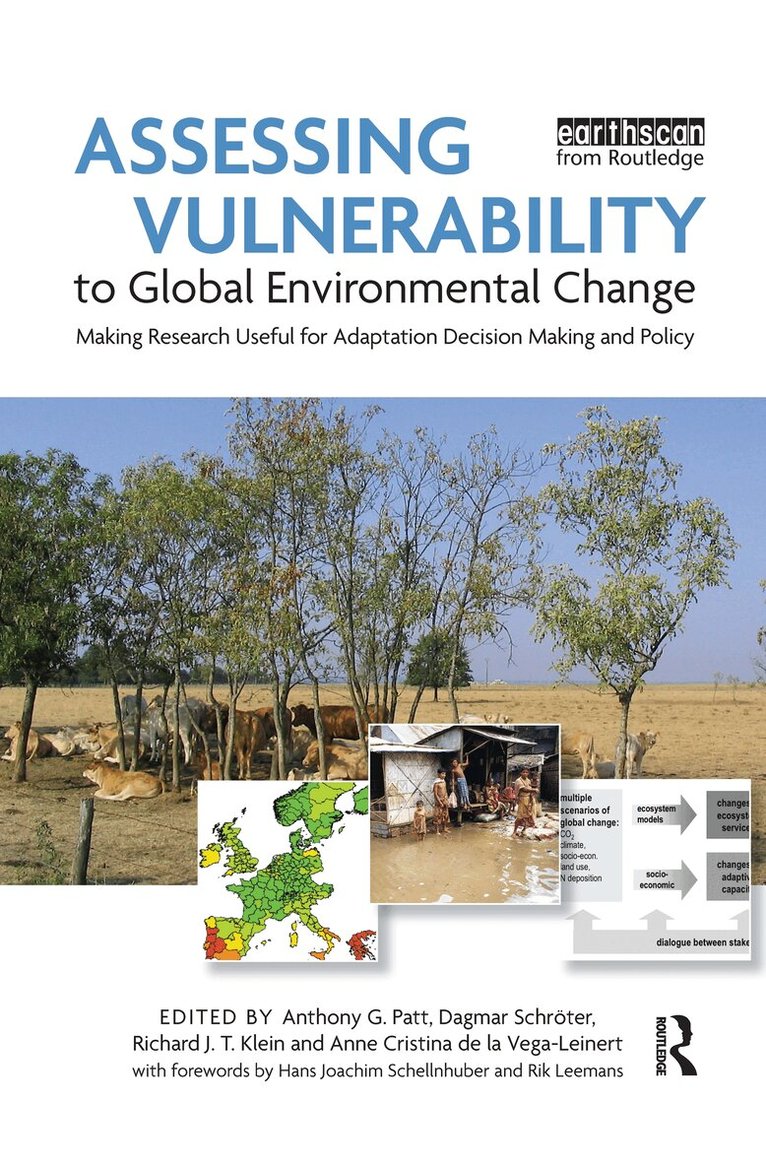
Assessing the vulnerability of human populations to global environmental change, particularly climate change, is now the main imperative of research and international action. However, much of the research into vulnerability is not designed to feed directly into decision making and policy, creating a gap between the knowledge created by researchers and what is required by decision makers. This book seeks to rectify this problem and bridge the gap. It discusses vulnerability as the central theme and brings together many different applications from disaster studies, climate change impact studies and several other fields and provides the most comprehensive synthesis of definitions, theories, formalization and applications to date, illustrated with examples from different disciplines, regions and periods, and from local through to regional, national and international levels.Case study topics cover sea level rise, vulnerability to changes in ecosystem services, assessing the vulnerability of human health and 'double exposure' to climate change and trade liberalization amongst other issues. Research outcomes stress that science-policy dialogues must be transparent to be effective and concentrate on a mutual understanding of the concepts used. A key research finding is that the most useful information for decision makers is that which shows the separate causes and drivers of vulnerability, rather than presenting vulnerability in an aggregated form. The book concludes with a unifying framework for analysing integrated methodologies of vulnerability assessment and guiding how research and policy can be linked to reduce vulnerability.
Häftad, Engelska, 2010
641 kr
Skickas inom 10-15 vardagar
Assessing the vulnerability of human populations to global environmental change, particularly climate change, is now the main imperative of research and international action. However, much of the research into vulnerability is not designed to feed directly into decision making and policy, creating a gap between the knowledge created by researchers and what is required by decision makers. This book seeks to rectify this problem and bridge the gap. It discusses vulnerability as the central theme and brings together many different applications from disaster studies, climate change impact studies and several other fields and provides the most comprehensive synthesis of definitions, theories, formalization and applications to date, illustrated with examples from different disciplines, regions and periods, and from local through to regional, national and international levels.Case study topics cover sea level rise, vulnerability to changes in ecosystem services, assessing the vulnerability of human health and 'double exposure' to climate change and trade liberalization amongst other issues. Research outcomes stress that science-policy dialogues must be transparent to be effective and concentrate on a mutual understanding of the concepts used. A key research finding is that the most useful information for decision makers is that which shows the separate causes and drivers of vulnerability, rather than presenting vulnerability in an aggregated form. The book concludes with a unifying framework for analysing integrated methodologies of vulnerability assessment and guiding how research and policy can be linked to reduce vulnerability.