Hilary Ballon - Böcker
Visar alla böcker från författaren Hilary Ballon. Handla med fri frakt och snabb leverans.
4 produkter
4 produkter
615 kr
Skickas inom 7-10 vardagar
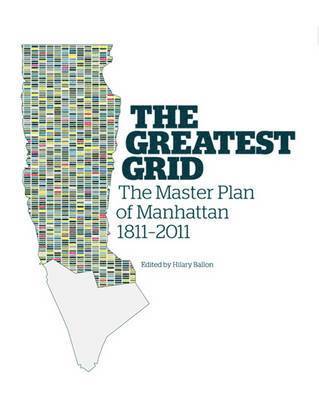
Laying out Manhattan's street grid and providing a rationale for the growth of New York was the city's first great civic enterprise, not to mention a brazenly ambitious project and major milestone in the history of city planning. The grid created the physical conditions for business and society to flourish and embodied the drive and discipline for which the city would come to be known. Published to coincide with an exhibition at the Museum of the City of New York celebrating the bicentennial of the Commissioners' 1811 Plan of Manhattan, this volume does more than memorialize such a visionary effort, it serves as an enduring reference full of rare images and information. The Greatest Grid shares the history of the Commissioners' plan, incorporating archival photos and illustrations, primary documents and testimony, and magnificent maps with essential analysis. The text, written by leading historians of New York City, follows the grid's initial design, implementation, and evolution, and then speaks to its enduring influence.A foldout map, accompanied by explanatory notes, reproduces the Commissioners' original plan, and additional maps and prints chart the city's pre-1811 irregular growth patterns and local precedent for the grid's design. Constituting the first sustained examination of this subject, this text describes the social, political, and intellectual figures who were instrumental in remaking early New York, not in the image of old Europe but as a reflection of other American cities and a distinct New World sensibility. The grid reaffirmed old hierarchies while creating new opportunities for power and advancement, giving rise to the multicultural, highly networked landscape New Yorkers thrive in today.
544 kr
Tillfälligt slut
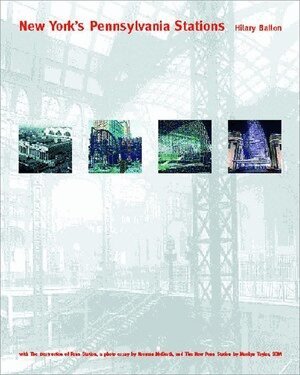
This is a guided tour through the past, present, and future of great civic architecture in New York City. It tells the story of Pennsylvania Station: the original building, its tragic demolition in the 1960s, and the new station designed by Skidmore, Owings & Merrill and now under construction. In stunning photographs by Norman McGrath the hidden structure of Penn Station is revealed along with the burial of the station beneath Madison Square Garden. Richly illustrated essays by Hilary Ballon and Marilyn Taylor, Skidmore, Owings & Merrill celebrated new chair, on the old and new stations illuminate their connections and indicate how public architecture and transportation planning can enhance the way millions of people experience New York City.
490 kr
Tillfälligt slut
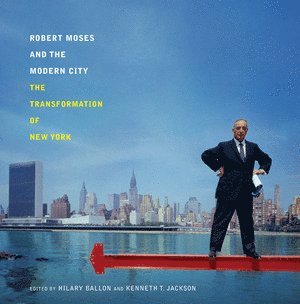
“We are rebuilding New York, not dispersing and abandoning it”: Robert Moses saw himself on a rescue mission to save the city from obsolescence, decentralization, and decline. His vast building program aimed to modernize urban infrastructure, expand the public realm with extensive recreational facilities, remove blight, and make the city more livable for the middle class. This book offers a fresh look at the physical transformation of New York during Moses’s nearly forty-year reign over city building from 1934 to 1968.It is hard to imagine that anyone will ever have the same impact on New York as did Robert Moses. In his various roles in city and state government, he reshaped the fabric of the city, and his legacy continues to touch the lives of all New Yorkers. Revered for most of his life, he is now one of the most controversial figures in the city’s history. Robert Moses and the Modern City is the first major publication devoted to him since Robert Caro’s damning 1974 biography, The Power Broker: Robert Moses and the Fall of New York.In these pages eight short essays by leading scholars of urban history provide a revised perspective; stunning new photographs offer the first visual record of Moses’s far-reaching building program as it stands today; and a comprehensive catalog of his works is illustrated with a wealth of archival records: photographs of buildings, neighborhoods, and landscapes, of parks, pools, and playgrounds, of demolished neighborhoods and replacement housing and urban renewal projects, of bridges and highways; renderings of rejected designs and controversial projects that were defeated; and views of spectacular models that have not been seen since Moses made them for promotional purposes.Robert Moses and the Modern City captures research undertaken in the last three decades and will stimulate a new round of debate.Robert Moses and the Modern City captures research undertaken in the last three decades and will stimulate a new round of debate.
342 kr
Tillfälligt slut
“We are rebuilding New York, not dispersing and abandoning it”: Robert Moses saw himself on a rescue mission to save the city from obsolescence, decentralization, and decline. His vast building program aimed to modernize urban infrastructure, expand the public realm with extensive recreational facilities, remove blight, and make the city more livable for the middle class. This book offers a fresh look at the physical transformation of New York during Moses’s nearly forty-year reign over city building from 1934 to 1968.It is hard to imagine that anyone will ever have the same impact on New York as did Robert Moses. In his various roles in city and state government, he reshaped the fabric of the city, and his legacy continues to touch the lives of all New Yorkers. Revered for most of his life, he is now one of the most controversial figures in the city’s history. Robert Moses and the Modern City is the first major publication devoted to him since Robert Caro’s damning 1974 biography, The Power Broker: Robert Moses and the Fall of New York.In these pages eight short essays by leading scholars of urban history provide a revised perspective; stunning new photographs offer the first visual record of Moses’s far-reaching building program as it stands today; and a comprehensive catalog of his works is illustrated with a wealth of archival records: photographs of buildings, neighborhoods, and landscapes, of parks, pools, and playgrounds, of demolished neighborhoods and replacement housing and urban renewal projects, of bridges and highways; renderings of rejected designs and controversial projects that were defeated; and views of spectacular models that have not been seen since Moses made them for promotional purposes.Robert Moses and the Modern City captures research undertaken in the last three decades and will stimulate a new round of debate.