Hilton Judin - Böcker
Visar alla böcker från författaren Hilton Judin. Handla med fri frakt och snabb leverans.
7 produkter
7 produkter
Architecture, State Modernism and Cultural Nationalism in the Apartheid Capital
Inbunden, Engelska, 2021
2 150 kr
Skickas inom 10-15 vardagar
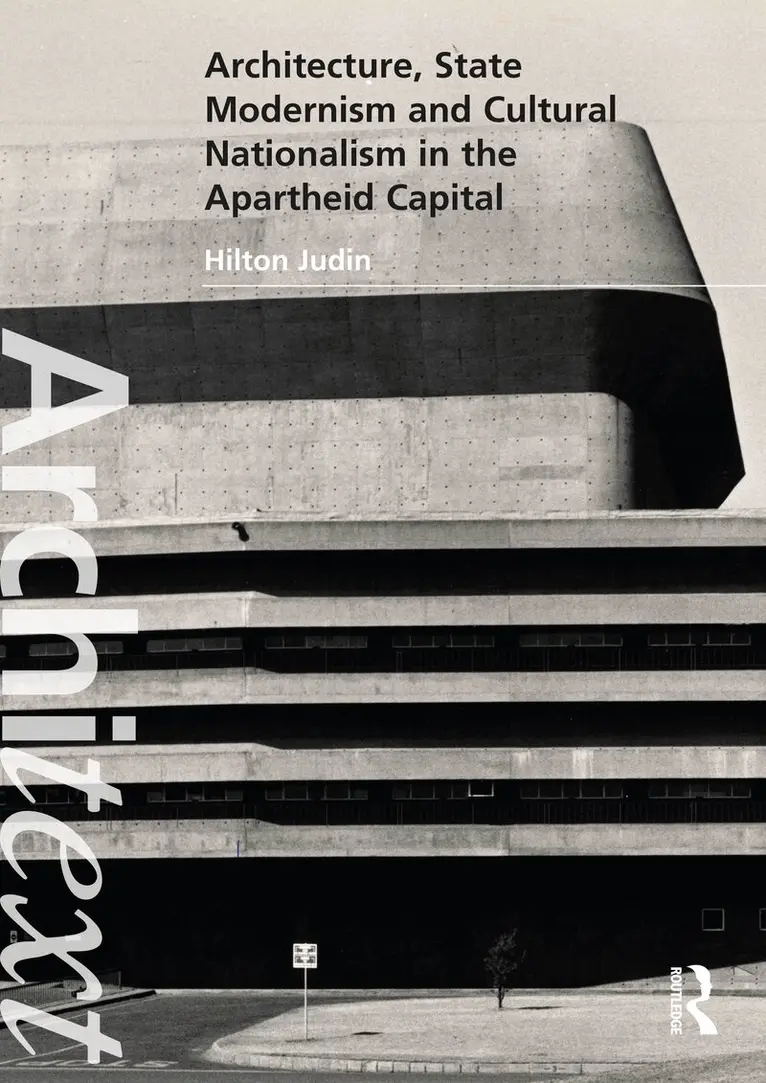
This book is the first comprehensive investigation of the architecture of the apartheid state in the period of rapid economic growth and political repression from 1957 to 1966 when buildings took on an ideological role that was never remote from the increasingly dominant administrative, legislative and policing mechanisms of the regime. It considers how this process reflected the usurpation of a regional modernism and looks to contribute to wider discourses on international postwar modernism in architecture. Buildings in Pretoria that came to embody ambitions of the apartheid state for industrialisation and progress serve as case studies. These were widely acclaimed projects that embodied for apartheid officials the pursuit of modernisation but carried latent apprehensions of Afrikaners about their growing economic prospects and cultural estrangement in Africa. It is a less known and marginal story due to the dearth of material and documents buried in archives and untranslated documents. Many of the documents, drawings and photographs in the book are unpublished and include classified material and photographs from the National Nuclear Research Centre, negatives of 1960s from Pretoria News and documents and pamphlets from Afrikaner Broederbond archives.State architecture became the most iconic public manifestation of an evolving expression of white cultural identity as a new generation of architects in Pretoria took up the challenge of finding form to their prospects and beliefs. It was an opportunistic faith in Afrikaners who urgently needed to entrench their vulnerable and contested position on the African continent. The shift from provincial town to apartheid capital was swift and relentless. Little was left to stand in the way of the ambitions and aim of the state as people were uprooted and forcibly relocated, structures torn down and block upon block of administration towers and slabs erected across Pretoria.This book will be of great interest to students and scholars of architectural history as well as those with an interest in postcolonial studies, political science and social anthropology.
Architecture, State Modernism and Cultural Nationalism in the Apartheid Capital
Häftad, Engelska, 2021
593 kr
Skickas inom 10-15 vardagar
This book is the first comprehensive investigation of the architecture of the apartheid state in the period of rapid economic growth and political repression from 1957 to 1966 when buildings took on an ideological role that was never remote from the increasingly dominant administrative, legislative and policing mechanisms of the regime. It considers how this process reflected the usurpation of a regional modernism and looks to contribute to wider discourses on international postwar modernism in architecture. Buildings in Pretoria that came to embody ambitions of the apartheid state for industrialisation and progress serve as case studies. These were widely acclaimed projects that embodied for apartheid officials the pursuit of modernisation but carried latent apprehensions of Afrikaners about their growing economic prospects and cultural estrangement in Africa. It is a less known and marginal story due to the dearth of material and documents buried in archives and untranslated documents. Many of the documents, drawings and photographs in the book are unpublished and include classified material and photographs from the National Nuclear Research Centre, negatives of 1960s from Pretoria News and documents and pamphlets from Afrikaner Broederbond archives.State architecture became the most iconic public manifestation of an evolving expression of white cultural identity as a new generation of architects in Pretoria took up the challenge of finding form to their prospects and beliefs. It was an opportunistic faith in Afrikaners who urgently needed to entrench their vulnerable and contested position on the African continent. The shift from provincial town to apartheid capital was swift and relentless. Little was left to stand in the way of the ambitions and aim of the state as people were uprooted and forcibly relocated, structures torn down and block upon block of administration towers and slabs erected across Pretoria.This book will be of great interest to students and scholars of architectural history as well as those with an interest in postcolonial studies, political science and social anthropology.
593 kr
Skickas inom 10-15 vardagar
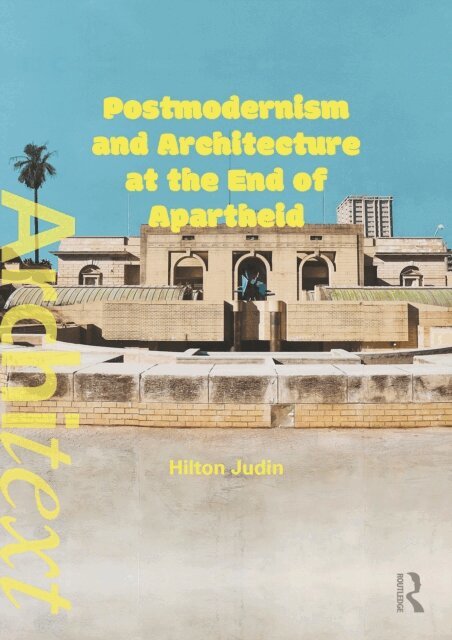
Set against a social and political urban landscape of segregation and forced removals, Postmodernism and Architecture at the End of Apartheid unpacks postmodernism in the 1970s and 1980s as it unfolds in South Africa during the final brutal decade of apartheid. Architecture and apartheid are central subjects of the book – the ways they came to interact simultaneously to both buttress and undermine a country rapidly disintegrating. With battles waged in defence of white minority rule, architects’ turn to postmodernism reflected their disintegrating consciences and commitments in operating in uncertain times.They shared with architects globally a postmodernism steeped in anxiety and despondency, summoning forth classical forms and colonial symbols detached from their surroundings. For some of these architects having studied abroad at the University of Pennsylvania, the route to postmodernism was through their mentor Louis Kahn’s bid to begin architecture anew in transforming ancient ruins as a modern concrete and brick order. For others, influenced by compatriot Denise Scott Brown who had moved to the United States, it was learning by way of her "African view of Las Vegas."Postmodernism and Architecture at the End of Apartheid expands on contemporary discourse in postmodernism and architectural theory, public culture, and urban spatial politics. It examines critical voices of the period – Robert Venturi, Paolo Portoghesi, Colin Rowe, Manfredo Tafuri, Fredric Jameson, and Kenneth Frampton – as well as questions of resistance in different forms and mediums, from the literature of Nadine Gordimer and J.M. Coetzee to grassroots struggle and community participation. Connections between postmodernism and apartheid are uncovered along with the contributions brought by architects in South Africa to a global postmodernism of newly transformed landscapes of neon strips, corporate temples, and white suburban sprawl amidst townships and growing informal settlements.
2 150 kr
Skickas inom 10-15 vardagar
Set against a social and political urban landscape of segregation and forced removals, Postmodernism and Architecture at the End of Apartheid unpacks postmodernism in the 1970s and 1980s as it unfolds in South Africa during the final brutal decade of apartheid. Architecture and apartheid are central subjects of the book – the ways they came to interact simultaneously to both buttress and undermine a country rapidly disintegrating. With battles waged in defence of white minority rule, architects’ turn to postmodernism reflected their disintegrating consciences and commitments in operating in uncertain times.They shared with architects globally a postmodernism steeped in anxiety and despondency, summoning forth classical forms and colonial symbols detached from their surroundings. For some of these architects having studied abroad at the University of Pennsylvania, the route to postmodernism was through their mentor Louis Kahn’s bid to begin architecture anew in transforming ancient ruins as a modern concrete and brick order. For others, influenced by compatriot Denise Scott Brown who had moved to the United States, it was learning by way of her "African view of Las Vegas."Postmodernism and Architecture at the End of Apartheid expands on contemporary discourse in postmodernism and architectural theory, public culture, and urban spatial politics. It examines critical voices of the period – Robert Venturi, Paolo Portoghesi, Colin Rowe, Manfredo Tafuri, Fredric Jameson, and Kenneth Frampton – as well as questions of resistance in different forms and mediums, from the literature of Nadine Gordimer and J.M. Coetzee to grassroots struggle and community participation. Connections between postmodernism and apartheid are uncovered along with the contributions brought by architects in South Africa to a global postmodernism of newly transformed landscapes of neon strips, corporate temples, and white suburban sprawl amidst townships and growing informal settlements.
235 kr
Tillfälligt slut
Since independence, African countries have been confronted with the relics of colonial powers and, in southern Africa, white minority regimes. The lingering spectre of colonial history and architecture’s largely hidden, yet pervasive, racist presence haunts these remains. They are a sobering reminder of the everyday bureaucracy of colonialism and apartheid – and of how this history of subjugation and planning continues to shape life in postcolonial societies under global capitalism. These societies have not necessarily changed the built landscape that they inherited. Cities and colonial infrastructure were taken over, repurposed and adapted for radically new societies that had to overcome racist divisions, oppression and poverty. Yet, it has often been the case that only the most obvious state buildings and oppressive administrative apparatuses of power were identified for destruction or as historic sites, memorials and museums. This leaves the lingering presence of oppressive everyday infrastructures, which often remain ignored and neglected when not easily disposed of. In this book architects and historians examine the ways people are rethinking, repurposing and reusing colonial and apartheid architecture and infrastructure. Sporadic campaigns and ongoing disputes around land, gentrification, repatriation and heritage, where different and often conflicting agendas are brought to the fore, have sharpened public awareness of the physical and environmental reminders of this past. Through the research of engaged practitioners, the book seeks to create and foster dialogue around the historical infrastructure of colonialism and apartheid’s daily oppressions.
Falling Monuments, Reluctant Ruins
The Persistence of the Past in the Architecture of Apartheid
Häftad, Engelska, 2021
373 kr
Skickas inom 7-10 vardagar
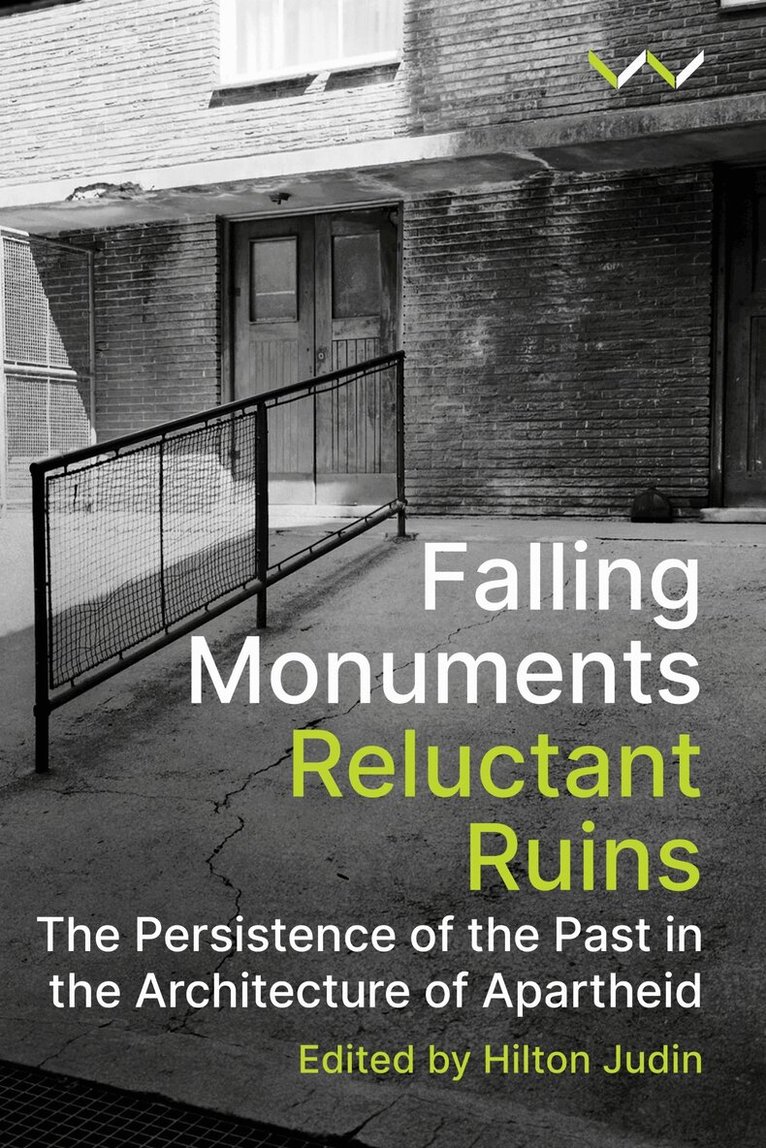
This edited collection looks at ruins and vacant buildings as part of South Africa's oppressive history of colonialism and apartheid and ways in which the past persists into the presentFalling Monuments, Reluctant Ruins: The Persistence of the Past in the Architecture of Apartheid interrogates how, in the era of decolonization, post-apartheid South Africa reckons with its past in order to shape its future. Architects, historians, artists, social anthropologists and urban planners seek answers in this book to complex and unsettling questions around heritage, ruins and remembrance. What do we do with hollow memorials and political architectural remnants? Which should remain, which forgotten, and which dismantled? Are these vacant buildings, cemeteries, statues, and derelict grounds able to serve as inspiration in the fight against enduring racism and social neglect? Should they become exemplary as spaces for restitution and justice? The contributors examine the influence of public memory, planning and activism on such anguished places of oppression, resistance and defiance. Their focus on visible markers in the landscape to interrogate our past will make readers reconsider these spaces, looking at their landscape and history anew.Through a series of 14 empirically grounded chapters and 48 images, the contributors seek to understand how architecture contests or subverts these persistent conditions in order to promote social justice, land reclamation and urban rehabilitation. The decades following the dismantling of apartheid are surveyed in light of contemporary heritage projects, where building ruins and abandoned spaces are challenged and renegotiated across the country to become sites of protest, inspiration and anger.This ground-breaking collection is an important resource for professionals, academics and activists working in South Africa today.
Falling Monuments, Reluctant Ruins
The Persistence of the Past in the Architecture of Apartheid
Inbunden, Engelska, 2021
1 196 kr
Skickas inom 5-8 vardagar
This edited collection looks at ruins and vacant buildings as part of South Africa's oppressive history of colonialism and apartheid and ways in which the past persists into the presentFalling Monuments, Reluctant Ruins: The Persistence of the Past in the Architecture of Apartheid interrogates how, in the era of decolonization, post-apartheid South Africa reckons with its past in order to shape its future. Architects, historians, artists, social anthropologists and urban planners seek answers in this book to complex and unsettling questions around heritage, ruins and remembrance. What do we do with hollow memorials and political architectural remnants? Which should remain, which forgotten, and which dismantled? Are these vacant buildings, cemeteries, statues, and derelict grounds able to serve as inspiration in the fight against enduring racism and social neglect? Should they become exemplary as spaces for restitution and justice? The contributors examine the influence of public memory, planning and activism on such anguished places of oppression, resistance and defiance. Their focus on visible markers in the landscape to interrogate our past will make readers reconsider these spaces, looking at their landscape and history anew.Through a series of 14 empirically grounded chapters and 48 images, the contributors seek to understand how architecture contests or subverts these persistent conditions in order to promote social justice, land reclamation and urban rehabilitation. The decades following the dismantling of apartheid are surveyed in light of contemporary heritage projects, where building ruins and abandoned spaces are challenged and renegotiated across the country to become sites of protest, inspiration and anger.This ground-breaking collection is an important resource for professionals, academics and activists working in South Africa today.