Hinh T. Dinh - Böcker
Visar alla böcker från författaren Hinh T. Dinh. Handla med fri frakt och snabb leverans.
6 produkter
6 produkter
Light Manufacturing in Africa
Targeted Policies to Enhance Private Investment and Create Jobs
Häftad, Engelska, 2012
337 kr
Skickas inom 10-15 vardagar
This book argues that light manufacturing can offer a viable solution for Sub-Saharan Africa’s need for structural transformation and productive job creation, given its potential competitiveness based on low wage costs and an abundance of natural resources that supply raw materials needed for industries. Based on five different analytical tools and data sources, the book examines in detail the binding constraints in each of the subsectors relevant for Sub-Saharan Africa (SSA): apparel, leather goods, metal products, agri-business, and wood products. Ethiopia is used as an example, with Vietnam as a comparator and China as a benchmark, and with insights from Tanzania and Zambia used to draw out lessons more broadly for SSA.The book recommends a program of focused policies to exploit Africa’s latent comparative advantage in a particular group of light manufacturing industries – especially leather goods, garments, and agricultural processing. These industries hold the prospect of initiating rapid, substantial, and potentially self-propelling waves of rising output, employment, productivity, and exports that can push countries like Ethiopia on a path of structural change of the sort recently achieved in both China and Vietnam. The timing for these initiatives is very appropriate as China’s comparative advantage in these areas is diminishing due to steep cost increases associated with rising wages and non-wage labour costs, escalating land prices, and mounting regulatory costs.Five features of this book distinguish it from previous studies. First, the detailed work on light manufacturing at the subsector and product levels in five countries provide in-depth cost comparisons between Asia and Africa that can be used as a framework for future studies. Second, the book uses a wide array of quantitative and qualitative techniques to identify key constraints to enterprises and to evaluate firm performance differences across countries. Third, the findings that firm constraints vary by country, sector, and firm size led to a focused approach to identifying constraints and combining market-based measures and select government intervention to remove them. Fourth, the solution to light manufacturing problems cuts across many sectors: solving the manufacturing inputs problem requires solving specific issues in agriculture, education, and infrastructure. African countries cannot afford to wait until all the problems across sectors are resolved. Fifth, the book draws on experiences and solutions from other developing countries to inform its recommendations.This book will be very valuable to African policy makers, professional economists, and anyone interested in economic development, industrialization, and structural transformation of developing countries.
392 kr
Skickas inom 10-15 vardagar
This book presents empirical evidence on manufacturing firm performance in Africa based on the World Bank Enterprise Survey and on a one-time quantitative survey conducted for the World Bank by Oxford University’s Centre for the Study of African Economies. Because of their institutional environment, their labor productivity is low, and their labor costs also tend to be low. Key constraints to firm growth vary by country, by sector, and by firm size. But the binding constraints for most large formal firms in Africa are access to finance and to electricity. The binding constraints for small firms tend to be access to finance and competition from foreign firms. After controlling for differences in firm characteristics, geography, infrastructure, political and institutional factors, business environment, and finance, the authors show that African manufacturing actually has a conditional advantage in productivity and sales growth. Political and institutional factors (especially party monopoly), access to finance, and the nature of the business environment are key to explaining the disadvantage of African countries in firm performance relative to countries at similar levels of income in which firms perform better. The results of the new Oxford survey, which covers both formal and informal firms, shed light on manufacturing firm performance in Africa in relation to that in Asian countries such as China. The survey results suggest that, whatever the reasons for China’s success relative to Africa, it is unlikely to be less regulation. Indeed, China seems to have more stringent registration requirements and labor laws. It is also unlikely to be corruption, lower labor or land costs, or social networks: Chinese firms report fewer links with banks and politicians and fewer business friends. There also are no strong differences across the countries in the rate at which individual firms innovate and invest. The dimensions along which Chinese firms are at an advantage appear to be finance, competition, information about innovations, and educational attainment. Asian workers and entrepreneurs have more schooling. Nonetheless, education is not a good predictor of how quickly production workers can become fully active in firm operations.
Tales from the Development Frontier
How China and Other Countries Harness Light Manufacturing to Create Jobs and Prosperity
Häftad, Engelska, 2013
447 kr
Skickas inom 10-15 vardagar
Despite widespread agreement among economists that labour-intensive manufacturing has contributed mightily to rapid development in China and other fast-growing economies, most developing countries have had little success in raising the share of manufacturing in production, employment, or exports. Tales from the Development Frontier recounts efforts to establish light manufacturing clusters in several Asian and African countries, looking in particular at China. A companion volume to Light Manufacturing in Africa—which laid out a strategy for injecting new industrial growth nodes into African economies—Tales from the Development Frontier focuses on the six main binding constraints to competitiveness that nascent light manufacturing industries must overcome in developing countries: the availability, cost, and quality of inputs; access to industrial land; access to finance; trade logistics; entrepreneurial capabilities, both technical and managerial; and worker skills. The volume systematically explores potential growth opportunities in light manufacturing in a carefully selected subset of industries: agribusiness, apparel, leather goods, wood-working, and metal products. It specifies the constraints that need to be addressed before local and international entrepreneurs can take advantage of the latent comparative advantage available to many low-income economies in the target industries. It also proposes policies to ease the constraints—policies that can open the door to rapid increases in industrial output, employment, productivity, and exports. The outcomes described in this volume include both inspiring successes and miserable failures in addressing the binding constraints in the identified sectors. These examples reveal how and why industrial development efforts in poor countries—where, by definition, underlying conditions are far from ideal—can accelerate growth. Most of the firms described in a series of case studies started from a very simple and modest base in an environment full of seemingly insurmountable obstacles. With its rich array of new material, this book will support the ongoing research of policy analysts focused on China and other developing countries. Above all, the volume aims to embolden business entrepreneurs and government officials in low-income countries to pursue newly emerging opportunities to expand and accelerate the growth of light manufacturing in their home economies.
Light Manufacturing in Tanzania
A Reform Agenda for Job Creation and Prosperity
Häftad, Engelska, 2013
227 kr
Skickas inom 10-15 vardagar
Light Manufacturing in Tanzania argues that for Tanzania to remain one of the fastest growing economies in Sub-Saharan Africa, it has to make progress in the structural transformation that can lift workers from low-productivity agriculture and the informal sector to higher productivity activities. Manufacturing, which has been the main vehicle throughout the world to achieve this transformation, has remained stunted in Tanzania. Using new evidence, the book shows that feasible, low-cost, sharply focused policy initiatives aimed at enhancing private investment could launch Tanzania on a path to competitive light manufacturing. These initiatives would complement progress on broader investment reforms by increasing the share of industry in regional output and raising the market share of domestically produced goods in rapidly growing local markets for light manufactures. And, as local producers increase their scale, improve quality, and gain experience with technology, management, and marketing, they can take advantage of emerging export opportunities. In Tanzania, as in East Asia, policies that encourage foreign direct investment can speed industrial development and the expansion of exports. The impact of isolated successes can be multiplied. The strategies proposed here can launch a process that would create millions of productive jobs.Light Manufacturing in Tanzania has several innovative features. First, it provides in-depth cost comparisons between Tanzania and four other countries in Asia and Africa at the sector and product levels. Second, the book uses a wide array of quantitative and qualitative techniques to identify key constraints to enterprises and to evaluate differences in the performance of firms across countries. Third, it uses a focused approach to identify country- and industry-specific constraints. Fourth, it highlights the interconnectedness of constraints and solutions. For example, solving the manufacturing input problem requires actions in agriculture, education, and infrastructure. Detailed cross-country analysis was carried out in four subsectors in Tanzania: textiles and apparel, leather products, wood products, and agroprocessing. Based on this analysis, the book suggests directing government policies toward removing constraints in a few of the most promising light manufacturing sectors using practical and innovative solutions inspired by the fast-growing Asian economies the starting point of which 20 years ago was not so different from Tanzania's today. This book will be valuable to African policy makers, professional economists, and anyone interested in economic development, industrialization, and the structural transformation of developing countries.
Light Manufacturing in Vietnam
Creating Jobs and Prosperity in a Middle-Income Economy
Häftad, Engelska, 2014
227 kr
Skickas inom 10-15 vardagar
Light Manufacturing in Vietnam makes the case that, if the country is to continue along a rapid economic growth path and create jobs, it must undertake a structural transformation that can lift workers from low-productivity agriculture and the mere assembly of imported inputs to higher-productivity activities. Vietnam needs to address fundamental issues in the manufacturing sector that, until now, have been masked by economic growth. The book shows that there is a dichotomy between domestic enterprises and enterprises supported by foreign direct investment. The dominant state-owned enterprises and foreign-invested firms are often not integrated with smaller, domestic firms through backward or forward links in the use of domestically produced inputs or intermediate products. Growth in the domestic light manufacturing sector has arisen from the sheer number of micro and small enterprises rather than from expansion in the number of medium and large firms. As a consequence, final products have little value added; technology and expertise are not shared; and the economy has failed to move up the structural transformation ladder. This structure of production is one of the reasons Vietnam's rapid process of industrialisation over the last three decades has not been accompanied by a favourable trade balance. Policy measures to address problems in competitiveness in Vietnam must confront the dual structure of the light manufacturing sector, while raising the value added in the industry. To that end, measures must be taken to nurture the expansion of small domestic firms, while helping these firms to achieve greater productivity through trade integration. This will require improvements in labour skills and technology and in the quality and variety of products able to compete with imports.
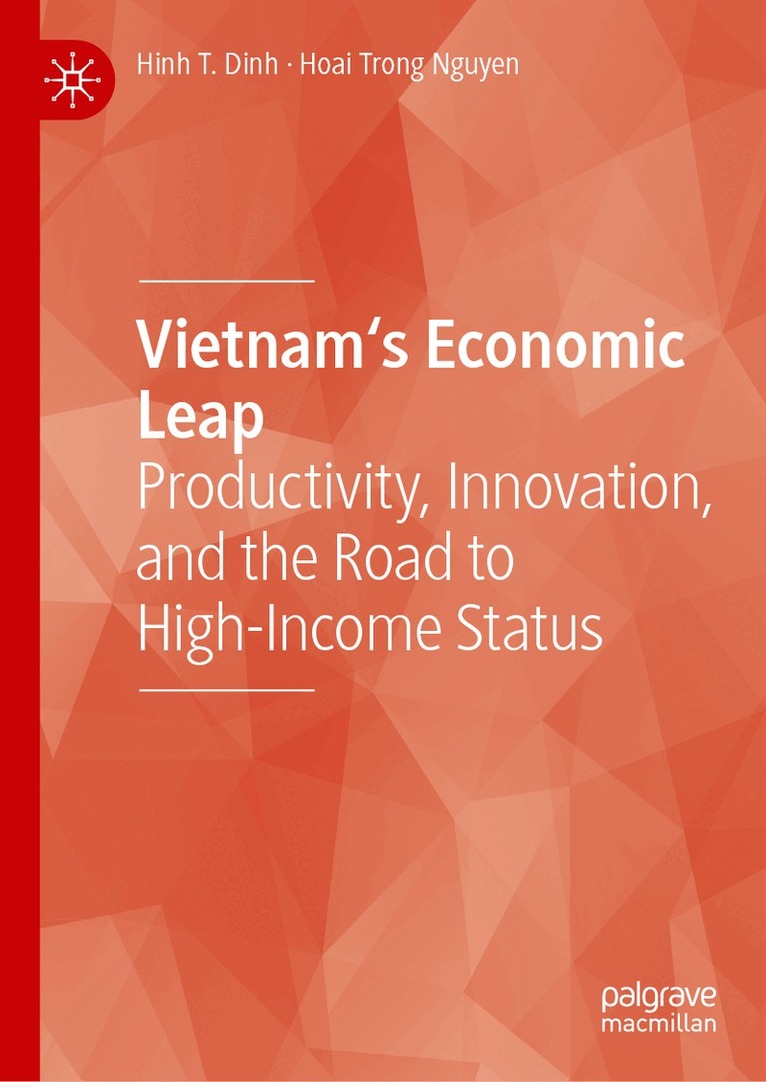
Vietnam's Economic Leap
Productivity, Innovation, and the Road to High-Income Status
Inbunden, Engelska, 2025
1 204 kr
Skickas inom 10-15 vardagar
This book presents a groundbreaking roadmap for one of the world’s most dynamic economies at a historic crossroads: Vietnam. It traces the country’s remarkable transformation since the Doi Moi reforms—lifting millions out of poverty and sustaining rapid growth—while confronting the central question: how can Vietnam escape the middle-income trap?Drawing on rigorous analysis and international experience, the authors reveal the structural weaknesses of an FDI-led growth model, highlight the urgent need for productivity gains, and emphasize the pivotal role of domestic enterprise development, human capital, and innovation. They outline a comprehensive strategy that combines industrial upgrading, digital transformation, education reform, labor market dynamism, and effective management of demographic transitions.Essential reading for policymakers, scholars, investors, and development practitioners, this volume offers timely insights into Vietnam’s economics development and its bold ambition to achieve high-income status by 2045.