
Horace Randall Williams – författare
Visar alla böcker från författaren . Handla med fri frakt och snabb leverans.
6 produkter
6 produkter
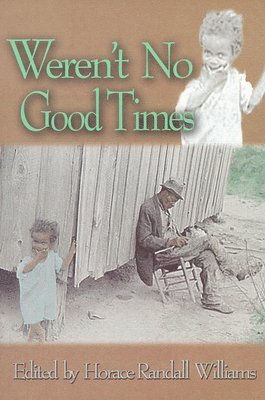
Häftad, Engelska, 2004
242 kr
Skickas inom 3-6 vardagar
From 1936 to 1938, the Federal Writers’ Project (FWP), a part of the New Deal’s Works Progress Administration, hired writers, editors, and researchers to interview as many former slaves as they could find and document their lives during slavery. More than 2,000 former slaves in 17 states were interviewed. With Weren’t No Good Times, John F. Blair, Publisher, continues its Real Voices, Real History™ series with selections from 46 of the 125 interviews now archived in the Library of Congress that were earmarked as interviews with Alabama slaves. Also included is an excerpt from Thirty Years a Slave: From Bondage to Freedom, a memoir written by Louis Hughes. This selection reveals a different aspect of the Alabama slavery experience, because Hughes was hired out by his master to work at the Confederate salt works during the Civil War. Alabama was a frontier state and from the beginning, its economy was built on cotton and slavery. That its laws were fashioned to accommodate both becomes obvious when related through the experiences of Alabama’s slaves. A year after it obtained statehood, Alabama had a slave population of 41,879, as compared to 85,451 whites and 571 free blacks. By 1860, the slave population had swelled to 435,080, while there were 536,271 whites and 2,690 free blacks. When emancipation came to the slaves, Alabama’s slave owners lost an estimated $200 million of capital. These narratives will help readers understand slavery by hearing the voices of the people who lived it.Horace Randall Williams describes himself as “among the last of Alabamians - black or white - who have memories of picking cotton by hand not for a few minutes to see how it felt but because I needed the few dollars I would get for a day’s hard labor under a hot sun,” an experience he says helped him recognize the cadences and dialect in the slave narratives. An Alabama native, he has researched and written extensively about civil rights, segregation, and slavery during three decades as a reporter, writer, editor, and publisher of newspapers, magazines, and books. He was the founder and, for many years, the director of the Southern Poverty Law Center’s Klanwatch Project. He is the co-founder and editor-in-chief of NewSouth Books in Montgomery, Alabama. He recently authored 100 Things You Need to Know about Alabama."For a century and a half, these stories and the truths they disclose have been hidden from view. They are far too important to stay neglected and ignored. Williams has resurrected the last generation of America’s slaves and allowed them to speak in their own voices." - Elizabeth Breau Foreword Review
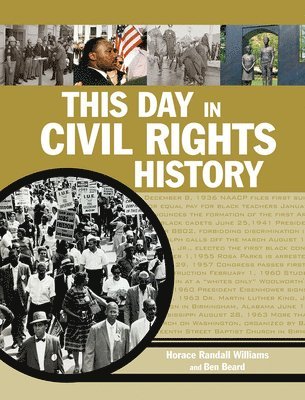
Häftad, Engelska, 2009
270 kr
Skickas inom 3-6 vardagar
A unique catalog of historic civil rights events, This Day in Civil Rights History details the struggles, sacrifices, and triumphs on the road to equal rights for all U.S. citizens. From the Quakers’ 17th-century antislavery resolution to slave uprisings during the Civil War, to the infamous Orangeburg Massacre in 1968, and beyond, authors Horace Randall Williams and Ben Beard present a vivid collection of 366 events—one for every day of the year plus Leap Day—chronicling African Americans’ battle for human dignity and self-determination.Every day of the year has witnessed significant events in the struggle for civil rights. This Day in Civil Rights History is an illuminating collection of these cultural turning points.
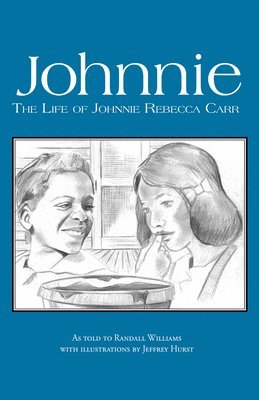
Häftad, Engelska, 2009
186 kr
Skickas inom 3-6 vardagar
The personal account of the triumph of a Southern black woman Mrs. Johnnie Carr, who overcame poverty, limited education, and racism to become a wife, mother, and civic leader. Johnnie also reveals the civil rights movement in Montgomery, Alabama. A childhood friend of Rosa Parks, as an adult she inspired Mrs. Parks to join the NAACP. Since 1968, Mrs. Carr has been president of the group which organized the Montgomery Bus Boycott. Her connection to Parks, Martin Luther King, Jr., and E.D. Nixon gives her a unique opportunity to offer insights and observations.
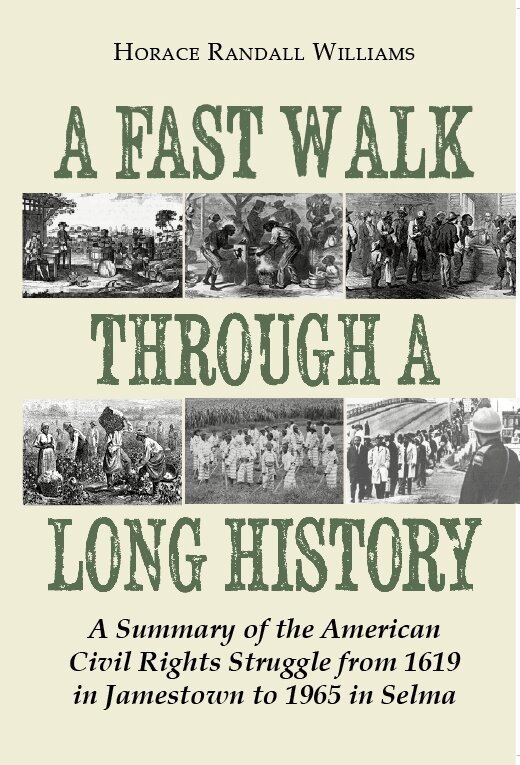
Häftad, Engelska, 2018
154 kr
Skickas inom 3-6 vardagar
A Fast Walk Through a Long History is a brisk but richly informative retelling of our civil rights history, originally prepared for inclusion in History Refused to Die: The Enduring Legacy of the African American Art of Alabama (Tinwood Books, 2015). In just 8,000 words, the essay presents a powerful telescopic view of the legacies of slavery and segregation, which the author traces back to back to the arrival of the first enslaved Africans in Jamestown, Virginia, in 1619. These first African Americans—literally—may have had status somewhat similar to European indentured servants already in the colonies, but soon the Africans’ skin color and the greed for cheap labor would consign them and their descendants to chattel slavery until the end of the Civil War. Post-war Reconstruction brought a brief moment of hope for equality, but these hopes were dashed by white supremacist terrorism abetted by politics and economics. Then followed a century of Jim Crow segregation, which was finally overcome—legally at least—in the 1950s and 1960s. The victories of civil rights and voting rights were the result of decades of black-led organizing, resistance, legal actions, and activism in communities across the nation but especially in the Deep South states. Alabama was at the center of this movement from 1955 to 1975. No brief essay can provide a comprehensive understanding of the African American freedom struggle, but A Fast Walk Through a Long History offers its readers a helpful perspective on the interconnectedness of the signal events, which continue to shape our national identity even today.
Häftad, Engelska, 2025
101 kr
Skickas inom 5-8 vardagar
Häftad, Engelska, 2006
116 kr
Tillfälligt slut
“One day, I went to the slave market and watched em barter off po’ niggers lak tey was hogs,” said George Lycurgas, as recalled by his son, Edward. “Whole families sold together, and some was split—mother gone to one marster and father and children gone to others. They’d bring a slave out on the platform and open his mouth, pound his chest, make him harden his muscles so the buyer could see what he was gittin’.” The ex-slaves in No Man’s Yoke on My Shoulders speak of a Florida that no longer exists and can barely be imagined today. Now the fourth most populous state in the country, Florida has more than 100 times the people it did in 1860, just before the Civil War. And it was only 40 years removed from Spanish rule. In the 1930s, the Federal Writers’ Project dispatched interviewers to record the recollections of former slaves, many in their 80s or 90s. Only one percent of the 2,000-plus transcripts collected in the Library of Congress told the stories of people who had experienced bondage in Florida. That makes the narratives of former Florida slaves in this volume doubly precious. Readers will get a glimpse into the lives of these rare survivors as they told their stories at the height of the Great Depression, a time many found little better than the slave days.Horace Randall Williams describes himself as “among the last of Alabamians—black or white—who have memories of picking cotton by hand not for a few minutes to see how it felt but because I needed the few dollars I would get for a day’s hard labor under a hot sun.” He was the founder and for many years the director of the Southern Poverty Law Center’s Klanwatch Project. He also edited Weren’t No Good Times: Personal Accounts of Slavery in Alabama.