Karen Wilkin – författare
Visar alla böcker från författaren Karen Wilkin. Handla med fri frakt och snabb leverans.
9 produkter
9 produkter
957 kr
Tillfälligt slut
410 kr
Tillfälligt slut
Hans Hofmann (1880–1966) was an acclaimed Abstract Expressionist and one of the most influential art teachers of the 20th century. While his paintings have been the subject of many exhibitions and publications, his works on paper are comparatively little known, despite how central they were to his artistic practice and to the evolution of his style and technique. This is the first full-length book devoted to Hofmann’s works on paper, presenting a valuable new perspective from which to appreciate the achievements of this giant of postwar art. More than fifty examples from across his long career and from many genres—including self-portraits, figural studies, interiors, landscapes, and abstractions—are all attractively illustrated in color. In addition, works in different stages of finish, from rough sketches to polished pieces, offer an intimate glimpse into Hofmann’s methods and creative process. Distributed for MOCA JacksonvilleExhibition Schedule:Museum of Contemporary Art, Jacksonville, FL(01/28/17–05/14/17)Portland Museum of Art, Portland, ME(06/16/17–09/10/17)
History Refused to Die: The Enduring Legacy of African American Art in Alabama
Inbunden, Engelska, 2015
476 kr
Skickas inom 3-6 vardagar
193 kr
Skickas
432 kr
Tillfälligt slut
A celebration of a brilliant young artist's tragically short career, this revealing look at Bruno Fonseca's life, unorthodox training, and startlingly diverse paintings, drawings, and sculpture not only casts light on his own impressive work but also offers unusually acute insight into the creative process. The son of a sculptor and a painter mother, Bruno Fonseca grew up in an art-filled Manhattan household and started creating his own art in early childhood. By the age of 18, he had started a rigorous course of study with Augusto Torres in Manhattan, where he maintained a studio until his death at age 36 in 1994. Alan Jenkins's perceptive musings about the young artist's accomplishments capture Bruno's quirky charm and summon up the complexity of his relationships with family, friends, and the history of art. Karen Wilkin investigates Fonseca's throwback approach to the study of art, based on painstakingly learned ways of seeing and creating that relate more to the 19th-century Academy than to today's conceptualizing, career-chasing art schools.Isabel Fonseca's deeply touching memoir of her brother's childhood and last days brings to life his irresistible spirit and quicksilver intelligence.
825 kr
Tillfälligt slut
393 kr
Tillfälligt slut
This work on Georges Braque depicts the man and the artist, drawing out the contrasts they throw up. The man was cheerful, good looking, an amateur boxer and a player of Beethoven; the artist was serious and meticulous, whether as a Fauvist, Cubist (with Picasso) or in his own style.
409 kr
Skickas inom 5-8 vardagar
This publication accompanies the Figuration Never Died: New York Painterly Painting, 1950-1970 exhibition at the Brattleboro Museum & Art Center. By about 1950, forward-looking New York painting was seen as synonymous with abstraction- especially charged, gestural Abstract Expressionism. But there was also a strong group of dissenters; artists, all born in the 1920s and many of them students of Hans Hofmann, who never lost their enthusiasm for the seductive qualities of thick, malleable oil paint. They remained, for the most part, 'painterly' painters. These rebellious artists include Lois Dodd, Jane Freilicher, Paul Georges, Grace Hartigan, Wolf Kahn, Alex Katz, Albert Kresch, Robert de Niro Sr., Paul Resika, and Anne Tabachnick. The compelling figurative work they made between about 1950 and 1970, in contrast to the prevailing Abstract Expressionism of the time, constitutes a significant chapter in the history of recent American Modernism.
591 kr
Skickas
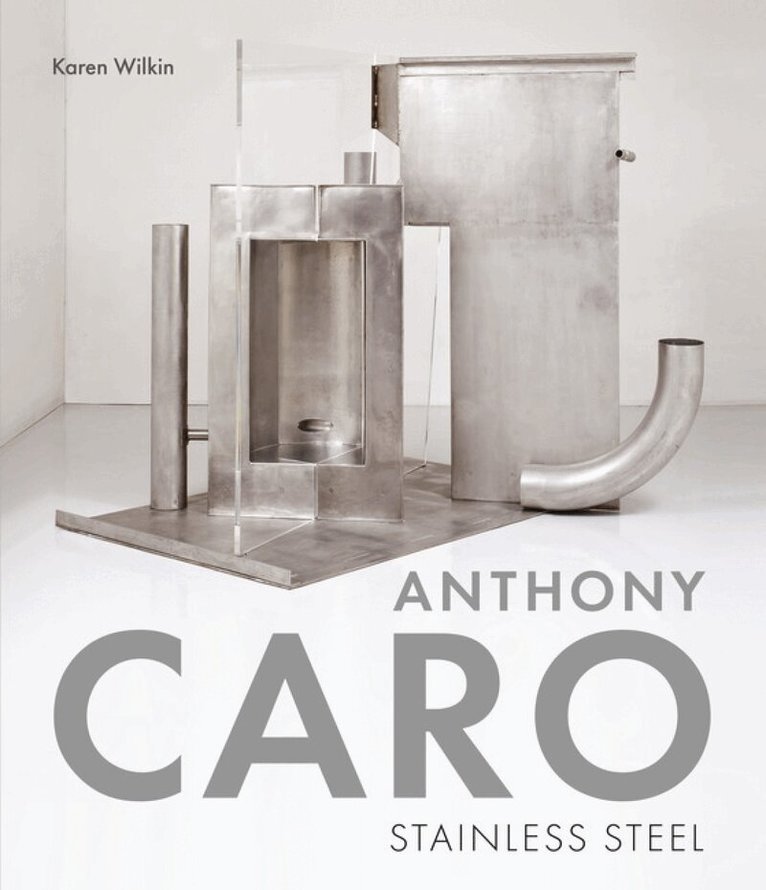
This is the sixth volume in Lund Humphries’ series of monographs on British sculptor Anthony Caro and the first publication to focus on his use of stainless steel as a distinct body of work.Caro employed stainless steel extensively, from intimately scaled TableSculptures to extremely large works, over many decades, and in his mature works, Caro's exploration and interrogation of this material became increasingly important. Karen Wilkin analyses Caro’s use of stainless steel in the context of the development of modernist constructed sculpture, pioneered in the UK by Caro and in the US by David Smith, a friend and admired predecessor, from whom Caro inherited most of the stainless steel he first employed, following Smith's untimely death in 1965. Karen Wilkin's text represents a much-needed overview of Caro's late career and a vital expansion of our understanding of 20th-century and early 21st-century modernist sculpture.