Horst Mewes - Böcker
Visar alla böcker från författaren Horst Mewes. Handla med fri frakt och snabb leverans.
2 produkter
2 produkter
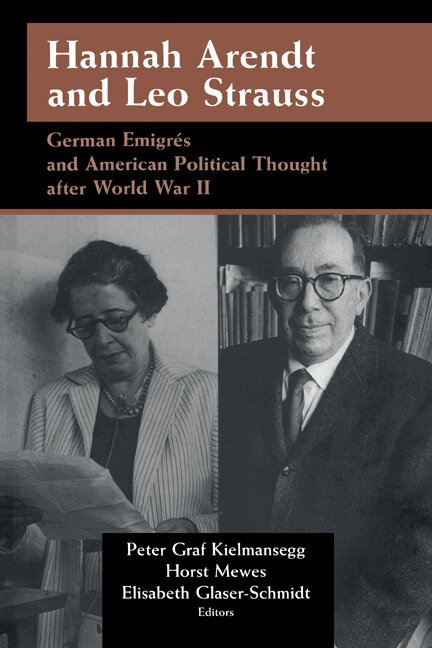
Hannah Arendt and Leo Strauss
German Émigrés and American Political Thought after World War II
Häftad, Engelska, 1997
547 kr
Skickas inom 7-10 vardagar
This volume on Hannah Arendt's and Leo Strauss' impact on American political science after 1933 contains essays presented at an international conference held at the University of Colorado at Boulder in 1991. The book explores the influence that Arendt's and Strauss' experiences of inter-war Germany had on their perception of democracy and their judgment of American liberal democracy. Although they represented different political attitudes, both thinkers interpreted the modern American political system as a response to totalitarianism. The contributors analyse how their émigré experience both influenced their American work and also had an impact on the formation of the discipline of political science in postwar Germany. Arendt's and Strauss' experiences thus aptly illustrate the transfer and transformation of political ideas in the World War II era.
Del 5 - Hannah Arendt-Studien / Hannah Arendt Studies
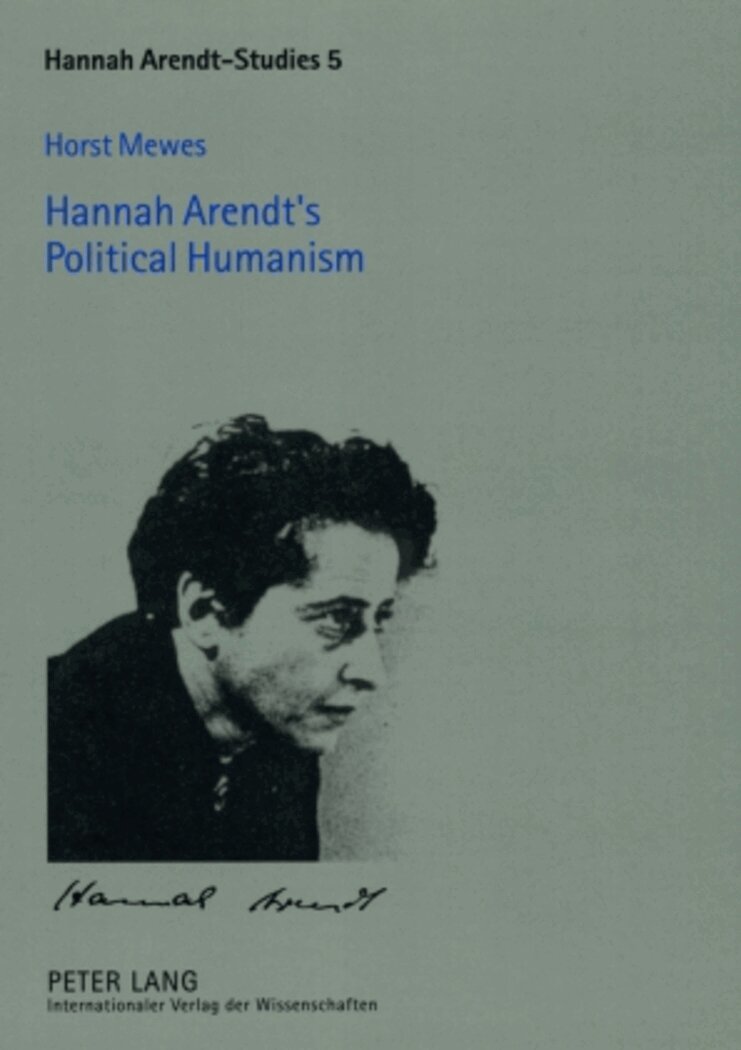
Hannah Arendt’s Political Humanism
Häftad, Engelska, 2009
508 kr
Tillfälligt slut
This introduction to Hannah Arendt’s political thinking, based on a very close reading of the most relevant texts, suggests that her core teaching culminates in a unique kind of political humanism. It consists of the disclosure of unique individual personalities in free public actions inspired by public principles. The full meaning of such principled actions and its actors emerges from an uneasy symbiosis between actors and their casts of judgmental spectators. But it is the free spectators of action who determine its possible meanings. Importantly, only such public meanings save humans from the abyss of meaningless existence. Still, and even though individuals are driven by an urge to public self-presentation, Arendt seems to insist that human freedom ultimately rests on our inability to fully disclose who we are. Perhaps paradoxically, Arendt’s emphasis on a very public humanism links freedom to what remains ineffable about being human. After the destruction wrought by 20th century totalitarianism, Arendt saw important residues of public freedom especially in the modern democratic republic of the United States.