Howell S. Baum - Böcker
Visar alla böcker från författaren Howell S. Baum. Handla med fri frakt och snabb leverans.
7 produkter
7 produkter
1 057 kr
Tillfälligt slut
This book tells why people want to feel like members of work organizations, and why doing so is difficult. Using case examples, it presents a psychoanalytic perspective on organizational entry and the process of entry negotiations for workers which sometimes lasts years. Interview material shows how workers try to use organizations to develop and how entire careers reflect satisfaction or disappointment with initial organizational experiences.Baum presents a useful framework for interpreting organizational behavior in terms of workers' efforts to develop. He shows how developmental expectations must be met before workers can identify with organizational goals or feel close to colleagues, and how worker motivation is possible only in organizations that meet individuals' growth needs.
402 kr
Tillfälligt slut
Analyzes the future of urban communities and presents models for community planning, taking into account different classes, ethnicities, and cultures.The Organization of Hope tells the stories of a Jewish community and a white ethnic community as they plan for their futures. Though they differ in class, ethnicity, and culture, they struggle with the same questions: What identity will hold their communities together? How can they plan for their communities' economic, social, and spiritual survival? The book analyzes the future of urban communities, and presents models for community planning.
1 027 kr
Tillfälligt slut
Presents an innovative community approach to educational improvement.Community Action for School Reform tells the story of a partnership between Baltimore community activists and a university as they created an organization to improve neighborhood schools. The book examines the challenges they faced, such as persuading community members that they had the necessary knowledge to do something about the schools, starting and sustaining an organization, conducting and using research, engaging the school system, and funding their work.
391 kr
Tillfälligt slut
Presents an innovative community approach to educational improvement.Community Action for School Reform tells the story of a partnership between Baltimore community activists and a university as they created an organization to improve neighborhood schools. The book examines the challenges they faced, such as persuading community members that they had the necessary knowledge to do something about the schools, starting and sustaining an organization, conducting and using research, engaging the school system, and funding their work.
1 475 kr
Skickas inom 10-15 vardagar
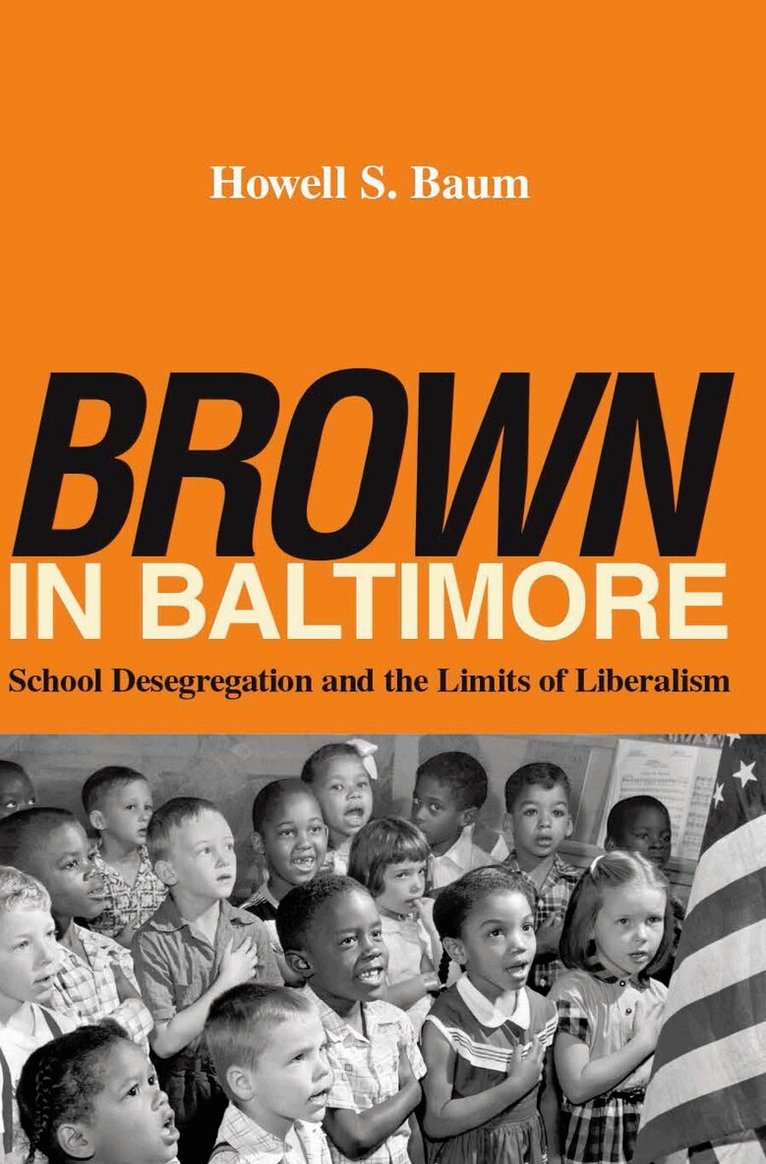
In the first book to present the history of Baltimore school desegregation, Howell S. Baum shows how good intentions got stuck on what Gunnar Myrdal called the "American Dilemma." Immediately after the 1954 Brown v. Board of Education decision, the city's liberal school board voted to desegregate and adopted a free choice policy that made integration voluntary. Baltimore's school desegregation proceeded peacefully, without the resistance or violence that occurred elsewhere. However, few whites chose to attend school with blacks, and after a few years of modest desegregation, schools resegregated and became increasingly segregated. The school board never changed its policy. Black leaders had urged the board to adopt free choice and, despite the limited desegregation, continued to support the policy and never sued the board to do anything else. Baum finds that American liberalism is the key to explaining how this happened. Myrdal observed that many whites believed in equality in the abstract but considered blacks inferior and treated them unequally. School officials were classical liberals who saw the world in terms of individuals, not races. They adopted a desegregation policy that explicitly ignored students' race and asserted that all students were equal in freedom to choose schools, while their policy let whites who disliked blacks avoid integration. School officials' liberal thinking hindered them from understanding or talking about the city's history of racial segregation, continuing barriers to desegregation, and realistic change strategies. From the classroom to city hall, Baum examines how Baltimore's distinct identity as a border city between North and South shaped local conversations about the national conflict over race and equality. The city's history of wrestling with the legacy of Brown reveals Americans' preferred way of dealing with racial issues: not talking about race. This avoidance, Baum concludes, allows segregation to continue.
409 kr
Skickas inom 10-15 vardagar
In the first book to present the history of Baltimore school desegregation, Howell S. Baum shows how good intentions got stuck on what Gunnar Myrdal called the "American Dilemma." Immediately after the 1954 Brown v. Board of Education decision, the city's liberal school board voted to desegregate and adopted a free choice policy that made integration voluntary. Baltimore's school desegregation proceeded peacefully, without the resistance or violence that occurred elsewhere. However, few whites chose to attend school with blacks, and after a few years of modest desegregation, schools resegregated and became increasingly segregated. The school board never changed its policy. Black leaders had urged the board to adopt free choice and, despite the limited desegregation, continued to support the policy and never sued the board to do anything else. Baum finds that American liberalism is the key to explaining how this happened. Myrdal observed that many whites believed in equality in the abstract but considered blacks inferior and treated them unequally. School officials were classical liberals who saw the world in terms of individuals, not races. They adopted a desegregation policy that explicitly ignored students' race and asserted that all students were equal in freedom to choose schools, while their policy let whites who disliked blacks avoid integration. School officials' liberal thinking hindered them from understanding or talking about the city's history of racial segregation, continuing barriers to desegregation, and realistic change strategies. From the classroom to city hall, Baum examines how Baltimore's distinct identity as a border city between North and South shaped local conversations about the national conflict over race and equality. The city's history of wrestling with the legacy of Brown reveals Americans' preferred way of dealing with racial issues: not talking about race. This avoidance, Baum concludes, allows segregation to continue.
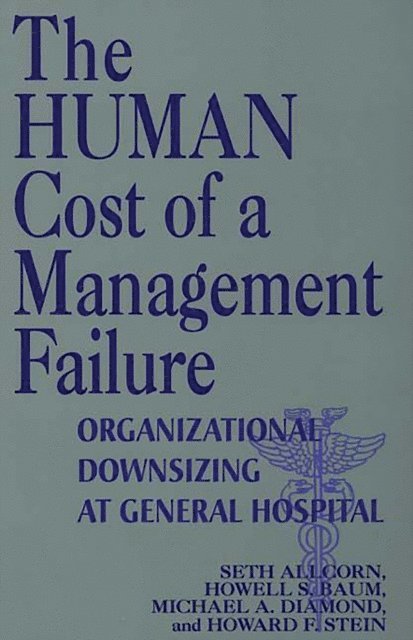
Human Cost of a Management Failure
Organizational Downsizing at General Hospital
Inbunden, Engelska, 1996
1 039 kr
Skickas inom 10-15 vardagar
This book presents a unique, in-depth examination of the effects that the popular approaches to management organizational change—downsizing, restructuring, and reengineering—had on a major American hospital. The Human Cost of a Management Failure shows what can happen when management insists on accomplishing its ends strictly by the numbers. The authors ask why top management so often, and with seemingly such a cavalier attitude, selects downsizing and similar methods when research indicates that they are all too often such poor choices. Based on a year-long longitudinal study, Allcorn, Baum, Diamond, and Stein report on their interviews with 23 senior and mid-level hospital administrators, then interpret their findings from a psychoanalytic perspective, to make clear that the human side of the workplace can only be ignored at great risk when change is contemplated and then implemented. This is essential reading not only for corporate management, but also for other professionals and academics throughout the social and behavioral sciences.Readers of The Human Cost of a Management Failure are oriented to the literature on downsizing, restructuring and reengineering, and to the context of the study. Case material follows, enabling readers to draw their own conclusions with regard to the nature of the organizational change and its effects upon the hospital's employees, and consultants offer their own viewpoints. An update of events at the hospital after the study was conducted is provided along with summaries by each author of his own interpretation and how he interprets the others' views. In this way, readers will get an unusual opportunity to evaluate their own viewpoints against those of the psychoanalytically trained researchers, and to decide for themselves whether there are, in fact, better ways to make an organization economically competitive in the marketplace.