• Fri frakt över 249 kr
  • •
  • Snabba leveranser
  • •
  • Billiga böcker
Kundservice

Du är på sajten för privatpersoner.

Företag, bibliotek eller offentlig verksamhet?

Du handlar på classic.bokus.com, där alla dina funktioner finns intakta.
Till classic.bokus.com
Bokus logotyp. Gå till startsidan.
  • Erbjudanden
  • Nyheter
  • Student
  • Topplistor
  • Barn & ungdom
  • Bokus Play
  • E-böcker
  • Pocketböcker
  • Spel & pussel

10% rabatt på allt med kod: NYSTART10 →

Sidfot

Mina sidor

    Hjälp

    • Kundservice
    • Vanliga frågor och svar
    • Frakt och leverans
    • Retur vid ångerrätt
    • Reklamera vara
    • Betalning
    • Köpvillkor
    • Allmänna villkor
    • Information om webbplatsens tillgänglighet

    Om Bokus

    • Om oss
    • Pressrum
    • För studenter
    • För företag
    • För bibliotek och offentlig verksamhet
    • För leverantörer
    • Hållbarhet

    Populärt

    • Aktuella erbjudanden
    • Presentkort
    • Studentlitteratur
    • Nya böcker
    • Topplistor
    • Signerade böcker
    • Engelska böcker

    Inspiration

    • Boktips
    • BookTok
    • Populära bokserier
    • Barnbokskaraktärer
    • Populära författare
    Logotyp för Bokus
    Följ oss på Facebook (extern länk)Följ oss på Instagram (extern länk)Följ oss på YouTube (extern länk)Följ oss på TikTok (extern länk)
    bokus @ CookiesAnpassa cookiesIntegritetspolicyKöpvillkor
    Till Citymail hemsida (extern länk)Till Budbee hemsida (extern länk)Till Postnord hemsida (extern länk)Till Schenker hemsida (extern länk)Till Early Bird hemsida (extern länk)Till Walleys hemsida (extern länk)
    1. Psykologi och pedagogik
    2. Pedagogik
    3. Utbildningsstrategier och utbildningspolitik

    "Brown" in Baltimore

    School Desegregation and the Limits of Liberalism

    AvHowell S. Baum

    Häftad, Engelska, 2010

    290 kr

    Beställningsvara. Skickas inom 10-15 vardagar. Fri frakt över 249 kr.

    Fler format och utgåvor

    Inbunden

    1 571 kr

    Beskrivning

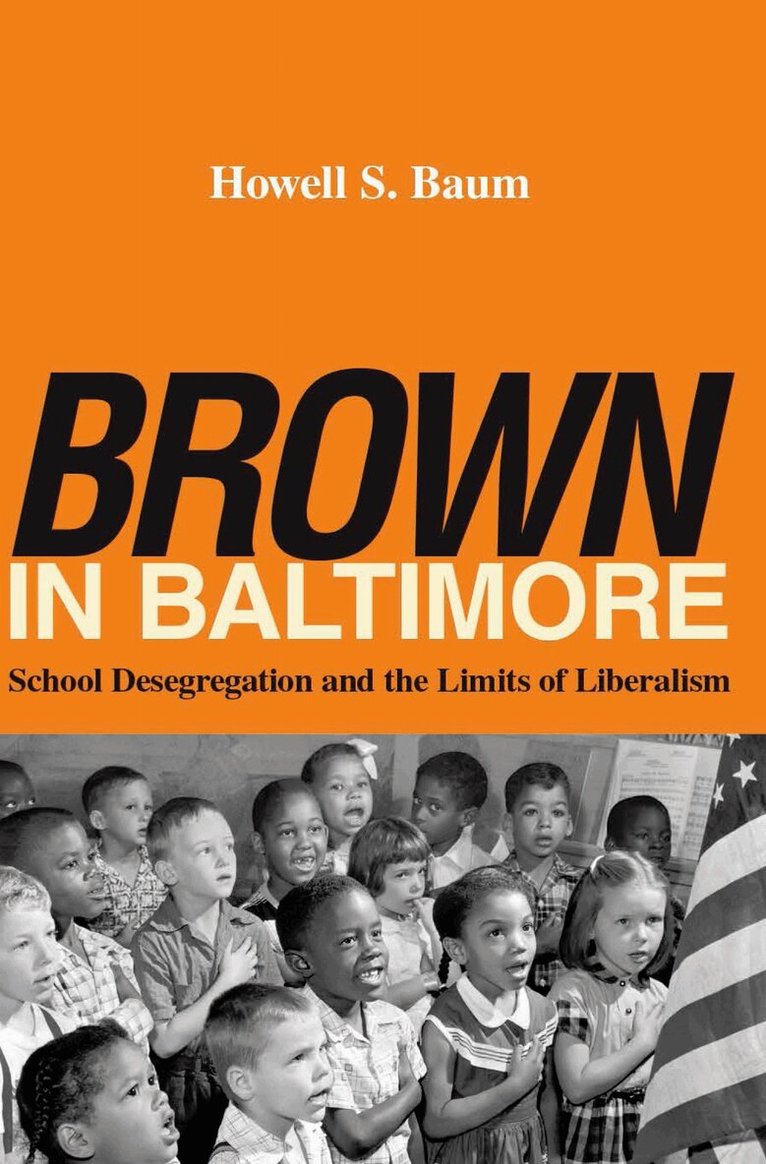
    In the first book to present the history of Baltimore school desegregation, Howell S. Baum shows how good intentions got stuck on what Gunnar Myrdal called the "American Dilemma." Immediately after the 1954 Brown v. Board of Education decision, the city's liberal school board voted to desegregate and adopted a free choice policy that made integration voluntary. Baltimore's school desegregation proceeded peacefully, without the resistance or violence that occurred elsewhere. However, few whites chose to attend school with blacks, and after a few years of modest desegregation, schools resegregated and became increasingly segregated. The school board never changed its policy. Black leaders had urged the board to adopt free choice and, despite the limited desegregation, continued to support the policy and never sued the board to do anything else. Baum finds that American liberalism is the key to explaining how this happened. Myrdal observed that many whites believed in equality in the abstract but considered blacks inferior and treated them unequally. School officials were classical liberals who saw the world in terms of individuals, not races. They adopted a desegregation policy that explicitly ignored students' race and asserted that all students were equal in freedom to choose schools, while their policy let whites who disliked blacks avoid integration. School officials' liberal thinking hindered them from understanding or talking about the city's history of racial segregation, continuing barriers to desegregation, and realistic change strategies. From the classroom to city hall, Baum examines how Baltimore's distinct identity as a border city between North and South shaped local conversations about the national conflict over race and equality. The city's history of wrestling with the legacy of Brown reveals Americans' preferred way of dealing with racial issues: not talking about race. This avoidance, Baum concludes, allows segregation to continue.

    Produktinformation

    • Utgivningsdatum:2010-05-15
    • Mått:155 x 235 x 18 mm
    • Vikt:454 g
    • Format:Häftad
    • Språk:Engelska
    • Antal sidor:296
    • Förlag:Cornell University Press
    • ISBN:9780801476525
    • Utmärkelser:Honorable Mention, 2011 Paul Davidoff Book Award (

    Utforska kategorier

    • Utbildningsstrategier och utbildningspolitik inom Psykologi och pedagogik

    Mer om författaren

    Howell S. Baum is Professor of Urban Studies and Planning at the University of Maryland. He is the author most recently of Community Action for School Reform and The Organization of Hope: Communities Planning Themselves.

    Recensioner i media

    Baum captures as no other historian has Baltimore city leaders' abiding faith in the power of liberalism to promote civic equality.... Their 'raceless attack on segregation,' Baum argues, was doomed to failure.... His book successfully indicts liberalism on its own terms, laying bare the devastating if unintended consequences of free-choice public schooling.- Robert S. Wolff (Journal of American History) Baum's excellent book populates an account about broad social forces with portraits of very human individuals, most well intentioned, many heroic, all making concrete decisions based on partial information.... Baum portrays the real roots of Baltimore's failures as running deeper and developing earlier than the anger over the post-assassination riots. The city's decline into helplessness in coping with race was not a hairpin turn but a slow-moving glacier, more or less predestined by political culture, ideology, and habits that Baum wraps up into the concept of liberalism. Liberalism, as he conceives it, buttressed the city's allegiance to individualism, freedom, and choice: all values that helped to support a readiness to toss aside formal segregation, but which created blind spots about more systemic forms of racial privilege, clashed with proposals to use government power to authoritatively intervene in pursuit of integration, and made it easy for the leaders to misguage political reactions rooted in collective identities, hopes, and resentments tied to race. Above all else, Baltimore was unwilling—possibly unable—to talk about race.- Jeffrey R. Henig (City & Community) Howell S. Baum's Brown in Baltimore provides a history of school segregation in Baltimore from the Civil War through the landmark Brown v. Board of Education decision that ended de jure segregation, to the early 1980s when desegregating the City of Baltimore was deemed a lost cause. In remarkable detail, Baum recounts Baltimore's consistent pursuit of liberal ideals that placed individual freedoms high above racial equality. What resulted was a failed desegregation effort. Baum's attention to context is the most impressive aspect of Brown in Baltimore. He places this story of education policymaking in Baltimore's political, geographic, and social settings to explain why these events unfolded as they did. Readers of Brown in Baltimore will learn a great deal about modern American history, urban society, city government, and education policy. As such, the text is well suited for upper-level undergraduate and graduate courses on these subjects. Additionally, it will be of great benefit to anyone working to understand the current struggles in American urban education, as the book tells the story of one of many failed educational reforms that preceded current efforts. Surely, Baum's history of school segregation in Baltimore contributes a great deal to our understanding of why efforts to desegregate have failed and, in turn, why desegregation has done little to reform American education.(Journal of Urban Affairs) The usual story emphasizes the influence of demographic change, federal urban policy, venal blockbusters, deindustrialization, and the politics of race and class. In his powerful account of the abject failure of desegregation in the schools of Baltimore, Howell S. Baum, professor of Urban Studies and Planning at the University of Maryland, does not deny the importance of any of these factors. His history includes all of them. But he digs deeper. Underlying the usual culprits, Baum finds American liberalism with its fixation on individual freedom and preference for markets over governments.... Baum's account rests on a thorough canvas of primary sources, including valuable interviews with key participants in the events.... Baum's book joins exceptional scholarship with keen political insight and a moral sensibility which never loses track of what is at stake.(Journal of Social History)

    Innehållsförteckning

    • Preface and AcknowledgmentsIntroduction: Liberalism, Race, and the American Dilemma1. An American Border City2. A Long Black Campaign for Equality3. Opening the Racial Door Slightly4. Desegregation by Free Choice5. Modest Change6. Parents' Protest against Continuing Segregation7. Growing Integrationism and the Murder of Martin Luther King, Jr.8. Federal Intervention9. Federal Officials, the School Board, and Parents Negotiate10. The City's Court VictoryConclusion: Baltimore School Desegregation, Liberalism, and RaceAppendixNotesIndex