I. Cuculescu - Böcker
Visar alla böcker från författaren I. Cuculescu. Handla med fri frakt och snabb leverans.
4 produkter
4 produkter
1 064 kr
Skickas inom 10-15 vardagar
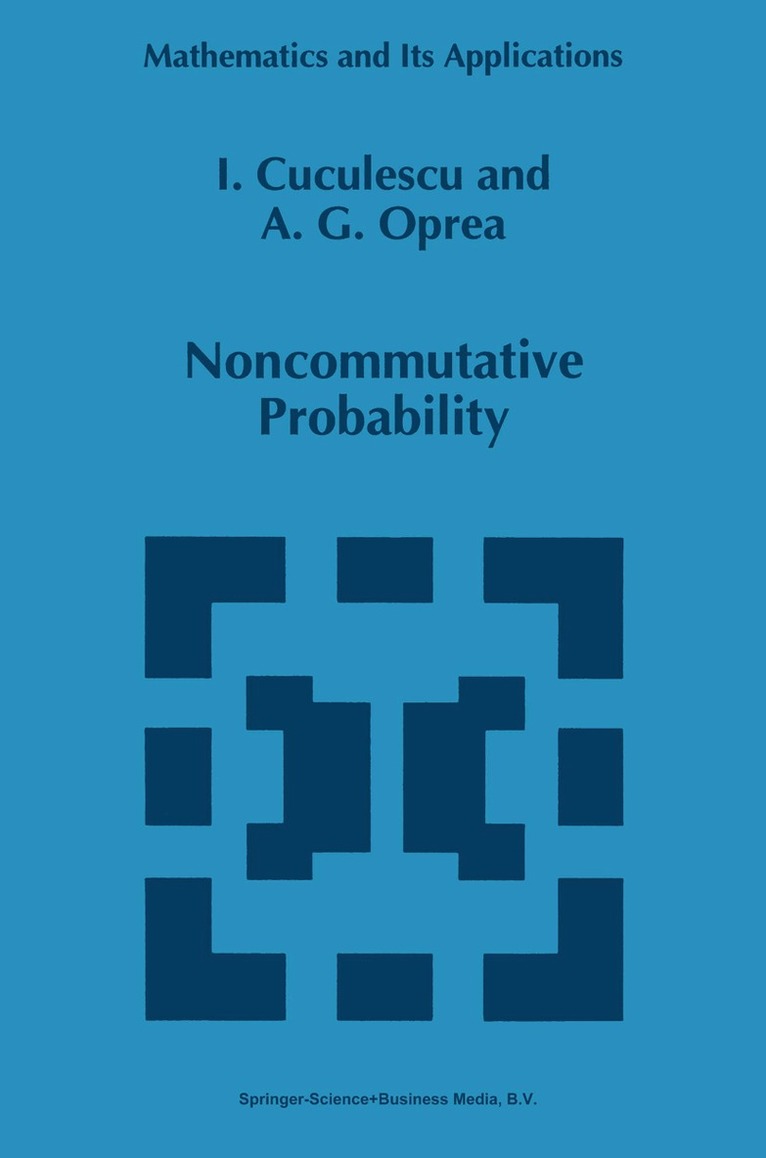
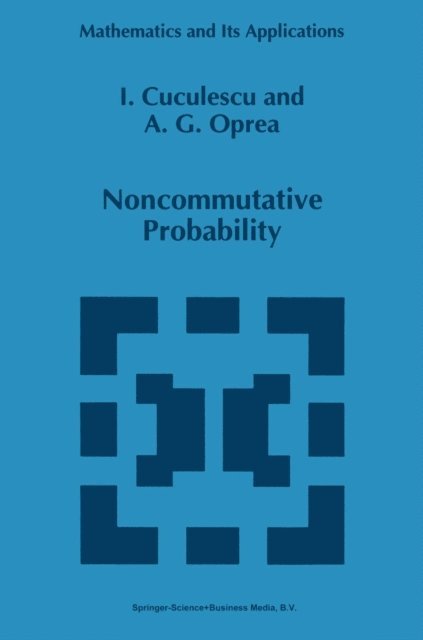
This volume introduces the subject of noncommutative probability from a mathematical point of view based on the idea of generalizing fundamental theorems in classical probability theory. It contains topics including von Neumann algebras, Fock spaces, free independence and Jordan algebras. Full proofs are given, and outlines are sketched where some background information is essential to follow the argument. The bibliography lists classical papers on the subject as well as recent titles, thus enabling further study. This book should be of interest to graduate students and researchers in functional analysis, von Neumann algebras, probability theory and stochastic calculus. Some previous knowledge of operator algebras and probability theory is assumed.
1 578 kr
Skickas inom 10-15 vardagar
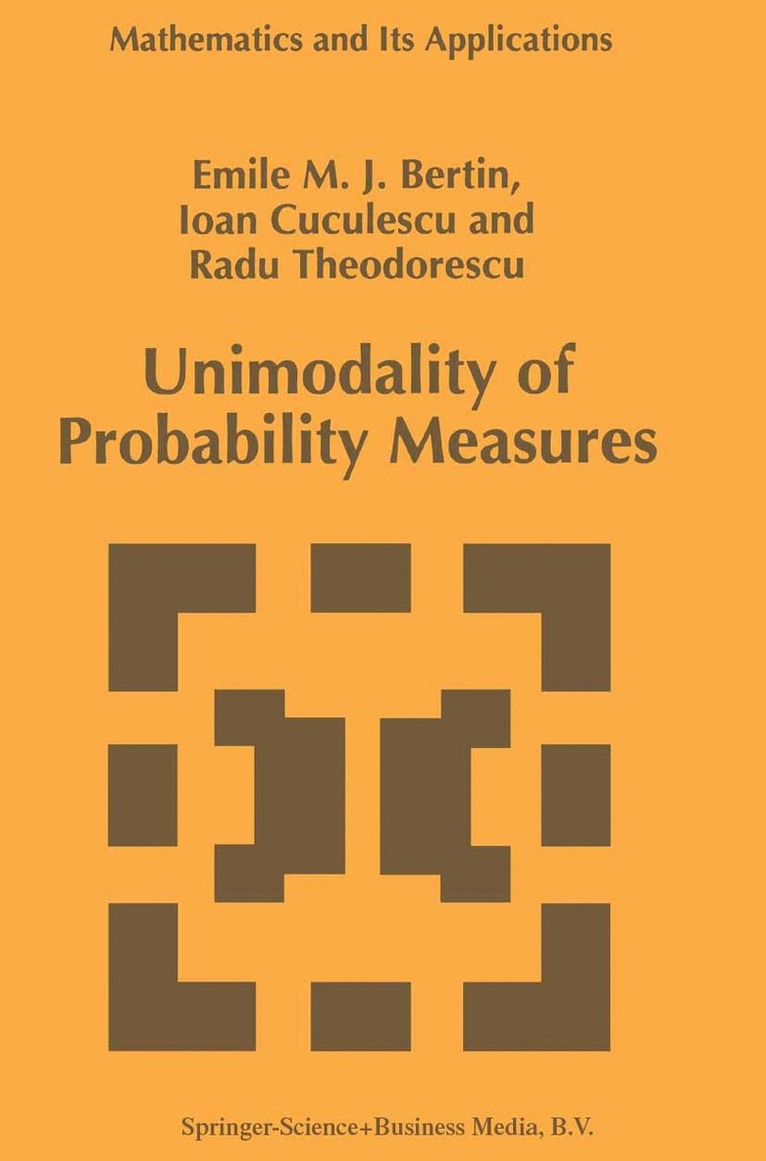
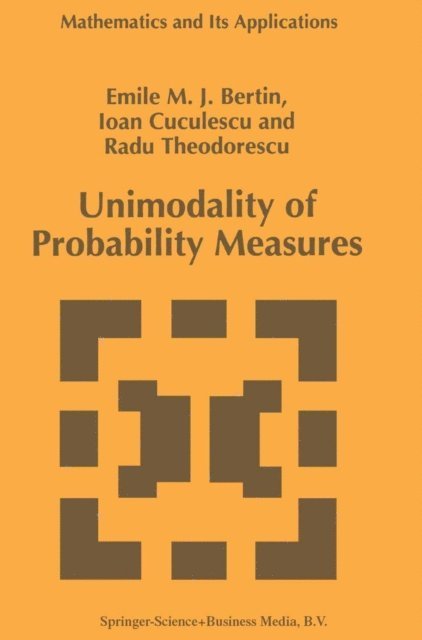
Labor omnia vincit improbus. VIRGIL, Georgica I, 144-145. In the first part of his Theoria combinationis observationum erroribus min- imis obnoxiae, published in 1821, Carl Friedrich Gauss [Gau80, p.10] deduces a Chebyshev-type inequality for a probability density function, when it only has the property that its value always decreases, or at least does l not increase, if the absolute value of x increases . One may therefore conjecture that Gauss is one of the first scientists to use the property of 'single-humpedness' of a probability density function in a meaningful probabilistic context. More than seventy years later, zoologist W.F.R. Weldon was faced with 'double- humpedness'. Indeed, discussing peculiarities of a population of Naples crabs, possi- bly connected to natural selection, he writes to Karl Pearson (E.S. Pearson [Pea78, p.328]): Out of the mouths of babes and sucklings hath He perfected praise! In the last few evenings I have wrestled with a double humped curve, and have overthrown it. Enclosed is the diagram...If you scoff at this, I shall never forgive you.Not only did Pearson not scoff at this bimodal probability density function, he examined it and succeeded in decomposing it into two 'single-humped curves' in his first statistical memoir (Pearson [Pea94]).
1 064 kr
Skickas inom 10-15 vardagar
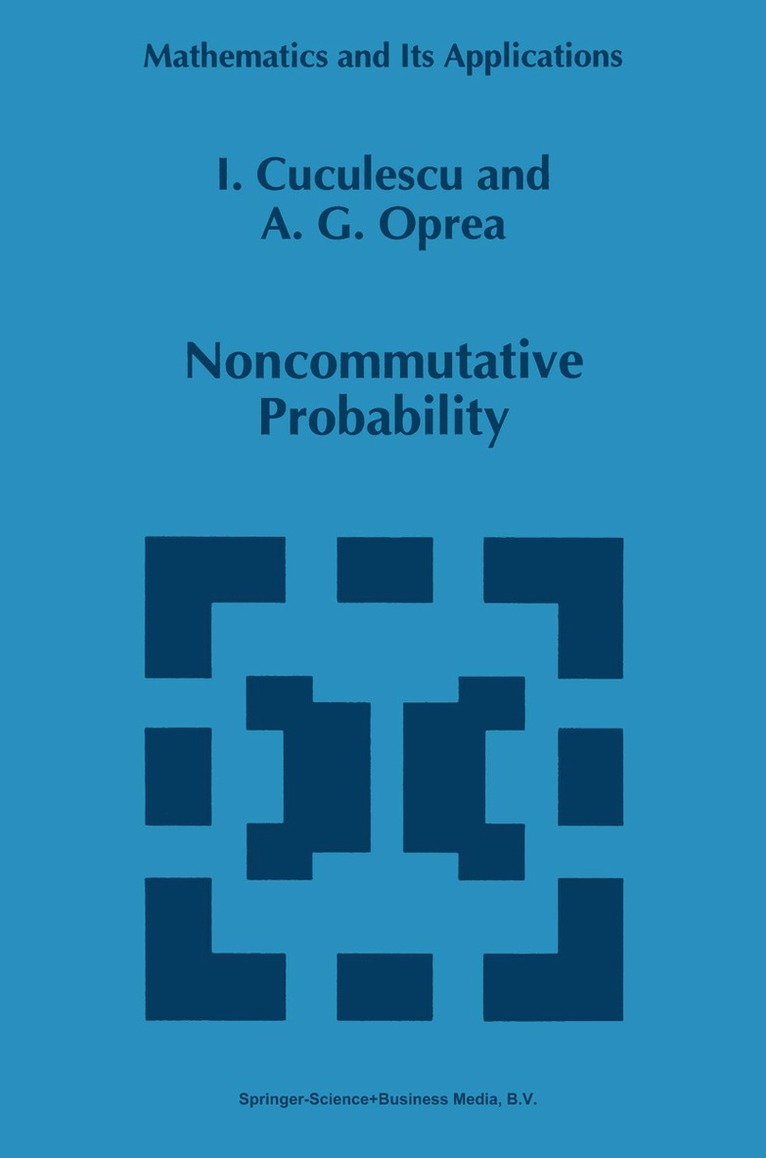
This volume introduces the subject of noncommutative probability from a mathematical point of view based on the idea of generalising fundamental theorems in classical probability theory. It contains topics including von Neumann algebras, Fock spaces, free independence and Jordan algebras. Full proofs are given, and outlines are sketched where some background information is essential to follow the argument. The bibliography lists classical papers on the subject as well as recent titles, thus enabling further study. This book is of interest to graduate students and researchers in functional analysis, von Neumann algebras, probability theory and stochastic calculus. Some previous knowledge of operator algebras and probability theory is assumed.
1 578 kr
Skickas inom 10-15 vardagar
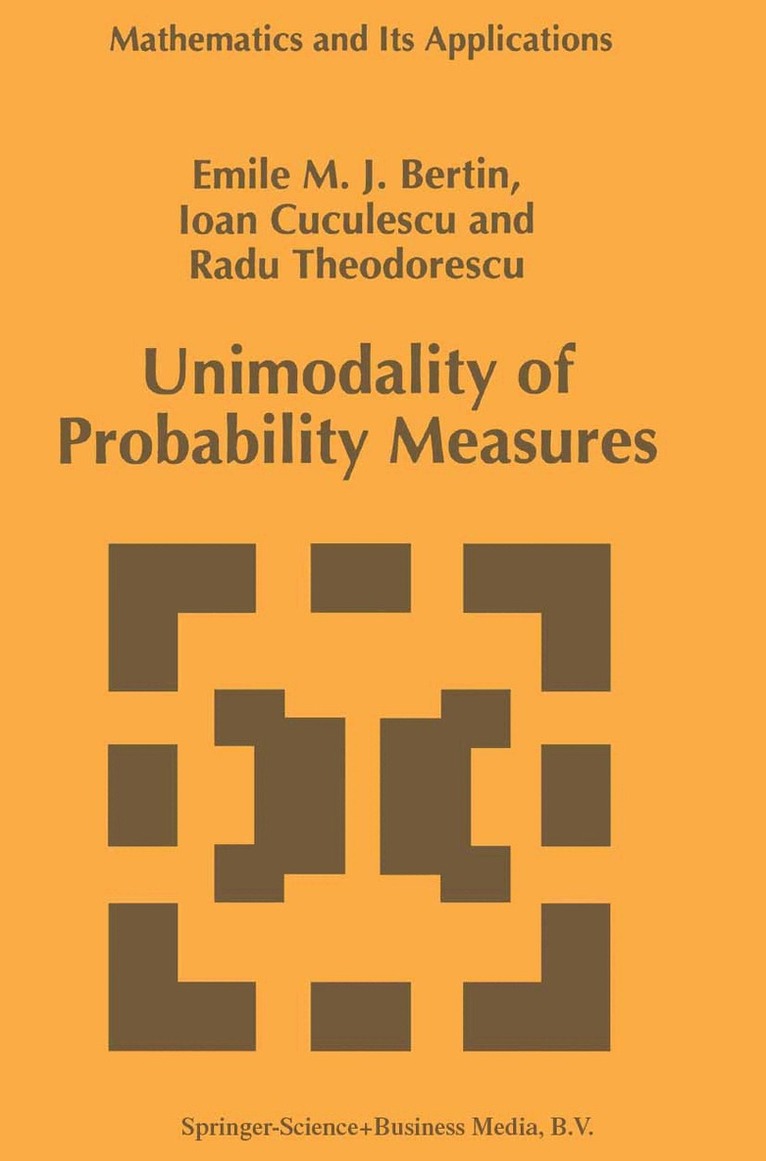
Labor omnia vincit improbus. VIRGIL, Georgica I, 144-145. In the first part of his Theoria combinationis observationum erroribus min- imis obnoxiae, published in 1821, Carl Friedrich Gauss [Gau80, p.10] deduces a Chebyshev-type inequality for a probability density function, when it only has the property that its value always decreases, or at least does l not increase, if the absolute value of x increases . One may therefore conjecture that Gauss is one of the first scientists to use the property of 'single-humpedness' of a probability density function in a meaningful probabilistic context. More than seventy years later, zoologist W.F.R. Weldon was faced with 'double- humpedness'. Indeed, discussing peculiarities of a population of Naples crabs, possi- bly connected to natural selection, he writes to Karl Pearson (E.S. Pearson [Pea78, p.328]): Out of the mouths of babes and sucklings hath He perfected praise! In the last few evenings I have wrestled with a double humped curve, and have overthrown it. Enclosed is the diagram...If you scoff at this, I shall never forgive you.Not only did Pearson not scoff at this bimodal probability density function, he examined it and succeeded in decomposing it into two 'single-humped curves' in his first statistical memoir (Pearson [Pea94]).