Emile M.J. Bertin – författare
Visar alla böcker från författaren Emile M.J. Bertin. Handla med fri frakt och snabb leverans.
6 produkter
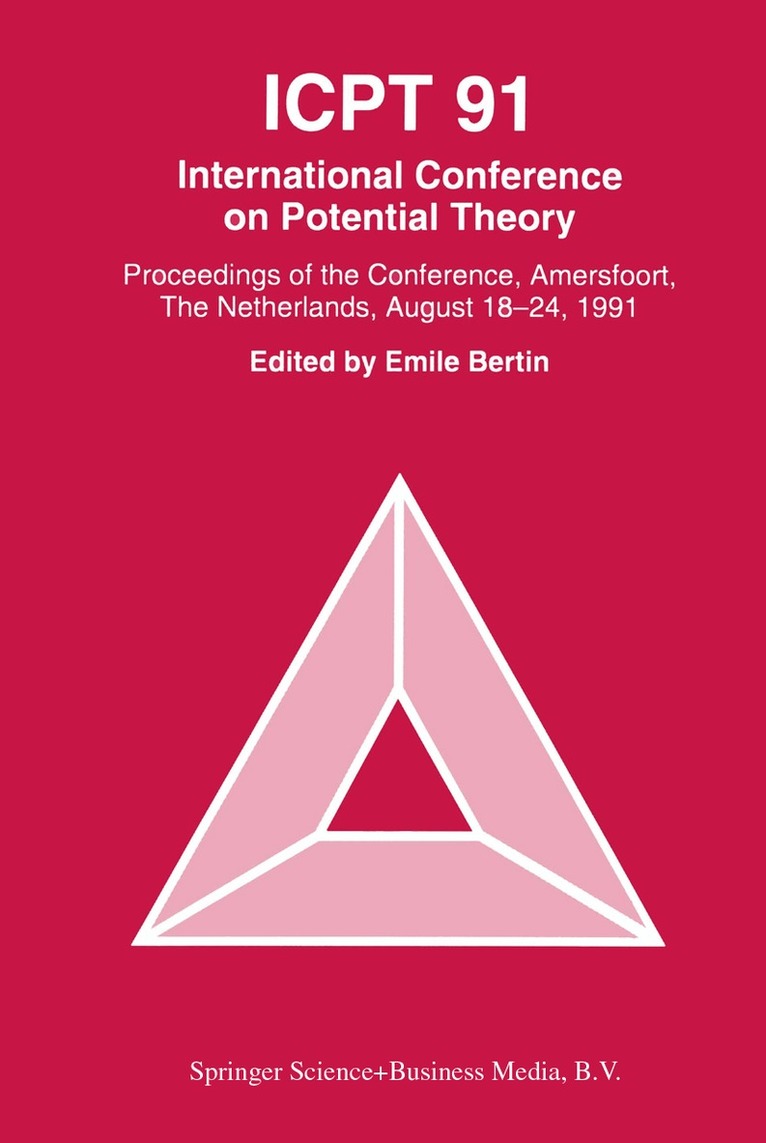
ICPT ’91
Proceedings from the International Conference on Potential Theory, Amersfoort, The Netherlands, August 18–24, 1991
Inbunden, 1994
2179 kr
Lägg i varukorg
ICPT91, the International Conference on Potential Theory, was held in Amersfoort, the Netherlands, from August 18--24, 1991. The volume consists of two parts, the first of which contains papers which also appear in the special issue of POTENTIAL ANALYSIS. The second part includes a collection of …
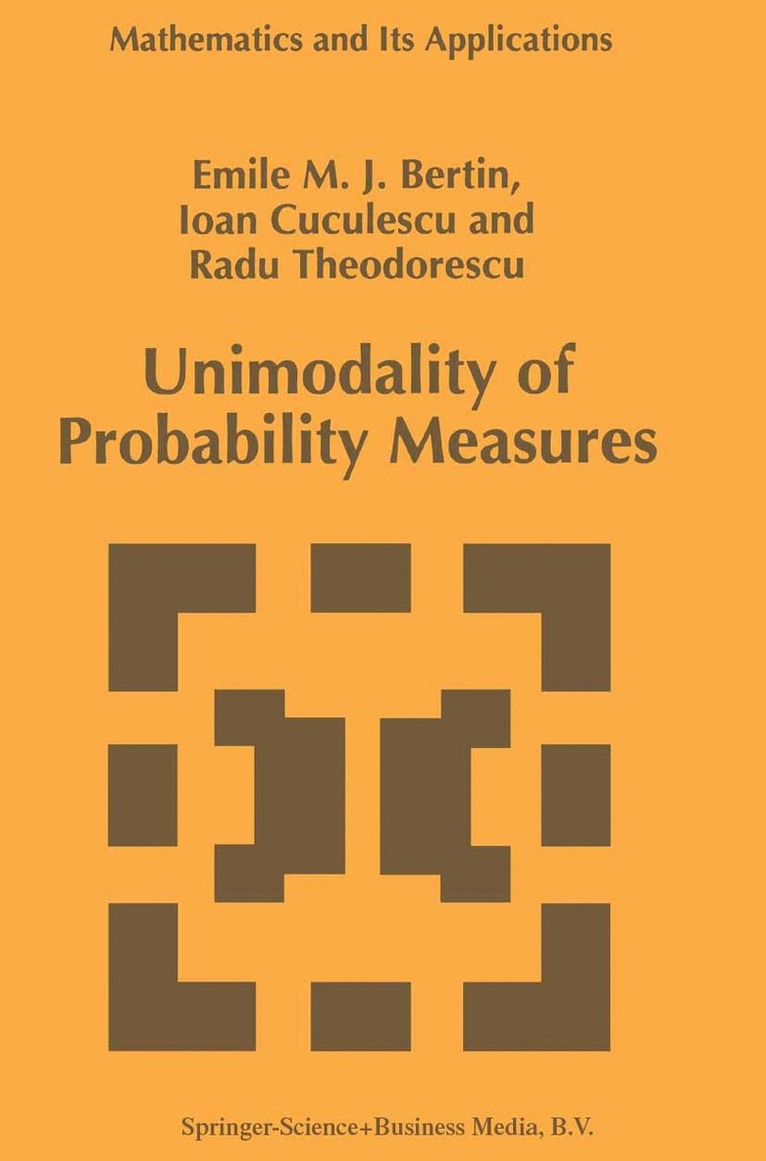
Unimodality of Probability Measures
Av Emile M.J. Bertin, I. Cuculescu m. fl.
Inbunden, 1996
1636 kr
Lägg i varukorg
Labor omnia vincit improbus. VIRGIL, Georgica I, 144-145. In the first part of his Theoria combinationis observationum erroribus min- imis obnoxiae, published in 1821, Carl Friedrich Gauss [Gau80, p.10] deduces a Chebyshev-type inequality for a probability density function, when it only has the …
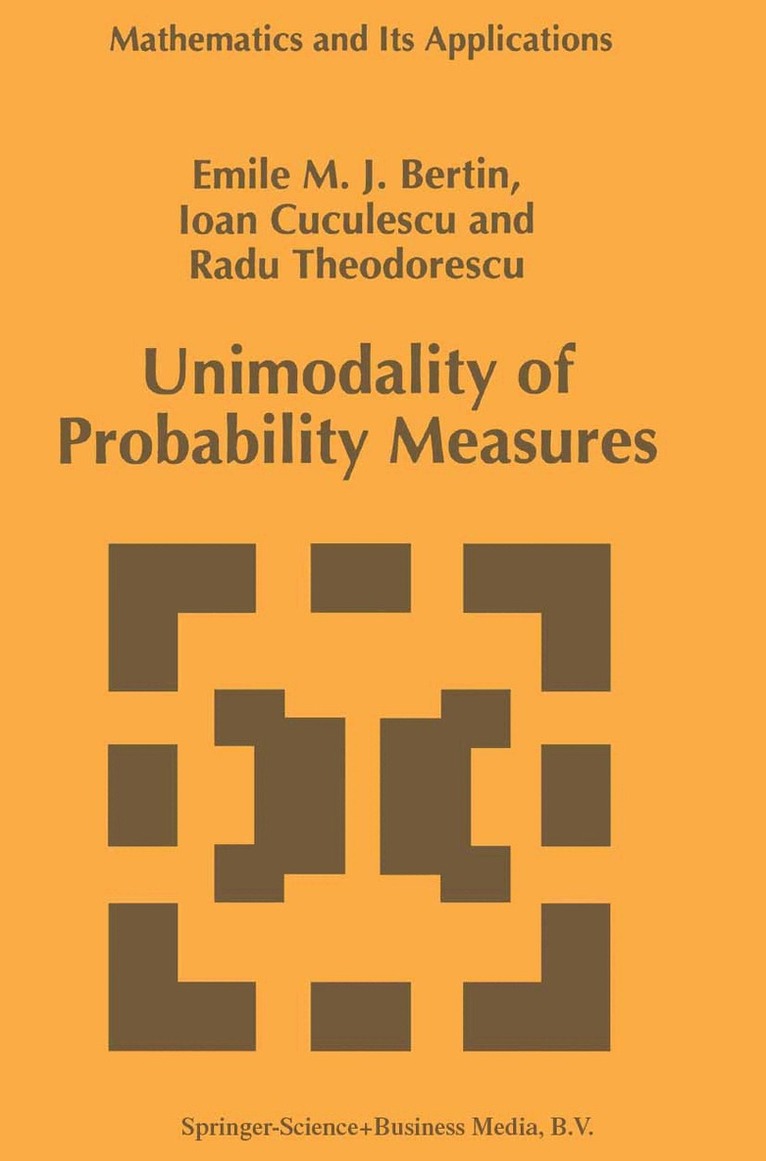
Unimodality of Probability Measures
Av Emile M.J. Bertin, I. Cuculescu m. fl.
Häftad, 2010
1636 kr
Lägg i varukorg
Labor omnia vincit improbus. VIRGIL, Georgica I, 144-145. In the first part of his Theoria combinationis observationum erroribus min- imis obnoxiae, published in 1821, Carl Friedrich Gauss [Gau80, p.10] deduces a Chebyshev-type inequality for a probability density function, when it only has the …
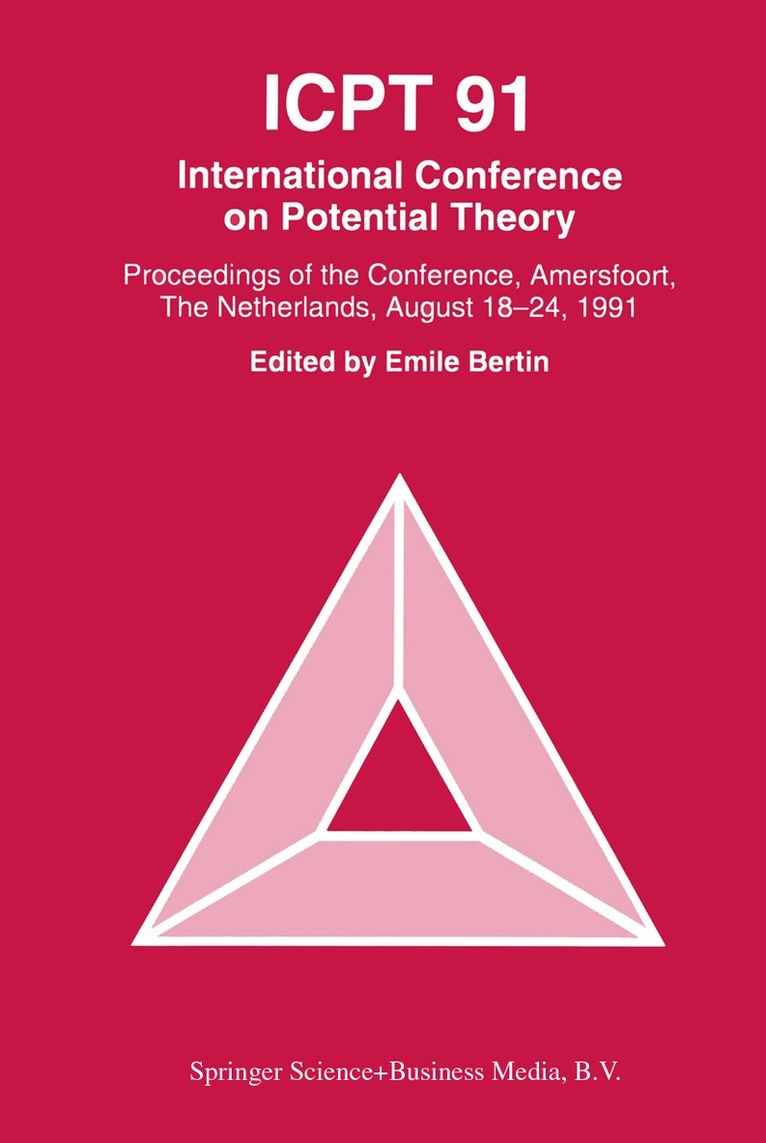
ICPT ’91
Proceedings from the International Conference on Potential Theory, Amersfoort, The Netherlands, August 18–24, 1991
Häftad, 2012
2179 kr
Lägg i varukorg
ICPT91, the International Conference on Potential Theory, was held in Amersfoort, the Netherlands, from August 18--24, 1991. The volume consists of two parts, the first of which contains papers which also appear in the special issue of POTENTIAL ANALYSIS. The second part includes a collection of …
ICPT '91
Proceedings from the International Conference on Potential Theory, Amersfoort, The Netherlands, August 18–24, 1991
E-bok, 2012
2925 kr
Lägg i varukorg
ICPT91, the International Conference on Potential Theory, was held in Amersfoort, the Netherlands, from August 18--24, 1991. The volume consists of two parts, the first of which contains papers which also appear in the special issue of POTENTIAL ANALYSIS . The second part includes a collection of …
Unimodality of Probability Measures
Av Radu Theodorescu, I. Cuculescu m. fl.
E-bok, 2013
2044 kr
Lägg i varukorg