Ian Anthony - Böcker
Visar alla böcker från författaren Ian Anthony. Handla med fri frakt och snabb leverans.
8 produkter
8 produkter
1 024 kr
Skickas inom 7-10 vardagar
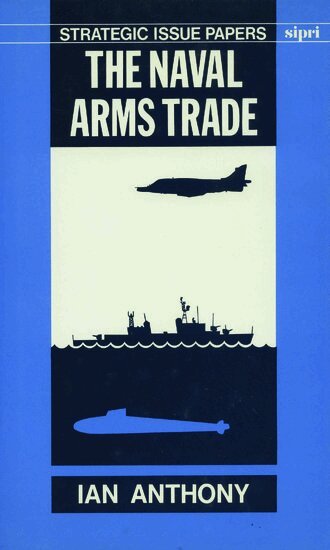
This book offers a sober appraisal of the world trade in naval weapon systems at a time when recent attacks on merchant shipping in the Persian Gulf have kept maritime security at the centre of global attention. At the same time India, outside the international non-proliferation regime, has become the first-ever customer for a nuclear attack submarine. In 1987-88, the most expensive and controversial arms sales were related to naval systems, and yet while regional navies are busy increasing their firepower, the traditional naval powers remain dependent on their sea-borne trade. In particular the book highlights critical areas in which trade in naval systems differs from the sale of land or air systems, and it discusses the implications of these differences.
1 247 kr
Skickas inom 3-6 vardagar
Governments have a legal obligation to ensure effective control over arms exports and to monitor and supervise the movement of arms to ensure that they do not fall into unauthorized hands. The purpose of this book is to provide a detailed picture of how governments discharge this responsibility. Individual chapters describe national efforts to control arms transfers, concentrating on the legal framework that exists to regulate arms exports. The book includes a discussion of existing multilateral arms transfer control regimes, including the United Nations, the Co-ordinating Committee for East-West Trade Policy (CoCom), the Missile Technology Control Regime (MTCR) and arms embargoes agreed by the Council of Ministers of the European Community. Every effort has been made to produce a comprehensive compendium, but total success has been prevented by the continued failure of some governments to release adequate information into the public domain.
Del 7 - SIPRI Research Reports
The Future of the Defence Industries in Central and Eastern Europe
Häftad, Engelska, 1994
400 kr
Skickas inom 3-6 vardagar
This report examines the prospects for defence industries in Central and Eastern Europe as they attempt to restructure in the wake of the dramatic changes in the security environment brought about by the end of the cold war. Chapters examine key factors affecting the process of industrial restructuring in the region: the role of military doctrine, the trend in national military expenditure, the process of internalization of the defence industry, and the role of arms exports.Contributors: Ian Anthony, Shannon Kile, Evamaria Loose-Weintraub
2 330 kr
Skickas inom 7-10 vardagar
During the cold war the Soviet Union was the single largest supplier of conventional weapons. With the collapse of first the Warsaw Pact and then the USSR, arms transfers from the new state of Russia virtually ceased. By 1996 Russia had once again emerged as a significant source of major conventional weapons. While unable to challenge the predominant position of the United States, it seems likely that Russia will be a serious competitor to second-tier arms suppliers such as France and the UK. In Russia and the Arms Trade a group of Russian authors were commissioned to describe and assess the arms trade policies and practices of Russia under new domestic and international conditions. The authors, drawn from the government, industry, and academic communities, offer a wide-ranging assessment of the political, military, economic, and industrial implications of Russian arms transfers together with specific case studies of important bilateral arms transfer relationships.Contributors: General Yri Kirshin (retired), Peter Litavrin, Sergei Kortunov, Alexander Subbotin, Alexander Sergounin, Elena Denezhkina, Irina Kobrinskaya, Sergei Kolpakov, Yuri Drugov, Gennady Gornostaev, Anton Surikov, Pavel Felgengauer.
1 956 kr
Skickas inom 3-6 vardagar
The Nobel Symposium on A Future Arms Control Agenda was organized by SIPRI to consider how arms control can contribute to creating a cooperative security system based on the peaceful resolution of disputes and the gradual demilitarization of international relations. The proceedings of the symposium include comprehensive discussions of the new normative and structural elements of the post-cold war global security system and the objectives and limits of arms control within that evolving system. Special attention is given to the changing roles and responsibilities of the major powers in arms control efforts. The role of transparency, verification and safeguards measures in arms control arrangements is analysed by a number of contributors. The subregional aspects of arms control are examined, in particular the uses of arms control instruments in conflict resolution and post-conflict settlement efforts. Approaches to enforcing norms codified in arms control treaties are considered, as are the international community's responses to activities by treaty parties which are judged to be contrary to those norms.The Nobel Foundation's Symposium programme was initiated in 1965. The symposia have achieved a high standing and play a significant role in the international exchange of knowledge and experience. They are devoted to scientific or scholarly disciplines related to the Nobel Prize areas. The symposia are sponsored by the Nobel Foundation through its Nobel Symposium Fund.
Del 19 - SIPRI Research Reports
Reducing Threats at the Source
A European Perspective on Cooperative Threat Reduction
Inbunden, Engelska, 2004
1 444 kr
Skickas inom 5-8 vardagar
In 2002 the Group of Eight industrialized nations - in which Canada, France, Germany, Italy, Japan, Russia, the UK, the USA and representatives of the European Union participate - formed the Global Partnership Against the Spread of Weapons and Materials of Mass Destruction. The G8 pledged to raise up to $20 billion to carry out the Global Partnership projects over a 10-year period, initially in Russia but with the intention to expand the scope of projects to include other countries. These projects will help to specify the quantities and locations of weapons and materials and ensure that stocks are held under safe and secure custody to prevent diversion to unauthorized users or inappropriate uses. If the weapons or materials are not required, this practical assistance can also help to eliminate the surplus.The G8 initiative is only one of a number of activities sharing the same basic features: tailor-made measures jointly implemented on the territory of one state by a coalition including states, international organizations, local and regional governments, non-governmental organizations and the private sector. This report reviews the current cooperative threat reduction activities with a particular focus on projects and approaches engaging European partners. It examines the organizing principles for cooperative threat reduction and the lessons learned from past project implementation. Finally, it examines how European countries might organize their cooperative threat reduction activities to increase their coherence and effectiveness.
Del 19 - SIPRI Research Reports
Reducing Threats at the Source
A European Perspective on Cooperative Threat Reduction
Häftad, Engelska, 2004
556 kr
Skickas inom 7-10 vardagar
Del 22 - SIPRI Research Reports
Reforming Nuclear Export Controls
The Future of the Nuclear Suppliers Group
Häftad, Engelska, 2007
316 kr
Skickas inom 3-6 vardagar
The diversion to military programmes of materials and technologies obtained from foreign suppliers for peaceful purposes has played a prominent role in the known cases of nuclear proliferation. The need to strengthen nuclear export controls has been identified by the G8 group of industrialized states and the European Union. This study examines the structure and activities of the Nuclear Suppliers Group (NSG), a group of 45 states committed to applying effective controls on exports of an agreed set of items as part of a wider effort to prevent nuclear proliferation.