Adam Daniel Rotfeld - Böcker
Visar alla böcker från författaren Adam Daniel Rotfeld. Handla med fri frakt och snabb leverans.
4 produkter
4 produkter
497 kr
Skickas inom 3-6 vardagar
The subject of this book is Europe after the cold war. The European security landscape has changed considerably. The period from November 1989 to November 1990 can be compared with such decisive dates in twentieth-century European history as 1918 and 1945. Germany and Europe have entered a crucial period of transition. While it was relatively easy to describe the dramatic events and changes in the making, it is now more difficult to demonstrate their mutual relationships within the framework of the new European system emerging from them.The documents published in this volume - many of them for the first time - provide an important record of this historic period. Key papers by some of the leading German politicians of this period, delivered at Potsdam in February 1990, are also presented. The volume provides the background for a better understanding of developments in Europe - particularly the role of the new German state, to contribute to a sober assessment of the role which the united Germany can play in an emerging new structure for European security, and to facilitate further research on these topics and related issues.
1 956 kr
Skickas inom 3-6 vardagar
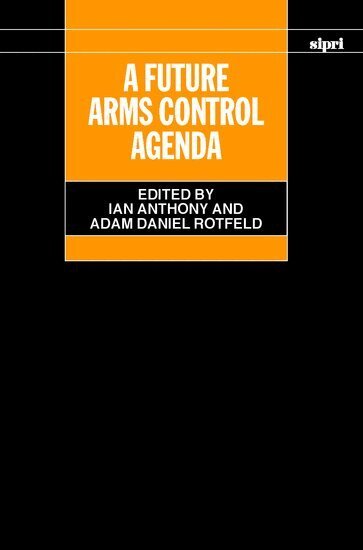
The Nobel Symposium on A Future Arms Control Agenda was organized by SIPRI to consider how arms control can contribute to creating a cooperative security system based on the peaceful resolution of disputes and the gradual demilitarization of international relations. The proceedings of the symposium include comprehensive discussions of the new normative and structural elements of the post-cold war global security system and the objectives and limits of arms control within that evolving system. Special attention is given to the changing roles and responsibilities of the major powers in arms control efforts. The role of transparency, verification and safeguards measures in arms control arrangements is analysed by a number of contributors. The subregional aspects of arms control are examined, in particular the uses of arms control instruments in conflict resolution and post-conflict settlement efforts. Approaches to enforcing norms codified in arms control treaties are considered, as are the international community's responses to activities by treaty parties which are judged to be contrary to those norms.The Nobel Foundation's Symposium programme was initiated in 1965. The symposia have achieved a high standing and play a significant role in the international exchange of knowledge and experience. They are devoted to scientific or scholarly disciplines related to the Nobel Prize areas. The symposia are sponsored by the Nobel Foundation through its Nobel Symposium Fund.
2 103 kr
Skickas inom 10-15 vardagar
Divided between two military alliances, Europe has maintained stability based on political status quo and military power balance. However, European states—including neutral and nonaligned countries—have felt a need for a common policy to guarantee their security, and the Conference on Security and Cooperation in Europe (CSCE) was convened to address this concern. Ten years later, the authors of this study find that the outlines of a European security regime are indeed discernible. The conference in Helsinki initiated efforts for negotiated and controlled change in Europe. Contributors to this volume analyze the achievements of CSCE, consider more recent models of collective or common security systems, and deal with political and military processes at work in Europe as well as relationships with great powers and the Third World. The role of Western Europe, and particularly Finland's role as an initiator of the CSCE process, receives special attention. Documentation of the tenth anniversary meeting and the CSCE process in general are also included.
621 kr
Skickas inom 10-15 vardagar
Divided between two military alliances, Europe has maintained stability based on political status quo and military power balance. However, European states—including neutral and nonaligned countries—have felt a need for a common policy to guarantee their security, and the Conference on Security and Cooperation in Europe (CSCE) was convened to address this concern. Ten years later, the authors of this study find that the outlines of a European security regime are indeed discernible. The conference in Helsinki initiated efforts for negotiated and controlled change in Europe. Contributors to this volume analyze the achievements of CSCE, consider more recent models of collective or common security systems, and deal with political and military processes at work in Europe as well as relationships with great powers and the Third World. The role of Western Europe, and particularly Finland's role as an initiator of the CSCE process, receives special attention. Documentation of the tenth anniversary meeting and the CSCE process in general are also included.