Ian Dunt - Böcker
Visar alla böcker från författaren Ian Dunt. Handla med fri frakt och snabb leverans.
9 produkter
9 produkter
139 kr
Skickas inom 5-8 vardagar
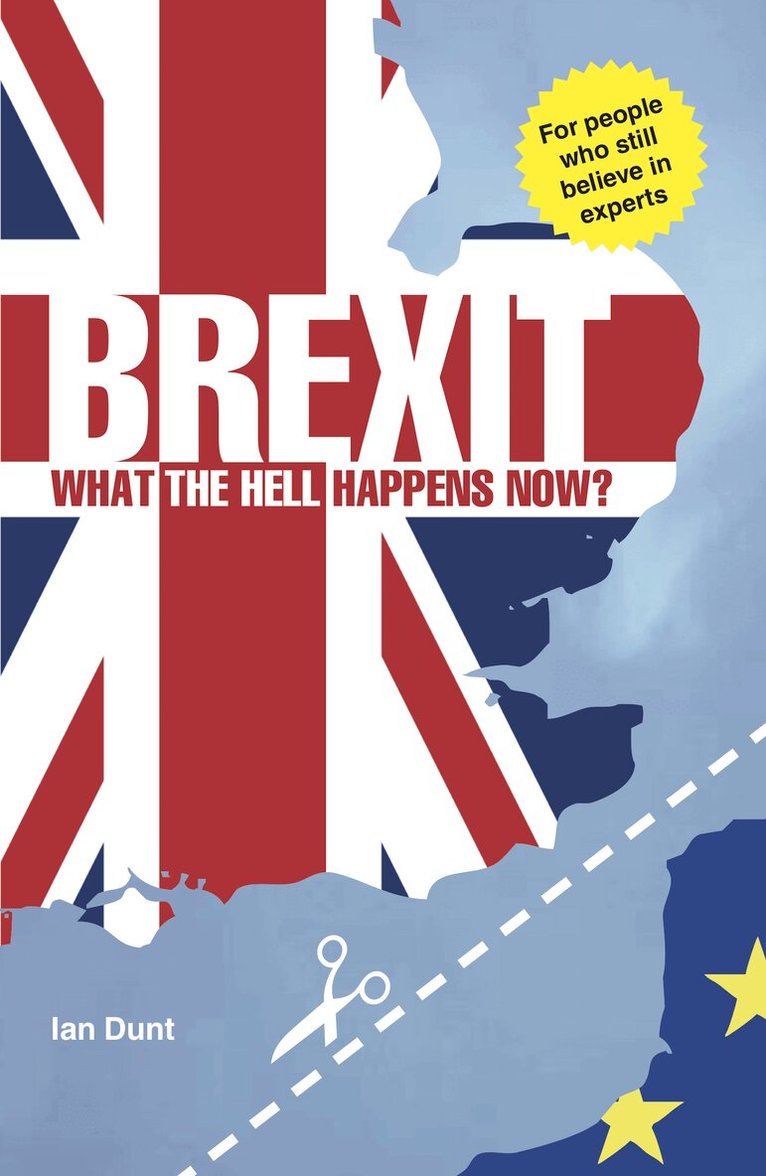
'Admirably brief and necessarily brutal... Highly recommended.' — NICK COHEN, THE SPECTATOR'Compact and easily digestible. I’d encourage anyone who is confused, fascinated or frustrated by Brexit to read this book – you’ll be far wiser by the end of it.' — CAROLINE LUCAS MP'I would strongly recommend Ian Dunt’s excellent guide. Dunt has taken the extraordinary step of asking a set of experts what they think. I learnt a lot.' — PHILIP COLLINS, PROSPECTBritain’s departure from the European Union is riddled with myth and misinformation — yet the risks are very real. Brexit could diminish the UK’s power, throw its legal system into turmoil, and lower the standard of living of 65m citizens.In this revised bestseller, Ian Dunt explains why leaving the world’s largest trading bloc will leave Britain poorer and key industries like finance and pharma struggling to operate. He argues that Brexit is unlikely to cause a big economic implosion, but will instead act like a slow puncture in the UK's national prosperity and global influence.Based on extensive interviews with trade and legal experts, Brexit: What the Hell Happens Now? is a searching exploration of Brexit shorn of the wishful thinking of its supporters in the British media and Parliament.ABOUT THE AUTHORIan Dunt is a columnist for the I newspaper and appears as a pundit on BBC TV, Sky News and Al-Jazeera.With Dorian Lynskey, he presents the Origin Story podcast and is a regular contributor to the Oh God, What Now? podcast. His most recent book, How To Be A Liberal (Canbury, 2020), is an epic history of the spread of the ideas underpinning personal freedom. EXTRACTWhat is the European project?Britain has always been deeply ignorant of the motivation behind the European project. The most common British response to European politicians is indifference, followed by frustration, followed by mockery. But without understanding Europe, you can’t effectively negotiate with Europe.Ultimately, the European Union arose out of the ashes of the Second World War. In 1951, to prevent future disputes over resources, six nations agreed to trade freely in steel and coal. In 1957, the nations of the Coal and Steel Community (France, West Germany, Italy, Holland, Belgium and Luxembourg) signed the Treaty of Rome, founding the European Economic Community, which created a bigger common market and a customs union. Over time this common market attracted more nations and became the European Union.For years Britain stood outside this club. In 1951, Prime Minister Clement Attlee declined an invitation to join the Coal and Steel Community, dismissing it as ‘six nations, four of whom we had to rescue from the other two.’ Britain also spurned the European Economic Community in 1958. While the European states looked to each other for peace and prosperity, the UK, with its still large empire and its special relationship with the United States, gazed overseas. Britain and the Continent were divided not just by geography, but by conflict. A great deal of the British psyche derives from the fact that we have not been invaded for centuries. We went through incredible suffering during the world wars, but it fell from the sky. It did not march down the streets in jackboots. On the mainland, that trauma was and is personal: the social memory of a neighbour’s betrayal, death camps, and tyranny. The EU is considered a barrier to conflict and carries an emotional weight we struggle to understand. Our MPs underestimate the resolve of Europe to preserve political unity.Extracted from Brexit: What the Hell Happens Now? by Ian Dunt (Canbury Press)
188 kr
Skickas inom 5-8 vardagar
'Admirably brief and necessarily brutal... Highly recommended.' — NICK COHEN, THE SPECTATOR 'Compact and easily digestible. I’d encourage anyone who is confused, fascinated or frustrated by Brexit to read this book – you’ll be far wiser by the end of it.' — CAROLINE LUCAS MP 'I would strongly recommend Ian Dunt’s excellent guide. Dunt has taken the extraordinary step of asking a set of experts what they think. I learnt a lot.' — PHILIP COLLINS, PROSPECT Britain’s departure from the European Union is riddled with myth and misinformation — yet the risks are very real. Brexit could diminish the UK’s power, throw its legal system into turmoil, and lower the standard of living of 65m citizens. In this revised bestseller, Ian Dunt explains why leaving the world’s largest trading bloc will leave Britain poorer and key industries like finance and pharma struggling to operate. He argues that Brexit is unlikely to cause a big economic implosion, but will instead act like a slow puncture in the UK's national prosperity and global influence. Based on extensive interviews with trade and legal experts, Brexit: What the Hell Happens Now? is a searching exploration of Brexit shorn of the wishful thinking of its supporters in the British media and Parliament. ABOUT THE AUTHOR Ian Dunt is a columnist for the I newspaper and appears as a pundit on BBC TV, Sky News and Al-Jazeera. With Dorian Lynskey, he presents the Origin Story podcast and is a regular contributor to the Oh God, What Now? podcast. His most recent book, How To Be A Liberal (Canbury, 2020), is an epic history of the spread of the ideas underpinning personal freedom. EXTRACTWhat is the European project? Britain has always been deeply ignorant of the motivation behind the European project. The most common British response to European politicians is indifference, followed by frustration, followed by mockery. But without understanding Europe, you can’t effectively negotiate with Europe. Ultimately, the European Union arose out of the ashes of the Second World War. In 1951, to prevent future disputes over resources, six nations agreed to trade freely in steel and coal. In 1957, the nations of the Coal and Steel Community (France, West Germany, Italy, Holland, Belgium and Luxembourg) signed the Treaty of Rome, founding the European Economic Community, which created a bigger common market and a customs union. Over time this common market attracted more nations and became the European Union. For years Britain stood outside this club. In 1951, Prime Minister Clement Attlee declined an invitation to join the Coal and Steel Community, dismissing it as ‘six nations, four of whom we had to rescue from the other two.’ Britain also spurned the European Economic Community in 1958. While the European states looked to each other for peace and prosperity, the UK, with its still large empire and its special relationship with the United States, gazed overseas. Britain and the Continent were divided not just by geography, but by conflict. A great deal of the British psyche derives from the fact that we have not been invaded for centuries. We went through incredible suffering during the world wars, but it fell from the sky. It did not march down the streets in jackboots. On the mainland, that trauma was and is personal: the social memory of a neighbour’s betrayal, death camps, and tyranny. The EU is considered a barrier to conflict and carries an emotional weight we struggle to understand. Our MPs underestimate the resolve of Europe to preserve political unity. Historically Britain has preferred to have a commercial relationship with the Continent. When Britain snubbed the coal and steel community, it started a looser trading club, the European Free Trade Association, with Austria, Denmark, Portugal, Sweden, Norway and Switzerland. Slowly Britain realised the European common market was booming and applied to join, but its entry was vetoed twice by French president Charles de Gaulle, which was frankly a little off given that London had offered him a place to stay during the war. Britain eventually got in in 1973 and held a referendum on membership a couple of years later, which was easily passed: Do you think the UK should stay in the European Community (Common Market)? YES 17,378,581 (67.23%) NO 8,470,073 (32.77%) During this period it was mostly the Left which was wary of European integration. It saw it as a free market initiative, which it was. But gradually the Right grew increasingly outraged by the federalist ambitions of many European officials. It wasn’t paranoia either – EU leaders really were out to create a federal state of Europe. Then, in 1987, the single market was born. It was everything sceptics of the European project feared it would be. Extracted from Brexit: What the Hell Happens Now? by Ian Dunt (Canbury Press) CONTENTS Introduction What was that? What did we vote for? What is Article 50? What is the European project? What is the single market? What are the politics of the European Union? What about freedom of movement? What about the economy? Norway Switzerland Turkey Canada The World Trade Organisation How can we keep the UK together? Scotland Ireland What are we going to do? What do the Brexit ministers want? How talented are they? What tools do they have? What is the context? The economy The City of London Immigration The parliamentary battle Making a new country The time problem What happens after Brexit? Postscript List of experts Acknowledgements References
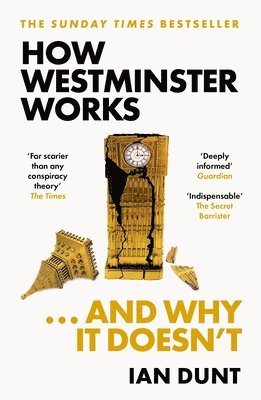
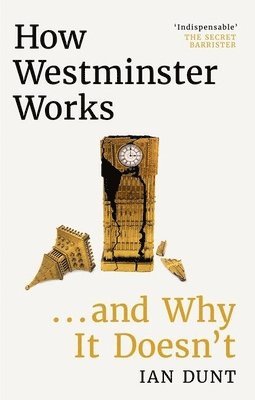
How Westminster Works . . . and Why It Doesn't
The instant Sunday Times bestseller from the ultimate political insider
Inbunden, Engelska, 2023
200 kr
Tillfälligt slut
THE INSTANT SUNDAY TIMES BESTSELLERBritish politics is broken.Anyone sitting down to watch the news will get the sense that something has gone terribly wrong. We have prime ministers who detonate the economy, secretaries of state who are intellectually incapable of doing the job and MPs who seem temperamentally unsuited to the role. Expertise is denigrated. Lies are rewarded. And deep-seated, long-lasting national problems go permanently unresolved. Most of us have a sense that the system doesn't work, but we struggle to articulate exactly why. Our political and financial system is cloaked in secrecy, archaic terminology, ancient custom and impenetrable technical jargon.Lifting the lid on British politics, How Westminster Works . . . and Why It Doesn't exposes every aspect of the system in a way that can be understood and challenged, from the heights of Downing Street to the depths of the nation's newsrooms, from the hallways of the civil service to the green benches of the Commons.Based on interviews with some of the leading voices in politics, from former occupants of No.10 to key figures in Whitehall, Westminster and Fleet Street, Ian Dunt provides exactly what people in power have always tried to avoid: a full description of the mechanisms of British government. And a vision of how we can fix it.
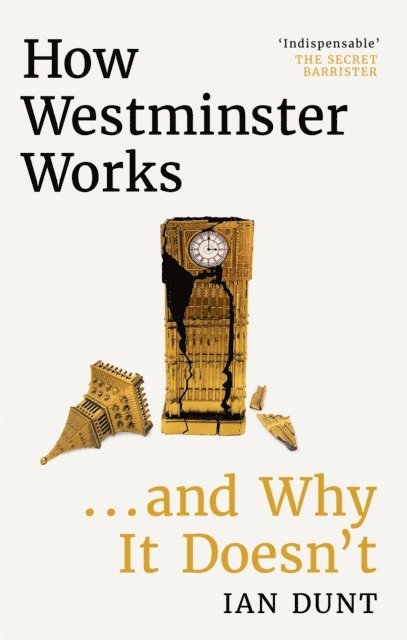
How Westminster Works . . . and Why It Doesn't
The instant Sunday Times bestseller from the ultimate political insider
Häftad, Engelska, 2024
127 kr
Skickas inom 7-10 vardagar
Why do some prime ministers manage to get things done, while others miserably fail? What is a 'special adviser' and how did they take over British political life? And why is the House of Lords more functional than most people think?Most of us have a sense that our political system doesn't seem to work, but struggle to articulate exactly why. And for good reason: our political and financial institutions are cloaked in secrecy, archaic terminology, ancient custom and impenetrable jargon. Now, expert political journalist Ian Dunt is lifting the lid on British politics to expose every aspect of the setup in a way that can be understood and challenged. From Downing Street to Whitehall, the Commons to the Lords, this book is an indispensable guide to our political system - and how we might begin to fix it.
118 kr
Skickas inom 7-10 vardagar
AN ORIGIN STORY BOOK'Provides clarity, scholarship, wit and essential insight into why our world is the way it is' Adam Rutherford'I wish I could make Ian and Dorian's work mandatory' Sathnam SangheraWhat makes people believe in conspiracy theories? Why have they taken over our political sphere? And how do we counter them before it's too late?The world has always had conspiracy theories. From the Illuminati to the deep state, the JFK assassination to the death of Princess Diana - there have always been those who believe that events are manipulated by shadowy forces with sinister intent. But in recent years, conspiracism has colonised the mainstream. These days, it is a booming industry, a political strategy and a pseudo-religion - and it's threatening the foundations of liberal democracy.Where once political battles were fought over ideas and values, it now feels as though we're arguing over the nature of reality itself. The problem is bigger than lizard people or UFOs: left unchecked, conspiracy theories have the power to warp the fabric of society and justify unspeakable crimes.In Conspiracy Theory: The Story of an Idea, Ian Dunt and Dorian Lynskey pull back the curtain on conspiracy theories: where they come from, who promotes them, how they work and what they're doing to us. From biblical myth to online hysteria, this book explains what happens when the human gift for storytelling goes wrong - and how we might restore our common reality.
118 kr
Skickas inom 7-10 vardagar
AN ORIGIN STORY BOOK'Provides clarity, scholarship, wit and essential insight into why our world is the way it is' Adam Rutherford'I wish I could make Ian and Dorian's work mandatory' Sathnam SangheraA coherent political philosophy or a vacuous cop-out? A pragmatic middle way between the extremes of left and right or a cynical strategy to secure power and neuter debate?Politicians have long invoked centrism as both a term of abuse (Margaret Thatcher) and a badge of pride (Tony Blair). Figures as important as John Maynard Keynes, Roy Jenkins, Bill Clinton and Emmanuel Macron have all had different ideas about how to make sure the centre holds. But for a term that purports to describe consensus, it's ironic just how little agreement there is over what 'centrism' actually means.In Centrism: The Story of an Idea, Ian Dunt and Dorian Lynskey trace the evolution of centrism from ancient Greece to the French Revolution, the Second World War to the 2024 elections. They find a story that is much bigger than the sum of its parts - and that raises some uncomfortable questions about tribalism and compromise.
118 kr
Skickas inom 7-10 vardagar
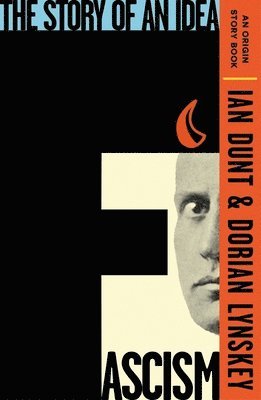
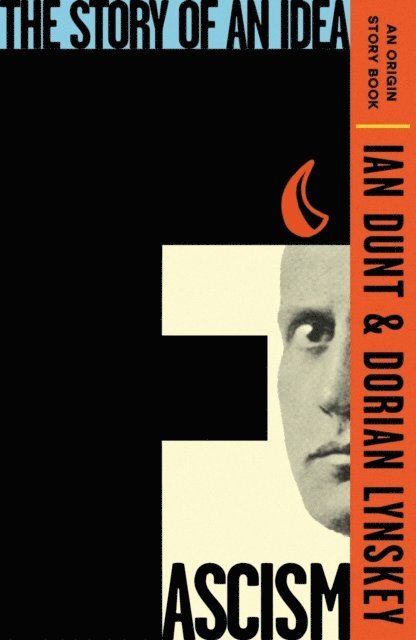
AN ORIGIN STORY BOOK'Provides clarity, scholarship, wit and essential insight into why our world is the way it is' Adam Rutherford'I wish I could make Ian and Dorian's work mandatory' Sathnam SangheraWhy is 'fascist' used to describe everyone from dictators to parking wardens? Does the word 'fascism' describe a historical movement or an enduring ideology? And could we see it rise again today, in an age of populism?Unlike most major political ideologies, fascism has no clear-cut intellectual foundation. It appeals to some of the very darkest instincts in human nature: the hatred of difference, the desire to control, the delight in violence. The story of fascism shows us what happens when these instincts consume entire nations.In Fascism: The Story of an Idea, Ian Dunt and Dorian Lynskey lay out in clear and accessible terms the origins of fascism: what happened, how it happened and why. It is only by understanding fascism's beginnings that we can start to understand what it means today - and guard against those who seek its return.
123 kr
Skickas
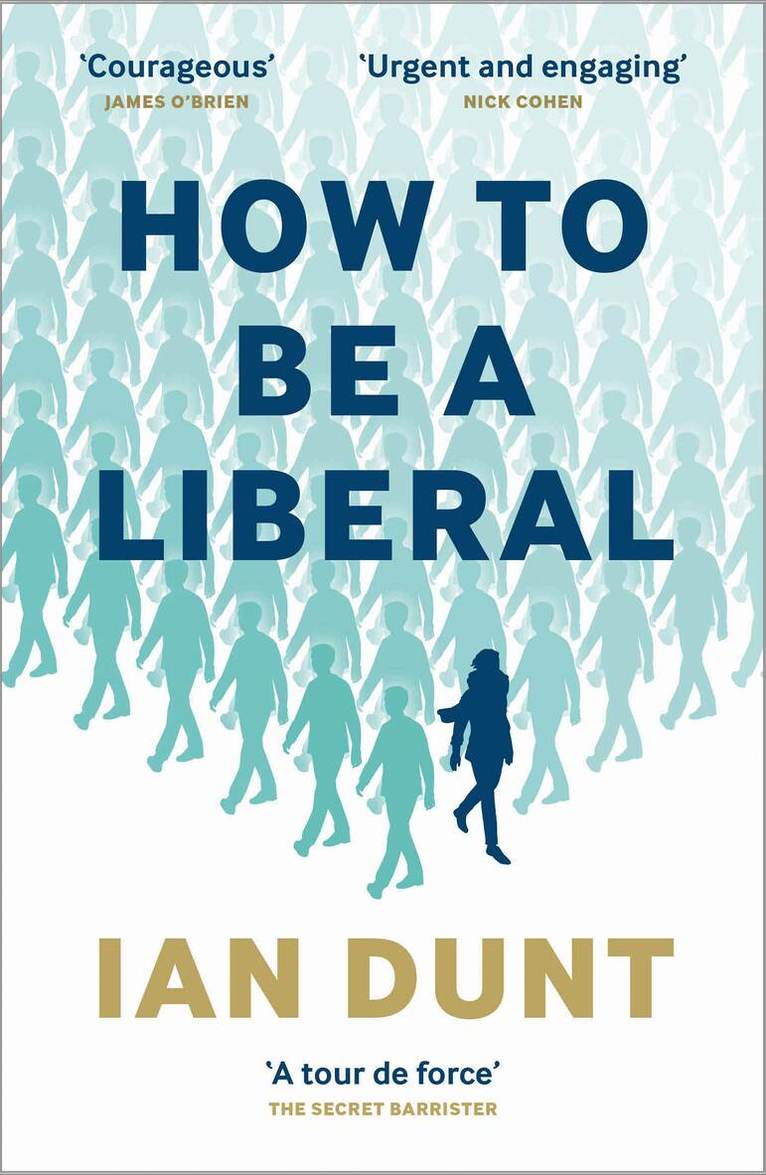
The fightback against populism begins with this work explaining liberal values 'Required reading for anyone interested in politics and philosophy' – Prospect magazine How To Be A Liberal is a bracing, beautifully written history of liberalism — and a practical defence of liberal democracy in an era of nationalism, culture wars, and post‑truth politics. Political journalist Ian Dunt (author of How Westminster Works and co‑presenter of the Origin Stories podcast) takes you from the scientific revolution to the present day, tracing how the idea of individual freedom became the most radical programme in modern politics. Along the way you’ll meet rebels, philosophers, campaigners, and iconoclasts — and see why liberalism still matters to anyone who cares about human rights, reason, and a plural society. Dunt begins where our current crisis starts: the rise of nationalism and its seductive simplifications — attacks on institutions, diversity, and even the possibility of objective truth. He shows how liberalism answers those pressures: by insisting that people are individuals before they are tribes, by defending free enquiry and evidence, and by protecting the space each person needs to live, love, and think as they choose. Inside you’ll find: A compelling narrative history of liberal thought—from Descartes and the birth of modern reason, through revolutionary arguments about rights and consent, to the debates that shaped the modern world.A clear explanation of liberalism’s core principles: individual liberty, equal rights, democratic restraint, and the institutions that keep power accountable.A modern guide to today’s conflicts—identity politics, anti‑truth, and the new nationalism—and what a renewed, radical liberalism could look like. Whether you’re a student of political philosophy, a reader of the history of ideas, or simply looking for a sharper way to understand liberalism and liberal democracy, How To Be A Liberal is an essential, hopeful book: a reminder that freedom is not a slogan, but a practice—and that it begins with the individual. Reviews ‘A tour de force; a mighty trumpet blast for the forces of liberalism and enlightenment in the face of a global tide of ignorance and populism.’ – The Secret Barrister ‘This is a history of ideas as it should be written – brilliant, vivid storytelling about the people who shaped liberalism, the challenges it has faced over the centuries, its commitment to the truth and why it’s now more important than ever to defend it.’ – Caroline Lucas MP ‘How To Be A Liberal is required reading for today’s political debates.’ – Anne Applebaum, Twilight of Democracy 'I'm loving How to be a Liberal. It's really great. I mean breathtakingly good. Bravo.' – Dr Ben Goldacre About the Author Ian Dunt is a journalist, newspaper columnist and co-presents the Origin Story podcast. His first book, Brexit: What the Hell Happens Now? (Canbury Press, 2017), about Britain's challenge in leaving the European Union, was a bestseller. In How To Be A Liberal (Canbury, 2020), he tells the epic story of personal freedom, with panache and a panoramic sweep. Ranging across history, politics and economics, he makes a powerful case for a radical brand of egalitarian liberalism that can safeguard individuals while looking after everyone. Buy the book and start reading
272 kr
Skickas inom 5-8 vardagar
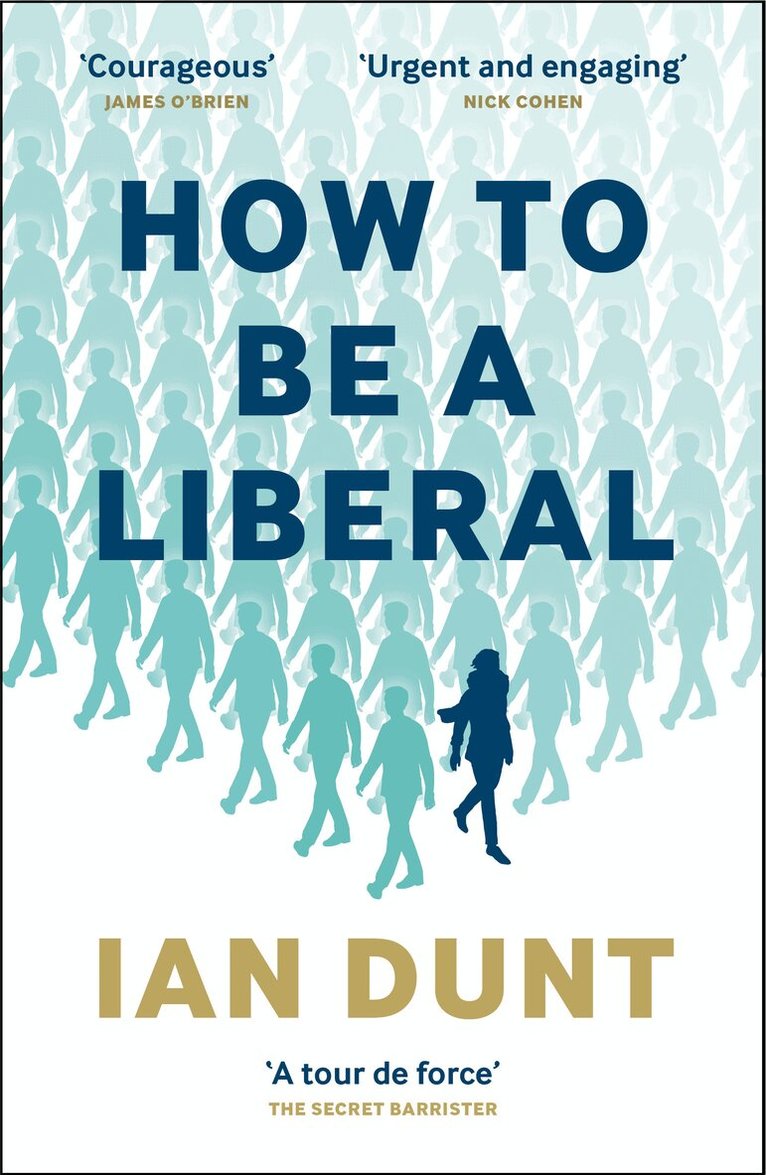
The fightback against populism begins with this work explaining liberal values 'Required reading for anyone interested in politics and philosophy' – Prospect magazine How To Be A Liberal is a bracing, beautifully written history of liberalism — and a practical defence of liberal democracy in an era of nationalism, culture wars, and post‑truth politics. Political journalist Ian Dunt (author of How Westminster Works and co‑presenter of the Origin Stories podcast) takes you from the scientific revolution to the present day, tracing how the idea of individual freedom became the most radical programme in modern politics. Along the way you’ll meet rebels, philosophers, campaigners, and iconoclasts — and see why liberalism still matters to anyone who cares about human rights, reason, and a plural society. Dunt begins where our current crisis starts: the rise of nationalism and its seductive simplifications — attacks on institutions, diversity, and even the possibility of objective truth. He shows how liberalism answers those pressures: by insisting that people are individuals before they are tribes, by defending free enquiry and evidence, and by protecting the space each person needs to live, love, and think as they choose. Inside you’ll find: A compelling narrative history of liberal thought—from Descartes and the birth of modern reason, through revolutionary arguments about rights and consent, to the debates that shaped the modern world.A clear explanation of liberalism’s core principles: individual liberty, equal rights, democratic restraint, and the institutions that keep power accountable.A modern guide to today’s conflicts—identity politics, anti‑truth, and the new nationalism—and what a renewed, radical liberalism could look like. Whether you’re a student of political philosophy, a reader of the history of ideas, or simply looking for a sharper way to understand liberalism and liberal democracy, How To Be A Liberal is an essential, hopeful book: a reminder that freedom is not a slogan, but a practice—and that it begins with the individual. Reviews ‘A tour de force; a mighty trumpet blast for the forces of liberalism and enlightenment in the face of a global tide of ignorance and populism.’ – The Secret Barrister ‘This is a history of ideas as it should be written – brilliant, vivid storytelling about the people who shaped liberalism, the challenges it has faced over the centuries, its commitment to the truth and why it’s now more important than ever to defend it.’ – Caroline Lucas MP ‘How To Be A Liberal is required reading for today’s political debates.’ – Anne Applebaum, Twilight of Democracy 'I'm loving How to be a Liberal. It's really great. I mean breathtakingly good. Bravo.' – Dr Ben Goldacre About the Author Ian Dunt is a journalist, newspaper columnist and co-presents the Origin Story podcast. His first book, Brexit: What the Hell Happens Now? (Canbury Press, 2017), about Britain's challenge in leaving the European Union, was a bestseller. In How To Be A Liberal (Canbury, 2020), he tells the epic story of personal freedom, with panache and a panoramic sweep. Ranging across history, politics and economics, he makes a powerful case for a radical brand of egalitarian liberalism that can safeguard individuals while looking after everyone. Buy the book and start reading