Ian Hudson – författare
Visar alla böcker från författaren Ian Hudson. Handla med fri frakt och snabb leverans.
32 produkter
Who Discovered America?
The Untold History of the Peopling of the Americas
Häftad, 2014
191 kr
Lägg i varukorg
Greatly expanding on his blockbuster 1421, distinguished historian Gavin Menzies uncovers the complete untold history of how mankind came to the Americas-offering new revelations and a radical rethinking of the accepted historical record in Who Discovered America? The iconoclastic historian's …
Who Discovered America?
The Untold History of the Peopling of the Americas
E-bok, 2013
125 kr
Lägg i varukorg
Greatly expanding on his blockbuster 1421 , distinguished historian Gavin Menzies uncovers the complete untold history of how mankind came to the Americas—offering new revelations and a radical rethinking of the accepted historical record in Who Discovered America? The iconoclastic historian’s …
To Live and Die in America
Class, Power, Health and Healthcare
Av Robert Chernomas, Ian Hudson
Häftad, 2013
334 kr
Lägg i varukorg
Reviled as one of the worst healthcare providers in the world, the United States has among the worst indicators of health in the industrialised world, whilst paradoxically spending significantly more on its health care system than any other industrial nation. Economists Robert Chernomas and Ian …
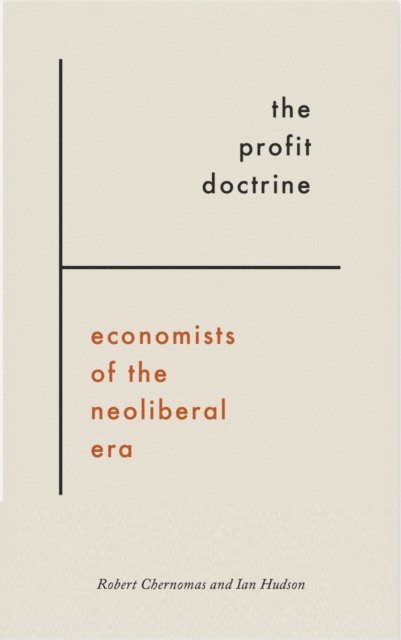
Profit Doctrine
Economists of the Neoliberal Era
Av Robert Chernomas, Ian Hudson
Häftad, 2016
451 kr
Lägg i varukorg
The economics profession has a lot to answer for. After the late 1970s, the ideas of influential economists have justified policies that have made the world more prone to economic crisis, remarkably less equal, more polluted and less secure than it might be. How could ideas and policies that proved …
Profit Doctrine
Economists of the Neoliberal Era
Av Robert Chernomas, Ian Hudson
Inbunden, 2016
1229 kr
Lägg i varukorg
The economics profession has a lot to answer for. After the late 1970s, the ideas of influential economists have justified policies that have made the world more prone to economic crisis, remarkably less equal, more polluted and less secure than it might be. How could ideas and policies that proved …
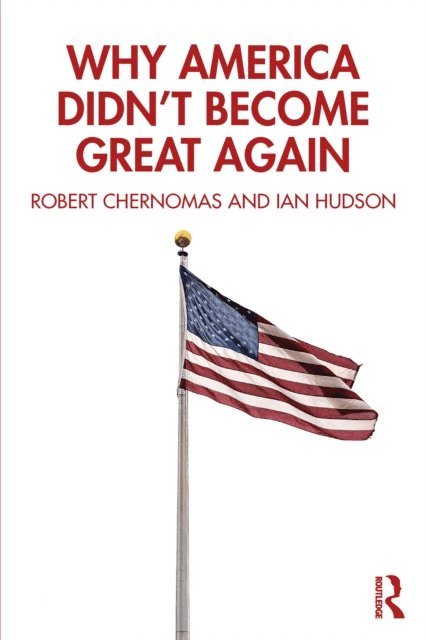
Why America Didn't Become Great Again
Av Robert Chernomas, Ian Hudson
Häftad, 2025
486 kr
Lägg i varukorg
Examining the conditions that not only blocked attempts to make America great again but also actively made the country worse, Why America Didn’t Become Great Again identifies those organizations, institutions, politicians, and prominent characters in the forefront of the economic and social …
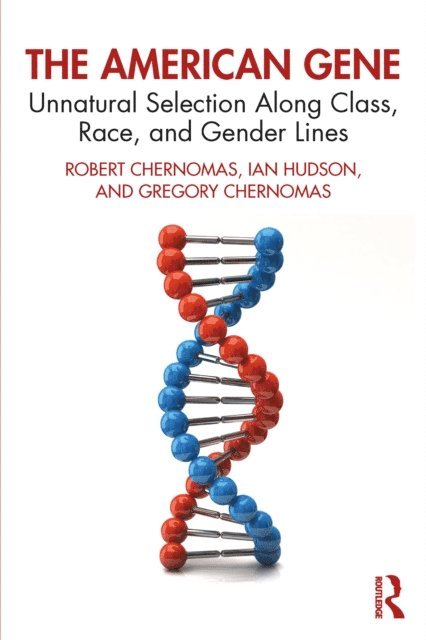
American Gene
Unnatural Selection Along Class, Race, and Gender Lines
Av Robert Chernomas, Ian Hudson m. fl.
Häftad, 2025
500 kr
Lägg i varukorg
"Claims about genetic superiority ignore the real drivers of human inequality", The Conversation, by Robert Chernomas and Ian HudsonBiological justification for all forms of inequality has a long history, with the claim that particular groups suffer disproportionately from inherited flaws of …
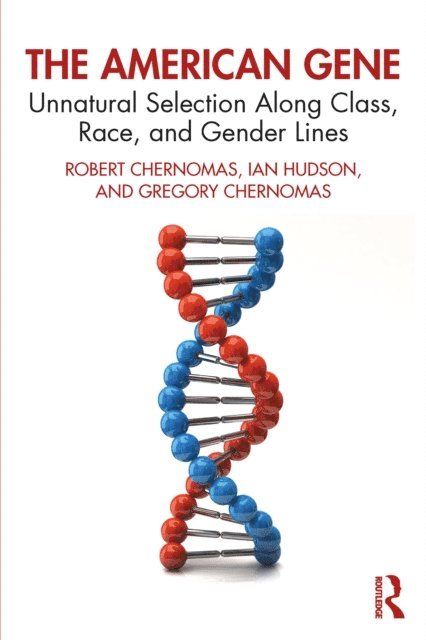
American Gene
Unnatural Selection Along Class, Race, and Gender Lines
Av Robert Chernomas, Ian Hudson m. fl.
Inbunden, 2025
2257 kr
Lägg i varukorg
"Claims about genetic superiority ignore the real drivers of human inequality", The Conversation, by Robert Chernomas and Ian HudsonBiological justification for all forms of inequality has a long history, with the claim that particular groups suffer disproportionately from inherited flaws of …
American Gene
Unnatural Selection Along Class, Race, and Gender Lines
Av Gregory Chernomas, Ian Hudson m. fl.
E-bok, 2025
589 kr
Lägg i varukorg
Biological justification for all forms of inequality has a long history, with the claim that particular groups suffer disproportionately from inherited flaws of ability and character used to explain a remarkably wide variety of inequalities. Providing an important critique of that biodeterminist …
American Gene
Unnatural Selection Along Class, Race, and Gender Lines
Av Gregory Chernomas, Ian Hudson m. fl.
E-bok, 2025
570 kr
Lägg i varukorg
Biological justification for all forms of inequality has a long history, with the claim that particular groups suffer disproportionately from inherited flaws of ability and character used to explain a remarkably wide variety of inequalities. Providing an important critique of that biodeterminist …
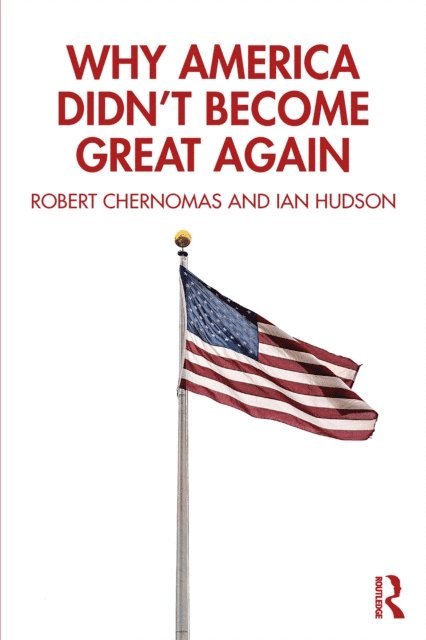
Why America Didn't Become Great Again
Av Ian Hudson, Robert Chernomas
E-bok, 2025
572 kr
Lägg i varukorg
Examining the conditions that not only blocked attempts to make America great again but also actively made the country worse, Why America Didn’t Become Great Again identifies those organizations, institutions, politicians, and prominent characters in the forefront of the economic and social …
Why America Didn't Become Great Again
Av Ian Hudson, Robert Chernomas
E-bok, 2025
559 kr
Lägg i varukorg
Examining the conditions that not only blocked attempts to make America great again but also actively made the country worse, Why America Didn’t Become Great Again identifies those organizations, institutions, politicians, and prominent characters in the forefront of the economic and social …
Why America Didn't Become Great Again
Av Robert Chernomas, Ian Hudson
Inbunden, 2025
2257 kr
Lägg i varukorg
Examining the conditions that not only blocked attempts to make America great again but also actively made the country worse, Why America Didn’t Become Great Again identifies those organizations, institutions, politicians, and prominent characters in the forefront of the economic and social …
Gatekeeper
60 Years of Economics According to the New York Times
Av Ian Hudson, Robert Chernomas
E-bok, 2015
883 kr
Lägg i varukorg
The New York Times is possibly the most influential newspaper in the world. Because of this, it has become the topic of much debate about media bias, with some claiming that it is liberal and others that it is conservative. The Gatekeeper argues that this debate is misleading and that the New York …
Gatekeeper
60 Years of Economics According to the New York Times
Av Ian Hudson, Robert Chernomas
E-bok, 2015
883 kr
Lägg i varukorg
The New York Times is possibly the most influential newspaper in the world. Because of this, it has become the topic of much debate about media bias, with some claiming that it is liberal and others that it is conservative. The Gatekeeper argues that this debate is misleading and that the New York …
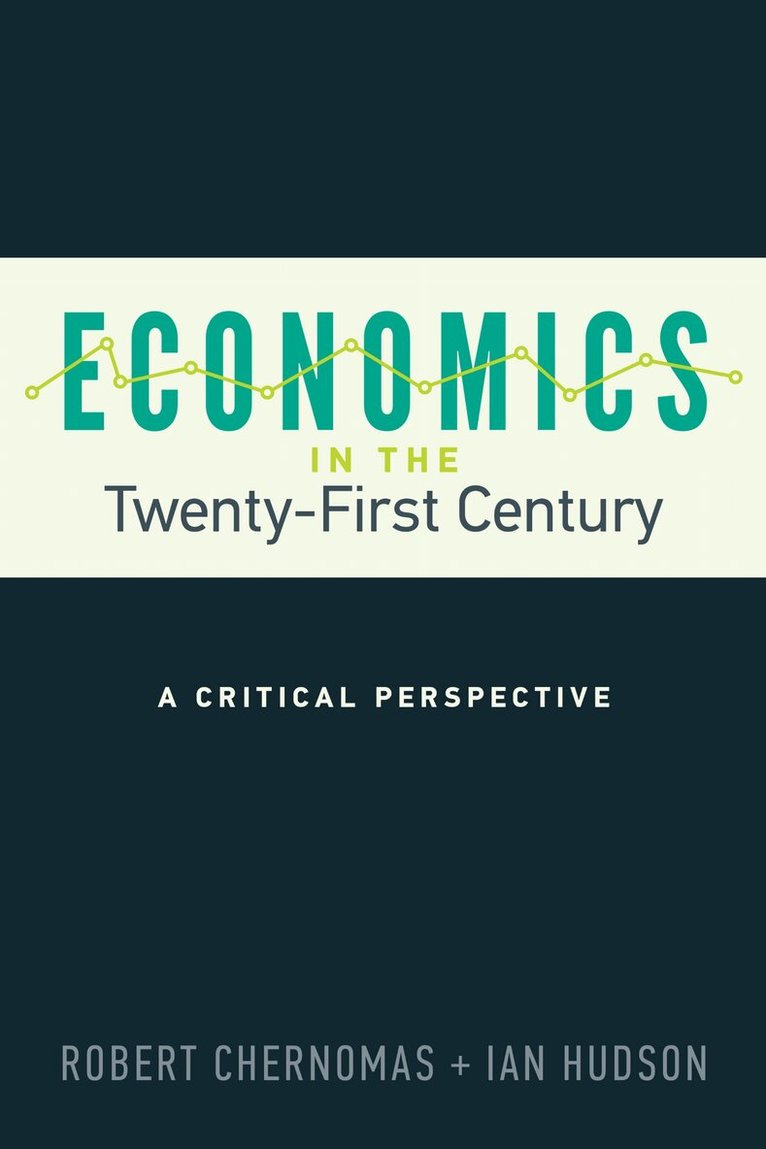
Economics in the Twenty-First Century
A Critical Perspective
Av Robert Chernomas, Ian Hudson
E-bok, 2016
420 kr
Lägg i varukorg
Economics has always been nicknamed the “dismal science,” but today the field seems a little more dismal than usual as governments, social movements, and even students complain that the discipline is failing to make sense of the major economic problems of the day.In Economics in the Twenty-First …
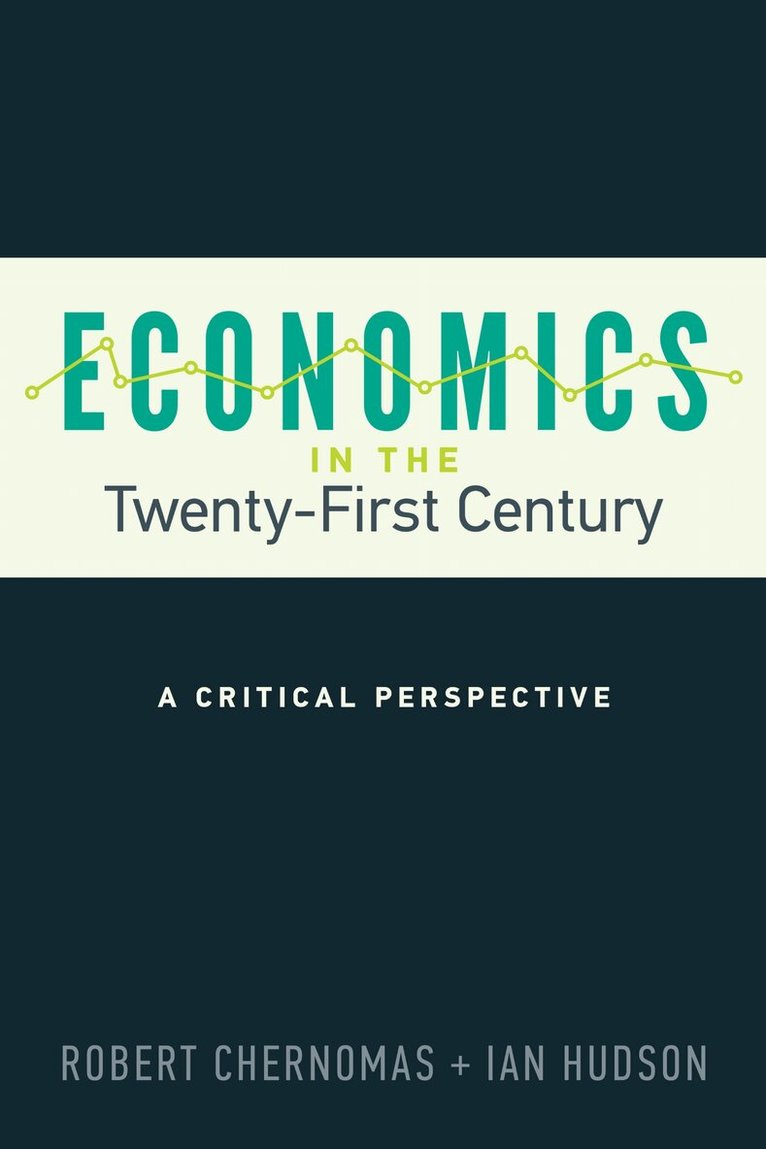
Economics in the Twenty-First Century
A Critical Perspective
Av Robert Chernomas, Ian Hudson
E-bok, 2016
420 kr
Lägg i varukorg
Economics has always been nicknamed the “dismal science,” but today the field seems a little more dismal than usual as governments, social movements, and even students complain that the discipline is failing to make sense of the major economic problems of the day.In Economics in the Twenty-First …
Economics in the Twenty-First Century
A Critical Perspective
Av Robert Chernomas, Ian Hudson
Häftad, 2016
323 kr
Lägg i varukorg
Economics has always been nicknamed the “dismal science,” but today the field seems a little more dismal than usual as governments, social movements, and even students complain that the discipline is failing to make sense of the major economic problems of the day.In Economics in the Twenty-First …
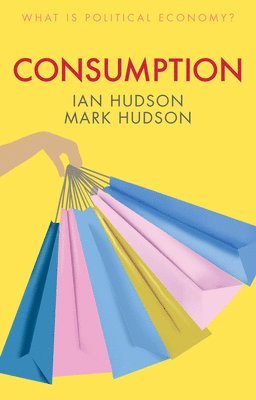
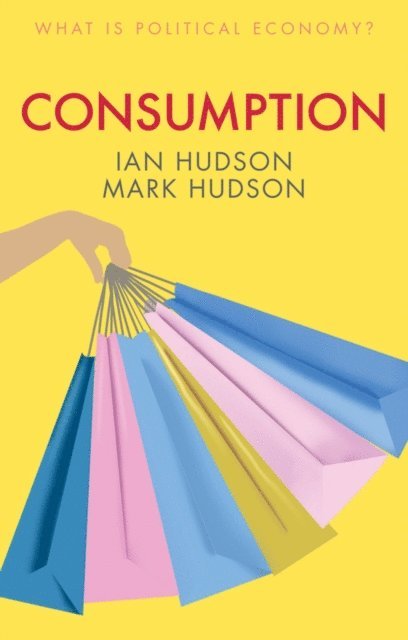
Consumption
Inbunden, 2020
654 kr
Lägg i varukorg
Consumption used to be a disease. Now it is the dominant manner in which most people meet their most basic needs and – if they can afford the price – their wildest desires.In this new book, Ian and Mark Hudson critically examine how consumption has been understood in economic theory before …
Consumption
Häftad, 2020
223 kr
Lägg i varukorg
Consumption used to be a disease. Now it is the dominant manner in which most people meet their most basic needs and – if they can afford the price – their wildest desires.In this new book, Ian and Mark Hudson critically examine how consumption has been understood in economic theory before …
Consumption
E-bok, 2020
247 kr
Lägg i varukorg
Consumption used to be a disease. Now it is the dominant manner in which most people meet their most basic needs and – if they can afford the price – their wildest desires. In this new book, Ian and Mark Hudson critically examine how consumption has been understood in economic theory before …
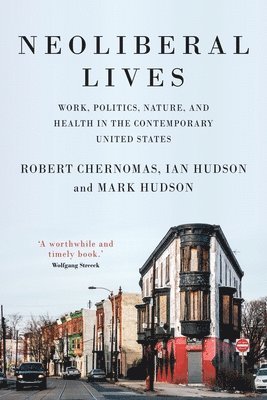
Neoliberal Lives
Work, Politics, Nature, and Health in the Contemporary United States
Av Robert Chernomas, Ian Hudson m. fl.
Inbunden, 2019
1227 kr
Lägg i varukorg
This book is about the transformation of America that has occurred over the past thirty-five years, as capitalist logic has expanded into previously protected spheres of life. This expansion has had devastating effects on the potential for human development. Looking at how human beings create …
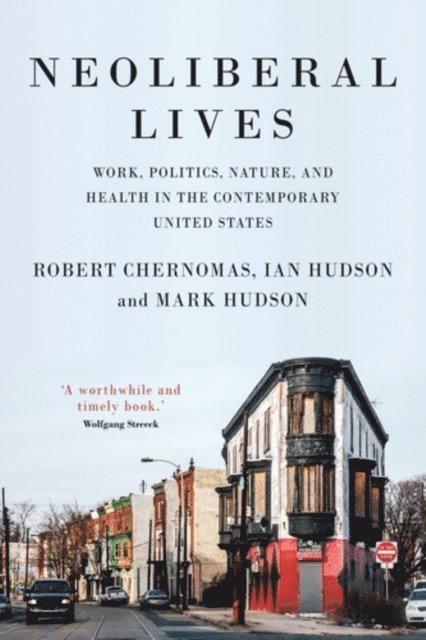
Neoliberal Lives
Work, Politics, Nature, and Health in the Contemporary United States
Av Robert Chernomas, Ian Hudson m. fl.
Häftad, 2020
371 kr
Lägg i varukorg
This book is about the transformation of America that has occurred over the past thirty-five years, as capitalist logic has expanded into previously protected spheres of life. This expansion has had devastating effects on the potential for human development. Looking at how human beings create …
Neoliberal Lives
Work, Politics, Nature, and Health in the Contemporary United States
Av Robert Chernomas, Ian Hudson m. fl.
E-bok, 2019
335 kr
Lägg i varukorg
This book is about the transformation of America that has occurred over the past thirty-five years, as capitalist logic has expanded into previously protected spheres of life. This expansion has had devastating effects on the potential for human development. Looking at how human beings create …
Neoliberal Lives
Work, Politics, Nature, and Health in the Contemporary United States
Av Robert Chernomas, Ian Hudson m. fl.
E-bok, 2019
342 kr
Lägg i varukorg
This book is about the transformation of America that has occurred over the past thirty-five years, as capitalist logic has expanded into previously protected spheres of life. This expansion has had devastating effects on the potential for human development. Looking at how human beings create …
Gatekeeper
60 Years of Economics According to the New York Times
Av Robert Chernomas, Ian Hudson
Inbunden, 2011
2736 kr
Lägg i varukorg
The New York Times is possibly the most influential newspaper in the world. Because of this, it has become the topic of much debate about media bias, with some claiming that it is liberal and others that it is conservative. The Gatekeeper argues that this debate is misleading and that the New York …
Gatekeeper
60 Years of Economics According to the New York Times
Av Robert Chernomas, Ian Hudson
Häftad, 2011
770 kr
Lägg i varukorg
The New York Times is possibly the most influential newspaper in the world. Because of this, it has become the topic of much debate about media bias, with some claiming that it is liberal and others that it is conservative. The Gatekeeper argues that this debate is misleading and that the New York …
Public Service in Tough Times
Working Under Austerity in Manitoba
Av Jesse Hajer, Jesse Hajer m. fl.
Häftad, 2025
342 kr
Lägg i varukorg
A scathing indictment of austerity policy In 2016, Brian Pallister's Progressive Conservative Party of Manitoba successfully campaigned on a platform to reduce taxes and restore the balance between revenue and spending. The years that followed their victory saw wages frozen, emergency rooms closed, …
Public Service in Tough Times
Working Under Austerity in Manitoba
Av Jesse Hajer, Jesse Hajer m. fl.
Inbunden, 2025
796 kr
Lägg i varukorg
Profit Doctrine
Economists of the Neoliberal Era
Av Ian Hudson, Robert Chernomas
E-bok, 2016
57 kr
Lägg i varukorg
The economics profession has a lot to answer for. After the late 1970s, the ideas of influential economists have justified policies that have made the world more prone to economic crisis, remarkably less equal, more polluted and less secure than it might be. How could ideas and policies that proved …