Ian Jared Miller - Böcker
Visar alla böcker från författaren Ian Jared Miller. Handla med fri frakt och snabb leverans.
5 produkter
5 produkter
Del 27 - Asia: Local Studies / Global Themes
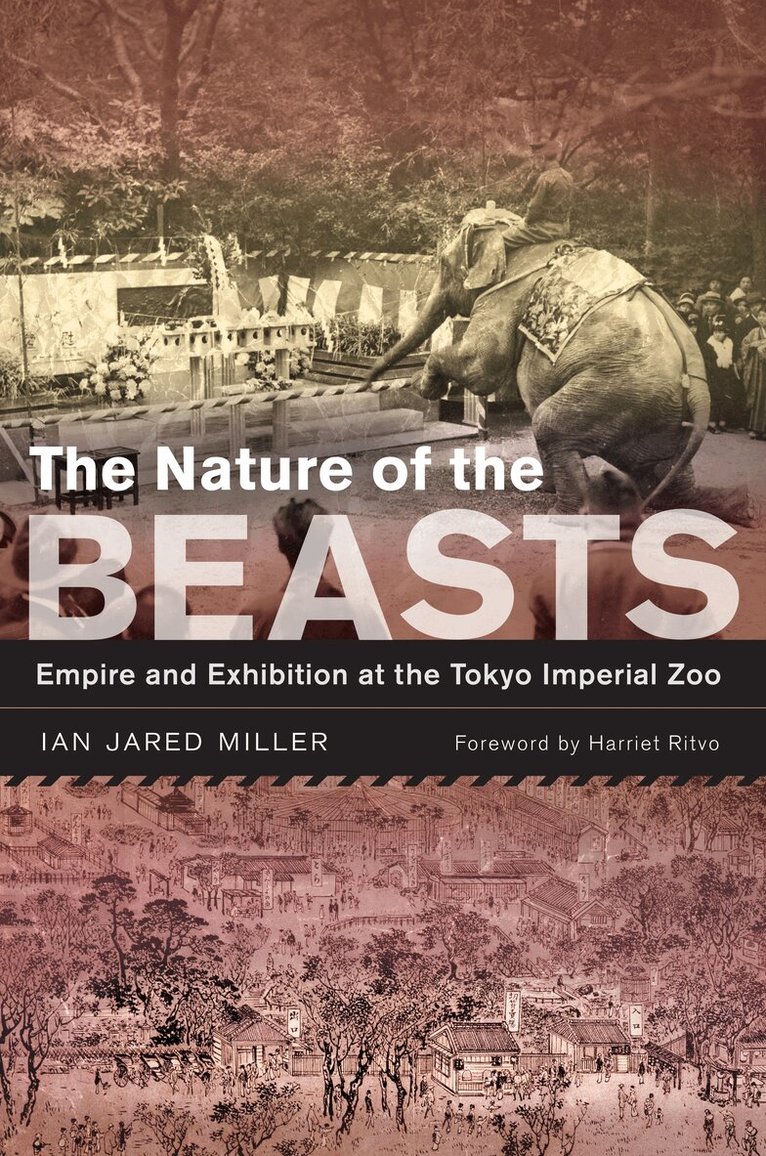
Nature of the Beasts
Empire and Exhibition at the Tokyo Imperial Zoo
Inbunden, Engelska, 2013
1 062 kr
Skickas inom 3-6 vardagar
It is widely known that such Western institutions as the museum, the university, and the penitentiary shaped Japan's emergence as a modern nation-state. Less commonly recognized is the role played by the distinctly hybrid institution - at once museum, laboratory, and prison - of the zoological garden. In this eye-opening study of Japan's first modern zoo, Tokyo's Ueno Imperial Zoological Gardens, opened in 1882, Ian Jared Miller offers a refreshingly unconventional narrative of Japan's rapid modernization and changing relationship with the natural world. As the first zoological garden in the world not built under the sway of a Western imperial regime, the Ueno Zoo served not only as a staple attraction in the nation's capital - an institutional marker of national accomplishment - but also as a site for the propagation of a new "natural" order that was scientifically verifiable and evolutionarily foreordained. As the Japanese empire grew, Ueno became one of the primary sites of imperialist spectacle, a microcosm of the empire that could be traveled in the course of a single day.The meaning of the zoo would change over the course of Imperial Japan's unraveling and subsequent Allied occupation. Today it remains one of Japan's most frequently visited places. But instead of empire in its classic political sense, it now bespeaks the ambivalent dominion of the human species over the natural environment, harkening back to its imperial roots even as it asks us to question our exploitation of the planet's resources.
Del 27 - Asia: Local Studies / Global Themes
Nature of the Beasts
Empire and Exhibition at the Tokyo Imperial Zoo
Häftad, Engelska, 2021
290 kr
Skickas inom 7-10 vardagar
It is widely known that such Western institutions as the museum, the university, and the penitentiary shaped Japan’s emergence as a modern nation-state. Less commonly recognized is the role played by the distinctly hybrid institution—at once museum, laboratory, and prison—of the zoological garden. In this eye-opening study of Japan’s first modern zoo, Tokyo’s Ueno Imperial Zoological Gardens, opened in 1882, Ian Jared Miller offers a refreshingly unconventional narrative of Japan’s rapid modernization and changing relationship with the natural world. As the first zoological garden in the world not built under the sway of a Western imperial regime, the Ueno Zoo served not only as a staple attraction in the nation’s capital—an institutional marker of national accomplishment—but also as a site for the propagation of a new “natural” order that was scientifically verifiable and evolutionarily foreordained. As the Japanese empire grew, Ueno became one of the primary sites of imperialist spectacle, a microcosm of the empire that could be traveled in the course of a single day. The meaning of the zoo would change over the course of Imperial Japan’s unraveling and subsequent Allied occupation. Today it remains one of Japan’s most frequently visited places. But instead of empire in its classic political sense, it now bespeaks the ambivalent dominion of the human species over the natural environment, harkening back to its imperial roots even as it asks us to question our exploitation of the planet’s resources.
722 kr
Skickas inom 10-15 vardagar
Japan at Nature’s Edge is a timely collection of essays that explores the relationship between Japan’s history, culture, and physical environment. It greatly expands the focus of previous work on Japanese modernization by examining Japan’s role in global environmental transformation and how Japanese ideas have shaped bodies and landscapes over the centuries. The immediacy of Earth’s environmental crisis, a predicament highlighted by Japan’s March 2011 disaster, brings a sense of urgency to the study of Japan and its global connections. The work is an environmental history in the broadest sense of the term because it contains writing by environmental anthropologists, a legendary Japanese economist, and scholars of Japanese literature and culture. The editors have brought together an unparalleled assemblage of some of the finest scholars in the field who, rather than treat it in isolation or as a unique cultural community, seek to connect Japan to global environmental currents such as whaling, world fisheries, mountaineering and science, mining and industrial pollution, and relations with nonhuman animals. The contributors assert the importance of the environment in understanding Japan’s history and propose a new balance between nature and culture, one weighted much more heavily on the side of natural legacies. This approach does not discount culture. Instead, it suggests that the Japanese experience of nature, like that of all human beings, is a complex and intimate negotiation between the physical and cultural worlds.
820 kr
Skickas inom 7-10 vardagar
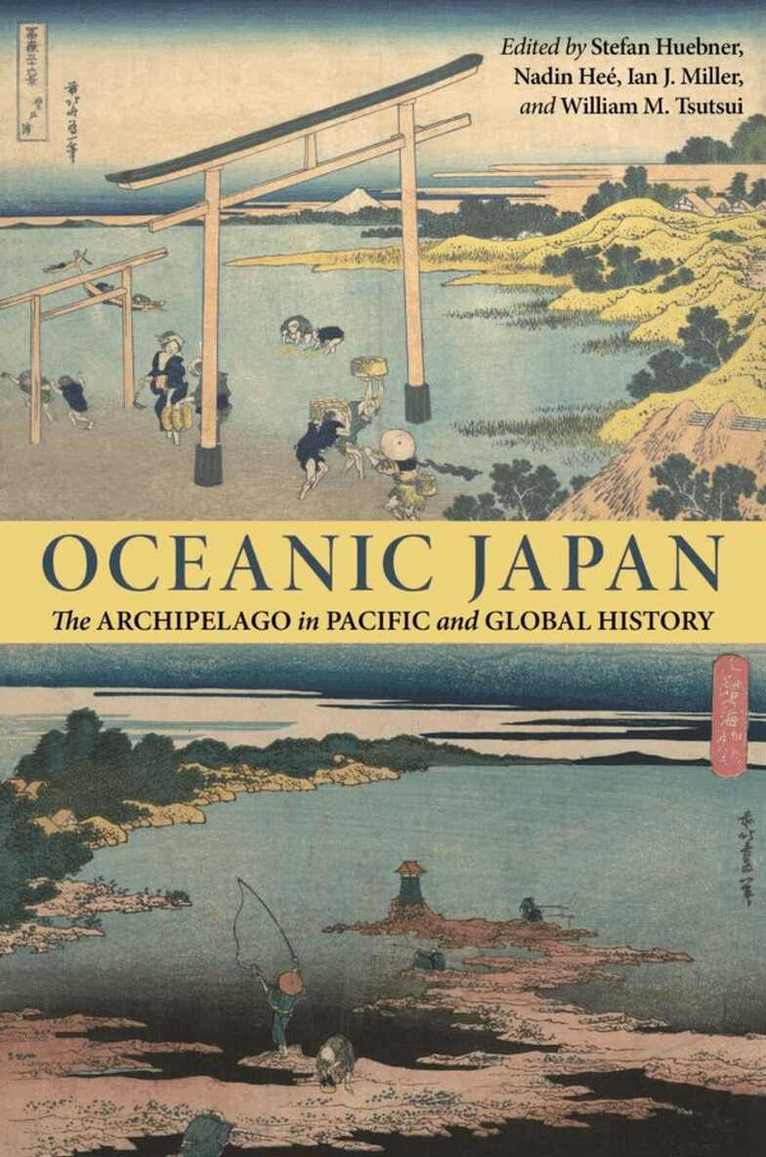
Japan’s oceans demand our attention. Violent, prolific, and changeful, they define life and death on the archipelago: pushing the shore under the rush of tsunami, charging typhoon circulation, feeding millions, and seeding conflicts over territory and resources. And yet, Japan studies remains largely beholden to a terrestrial view of the world that is at odds with the importance of the sea. This “terrestrial bias” also means that on those occasions when oceans are recognized they are most often presented as dividers or connectors—spaces in between rather than rich ecologies and meaningful sites. Oceanic Japan>/i> is meant to help readers re-envision Japanese history in order to show how the seas created the country that we know today.The book convenes a diverse, multinational, multidisciplinary group of scholars to expand the scope of Japan studies and the field of environmental humanities. The chapters draw from the broader turn to the sea—characterized by new oceanic and terraqueous perspectives—developing within these fields and in areas such as Pacific history and Indian Ocean studies. The volume editors’ vision is bifocal. On one hand, they aim to reorient East Asian studies and Japan studies to the sea, underlining how oceans have shaped dynamics from the Tokugawa Era forward into the age of empire and the crisis of the Anthropocene. On the other hand, they argue for a more nuanced environmental approach within the burgeoning field of Oceanic studies. Seeing oceanic spaces as more than entrepots or political spheres requires thinking in new, often vertical, volumetric ways. The chapters follow human and non-human actors to recognize the variegation of watery ecologies through winds, tides, coasts, seabeds, and currents such as the Kuroshio and Oyashio, which have always shaped life on the archipelago.
332 kr
Skickas inom 7-10 vardagar
Japan’s oceans demand our attention. Violent, prolific, and changeful, they define life and death on the archipelago: pushing the shore under the rush of tsunami, charging typhoon circulation, feeding millions, and seeding conflicts over territory and resources. And yet, Japan studies remains largely beholden to a terrestrial view of the world that is at odds with the importance of the sea. This "terrestrial bias" also means that on those occasions when oceans are recognized they are most often presented as dividers or connectors—spaces in between rather than rich ecologies and meaningful sites. Oceanic Japan is meant to help readers re-envision Japanese history in order to show how the seas created the country that we know today. The book convenes a diverse, multinational, multidisciplinary group of scholars to expand the scope of Japan studies and the field of environmental humanities. The chapters draw from the broader turn to the sea—characterized by new oceanic and terraqueous perspectives—developing within these fields and in areas such as Pacific history and Indian Ocean studies. The volume editors' vision is bifocal. On one hand, they aim to reorient East Asian studies and Japan studies to the sea, underlining how oceans have shaped dynamics from the Tokugawa Era forward into the age of empire and the crisis of the Anthropocene. On the other hand, they argue for a more nuanced environmental approach within the burgeoning field of Oceanic studies. Seeing oceanic spaces as more than entrepots or political spheres requires thinking in new, often vertical, volumetric ways. The chapters follow human and non-human actors to recognize the variegation of watery ecologies through winds, tides, coasts, seabeds, and currents such as the Kuroshio and Oyashio, which have always shaped life on the archipelago.