Stefan Huebner - Böcker
Visar alla böcker från författaren Stefan Huebner. Handla med fri frakt och snabb leverans.
7 produkter
7 produkter
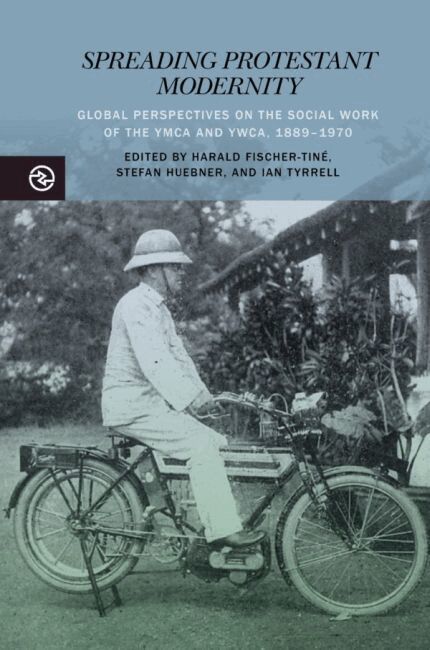
Spreading Protestant Modernity
Global Perspectives on the Social Work of the YMCA and YWCA, 1889-1970
Inbunden, Engelska, 2020
741 kr
Skickas inom 10-15 vardagar
A half century after its founding in London in 1844, the Young Men's Christian Association (YMCA) became the first NGO to effectively push a modernization agenda around the globe. Soon followed by a sister organization, the Young Women's Christian Association (YWCA), founded in 1855, the Y-movement defined its global mission in 1889. Although their agendas have been characterized as predominantly religious, both the YMCA and YWCA were also known for their new vision of a global civil society and became major agents in the world-wide dissemination of modern "Western" bodies of knowledge.The YMCA's and YWCA's "secular" social work was partly rooted in the Anglo-American notions of the "social gospel" that became popular during the 1890s. The Christian lay organizations' vision of a "Protestant Modernity" increasingly globalized their "secular" social work that transformed notions of science, humanitarianism, sports, urban citizenship, agriculture, and gender relations. Spreading Protestant Modernity shows how the YMCA and YWCA became crucial in circulating various forms of knowledge and practices that were related to this vision, and how their work was coopted by governments and rival NGOs eager to achieve similar ends.The studies assembled in this collection explore the influence of the YMCA's and YWCA's work on highly diverse societies in South, Southeast, and East Asia, North America, Africa, and Eastern Europe. Focusing on two of the most prominent representative groups within the Protestant youth, social service, and missionary societies (the so-called "Protestant International"), the book provides new insights into the evolution of global civil society in the nineteenth and twentieth centuries, and its multifarious, seemingly secular, legacies for today's world.Spreading Protestant Modernity offers a compelling read for those interested in global history, the history of colonialism and decolonization, the history of Protestant internationalism, and the trajectories of global civil society. While each study is based on rigorous scholarship, the discussion and analyses are in accessible language that allows everyone from undergraduate students to advanced academics to appreciate the Y-movement's role in social transformations across the world.
Spreading Protestant Modernity
Global Perspectives on the Social Work of the YMCA and YWCA, 1889-1970
Häftad, Engelska, 2022
283 kr
Skickas inom 7-10 vardagar
A half century after its founding in London in 1844, the Young Men’s Christian Association (YMCA) became the first NGO to effectively push a modernization agenda around the globe. Soon followed by a sister organization, the Young Women’s Christian Association (YWCA), founded in 1855, the Y movement defined its global mission in 1889. Although their agendas have been characterized as predominantly religious, both the YMCA and YWCA were also known for their new vision of a global civil society and became major agents in the worldwide dissemination of modern "Western" bodies of knowledge.The YMCA’s and YWCA’s "secular" social work was partly rooted in the Anglo-American notions of the "social gospel" that became popular during the 1890s. The Christian lay organizations’ vision of a "Protestant Modernity" increasingly globalized their "secular" social work that transformed notions of science, humanitarianism, sports, urban citizenship, agriculture, and gender relations. Spreading Protestant Modernity shows how the YMCA and YWCA became crucial in circulating various forms of knowledge and practices that were related to this vision, and how their work was co-opted by governments and rival NGOs eager to achieve similar ends.The studies assembled in this collection explore the influence of the YMCA’s and YWCA’s work on highly diverse societies in South, Southeast, and East Asia; North America; Africa; and Eastern Europe. Focusing on two of the most prominent representative groups within the Protestant youth, social service, and missionary societies (the so-called "Protestant International"), the book provides new insights into the evolution of global civil society in the nineteenth and twentieth centuries, and its multifarious, seemingly secular, legacies for today’s world.Spreading Protestant Modernity offers a compelling read for those interested in global history, the history of colonialism and decolonization, the history of Protestant internationalism, and the trajectories of global civil society. While each study is based on rigorous scholarship, the discussion and analyses are in accessible language that allows everyone from undergraduate students to advanced academics to appreciate the Y movement’s role in social transformations across the world.
820 kr
Skickas inom 7-10 vardagar
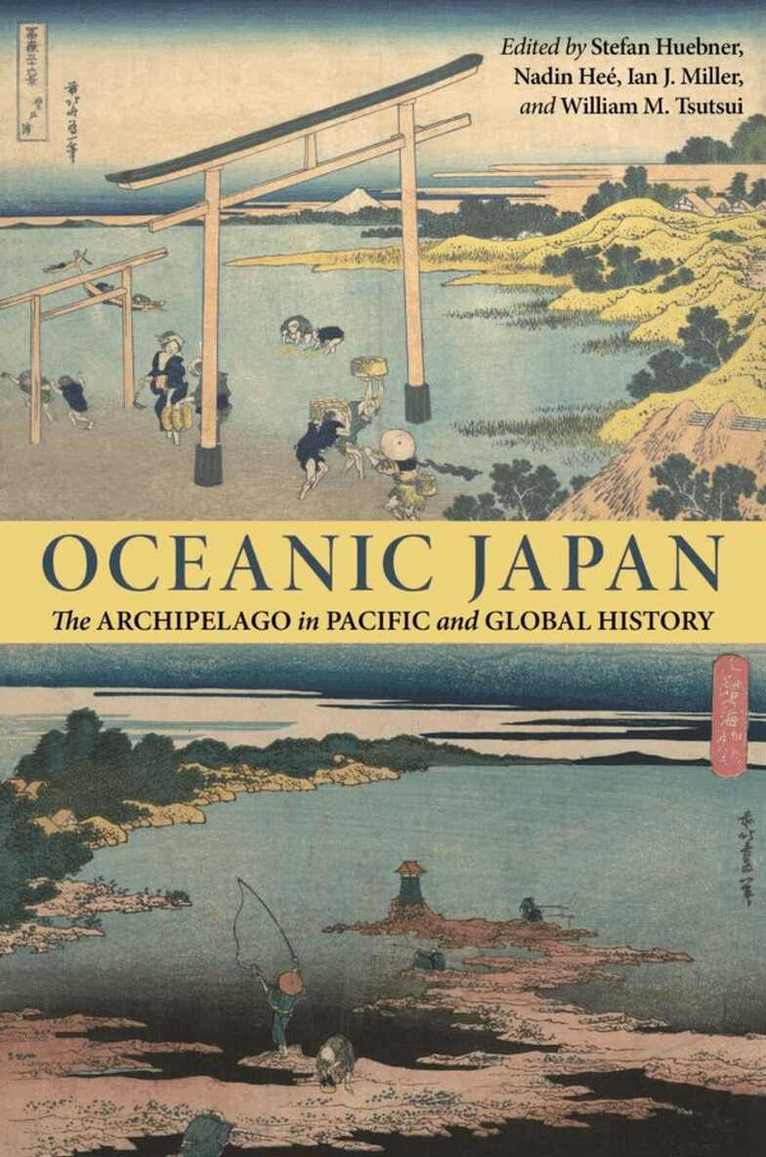
Japan’s oceans demand our attention. Violent, prolific, and changeful, they define life and death on the archipelago: pushing the shore under the rush of tsunami, charging typhoon circulation, feeding millions, and seeding conflicts over territory and resources. And yet, Japan studies remains largely beholden to a terrestrial view of the world that is at odds with the importance of the sea. This “terrestrial bias” also means that on those occasions when oceans are recognized they are most often presented as dividers or connectors—spaces in between rather than rich ecologies and meaningful sites. Oceanic Japan>/i> is meant to help readers re-envision Japanese history in order to show how the seas created the country that we know today.The book convenes a diverse, multinational, multidisciplinary group of scholars to expand the scope of Japan studies and the field of environmental humanities. The chapters draw from the broader turn to the sea—characterized by new oceanic and terraqueous perspectives—developing within these fields and in areas such as Pacific history and Indian Ocean studies. The volume editors’ vision is bifocal. On one hand, they aim to reorient East Asian studies and Japan studies to the sea, underlining how oceans have shaped dynamics from the Tokugawa Era forward into the age of empire and the crisis of the Anthropocene. On the other hand, they argue for a more nuanced environmental approach within the burgeoning field of Oceanic studies. Seeing oceanic spaces as more than entrepots or political spheres requires thinking in new, often vertical, volumetric ways. The chapters follow human and non-human actors to recognize the variegation of watery ecologies through winds, tides, coasts, seabeds, and currents such as the Kuroshio and Oyashio, which have always shaped life on the archipelago.
332 kr
Skickas inom 7-10 vardagar
Japan’s oceans demand our attention. Violent, prolific, and changeful, they define life and death on the archipelago: pushing the shore under the rush of tsunami, charging typhoon circulation, feeding millions, and seeding conflicts over territory and resources. And yet, Japan studies remains largely beholden to a terrestrial view of the world that is at odds with the importance of the sea. This "terrestrial bias" also means that on those occasions when oceans are recognized they are most often presented as dividers or connectors—spaces in between rather than rich ecologies and meaningful sites. Oceanic Japan is meant to help readers re-envision Japanese history in order to show how the seas created the country that we know today. The book convenes a diverse, multinational, multidisciplinary group of scholars to expand the scope of Japan studies and the field of environmental humanities. The chapters draw from the broader turn to the sea—characterized by new oceanic and terraqueous perspectives—developing within these fields and in areas such as Pacific history and Indian Ocean studies. The volume editors' vision is bifocal. On one hand, they aim to reorient East Asian studies and Japan studies to the sea, underlining how oceans have shaped dynamics from the Tokugawa Era forward into the age of empire and the crisis of the Anthropocene. On the other hand, they argue for a more nuanced environmental approach within the burgeoning field of Oceanic studies. Seeing oceanic spaces as more than entrepots or political spheres requires thinking in new, often vertical, volumetric ways. The chapters follow human and non-human actors to recognize the variegation of watery ecologies through winds, tides, coasts, seabeds, and currents such as the Kuroshio and Oyashio, which have always shaped life on the archipelago.
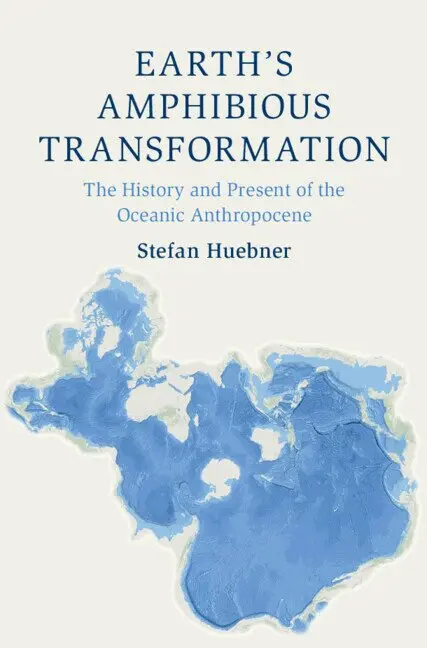
Earth's Amphibious Transformation
The History and Present of the Oceanic Anthropocene
Inbunden, Engelska, 2026
1 543 kr
Kommande
In the first history of the oceanic Anthropocene, Stefan Huebner explores the twentieth-century extension of human habitats into oceanic spaces. He shows how the effects of this amphibious transformation have followed a very different trajectory from human-driven change on land, in terms of both socioeconomic development and environmental degradation. The extension of the human habitat through artificial islands such as seabed-fixed and floating structures has granted vertical access to Earth's different spatial layers, from the fossil fuels beneath the seabed to outer space. Huebner asks why this transformation occurred; how it has been shaped by political, economic, and environmental factors; and how it has altered marine environments. A deeper understanding of Earth's amphibious transformation compels us to reconsider the history and future of climate change, sea level rise, energy transitions, human-marine species interactions, globalization, and even urbanization, including floating cities. This title is also available as open access on Cambridge Core.
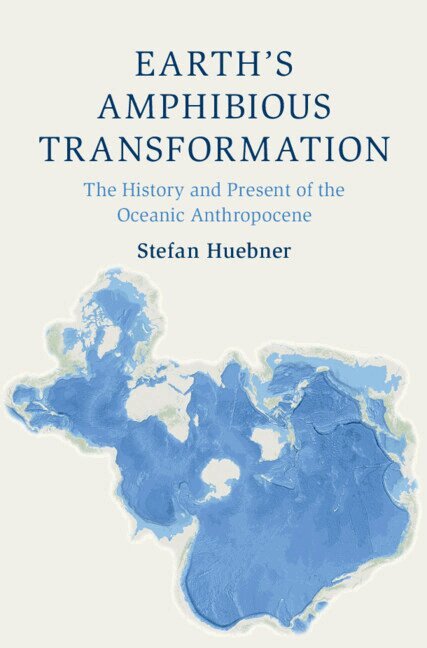
Earth's Amphibious Transformation
The History and Present of the Oceanic Anthropocene
Häftad, Engelska, 2026
566 kr
Kommande
In the first history of the oceanic Anthropocene, Stefan Huebner explores the twentieth-century extension of human habitats into oceanic spaces. He shows how the effects of this amphibious transformation have followed a very different trajectory from human-driven change on land, in terms of both socioeconomic development and environmental degradation. The extension of the human habitat through artificial islands such as seabed-fixed and floating structures has granted vertical access to Earth's different spatial layers, from the fossil fuels beneath the seabed to outer space. Huebner asks why this transformation occurred; how it has been shaped by political, economic, and environmental factors; and how it has altered marine environments. A deeper understanding of Earth's amphibious transformation compels us to reconsider the history and future of climate change, sea level rise, energy transitions, human-marine species interactions, globalization, and even urbanization, including floating cities. This title is also available as open access on Cambridge Core.
454 kr
Skickas inom 7-10 vardagar
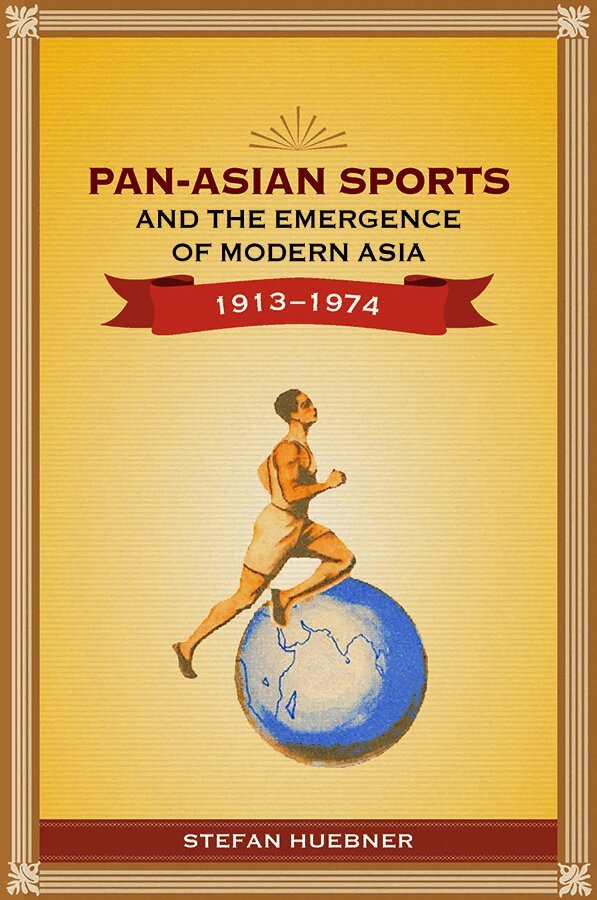
The history of regional sporting events in 20th-century Asia yields insights into Western and Asian perspectives on what defines modern Asia, and can be read as a staging of power relations in Asia and between Asia and the West. The Far Eastern Championship Games began in 1913, and were succeeded after the Pacific War by the Asian Games. Missionary groups and colonial administrations viewed sporting success not only as a triumph of physical strength and endurance but also of moral education and social reform. Sporting competitions were to shape a “new Asian man” and later a “new Asian woman” by promoting internationalism, egalitarianism and economic progress, all serving to direct a “rising” Asia toward modernity. Over time, exactly what constituted a “rising” Asia underwent remarkable changes, ranging from the YMCA’s promotion of muscular Christianity, democratization, and the social gospel in the US-colonized Philippines to Iranian visions of recreating the Great Persian Empire.Based on a vast range of archival materials and spanning 60 years and 3 continents, Pan-Asian Sports and the Emergence of Modern Asia shows how pan-Asian sporting events helped shape anti-colonial sentiments, Asian nationalisms, and pan-Asian aspirations in places as diverse as Japan and Iran, and across the span of countries lying between them.