Ian Saxine - Böcker
Visar alla böcker från författaren Ian Saxine. Handla med fri frakt och snabb leverans.
2 produkter
2 produkter
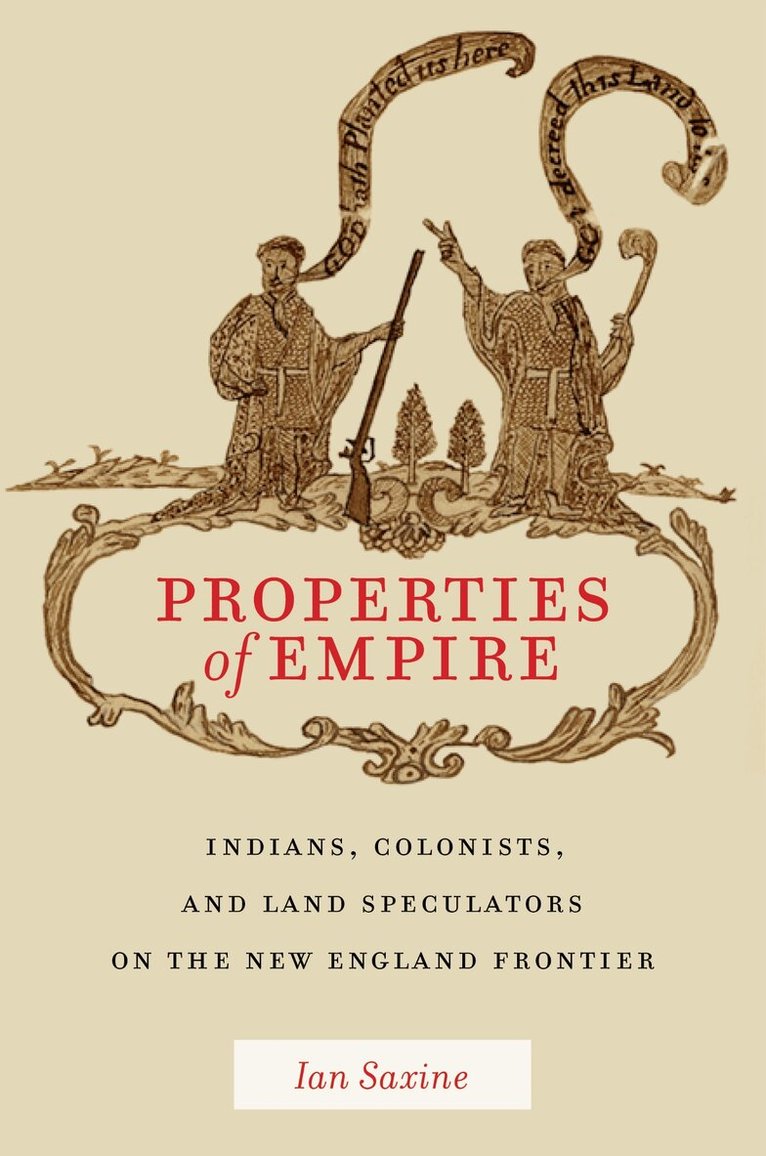
Properties of Empire
Indians, Colonists, and Land Speculators on the New England Frontier
Inbunden, Engelska, 2019
472 kr
Skickas inom 10-15 vardagar
A fascinating history of a contested frontier, where struggles over landownership brought Native Americans and English colonists togetherProperties of Empire shows the dynamic relationship between Native and English systems of property on the turbulent edge of Britain's empire, and how so many colonists came to believe their prosperity depended on acknowledging Indigenous land rights.As absentee land speculators and hardscrabble colonists squabbled over conflicting visions for the frontier, Wabanaki Indians' unity allowed them to forcefully project their own interpretations of often poorly remembered old land deeds and treaties. The result was the creation of a system of property in Maine that defied English law, and preserved Native power and territory. Eventually, ordinary colonists, dissident speculators, and grasping officials succeeded in undermining and finally destroying this arrangement, a process that took place in councils and courtrooms, in taverns and treaties, and on battlefields.Properties of Empire challenges assumptions about the relationship between Indigenous and imperial property creation in early America, as well as the fixed nature of Indian "sales" of land, revealing the existence of a prolonged struggle to re-interpret seventeenth-century land transactions and treaties well into the eighteenth century. The ongoing struggle to construct a commonly agreed-upon culture of landownership shaped diplomacy, imperial administration, and matters of colonial law in powerful ways, and its legacy remains with us today.
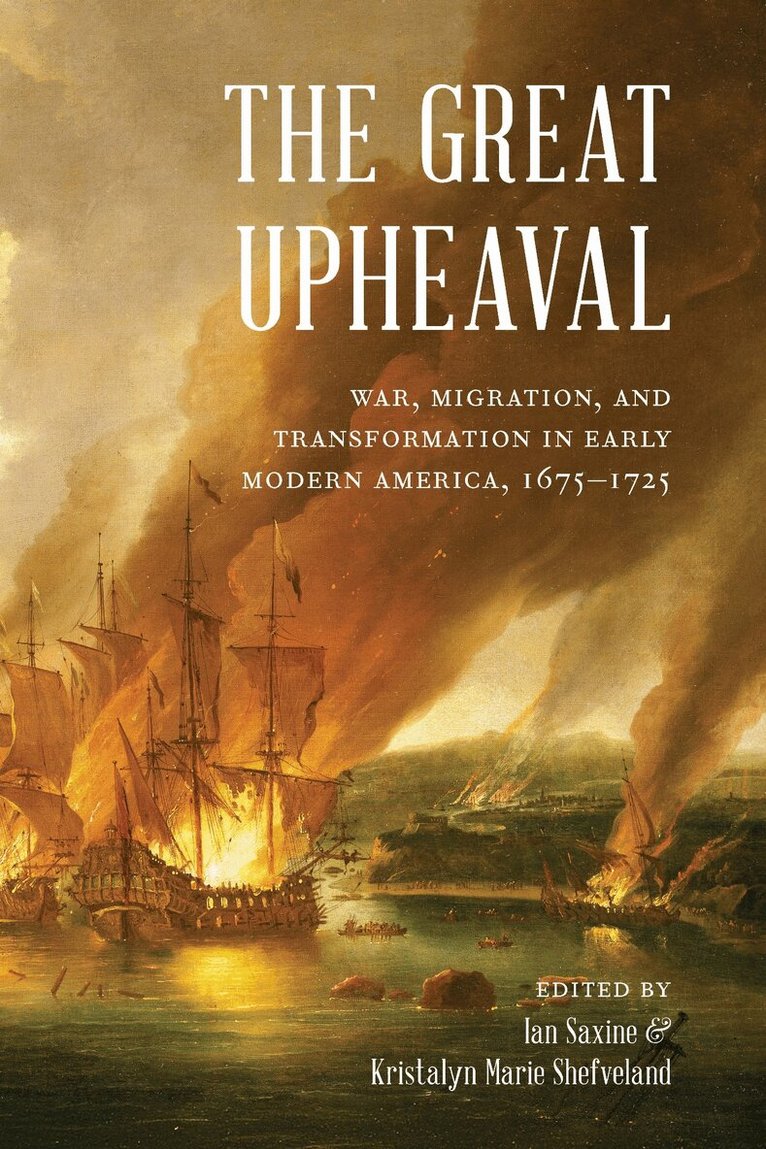
Great Upheaval
War, Migration, and Transformation in Early Modern America, 1675–1725
Inbunden, Engelska, 2026
772 kr
Skickas inom 10-15 vardagar
The Great Upheaval seeks to challenge the periodization employed by most Anglophone scholars of colonial North America and to better integrate scholarship of North America and the Atlantic world with broader early modern histories. Imperial crises were not mere disturbances in a long story of imperial consolidation that began in the early seventeenth century; for a half century these crises—not growth or stability—were the norm. The contributors treat these numerous outbreaks of violence not as interruptions in a “provincial” era but as marking a distinct period in time: the Great Upheaval.The rigidly enforced social hierarchies in colonial North America during this era accelerated the exchange of people, goods, and ideas in unprecedented volumes, accompanied by rising Anglophone military and commercial power at sea, and a population increase of colonists that were all not only preceded by, but made possible by, the Great Upheaval.