Ian Whittington - Böcker
Visar alla böcker från författaren Ian Whittington. Handla med fri frakt och snabb leverans.
5 produkter
5 produkter
129 kr
Skickas inom 7-10 vardagar
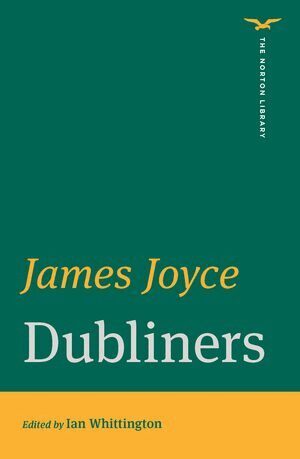
Dubliners is James Joyce’s collection of fifteen short stories that vividly depict middle-class life in early twentieth-century Dublin. Edited by Ian Whittington, the Norton Library edition features the text of the first (1914) edition, including corrections compiled separately by Joyce, a thorough introduction to the work’s historical and literary contexts, and explanatory endnotes.
476 kr
Skickas
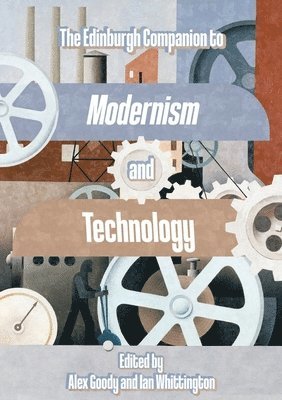
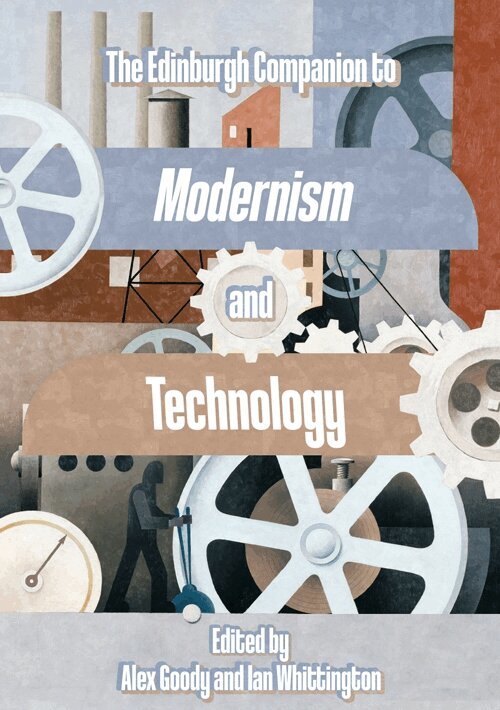
Though modernism's emergence in an environment of techno-cultural acceleration has long been recognized, recent scholarship has deepened and challenged our understanding of the connections between twentieth-century cultural production and its technological interlocutors. In twenty-eight chapters by leading academics, The Edinburgh Companion to Modernism and Technology re-examines the machines and media that functioned as modernism's contexts and competitors. Grounded in an interdisciplinary approach informed by the theoretical and socio-historical frames of current teaching and research on modernism and technology, this research volume makes a crucial and timely intervention in the field of modernist studies. The scholarly contributions on machines that govern transport, production, and public utilities, on media and communication technologies, on the intersections of technology with the human body, and on the technological systems of the early twentieth century capture the contemporary state of modernist technology studies and chart the future directions of this vibrant area.
1 303 kr
Skickas inom 7-10 vardagar
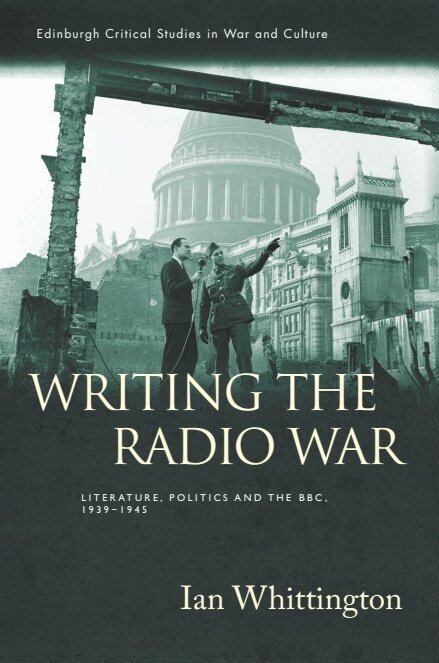
Wartime British writers took to the airwaves to reshape the nation and the Empire'Writing the Radio War' positions the Second World War as a critical moment in the history of cultural mediation in Britain. Through chapters focusing on the middlebrow radicalism of J.B. Priestley, ground-breaking works by Louis MacNeice and James Hanley at the BBC Features Department, frontline reporting by Denis Johnston, and the emergence of a West Indian literary identity in the broadcasts of Una Marson, 'Writing the Radio War' explores how these writers capitalised on the particularities of the sonic medium to communicate their visions of wartime and postwar Britain and its empire. By combining literary aesthetics with the acoustics of space, accent, and dialect, writers created aural communities that at times converged, and at times contended, with official wartime versions of Britain and Britishness.Key FeaturesMerges the fields of sound studies, radio studies, and Second World War literary studies through considerations of both major and marginalized figures of wartime broadcastingBrings substantial but underused archival material (from the BBC Written Archives Centre, the Harry Ransom Humanities Research Center, the British Library, and other archives) to bear on the cultural importance of radio during the warForegrounds the role of radio in bridging literary movements from the highbrow to the middlebrow, and from the regional to the imperialDraws on Listener Research Reports, listener correspondence, newspaper coverage, and surveys by Mass Observation and the Wartime Social Survey in order to capture listeners' responses to wartime broadcasting in general as well as specific programsFills a gap in accounts of literary radio broadcasting, between Todd Avery's Radio Modernism (which ends at 1939) and postwar accounts of the Third Programme (by Humphrey Carpenter and Kate Whitehead) and individual writer-broadcasters
635 kr
Skickas inom 3-6 vardagar
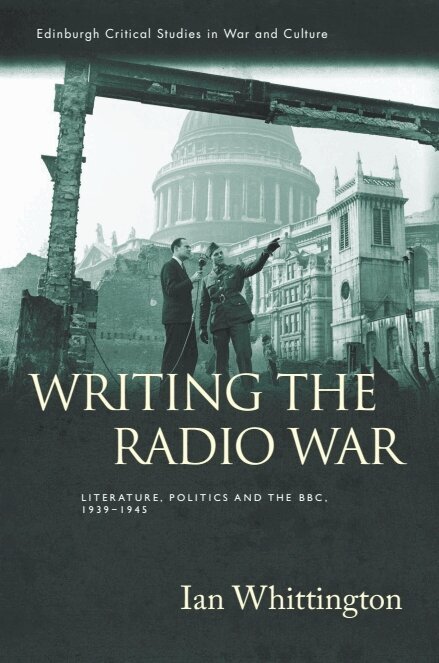
Wartime British writers took to the airwaves to reshape the nation and the EmpireWriting the Radio War positions the Second World War as a critical moment in the history of cultural mediation in Britain. Through chapters focusing on the middlebrow radicalism of J.B. Priestley, ground-breaking works by Louis MacNeice and James Hanley at the BBC Features Department, frontline reporting by Denis Johnston, and the emergence of a West Indian literary identity in the broadcasts of Una Marson, Writing the Radio War explores how these writers capitalised on the particularities of the sonic medium to communicate their visions of wartime and postwar Britain and its empire. By combining literary aesthetics with the acoustics of space, accent, and dialect, writers created aural communities that at times converged, and at times contended, with official wartime versions of Britain and Britishness. Key FeaturesMerges the fields of sound studies, radio studies, and Second World War literary studies through considerations of both major and marginalized figures of wartime broadcastingBrings substantial but underused archival material (from the BBC Written Archives Centre, the Harry Ransom Humanities Research Center, the British Library, and other archives) to bear on the cultural importance of radio during the warForegrounds the role of radio in bridging literary movements from the highbrow to the middlebrow, and from the regional to the imperialDraws on Listener Research Reports, listener correspondence, newspaper coverage, and surveys by Mass Observation and the Wartime Social Survey in order to capture listeners’ responses to wartime broadcasting in general as well as specific programsFills a gap in accounts of literary radio broadcasting, between Todd Avery’s Radio Modernism (which ends at 1939) and postwar accounts of the Third Programme (by Humphrey Carpenter and Kate Whitehead) and individual writer-broadcasters
3 766 kr
Skickas inom 3-6 vardagar
Though modernism's emergence in an environment of techno-cultural acceleration has long been recognized, recent scholarship has deepened and challenged our understanding of the connections between twentieth-century cultural production and its technological interlocutors. In twenty-eight chapters by leading academics, The Edinburgh Companion to Modernism and Technology re-examines the machines and media that functioned as modernism's contexts and competitors. Grounded in an interdisciplinary approach informed by the theoretical and socio-historical frames of current teaching and research on modernism and technology, this research volume makes a crucial and timely intervention in the field of modernist studies. The scholarly contributions on machines that govern transport, production, and public utilities, on media and communication technologies, on the intersections of technology with the human body, and on the technological systems of the early twentieth century capture the contemporary state of modernist technology studies and chart the future directions of this vibrant area.