Ida Altman - Böcker
Visar alla böcker från författaren Ida Altman. Handla med fri frakt och snabb leverans.
8 produkter
8 produkter
Del 12 - Latin American Originals
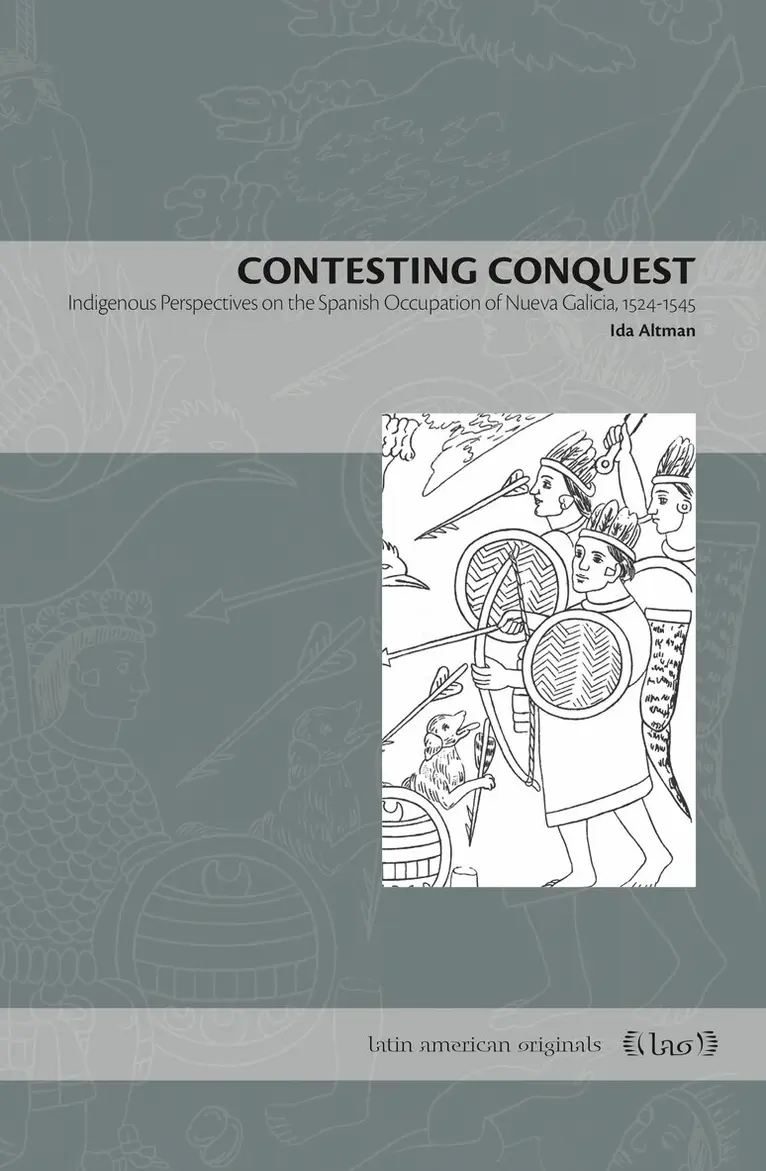
Contesting Conquest
Indigenous Perspectives on the Spanish Occupation of Nueva Galicia, 1524–1545
Häftad, Engelska, 2017
392 kr
Skickas inom 5-8 vardagar
Contesting Conquest presents an important set of indigenous and Spanish accounts that document Spain’s efforts to establish control over western Mexico during the first half of the sixteenth century.Though the 1521 defeat of the Mexica of Tenochtitlan signaled the downfall of the Aztec empire, large areas outside of central Mexico still remained beyond the Spaniards’ control. Home to groups such as the Maya of present-day Yucatan and Guatemala and the diverse peoples of western Mexico, these regions were remarkably resilient in the face of Spanish conquest. Ida Altman provides the first English translations of a set of accounts that directly reflect the perspectives of these indigenous peoples. These include a chronicle of Mendoza’s campaign during the Mixton War, a letter from the exiled rebel leader Tenamaztle, and an account written by or on behalf of the rulers of the indigenous community of Xalisco. The narratives are supplemented by translations from Spanish sources that shed light on indigenous-Spanish interaction and conflict. Together these accounts provide insights into indigenous struggles and illuminate the resistance met by their would-be conquerors.Providing multiple perspectives on Spanish campaigns to conquer modern-day Mexico and giving indigenous voices equal weight to that of the conquistadores, this book is an essential counterpoint to standard narratives of the Spanish conquest. It will be especially useful to students and scholars of Latin American colonial history.
684 kr
Skickas inom 3-6 vardagar
To Make America: European Emigration in the Early Modern Period brings together leading scholars to examine one of the most consequential yet understudied forces in Atlantic history: the mass movement of Europeans across the ocean between the sixteenth and eighteenth centuries. Edited by Ida Altman and James Horn, this collection explores how migrants from Spain, England, France, and Germany reshaped both their homelands and the diverse colonial societies of the New World. Essays trace the sheer magnitude of emigration—over a million settlers before 1800—while probing the experiences of the people themselves: hidalgos and artisans, indentured servants and redemptioners, filles du roi and convicts. The volume reveals how kinship networks, labor contracts, and state policies structured migration flows, and how poverty, profit, and the pursuit of religious or political refuge motivated departures.Framing emigration as a transatlantic phenomenon rather than a series of isolated national stories, the book highlights both the diversity and commonality of the European diaspora. Contributors show how regional origins in Europe tied migrants to specific destinations, how the balance between free and unfree labor shaped colonial societies, and how enduring family and commercial connections prevented most colonies from becoming culturally isolated enclaves. Richly comparative, the volume situates indentured servitude alongside the rise of African slavery, explores the interplay of voluntary and coerced migration, and redefines the “making of America” as a process forged through overlapping, mutually influential transatlantic communities. Essential reading for historians of migration, empire, and early modern society, To Make America offers a landmark synthesis of how Europe’s restless multitudes created the foundations of the Americas while simultaneously transforming the Old World they left behind.This title is part of UC Press's Voices Revived program, which commemorates University of California Press’s mission to seek out and cultivate the brightest minds and give them voice, reach, and impact. Drawing on a backlist dating to 1893, Voices Revived makes high-quality, peer-reviewed scholarship accessible once again using print-on-demand technology. This title was originally published in 1991.
777 kr
Skickas inom 7-10 vardagar
To Make America: European Emigration in the Early Modern Period brings together leading scholars to examine one of the most consequential yet understudied forces in Atlantic history: the mass movement of Europeans across the ocean between the sixteenth and eighteenth centuries. Edited by Ida Altman and James Horn, this collection explores how migrants from Spain, England, France, and Germany reshaped both their homelands and the diverse colonial societies of the New World. Essays trace the sheer magnitude of emigration—over a million settlers before 1800—while probing the experiences of the people themselves: hidalgos and artisans, indentured servants and redemptioners, filles du roi and convicts. The volume reveals how kinship networks, labor contracts, and state policies structured migration flows, and how poverty, profit, and the pursuit of religious or political refuge motivated departures.Framing emigration as a transatlantic phenomenon rather than a series of isolated national stories, the book highlights both the diversity and commonality of the European diaspora. Contributors show how regional origins in Europe tied migrants to specific destinations, how the balance between free and unfree labor shaped colonial societies, and how enduring family and commercial connections prevented most colonies from becoming culturally isolated enclaves. Richly comparative, the volume situates indentured servitude alongside the rise of African slavery, explores the interplay of voluntary and coerced migration, and redefines the “making of America” as a process forged through overlapping, mutually influential transatlantic communities. Essential reading for historians of migration, empire, and early modern society, To Make America offers a landmark synthesis of how Europe’s restless multitudes created the foundations of the Americas while simultaneously transforming the Old World they left behind.This title is part of UC Press's Voices Revived program, which commemorates University of California Press’s mission to seek out and cultivate the brightest minds and give them voice, reach, and impact. Drawing on a backlist dating to 1893, Voices Revived makes high-quality, peer-reviewed scholarship accessible once again using print-on-demand technology. This title was originally published in 1991.
433 kr
Skickas inom 10-15 vardagar
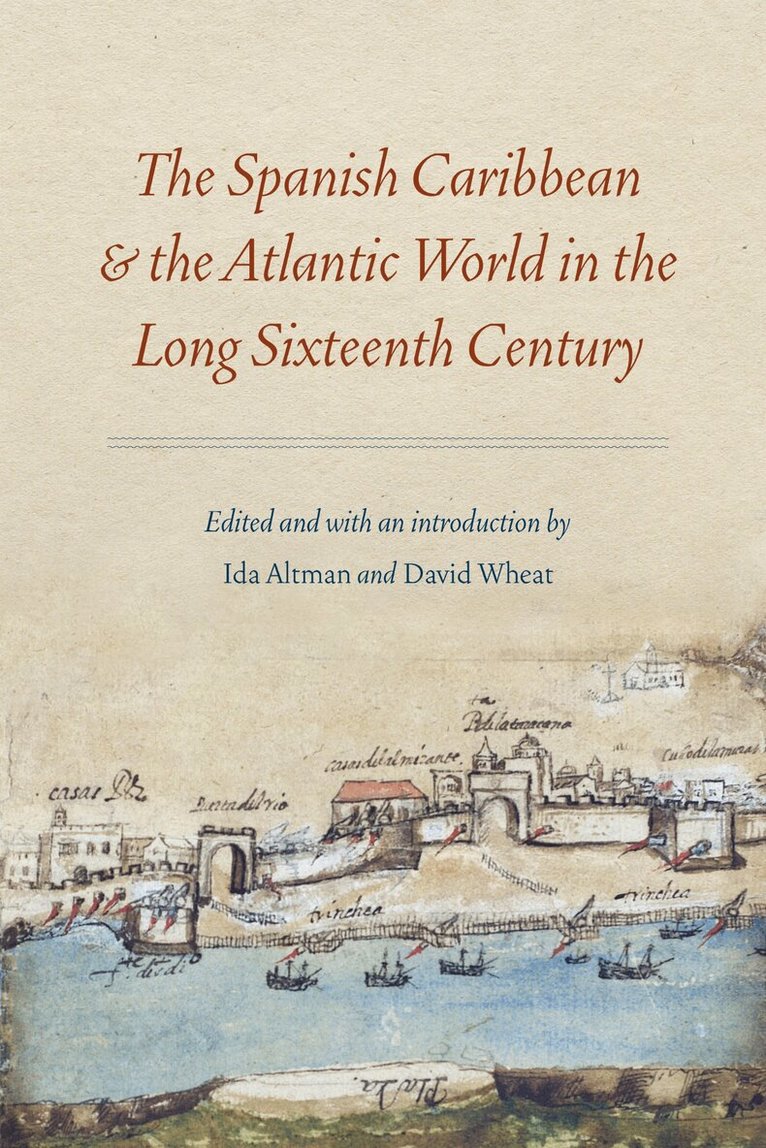
The Spanish Caribbean and the Atlantic World in the Long Sixteenth Century breaks new ground in articulating the early Spanish Caribbean as a distinct and diverse group of colonies loosely united under Spanish rule for roughly a century prior to the establishment of other European colonies.In the sixteenth century no part of the Americas was more diverse; international; or as closely tied to Spain, the islands of the Atlantic, western Africa, and the Spanish American mainland than the Caribbean. The Caribbean experienced rapid growth during this period, displayed considerable ethnic and religious diversity, developed extensive networks of exchange both within and beyond the region, and played an important role in the broader Spanish colonization of the Americas. Contributors address topics such as the role of religious orders, the development of transatlantic and regional commercial systems, insular and regional political dynamics in relation to imperial objectives, the formation of colonial society, and the effects on Caribbean colonial society of the importation and incorporation of large numbers of indigenous captives and enslaved Africans.
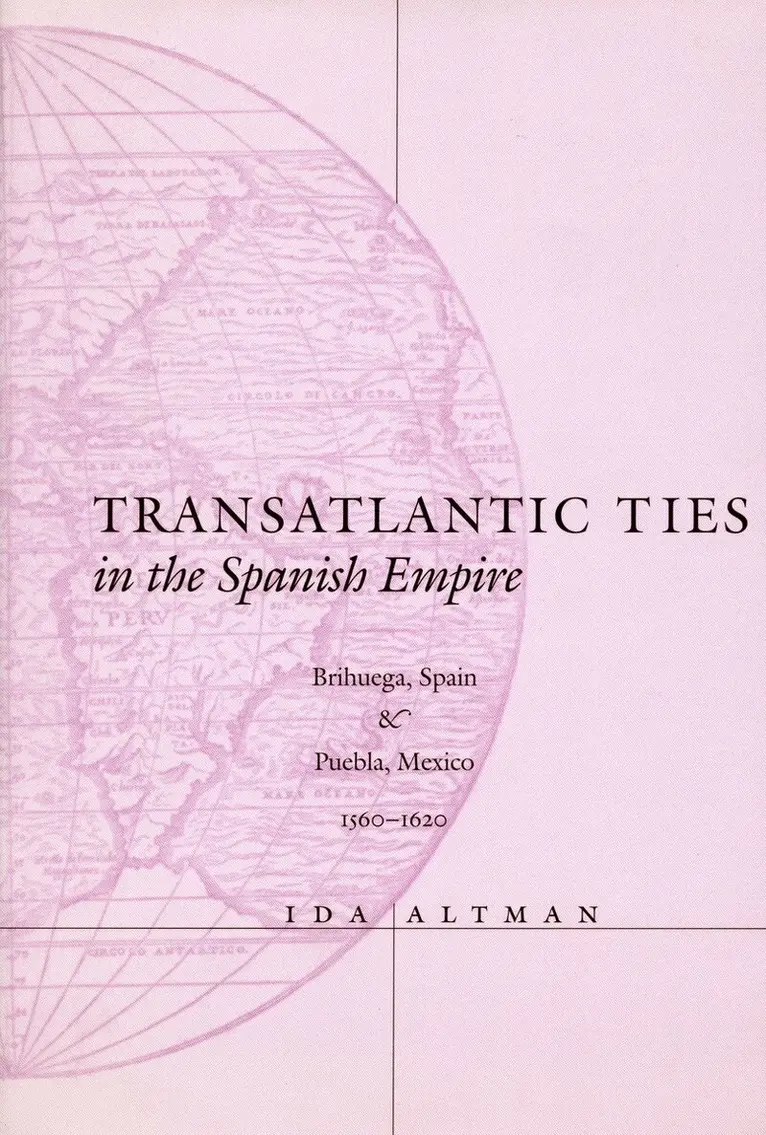
Transatlantic Ties in the Spanish Empire
Brihuega, Spain, and Puebla, Mexico, 1560-1620
Inbunden, Engelska, 2000
715 kr
Skickas inom 5-8 vardagar
Between 1560 and 1620, a thousand or more people left the town of Brihuega in Spain to migrate to New Spain (now Mexico), where nearly all of them settled in Puebla de los Angeles, New Spain's second most important city. A medium-sized community of about four thousand people, Brihuega had been a center of textile production since the Middle Ages, but in the latter part of the sixteenth century its industry was in decline—a circumstance that induced a significant number of its townspeople to emigrate to Puebla, where conditions for textile manufacturing seemed ideal.The immigrants from Brihuega played a crucial role in making Puebla the leading textile producer in New Spain, and they were otherwise active in the city's commercial-industrial sector as well. Although some immigrants penetrated the higher circles of poblano society and politics, for the most part they remained close to their entrepreneurial and artisanal origins. Closely associated through business, kinship, marital, and compadrazgo ties, and in residential patterns, the Brihuega immigrants in Puebla constituted a coherent and visible community.This book uses the experiences and activities of the immigrants as a basis for analyzing society in Brihuega and Puebla, making direct comparisons between the two cities by examining such topics as mobility and settlement; politics and public life; economic activity; religious life; social relations; and marriage, family, and kinship. In tracing the socioeconomic, cultural, and institutional patterns of a town in Spain and a city in New Spain—in all their connections, continuities, and discontinuities—the book offers a new basis for understanding the process and implications of the transference of these patterns within the early modern Hispanic world.
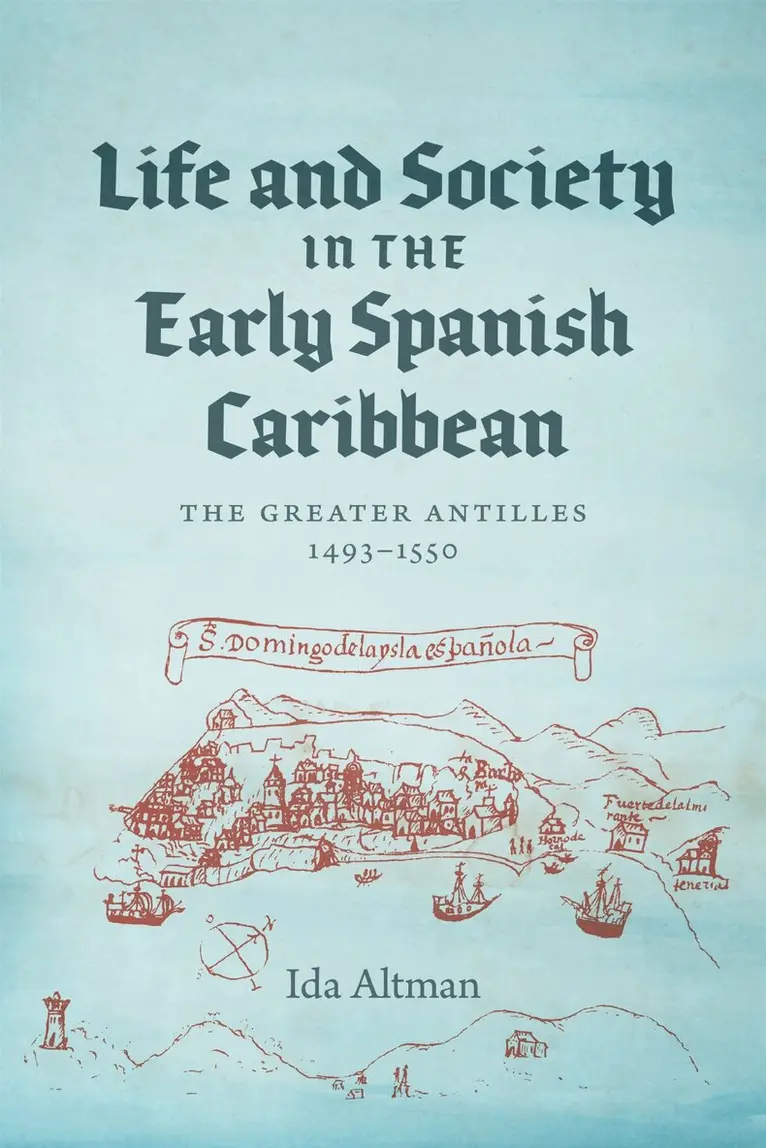
Life and Society in the Early Spanish Caribbean
The Greater Antilles, 1493–1550
Häftad, Engelska, 2021
433 kr
Skickas inom 10-15 vardagar
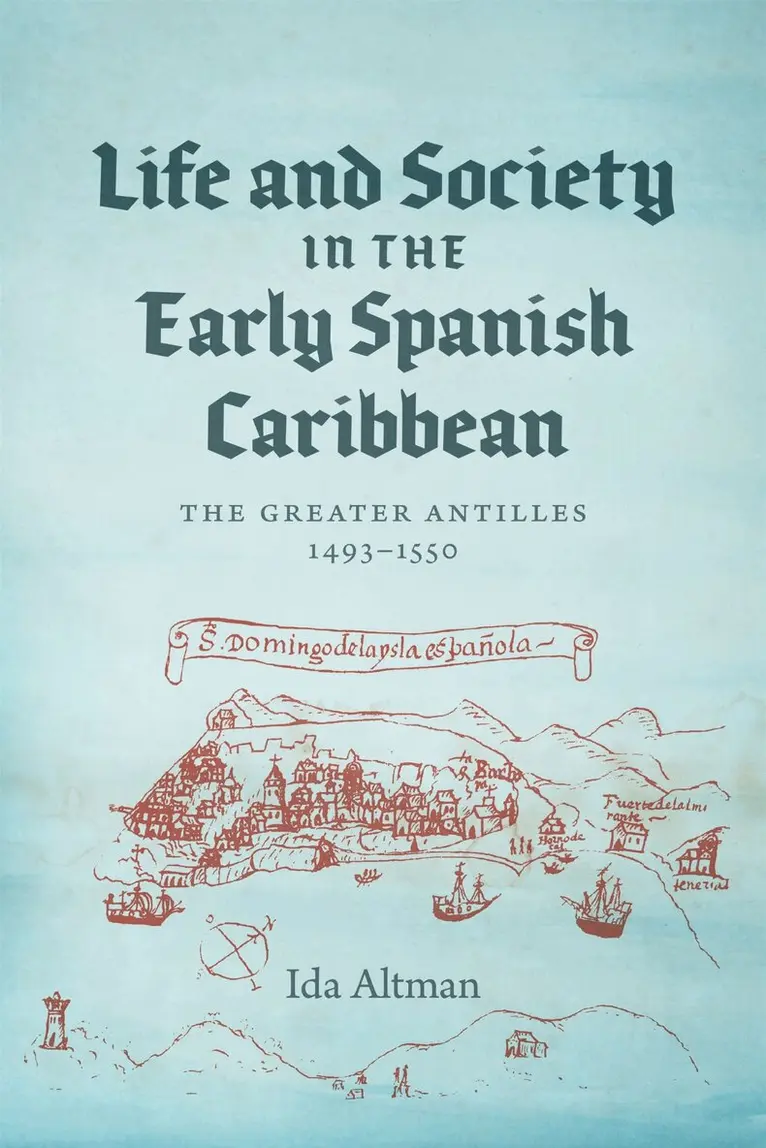
The half century of European activity in the Caribbean that followed Columbus's first voyages brought enormous demographic, economic, and social change to the region as Europeans, Indigenous people, and Africans whom Spaniards imported to provide skilled and unskilled labor came into extended contact for the first time. In Life and Society in the Early Spanish Caribbean, Ida Altman examines the interactions of these diverse groups and individuals and the transformation of the islands of the Greater Antilles (Hispaniola, Puerto Rico, Cuba, and Jamaica). She addresses the impact of disease and ongoing conflict; the Spanish monarchy's efforts to establish a functioning political system and an Iberian church; evangelization of Indians and Blacks; the islands' economic development; the international character of the Caribbean, which attracted Portuguese, Italian, and German merchants and settlers; and the formation of a highly unequal and coercive but dynamic society. As Altman demonstrates, in the first half of the sixteenth century the Caribbean became the first full-fledged iteration of the Atlantic world in all its complexity.
Life and Society in the Early Spanish Caribbean
The Greater Antilles, 1493–1550
Inbunden, Engelska, 2021
886 kr
Skickas inom 10-15 vardagar
The half century of European activity in the Caribbean that followed Columbus's first voyages brought enormous demographic, economic, and social change to the region as Europeans, Indigenous people, and Africans whom Spaniards imported to provide skilled and unskilled labor came into extended contact for the first time. In Life and Society in the Early Spanish Caribbean, Ida Altman examines the interactions of these diverse groups and individuals and the transformation of the islands of the Greater Antilles (Hispaniola, Puerto Rico, Cuba, and Jamaica). She addresses the impact of disease and ongoing conflict; the Spanish monarchy's efforts to establish a functioning political system and an Iberian church; evangelization of Indians and Blacks; the islands' economic development; the international character of the Caribbean, which attracted Portuguese, Italian, and German merchants and settlers; and the formation of a highly unequal and coercive but dynamic society. As Altman demonstrates, in the first half of the sixteenth century the Caribbean became the first full-fledged iteration of the Atlantic world in all its complexity.
319 kr
Skickas inom 7-10 vardagar
The War for Mexico's West examines a dramatic, complex episode in the early history of New Spain that stands as an instructive counterpoint to the much more familiar, triumphalist narrative of Spanish daring, resilience and victory embodied in the oft-told tale of the conquest of central Mexico. As Spaniards consolidated their hold over central Mexico they fanned out in several directions, first entering western Mexico - the future New Galicia - in 1524. A full-fledged expedition of conquest followed several years later. Among the loosely organized, ethnically and linguistically diverse societies of New Galicia, however, neither the Spaniards' usual stratagems of conquest nor their attempts to settle and impose their institutions met with much success. An uprising against Spanish rule, today known as the Mixton war, erupted in 1540, attracting thousands of people from many different indigenous communities and bringing Spanish failure in the region into sharp relief. Set within the context of the complex politics of early New Spain in which such prominent figures as Hernando Cortes, Nuno de Guzman, Pedro de Alvarado, Francisco Vazquez de Coronado and don Antonio de Mendoza vied to fulfill their ambitions in the west and incorporating accounts and testimony reflecting indigenous perspectives, Altman's treatment of the prolonged conquest of New Galicia provides the first full-length account in English of these little-known events and their consequences for Indians and Spaniards.