James Horn - Böcker
Visar alla böcker från författaren James Horn. Handla med fri frakt och snabb leverans.
11 produkter
11 produkter
265 kr
Skickas inom 3-6 vardagar
250 kr
Skickas inom 3-6 vardagar
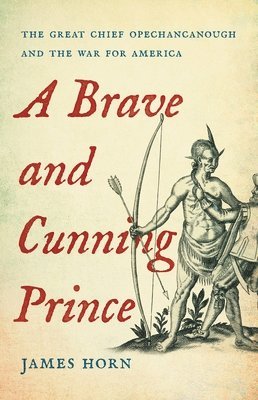
A Brave and Cunning Prince
The Great Chief Opechancanough and the War for America
Inbunden, Engelska, 2021, 12-15 år
275 kr
Skickas inom 7-10 vardagar
In the mid-sixteenth century, Spanish explorers in the Chesapeake region kidnapped an Indian teenager and took him back to Spain, a common occurrence at the time. What was uncommon in this case was that the young man eventually came back. During his time abroad, the boy lived in Madrid, Seville, Havana, and Mexico City, becoming a favorite of King Philip II and converting to Catholicism in the process. In fact, his faith grew so strong, he said, that he felt compelled to help establish a Jesuit mission to save the souls of his people back in Virginia-but shortly after the group arrived in the New World, he abandoned his fellow missionaries, rejoined his family, and soon returned with a small band of warriors to slaughter the Europeans. In the years that followed, he became the warrior chief known as Opechancanough, and alongside his brother Wahunsonacock (father of Pocahontas), he solidified their people's control of coastal Virginia, making the Powhatans the most powerful Indian chiefdom on the mid-Atlantic seaboard. Under their reign, the region remained free of European settlers until 1607, when English colonists arrived in Jamestown. But this was not so unbalanced an encounter as many have supposed. Because of his time among the Europeans, Opechancanough was acutely aware not only of the English settlers' technological capabilities, but also of the fierce determination with which they would pursue their invasion of his homeland. As time passed, the two chiefs sought to drive the invaders out, and mounted a series of attacks that nearly destroyed the colony at Jamestown. But the English settlers proved more resilient than the Spanish missionaries had been forty years earlier. Additional soldiers, weapons, and provisions arrived from England, forcing Opechancanough to drag his offensive on for decades. He survived to be nearly a hundred years old and died as he lived, fighting the invaders. A Brave and Cunning Prince is the first book to chronicle the life of Opechancanough, exploring his early exposure to European society and his lifelong fight to protect the integrity of his homeland. With engrossing storytelling, deep research, and surprising insights, A Brave and Cunning Prince will be vital reading for anyone seeking to understand the charged early encounters between the indigenous peoples of North America and the settlers who would bring death and destruction.
266 kr
Skickas inom 7-10 vardagar
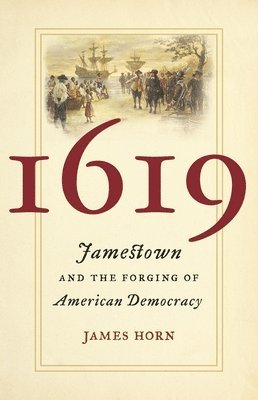
1619 offers a new interpretation of the significance of Jamestown in the long trajectory of American history. Jamestown, the cradle of American democracy, also saw the birth of our nation's greatest challenge: the corrosive legacy of slavery and racism that have deepened and entrenched stark inequalities in our society. After running Jamestown under martial law from 1610-1616, the Virginia Company turned toward representative government in an effort to provide settlers with more control over their own affairs and more incentive to invest further in the colony. Governor Edwin Sandys dreamed of creating a real commonwealth, to provide for the interests of settlers and Indians alike. Thus, in late July 1619, the newly-formed General Assembly gathered to introduce "just Laws for the happy guiding and governing of the people." It was the first legislature in America, and history has cast it as the foundation of American freedom and democracy. From that moment on, propertied white colonists became accustomed to freedoms that would have been unthinkable in England with its layers of customs and hierarchy of courts and regulations, and these expanding political and economic freedoms attracted countless British immigrants and other Europeans to Virginia and the American colonies. But those very freedoms also permitted the wholesale and largely unchecked exploitation of poor white laborers and non-European peoples. More than nine-tenths of all those arriving in Virginia at this time were brought in some form of servitude or labor contract. In a cruel irony, 1619 also saw the arrival of the first African slaves in Virginia. The establishment of the General Assembly did nothing to ameliorate these disparities, but rather put ever more power in the hands of local grandees. Sandys's dream of creating a commonwealth in the interests of settlers and Indians proved short-lived. But the twin pillars of democracy-the rule of law and representative government based on the consent of the people-survived and flourished. It was his greatest legacy to America. What was lost was his steadfast conviction that serving the common good served all. This is a pattern we recognize all too well in modern American society-opportunities are not shared, inequality is rampant, racism is systemic. We would like to think these are problems that can be solved by expanding representative democracy; Jamestown teaches us, instead, that these are problems have long been created and encouraged by American democracy. Casting a skeptical eye on deeply-cherished myths, 1619 will be essential reading for anyone struggling to understand the paradox of American freedom.
684 kr
Skickas inom 3-6 vardagar
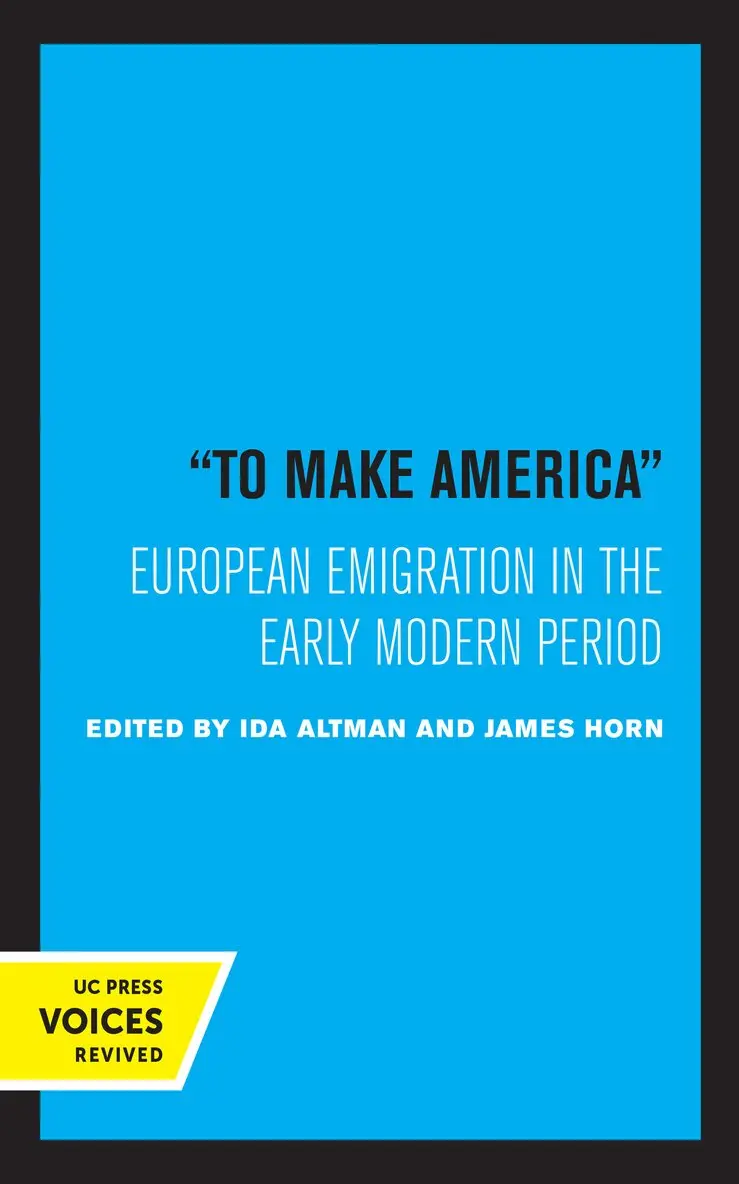
To Make America: European Emigration in the Early Modern Period brings together leading scholars to examine one of the most consequential yet understudied forces in Atlantic history: the mass movement of Europeans across the ocean between the sixteenth and eighteenth centuries. Edited by Ida Altman and James Horn, this collection explores how migrants from Spain, England, France, and Germany reshaped both their homelands and the diverse colonial societies of the New World. Essays trace the sheer magnitude of emigration—over a million settlers before 1800—while probing the experiences of the people themselves: hidalgos and artisans, indentured servants and redemptioners, filles du roi and convicts. The volume reveals how kinship networks, labor contracts, and state policies structured migration flows, and how poverty, profit, and the pursuit of religious or political refuge motivated departures.Framing emigration as a transatlantic phenomenon rather than a series of isolated national stories, the book highlights both the diversity and commonality of the European diaspora. Contributors show how regional origins in Europe tied migrants to specific destinations, how the balance between free and unfree labor shaped colonial societies, and how enduring family and commercial connections prevented most colonies from becoming culturally isolated enclaves. Richly comparative, the volume situates indentured servitude alongside the rise of African slavery, explores the interplay of voluntary and coerced migration, and redefines the “making of America” as a process forged through overlapping, mutually influential transatlantic communities. Essential reading for historians of migration, empire, and early modern society, To Make America offers a landmark synthesis of how Europe’s restless multitudes created the foundations of the Americas while simultaneously transforming the Old World they left behind.This title is part of UC Press's Voices Revived program, which commemorates University of California Press’s mission to seek out and cultivate the brightest minds and give them voice, reach, and impact. Drawing on a backlist dating to 1893, Voices Revived makes high-quality, peer-reviewed scholarship accessible once again using print-on-demand technology. This title was originally published in 1991.
777 kr
Skickas inom 7-10 vardagar
To Make America: European Emigration in the Early Modern Period brings together leading scholars to examine one of the most consequential yet understudied forces in Atlantic history: the mass movement of Europeans across the ocean between the sixteenth and eighteenth centuries. Edited by Ida Altman and James Horn, this collection explores how migrants from Spain, England, France, and Germany reshaped both their homelands and the diverse colonial societies of the New World. Essays trace the sheer magnitude of emigration—over a million settlers before 1800—while probing the experiences of the people themselves: hidalgos and artisans, indentured servants and redemptioners, filles du roi and convicts. The volume reveals how kinship networks, labor contracts, and state policies structured migration flows, and how poverty, profit, and the pursuit of religious or political refuge motivated departures.Framing emigration as a transatlantic phenomenon rather than a series of isolated national stories, the book highlights both the diversity and commonality of the European diaspora. Contributors show how regional origins in Europe tied migrants to specific destinations, how the balance between free and unfree labor shaped colonial societies, and how enduring family and commercial connections prevented most colonies from becoming culturally isolated enclaves. Richly comparative, the volume situates indentured servitude alongside the rise of African slavery, explores the interplay of voluntary and coerced migration, and redefines the “making of America” as a process forged through overlapping, mutually influential transatlantic communities. Essential reading for historians of migration, empire, and early modern society, To Make America offers a landmark synthesis of how Europe’s restless multitudes created the foundations of the Americas while simultaneously transforming the Old World they left behind.This title is part of UC Press's Voices Revived program, which commemorates University of California Press’s mission to seek out and cultivate the brightest minds and give them voice, reach, and impact. Drawing on a backlist dating to 1893, Voices Revived makes high-quality, peer-reviewed scholarship accessible once again using print-on-demand technology. This title was originally published in 1991.
515 kr
Skickas inom 10-15 vardagar
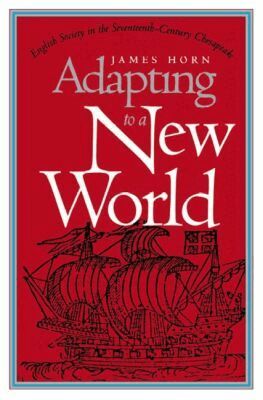
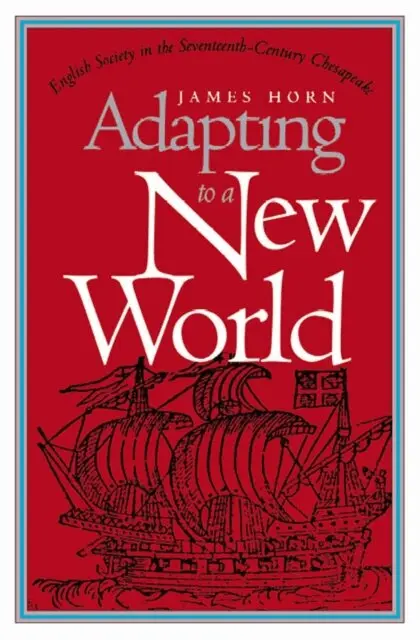
Often compared unfavorably with colonial New England, the early Chesapeake has been portrayed as irreligious, unstable, and violent. In this important new study, James Horn challenges this conventional view and looks across the Atlantic to assess the enduring influence of English attitudes, values, and behavior on the social and cultural evolution of the early Chesapeake. Using detailed local and regional studies to compare everyday life in English provincial society and the emergent societies of the Chesapeake Bay, Horn provides a richly textured picture of the immigrants' Old World backgrounds and their adjustment to life in America. Until the end of the seventeenth century, most settlers in Virginia and Maryland were born and raised in England, a factor of enormous consequence for social development in the two colonies. By stressing the vital social and cultural connections between England and the Chesapeake during this period, Horn places the development of early America in the context of a vibrant Anglophone transatlantic world and suggests a fundamental reinterpretation of New World society. |Based on literary and legal sources, this study reveals how legal contests involving women, children, African-Americans, and the poor of the 19th-century South led to a rethinking of families, sexuality, and the social order.
886 kr
Skickas inom 10-15 vardagar
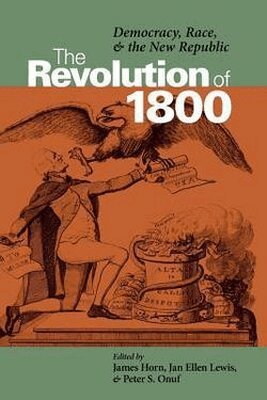
George W. Bush and Al Gore were by no means the first presidential hopefuls to find themselves embroiled in a hotly contested electoral impasse. Two hundred years earlier, Thomas Jefferson and John Adams endured arguably the most controversial and consequential election in American history. As the result of an intensely divided party process - the Federalists and the Republicans each convinced that the other would destroy the new nation if in control - the electoral system produced a tie, throwing the final decision to a House vote. Focusing on the wide range of possible outcomes of the 1800-1801 melee, this collection of essays situates the American ""Revolution of 1800"" in a broad context of geopolitical and racial developments in the Atlantic world as a whole. In essays written expressly for this volume, leading historians of the period examine the electoral, social, and political outcome of Jefferson's election in discussions strikingly relevant in the aftermath of the 2000 election.
364 kr
Skickas inom 10-15 vardagar
George W. Bush and Al Gore were by no means the first presidential hopefuls to find themselves embroiled in a hotly contested electoral impasse. Two hundred years earlier, Thomas Jefferson and John Adams endured arguably the most controversial and consequential election in American history. As the result of an intensely divided party process - the Federalists and the Republicans each convinced that the other would destroy the new nation if in control - the electoral system produced a tie, throwing the final decision to a House vote. Focusing on the wide range of possible outcomes of the 1800-1801 melee, this collection of essays situates the American ""Revolution of 1800"" in a broad context of geopolitical and racial developments in the Atlantic world as a whole. In essays written expressly for this volume, leading historians of the period examine the electoral, social, and political outcome of Jefferson's election in discussions strikingly relevant in the aftermath of the 2000 election.
323 kr
Skickas inom 10-15 vardagar
Virginia 1619 provides an opportunity to reflect on the origins of English colonialism around the Chesapeake Bay and the Atlantic world. As the essays here demonstrate, Anglo-Americans have been simultaneously experimenting with representative government and struggling with the corrosive legacy of racial thinking for more than four centuries. Virginia, contrary to popular stereotypes, was not the product of thoughtless, greedy, or impatient English colonists. Instead, the emergence of stable English Atlantic colonies reflected the deliberate efforts of an array of actors to establish new societies based on their ideas about commonwealth, commerce, and colonialism. Looking back from 2019, we can understand that what happened on the shores of the Chesapeake four hundred years ago was no accident. Slavery and freedom were born together as migrants and English officials figured out how to make this colony succeed. They did so in the face of rival ventures and while struggling to survive in a dangerous environment. Three hallmarks of English America-self-government, slavery, and native dispossession-took shape as everyone contested the future of empire along the James River in 1619. The contributors are Nicholas Canny, Misha Ewen, Andrew Fitzmaurice, Jack P. Greene, Paul D. Halliday, Alexander B. Haskell, Linda M. Heywood, James Horn, Michael J. Jarvis, Peter C. Mancall, Philip D. Morgan, Melissa N. Morris, Paul Musselwhite, James D. Rice, and Lauren Working.
1 092 kr
Skickas inom 10-15 vardagar
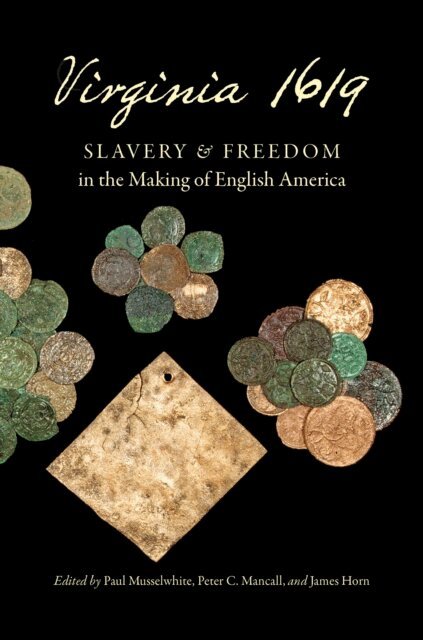
Virginia 1619 provides an opportunity to reflect on the origins of English colonialism around the Chesapeake Bay and the Atlantic world. As the essays here demonstrate, Anglo-Americans have been simultaneously experimenting with representative government and struggling with the corrosive legacy of racial thinking for more than four centuries. Virginia, contrary to popular stereotypes, was not the product of thoughtless, greedy, or impatient English colonists. Instead, the emergence of stable English Atlantic colonies reflected the deliberate efforts of an array of actors to establish new societies based on their ideas about commonwealth, commerce, and colonialism. Looking back from 2019, we can understand that what happened on the shores of the Chesapeake four hundred years ago was no accident. Slavery and freedom were born together as migrants and English officials figured out how to make this colony succeed. They did so in the face of rival ventures and while struggling to survive in a dangerous environment. Three hallmarks of English America-self-government, slavery, and native dispossession-took shape as everyone contested the future of empire along the James River in 1619. The contributors are Nicholas Canny, Misha Ewen, Andrew Fitzmaurice, Jack P. Greene, Paul D. Halliday, Alexander B. Haskell, Linda M. Heywood, James Horn, Michael J. Jarvis, Peter C. Mancall, Philip D. Morgan, Melissa N. Morris, Paul Musselwhite, James D. Rice, and Lauren Working.