Ignas K. Skrupskelis – författare
Visar alla böcker från författaren Ignas K. Skrupskelis. Handla med fri frakt och snabb leverans.
11 produkter
Essays in Philosophy
Av William James, Frederick Burkhardt m. fl.
Inbunden, 1978
1686 kr
Lägg i varukorg
Essays in Philosophy brings together twenty-one essays, reviews, and occasional pieces published by James between 1876 and 1910. They range in subject from a concern with the teaching of philosophy and appraisals of philosophers to analyses of important problems.Several of the essays, like "The …
Essays in Radical Empiricism
Av William James, Fredson Bowers m. fl.
Inbunden, 1976
1686 kr
Lägg i varukorg
A pioneer in early studies of the human mind and founder of that peculiarly American philosophy called Pragmatism, William James remains America's most widely read philosopher. Generations of students have been drawn to his lucid presentations of philosophical problems. His works, now being made …
Will to Believe
Av William James, Frederick Burkhardt m. fl.
Inbunden, 1979
1686 kr
Lägg i varukorg
The Will to Believe addresses several of the most important and perplexing problems of philosophy. In ten lucid essays James deals with such subjects as causality and free will, the definition of the good life and the Good itself, the importance of the individual in society, and the intellectual …
Correspondence of William James V. 4; 1856-1877
Av William James, Ignas K. Skrupskelis
Inbunden, 1996
1317 kr
Lägg i varukorg
This volume contains 309 letters which start when William James was 14 years old and conclude when he was 35. The letters range from his relations with family and friends to his courtship of Alice Howe.
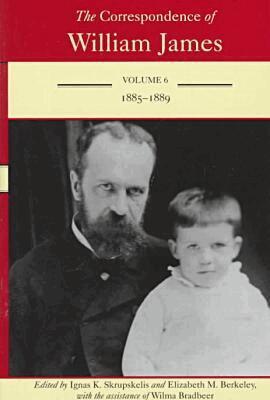
Correspondence of William James Vol 6; 1885-1889
Av William James, John J. McDermott m. fl.
Inbunden, 1998
1317 kr
Lägg i varukorg
Consisting of 400 letters with an additional 400 calendared, this volume offers an account of William James' correspondence for the years 1885-89. During this period, he completed most of the work on his book, ""The Principles of Psychology"" and became more directly involved with psychical …
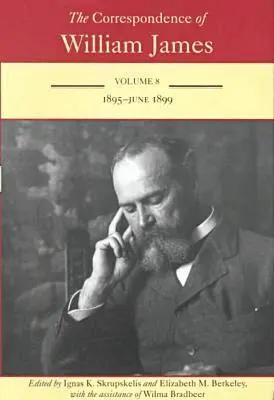
Correspondence of William James V. 8; 1895-June 1899
Av William James, Ignas K. Skrupskelis
Inbunden, 2000
1317 kr
Lägg i varukorg
The eighth volume of William James's correspondence, covering the period 1895 to June 1899. During this period, James struggles against various temptations, never completely successfully, to devote all of his attention to philosophy, the first and great love of his life.
Correspondence of William James V. 10; July 1902-March 1905
Av William James, Ignas K. Skrupskelis
Inbunden, 2002
1317 kr
Lägg i varukorg
Consisting of some 572 letters, with another 460 calendared, this tenth volume in a projected series of twelve offers a complete accounting of William James's known correspondence-with family, friends, and colleagues-from the beginning of 1902 through March 1905. For James these were hopeful years …
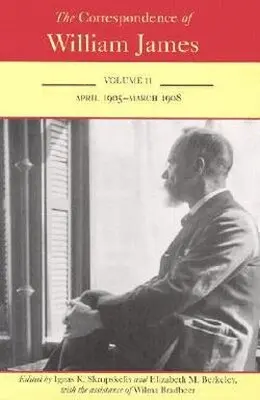
Correspondence of William James V. 11; April 1905-March 1908
Av William James, Ignas K. Skrupskelis
Inbunden, 2003
1317 kr
Lägg i varukorg
Consisting of more than 500 letters to family with an additional 650 calendared, this volume offers a complete account of William James's known correspondence from April 1905 to March 1908.
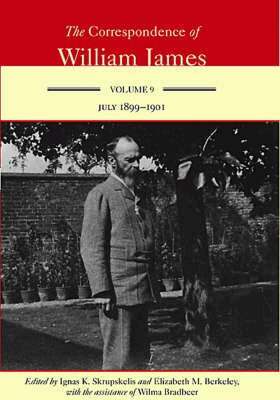
Correspondence of William James V. 9; July 1899-1901
Av William James, Ignas K. Skrupskelis
Inbunden, 2001
1317 kr
Tillfälligt slut
The ninth volume of William James's correspondence, covering the period July 1899 to 1901. It covers the period of James's great collapse, of his years of exile in Europe in search of health, and of the beginning of his withdrawal fron full time teaching at Harvard.
Correspondence of William James V. 12; April 1908-August 1910
Av William James, Ignas K. Skrupskelis m. fl.
Inbunden, 2004
1317 kr
Tillfälligt slut
This twelfth and final volume of The Correspondence of William James concludes the series of William James's correspondence with family, friends, and colleagues that began with volume 4. The first three volumes were devoted to the letters exchanged between the brothers William and Henry James. …
Correspondence of William James
Volumes 1-12
Av William James, Ignas K. Skrupskelis m. fl.
Inbunden, 2004
5944 kr
Tillfälligt slut