Ingrid D. Rowland - Böcker
Visar alla böcker från författaren Ingrid D. Rowland. Handla med fri frakt och snabb leverans.
6 produkter
6 produkter
191 kr
Skickas inom 7-10 vardagar
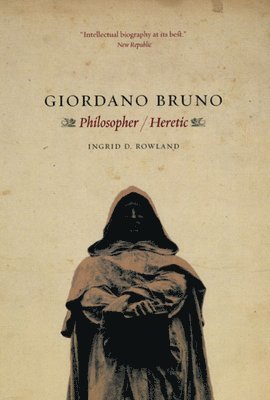
Giordano Bruno (1548-1600) is one of the great figures of early modern Europe, and one of the least understood. Ingrid D. Rowland's biography establishes him once and for all as a peer of Erasmus, Shakespeare, and Galileo - a thinker whose vision of the world prefigures ours. Writing with great verve and erudition, Rowland traces Bruno's wanderings through a sixteenth-century Europe where every certainty of religion and philosophy has been called into question, and reveals how he valiantly defended his ideas to the very end, when he was burned at the stake as a heretic on Rome's Campo de' Fiori.
388 kr
Skickas
Luminous essays on artists of the Italian Renaissance by one of our most inspired writers on the history and making of art. In the three centuries from 1450 to 1750 painters, sculptors, and architects emerged from the medieval craft guilds of Italy to claim a new social status as creators, whose gorgeous handiwork, now called 'art,' expressed lofty inspiration as much as manual skill. In The Lies of the Artists, Ingrid Rowland takes us into the world of these artists, and into their seemingly miraculous ways of transforming transcendent ideas into tangible works of art that challenged and redefined reality, 'lies' with the power to reveal a deeper truth. As the great art patron Daniele Barbaro wrote: 'bisogna aprire gli occhi,' or 'you have to open your eyes.' And this is precisely what Rowland does in these essays, bringing her knowledge, keen perception, and singular wit to bear on the art and lives of Renaissance masters, including Michelangelo, Caravaggio, Bernini, Raphael, Titian, and El Greco, as well as some overlooked artists of phenomenal talent, such as Antonello da Messina, Andrea del Sarto, and Bertoldo di Giovanni. In dazzling prose, as luminous and versatile as the painterly effects she describes, she shows us the work of these artists in eye-opening, thought-provoking ways, recreating the delight and insight that the discovery of great art evokes.
409 kr
Skickas inom 7-10 vardagar
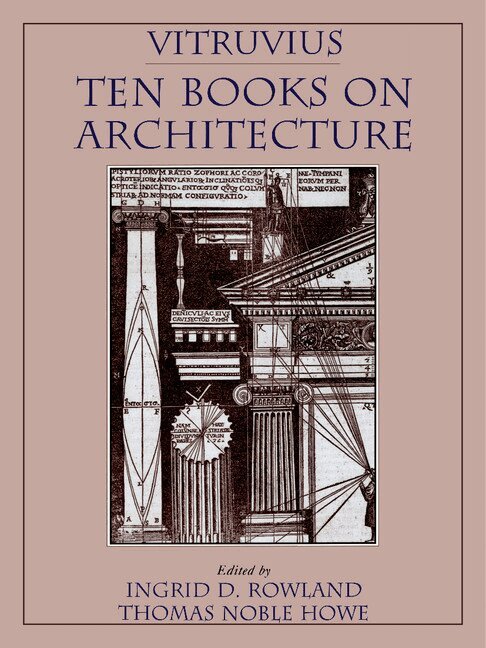
The only full treatise on architecture and its related arts to survive from classical antiquity, the De Architectura libri decem (Ten Books on Architecture) is the single most important work of architectural history in the Western world, having shaped humanist architecture and the image of the architect from the Renaissance to the present. This new, critical edition of Vitruvius' Ten Books of Architecture is the first to be published for an English-language audience in more than half a century. Expressing the range of Vitruvius' style, the translation, along with the critical commentary and illustrations, aims to shape a new image of the Vitruvius who emerges as an inventive and creative thinker, rather than the normative summarizer, as he was characterized in the Middle Ages and Renaissance.
The Culture of the High Renaissance
Ancients and Moderns in Sixteenth-Century Rome
Häftad, Engelska, 2001
631 kr
Skickas inom 7-10 vardagar
Between 1480 and 1520, a concentration of talented artists, including Melozzo da Forlì, Bramante, Pinturicchio, Raphael, and Michelangelo, arrived in Rome and produced some of the most enduring works of art ever created. This period, now called the High Renaissance, is generally considered to be one of the high points of Western civilisation. How did it come about, and what were the forces that converged to spark such an explosion of creative activity? In this study, Ingrid Rowland examines the culture, society, and intellectual norms that generated the High Renaissance. This interdisciplinary 2001 study assesses the intellectual paradigm shift that occurred at the turn of the fifteenth century. It also finds and explains the connections between ideas, people, and the art works they created by looking at economics, art, contemporary understanding of classical antiquity, and social conventions.
306 kr
Skickas inom 10-15 vardagar
When Vesuvius erupted in 79 CE, the force of the explosion blew the top right off the mountain, burying nearby Pompeii in a shower of volcanic ash. Ironically, the calamity that proved so lethal for Pompeii's inhabitants preserved the city for centuries, leaving behind a snapshot of Roman daily life that has captured the imagination of generations.The experience of Pompeii always reflects a particular time and sensibility, says Ingrid Rowland. From Pompeii: The Afterlife of a Roman Town explores the fascinating variety of these different experiences, as described by the artists, writers, actors, and others who have toured the excavated site. The city's houses, temples, gardens--and traces of Vesuvius's human victims--have elicited responses ranging from awe to embarrassment, with shifting cultural tastes playing an important role. The erotic frescoes that appalled eighteenth-century viewers inspired Renoir to change the way he painted. For Freud, visiting Pompeii was as therapeutic as a session of psychoanalysis. Crown Prince Hirohito, arriving in the Bay of Naples by battleship, found Pompeii interesting, but Vesuvius, to his eyes, was just an ugly version of Mount Fuji. Rowland treats readers to the distinctive, often quirky responses of visitors ranging from Wolfgang Amadeus Mozart, Charles Dickens, and Mark Twain to Roberto Rossellini and Ingrid Bergman.Interwoven throughout a narrative lush with detail and insight is the thread of Rowland's own impressions of Pompeii, where she has returned many times since first visiting in 1962.
282 kr
Skickas inom 7-10 vardagar
Focusing on the figures of Plato, Archimedes, and Caravaggio, The Divine Spark of Syracuse discloses the role that Syracuse, a Greek cultural outpost in Sicily, played in fueling creative energies. Among the topics this book explores are Plato and the allegory of the cave, and the divine spark mentioned in his Seventh Letter. It also considers the machines of Archimedes, including his famous screw, and the variety of siege and antisiege weapons that he developed in the defense of his hometown during the sieges of the First and Second Punic Wars, including “the hand” (a giant claw), the “burning mirror,” and the catapult. The final chapter offers a look at the sixteenth-century artist and roustabout Caravaggio. On the run after yet another street brawl, Caravaggio traveled to Syracuse, where he painted The Burial of St. Lucy (Santa Lucia) in 1608. Typical of his late works, the painting is notable for its subdued tones and emotional and psychological delicacy, even fragility. This captivating book lends clear insight into the links between the sense of place and inspiration in philosophy, mathematics, and art. Rowland is the most learned tour guide we could ask for.