Iqbal S. Grewal – författare
Visar alla böcker från författaren Iqbal S. Grewal. Handla med fri frakt och snabb leverans.
3 produkter
3 produkter
1 649 kr
Skickas inom 10-15 vardagar
Tumor necrosis factor (TNF) superfamily is a rapidly growing family of cytokines that interacts with a corresponding superfamily of receptors. Liga- receptor interactions of this superfamily are involved in numerous biological processes ranging from hematopoiesis to pleiotropic cellular responses, including activation, proliferation, differentiation, and apoptosis. The particular response depends on the receptor, the cell type, and the concurrent signals received by the cell. Worldwide interest in the TNF field surged dramatically early in 1984 with the cloning and defining of the profound cellular effects of the first member of this family, TNF . Subsequently, the major influence of TNF on the development and functioning of the immune system was established. Today, over 20 human TNF ligands and their more than 30 corresponding receptors have been identified. Few receptors still remain orphans. What has emerged over the years is that most TNF ligands bind to one distinct receptor and some of the TNF ligands are able to bind to multiple TNF receptors, explaining to some extent the apparent disparity in the number of TNF receptors and ligands. Yet, in spite of some redundancy in TNF ligand/receptor interactions, it is clear that in vivo spatial, temporal, and indeed cell- and tissue-specific expression of both ligands and their receptors are important factors in determining the precise nature of cellular, physiological and pathological processes they control. TNF superfamily has been the most highly investigated area of basic medical research for over two decades.
3 169 kr
Skickas inom 5-8 vardagar
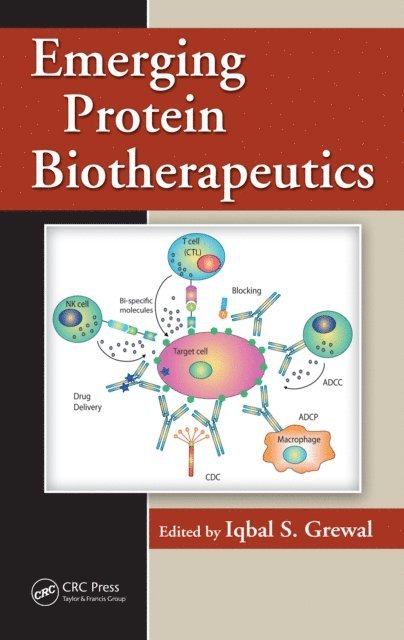
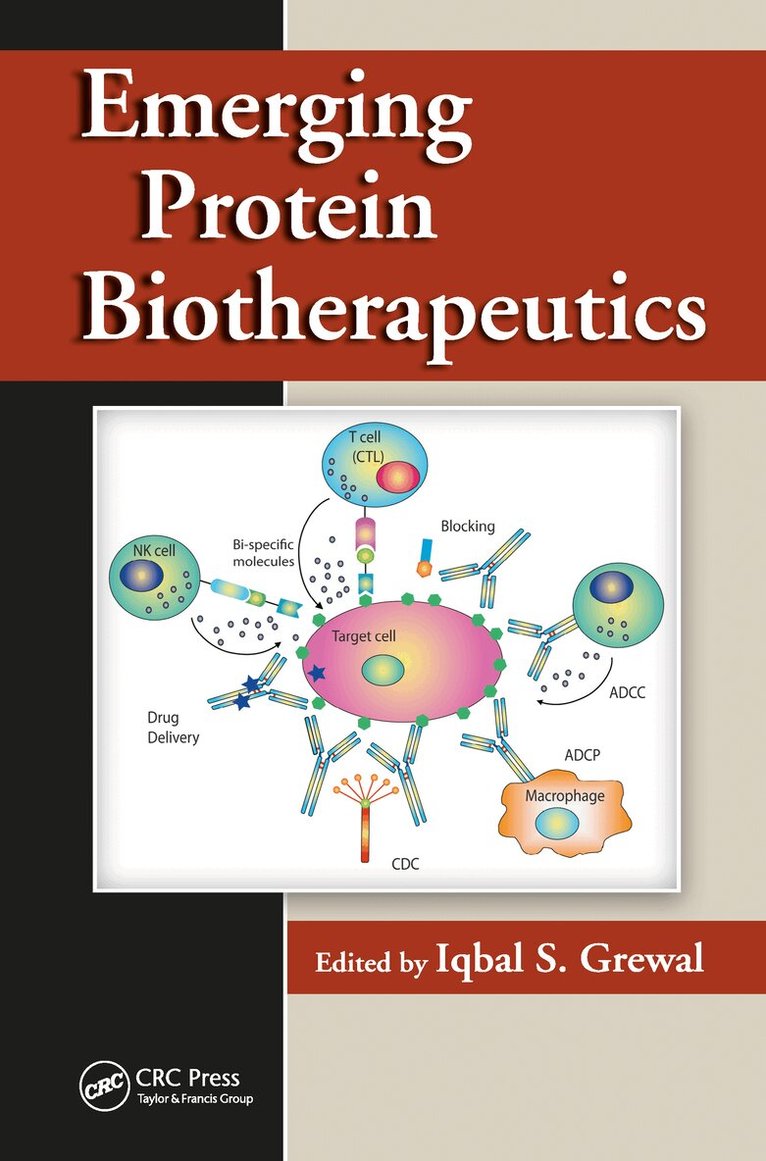
A Readily Applicable Framework for Novel Drug DesignIt is only 20 years since the reach of genetic knowledge has allowed for the development of protein biotherapeutics, but in that time the pace has been fast. While the literature abounds, the field has lacked a comprehensive accounting of this progress. Emerging Protein Biotherapeutics consolidates current knowledge of key protein targets important in autoimmunity and cancers, exploring basic aspects and diverse clinical application. Presents Strategies to Exploit Therapeutic UsesIn this volume, leading researchers cover many aspects of biology related to protein targets, ranging from the in vivo role in the disease process, to various strategies exploiting development of these targets for therapeutic use. Each chapter includes background, a discussion of clinical implications, an account of preclinical and clinical testing of various candidates, and a listing of key references. This volume makes the study of protein biotherapeutics accessible at all levels of expertise. It offers an efficient and rational way to grasp the theoretical and experimental knowledge currently available while also providing a deeper understanding of disease processes. Most importantly, it presents a framework that can be readily employed by those looking to develop their own strategies in pursuit of new clinical applications.
1 649 kr
Skickas inom 10-15 vardagar
Tumor necrosis factor (TNF) superfamily is a rapidly growing family of cytokines that interacts with a corresponding superfamily of receptors. Liga- receptor interactions of this superfamily are involved in numerous biological processes ranging from hematopoiesis to pleiotropic cellular responses, including activation, proliferation, differentiation, and apoptosis. The particular response depends on the receptor, the cell type, and the concurrent signals received by the cell. Worldwide interest in the TNF field surged dramatically early in 1984 with the cloning and defining of the profound cellular effects of the first member of this family, TNF . Subsequently, the major influence of TNF on the development and functioning of the immune system was established. Today, over 20 human TNF ligands and their more than 30 corresponding receptors have been identified. Few receptors still remain orphans. What has emerged over the years is that most TNF ligands bind to one distinct receptor and some of the TNF ligands are able to bind to multiple TNF receptors, explaining to some extent the apparent disparity in the number of TNF receptors and ligands. Yet, in spite of some redundancy in TNF ligand/receptor interactions, it is clear that in vivo spatial, temporal, and indeed cell- and tissue-specific expression of both ligands and their receptors are important factors in determining the precise nature of cellular, physiological and pathological processes they control. TNF superfamily has been the most highly investigated area of basic medical research for over two decades.