Ira Helderman – författare
Visar alla böcker från författaren Ira Helderman. Handla med fri frakt och snabb leverans.
3 produkter
3 produkter
798 kr
Skickas inom 7-10 vardagar
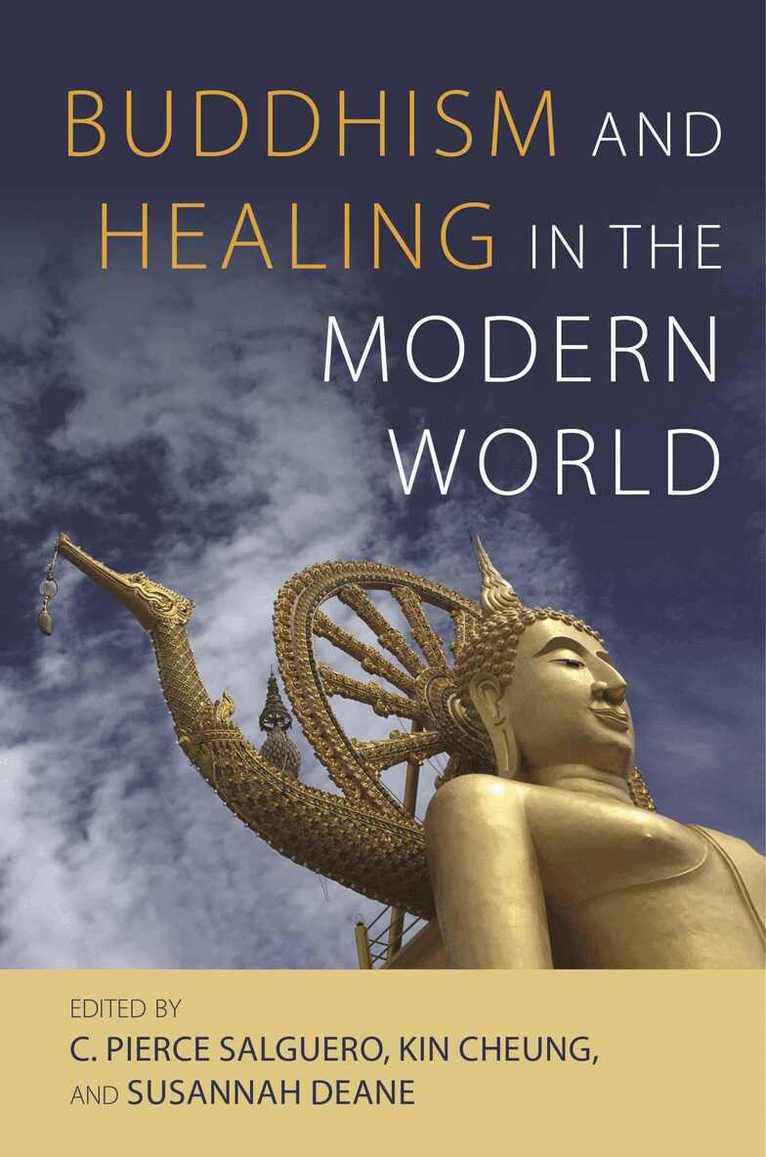
This rich collection focuses on the nexus between Buddhism and healing in the modern and contemporary world, highlighting the many ways Buddhists have adapted in response to and in dialogue with modern science, biomedicine, and other facets of modernity from the nineteenth century to today. Buddhist healing activities are much more diverse than the narrow range of mindfulness techniques that have dominated scholarly and popular focus. From the community-based healing practices of Asian American Buddhists and transnational Tantric sex therapy retreats to concerns about balancing being contemporary with being authentically Buddhist, contributors explore how Buddhists have rethought the mind-body relationship against the backdrop of the modernization and globalization of Buddhism. They examine Buddhists navigating the differences and commonalities that exist in their practice and modern systems of mental and physical healthcare, paying attention to how they have negotiated shifting configurations of legitimacy, authority, and authenticity. Through historical and ethnographic case studies, the work details these ruptures and reconciliations in Japan, Sri Lanka, Tibet, Korea, and the U.S., in addition to mapping the transnational pathways of exchange as knowledge about Buddhism and medicine has traveled between Asia and the West.Buddhism and Healing in the Modern World encompasses a wide range of Buddhist ideas about health and health-seeking practices that remain a vital part of the everyday practice of modern Buddhism across the globe.
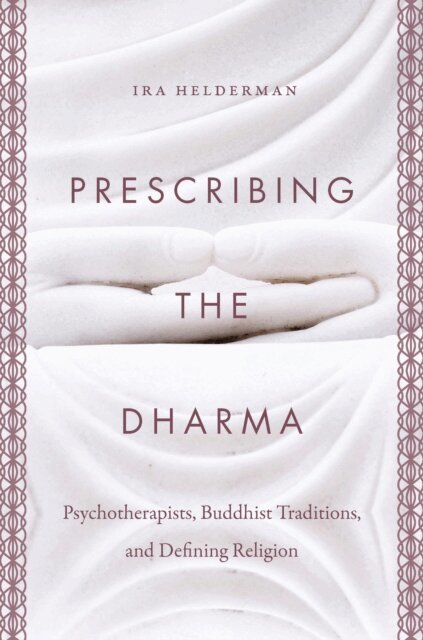
Prescribing the Dharma
Psychotherapists, Buddhist Traditions, and Defining Religion
Inbunden, Engelska, 2019
1 063 kr
Skickas inom 10-15 vardagar
Interest in the psychotherapeutic capacity of Buddhist teachings and practices is widely evident in the popular imagination. News media routinely report on the neuropsychological study of Buddhist meditation and applications of mindfulness practices in settings including corporate offices, the U.S. military, and university health centers. However, as Ira Helderman shows, curious investigators have studied the psychological dimensions of Buddhist doctrine for well over a century, stretching back to William James and Carl Jung. These activities have shaped both the mental health field and Buddhist practice throughout the United States.This is the first comprehensive study of the surprisingly diverse ways that psychotherapists have related to Buddhist traditions. Through extensive fieldwork and in-depth interviews with clinicians, many of whom have been formative to the therapeutic use of Buddhist practices, Helderman gives voice to the psychotherapists themselves. He focuses on how they understand key categories such as religion and science. Some are invested in maintaining a hard border between religion and psychotherapy as a biomedical discipline. Others speak of a religious-secular binary that they mean to disrupt. Helderman finds that psychotherapists' approaches to Buddhist traditions are molded by how they define what is and is not religious, demonstrating how central these concepts are in contemporary American culture.
Prescribing the Dharma
Psychotherapists, Buddhist Traditions, and Defining Religion
Häftad, Engelska, 2019
368 kr
Skickas inom 10-15 vardagar
Interest in the psychotherapeutic capacity of Buddhist teachings and practices is widely evident in the popular imagination. News media routinely report on the neuropsychological study of Buddhist meditation and applications of mindfulness practices in settings including corporate offices, the U.S. military, and university health centers. However, as Ira Helderman shows, curious investigators have studied the psychological dimensions of Buddhist doctrine for well over a century, stretching back to William James and Carl Jung. These activities have shaped both the mental health field and Buddhist practice throughout the United States.This is the first comprehensive study of the surprisingly diverse ways that psychotherapists have related to Buddhist traditions. Through extensive fieldwork and in-depth interviews with clinicians, many of whom have been formative to the therapeutic use of Buddhist practices, Helderman gives voice to the psychotherapists themselves. He focuses on how they understand key categories such as religion and science. Some are invested in maintaining a hard border between religion and psychotherapy as a biomedical discipline. Others speak of a religious-secular binary that they mean to disrupt. Helderman finds that psychotherapists' approaches to Buddhist traditions are molded by how they define what is and is not religious, demonstrating how central these concepts are in contemporary American culture.