Ira M. Lapidus – Författare
Visar alla böcker från författaren Ira M. Lapidus. Handla med fri frakt och snabb leverans.
8 produkter
8 produkter
267 kr
Skickas inom 7-10 vardagar
Taken together the essays in this work not only provide new research essential to the study of Islamic societies and Muslim peoples, but also set a new standard for the concrete study of local situations and illuminate the forces shaping the history of modern Muslim societies. This collection is unique in its sophisticated interpretation of the social protest and political resistance movements in Muslim countries during the nineteenth and twentieth centuries. The contributors take two principal approaches to the study of their subject. Utilizing "new cultural history," they explore how particular movements have deployed the cultural and religious resources of Islam to mobilize and legitimize insurgent political action. Others rely on "new social history" to study the economic, political, and social contexts in which movements of anti-colonial resistance and revolution have developed. This work brings together contributions from specialists on Islamic North Africa, Egypt, the Arab fertile crescent, Iran and India.
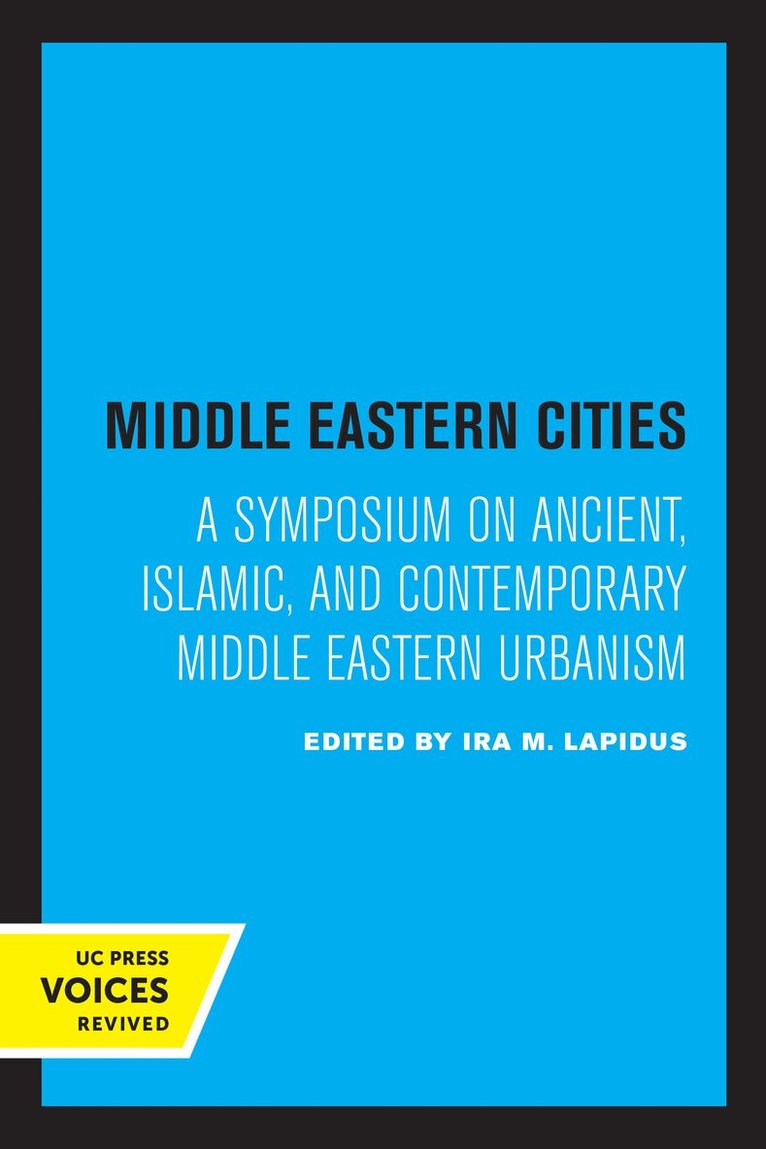
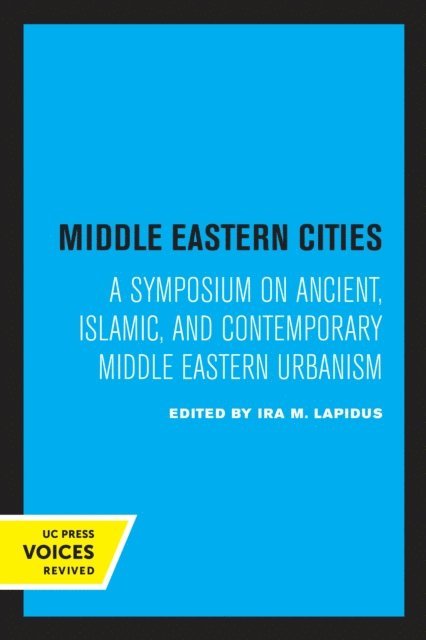
Middle Eastern Cities
A Symposium on Ancient, Islamic, and Contemporary Middle Eastern Urbanism
Häftad, Engelska, 2022
333 kr
Skickas inom 7-10 vardagar
Middle Eastern Cities: A Symposium on Ancient, Islamic, and Contemporary Middle Eastern Urbanism is an essential exploration of the enduring relationship between urban centers and their surrounding societies throughout the history of the Middle East. This collection emerges from a landmark symposium held at the University of California, Berkeley, in 1966, which convened leading scholars across disciplines to examine the dynamic roles cities have played in political, cultural, and economic spheres across ancient, Islamic, and modern contexts. Spanning discussions on the interplay between urban and rural areas, demographic transitions, social hierarchies, and the impact of cultural and religious institutions, the volume seeks to weave together disparate strands of research into a cohesive understanding of Middle Eastern urbanism.Central themes include the interdependence between cities and their environments—be it ecological, economic, or cultural—and the internal structures that shape urban societies, from kinship networks and religious institutions to evolving patterns of social stratification and integration. Contributions from renowned scholars such as Professors Oppenheim, Grabar, and Issawi delve into specific facets of urban life, while a concluding essay synthesizes broader methodological and theoretical implications for the study of cities. Enhanced by thoughtful discussions and edited transcripts of conference exchanges, this volume stands as a significant contribution to the study of urbanism, offering a multidimensional lens for understanding the historical and ongoing transformations of Middle Eastern societies.This title is part of UC Press's Voices Revived program, which commemorates University of California Press’s mission to seek out and cultivate the brightest minds and give them voice, reach, and impact. Drawing on a backlist dating to 1893, Voices Revived makes high-quality, peer-reviewed scholarship accessible once again using print-on-demand technology. This title was originally published in 1969.
Middle Eastern Cities
A Symposium on Ancient, Islamic, and Contemporary Middle Eastern Urbanism
Inbunden, Engelska, 2022
1 513 kr
Skickas inom 3-6 vardagar
Middle Eastern Cities: A Symposium on Ancient, Islamic, and Contemporary Middle Eastern Urbanism is an essential exploration of the enduring relationship between urban centers and their surrounding societies throughout the history of the Middle East. This collection emerges from a landmark symposium held at the University of California, Berkeley, in 1966, which convened leading scholars across disciplines to examine the dynamic roles cities have played in political, cultural, and economic spheres across ancient, Islamic, and modern contexts. Spanning discussions on the interplay between urban and rural areas, demographic transitions, social hierarchies, and the impact of cultural and religious institutions, the volume seeks to weave together disparate strands of research into a cohesive understanding of Middle Eastern urbanism.Central themes include the interdependence between cities and their environments—be it ecological, economic, or cultural—and the internal structures that shape urban societies, from kinship networks and religious institutions to evolving patterns of social stratification and integration. Contributions from renowned scholars such as Professors Oppenheim, Grabar, and Issawi delve into specific facets of urban life, while a concluding essay synthesizes broader methodological and theoretical implications for the study of cities. Enhanced by thoughtful discussions and edited transcripts of conference exchanges, this volume stands as a significant contribution to the study of urbanism, offering a multidimensional lens for understanding the historical and ongoing transformations of Middle Eastern societies.This title is part of UC Press's Voices Revived program, which commemorates University of California Press’s mission to seek out and cultivate the brightest minds and give them voice, reach, and impact. Drawing on a backlist dating to 1893, Voices Revived makes high-quality, peer-reviewed scholarship accessible once again using print-on-demand technology. This title was originally published in 1969.
318 kr
Skickas inom 7-10 vardagar
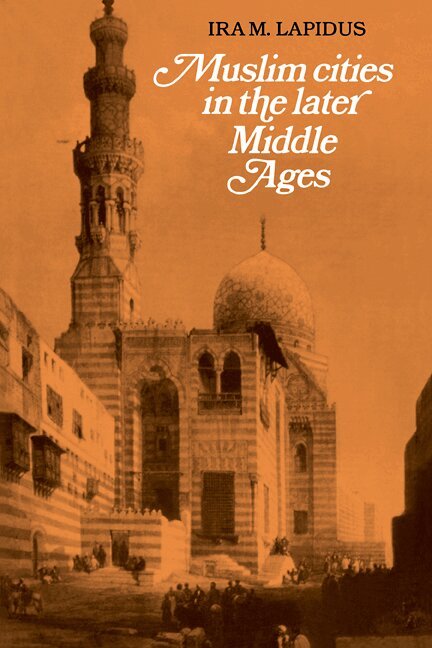
First published in 1967, Muslim Cities in the Later Middle Ages is one of the most influential works in the field of Islamic history. Primarily a study of the main cities of the Mamluk state of the fourteenth and fifteenth centuries AD, Professor Lapidus' book serves to provide a framework for understanding the long evolution of Muslim political and social institutions and urban societies. The relationships between military rulers, the bourgeoisie and the common people are presented in a study of wide relevance to social history.
1 263 kr
Skickas inom 7-10 vardagar
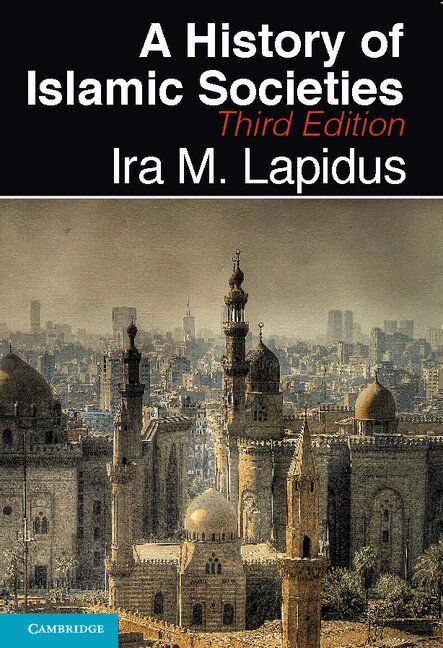
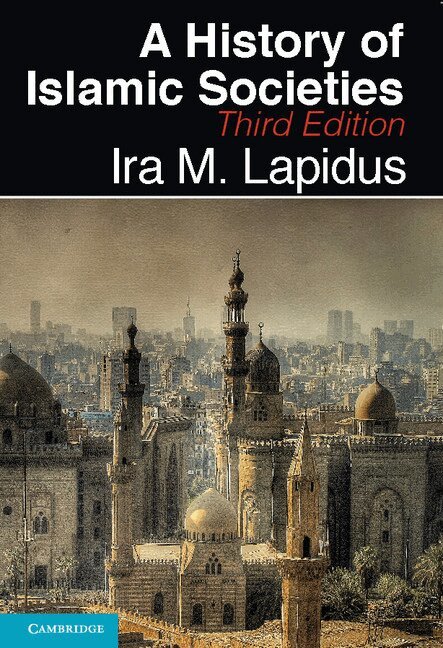
This new edition of one of the most widely used course books on Islamic civilizations around the world has been substantially revised to incorporate the new scholarship and insights of the last twenty-five years. Ira Lapidus' history explores the beginnings and transformations of Islamic civilizations in the Middle East and details Islam's worldwide diffusion. The history is divided into four parts. Part I is a comprehensive account of pre-Islamic late antiquity; the beginnings of Islam; the early Islamic empires; and Islamic religious, artistic, legal and intellectual cultures. Part II deals with the construction in the Middle East of Islamic religious communities and states to the fifteenth century. Part III includes the history to the nineteenth century of Islamic North Africa and Spain; the Ottoman, Safavid and Mughal empires; and other Islamic societies in Asia and Africa. Part IV accounts for the impact of European commercial and imperial domination on Islamic societies and traces the development of the modern national state system and the simultaneous Islamic revival from the early nineteenth century to the present.
769 kr
Skickas inom 7-10 vardagar
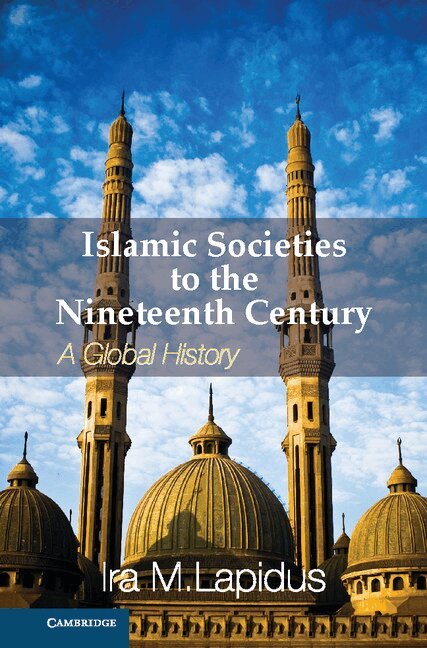
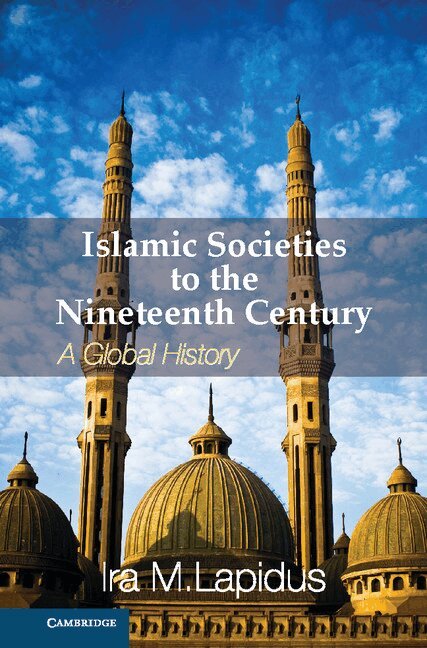
First published in 1988, Ira Lapidus' A History of Islamic Societies has become a classic in the field, enlightening students, scholars, and others with a thirst for knowledge about one of the world's great civilizations. This book, based on fully revised and updated parts one and two of this monumental work,describes the transformations of Islamic societies from their beginning in the seventh century, through their diffusion across the globe, into the challenges of the nineteenth century. The story focuses on the organization of families and tribes, religious groups and states, showing how they were transformed by their interactions with other religious and political communities. The book concludes with the European commercial and imperial interventions that initiated a new set of transformations in the Islamic world, and the onset of the modern era. Organized in narrative sections for the history of each major region, with innovative, analytic summary introductions and conclusions, this book is a unique endeavour.
681 kr
This new edition of one of the most widely used course books on Islamic civilizations around the world has been substantially revised to incorporate the new scholarship and insights of the last twenty-five years. Ira Lapidus' history explores the beginnings and transformations of Islamic civilizations in the Middle East and details Islam's worldwide diffusion. The history is divided into four parts. Part I is a comprehensive account of pre-Islamic late antiquity; the beginnings of Islam; the early Islamic empires; and Islamic religious, artistic, legal and intellectual cultures. Part II deals with the construction in the Middle East of Islamic religious communities and states to the fifteenth century. Part III includes the history to the nineteenth century of Islamic North Africa and Spain; the Ottoman, Safavid and Mughal empires; and other Islamic societies in Asia and Africa. Part IV accounts for the impact of European commercial and imperial domination on Islamic societies and traces the development of the modern national state system and the simultaneous Islamic revival from the early nineteenth century to the present.
474 kr
Skickas inom 7-10 vardagar
First published in 1988, Ira Lapidus' A History of Islamic Societies has become a classic in the field, enlightening students, scholars, and others with a thirst for knowledge about one of the world's great civilizations. This book, based on fully revised and updated parts one and two of this monumental work,describes the transformations of Islamic societies from their beginning in the seventh century, through their diffusion across the globe, into the challenges of the nineteenth century. The story focuses on the organization of families and tribes, religious groups and states, showing how they were transformed by their interactions with other religious and political communities. The book concludes with the European commercial and imperial interventions that initiated a new set of transformations in the Islamic world, and the onset of the modern era. Organized in narrative sections for the history of each major region, with innovative, analytic summary introductions and conclusions, this book is a unique endeavour.