• Fri frakt över 249 kr
  • •
  • Snabba leveranser
  • •
  • Billiga böcker
Kundservice

Du är på sajten för privatpersoner.

Företag, bibliotek eller offentlig verksamhet?

Du handlar på classic.bokus.com, där alla dina funktioner finns intakta.
Till classic.bokus.com
Bokus logotyp. Gå till startsidan.
  • Erbjudanden
  • Student
  • Topplistor
  • Barn & ungdom
  • Bokus Play
  • E-böcker
  • Ljudböcker
  • Pocketböcker
  • Spel och pussel

Pocketfynda! Hundratals böcker för 49 kr/st →

Sidfot

Mina sidor

    Hjälp

    • Kundservice
    • Vanliga frågor och svar
    • Frakt och leverans
    • Retur vid ångerrätt
    • Reklamera vara
    • Betalning
    • Köpvillkor
    • Allmänna villkor
    • Information om webbplatsens tillgänglighet

    Om Bokus

    • Om oss
    • Pressrum
    • För studenter
    • För företag
    • För bibliotek och offentlig verksamhet
    • För leverantörer
    • Hållbarhet

    Populärt

    • Aktuella erbjudanden
    • Presentkort
    • Studentlitteratur
    • Nya böcker
    • Topplistor
    • Signerade böcker
    • Engelska böcker

    Inspiration

    • Boktips
    • BookTok
    • Barnbokskaraktärer
    • Populära författare
    Logotyp för Bokus
    Följ oss på Facebook (extern länk)Följ oss på Instagram (extern länk)Följ oss på YouTube (extern länk)Följ oss på TikTok (extern länk)
    bokus @ CookiesAnpassa cookiesIntegritetspolicyKöpvillkor
    Till Citymail hemsida (extern länk)Till Budbee hemsida (extern länk)Till Postnord hemsida (extern länk)Till Schenker hemsida (extern länk)Till Early Bird hemsida (extern länk)Till Walleys hemsida (extern länk)
    1. Historia och arkeologi
    2. Historia
    3. Allmän historia och världshistoria

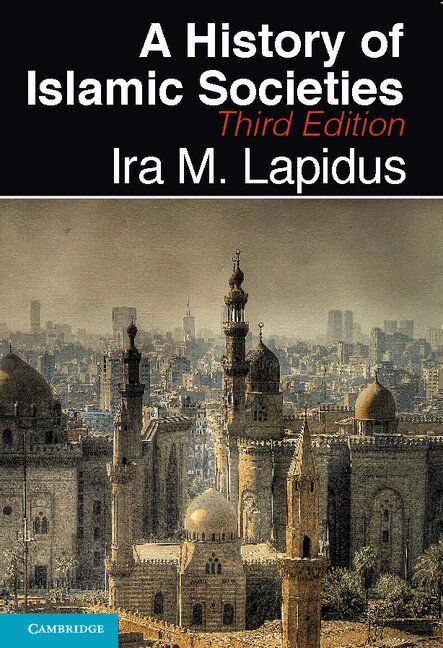
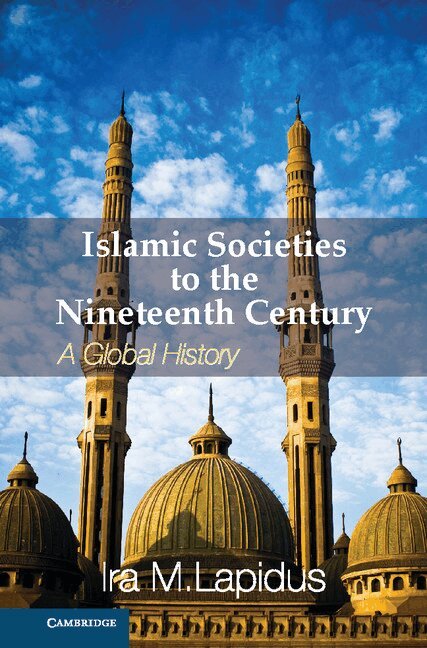
    Islamic Societies to the Nineteenth Century

    A Global History

    AvIra M. Lapidus

    Inbunden, Engelska, 2012

    783 kr

    Beställningsvara. Skickas inom 7-10 vardagar. Fri frakt över 249 kr.

    Fler format och utgåvor

    Häftad

    509 kr

    Beskrivning

    First published in 1988, Ira Lapidus' A History of Islamic Societies has become a classic in the field, enlightening students, scholars, and others with a thirst for knowledge about one of the world's great civilizations. This book, based on fully revised and updated parts one and two of this monumental work,describes the transformations of Islamic societies from their beginning in the seventh century, through their diffusion across the globe, into the challenges of the nineteenth century. The story focuses on the organization of families and tribes, religious groups and states, showing how they were transformed by their interactions with other religious and political communities. The book concludes with the European commercial and imperial interventions that initiated a new set of transformations in the Islamic world, and the onset of the modern era. Organized in narrative sections for the history of each major region, with innovative, analytic summary introductions and conclusions, this book is a unique endeavour.

    Produktinformation

    • Utgivningsdatum:2012-10-29
    • Mått:151 x 235 x 43 mm
    • Vikt:1 200 g
    • Format:Inbunden
    • Språk:Engelska
    • Antal sidor:788
    • Förlag:Cambridge University Press
    • ISBN:9780521514415

    Utforska kategorier

    • Allmän historia och världshistoria inom Historia och arkeologi

    Mer om författaren

    Ira Lapidus is Professor Emeritus of History at the University of California, Berkeley. Throughout his long and illustrious career he has published extensively. His abiding interest has been the relationship between the family, the tribe and the city, and this is exemplified in his current work and previous publications, including Contemporary Islamic Movements in Historical Perspective (1983), Muslim Cities in the Later Middle Ages (1984), Islam, Politics and Social Movements, co-edited with Edmund Burke (1988) and A History of Islamic Societies (1988, 2002).

    Innehållsförteckning

    • Introduction to the history of Islamic societies; Book I. Part I. The Beginnings of Islamic Civilizations, The Middle East from c.600 to c.1000: 1. Middle Eastern societies before Islam; 2. Historians and the sources; 3. Arabia; 4. Muhammad: preaching, community, and state formation; 5. Introduction; 6. The Arab-Muslim conquests and the socio-economic bases of empire; 7. Regional developments: economic and social changes; 8. The caliphate to 750; 9. The 'Abbasid empire; 10. Decline and fall of the 'Abbasid empire; 11. Introduction: religion and identity; 12. The ideology of imperial Islam; 13. The 'Abbasids: caliphs and emperors; 14. Introduction; 15. Sunni Islam; 16. Shi'i Islam; 17. Muslim urban societies to the tenth century; 18. The non-Muslim minorities; 19. Continuity and change in the historic cultures of the Middle East; Book I. Part II. From Islamic Community to Islamic Society: Egypt, Iraq and Iran, 945–c.1500: 20. The post-'Abbasid Middle Eastern state system; 21. Muslim communities and Middle Eastern societies: 1000–1500 CE; 22. The collective ideal; 23. The personal ethic; 24. Conclusion: Middle Eastern Islamic patterns; Book II. The Global Expansion of Islam from the Seventh to the Nineteenth Century: 25. Introduction: Islamic institutions; 26. Islamic north Africa to the thirteenth century; 27. Spanish-Islamic civilization; 28. Libya, Tunisia, Algeria, and Morocco from the thirteenth to the nineteenth centuries; 29. States and Islam: North African variations; 30. Introduction: empires and societies; 31. The Turkish migrations and the Ottoman empire; 32. The post-classical Ottoman empire: decentralization, commercialization, incorporation; 33. The Arab regions of the Middle East; 34. The Safavid empire; 35. The Indian subcontinent: the Delhi sultanates and the Mughal empire; 36. Islamic empires compared; 37. Inner Asia from the Mongol conquests to the nineteenth century; 38. Islamic societies in Southeast Asia; 39. The African context: Islam, slavery, and colonialism; 40. Islam in Sudanic, Savannah, and forest west Africa; 41. The West African jihads; 42. Islam in East Africa and the European colonial empires; 43. Conclusion: the varieties of Islamic societies; 44. The global context.