J. C. Yardley - Böcker
Visar alla böcker från författaren J. C. Yardley. Handla med fri frakt och snabb leverans.
13 produkter
13 produkter
1 770 kr
Skickas inom 3-6 vardagar
This book presents a translation, with commentary, of a major Roman source on the end of the reign of Alexander the Great. Book 10 of Curtius' Histories covers the reign of terror and mutiny that followed upon Alexander's return from India; and offers the fullest account of the power struggle that began in Babylon immediately after his death. The Introduction establishes a profile of Curtius Rufus (quite probably a Roman Senator of the first century AD), and his agenda as a historian. John Yardley's translation and the commentary are designed for the reader without Latin. The Commentary provides detailed analysis of the historical events of the crucial period 325-3 BC covered by Curtius, and also tries to get behind the surface level of meaning to show how Curtius intended his history to be a text for his time. Curtius' text is also examined as a literary achievement in its own right.
989 kr
Skickas inom 5-8 vardagar
This book presents a translation, with commentary, of a major Roman source on the end of the reign of Alexander the Great. Book 10 of Curtius' Histories covers the reign of terror and mutiny that followed upon Alexander's return from India; and offers the fullest account of the power struggle that began in Babylon immediately after his death. The Introduction establishes a profile of Curtius Rufus (quite probably a Roman Senator of the first century AD), and his agenda as a historian. John Yardley's translation and the commentary are designed for the reader without Latin. The Commentary provides detailed analysis of the historical events of the crucial period 325-3 BC covered by Curtius, and also tries to get behind the surface level of meaning to show how Curtius intended his history to be a text for his time. Curtius' text is also examined as a literary achievement in its own right.
Del 5 - Blackwell Sourcebooks in Ancient History
Alexander the Great
Historical Sources in Translation
Inbunden, Engelska, 2003
1 589 kr
Skickas inom 7-10 vardagar
This source book presents new translations of the most important ancient writings on the life and legacy of Alexander the Great. Provides comprehensive coverage of Alexander, from his family background to his military conquests, death and legacy.Includes substantial extracts of texts written by historians, geographers, biographers and military writers.A general introduction and introductions to each chapter set the sources in context.Also includes a bibliography of modern works, visual sources and a map of Alexander's expedition.
Del 6 - Blackwell Sourcebooks in Ancient History
Alexander the Great
Historical Sources in Translation
Häftad, Engelska, 2003
553 kr
Skickas inom 7-10 vardagar
This source book presents new translations of the most important ancient writings on the life and legacy of Alexander the Great. Provides comprehensive coverage of Alexander, from his family background to his military conquests, death and legacy.Includes substantial extracts of texts written by historians, geographers, biographers and military writers.A general introduction and introductions to each chapter set the sources in context.Also includes a bibliography of modern works, visual sources and a map of Alexander's expedition.
350 kr
Skickas inom 7-10 vardagar
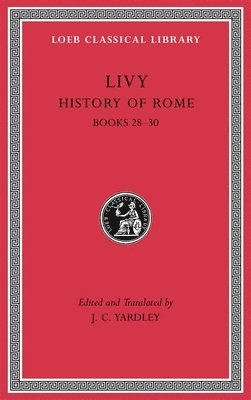
Rome, from the beginning.Livy (Titus Livius), the great Roman historian, was born at Patavium (Padua) in 64 or 59 BC, where after years in Rome he died in AD 12 or 17. Livy’s history, composed as the imperial autocracy of Augustus was replacing the republican system that had stood for over five hundred years, presents in splendid style a vivid narrative of Rome’s rise from the traditional foundation of the city in 753 or 751 BC to 9 BC and illustrates the collective and individual virtues necessary to achieve and maintain such greatness.Of its 142 books, conventionally divided into pentads and decades, we have 1–10 and 21–45 complete, and short summaries (periochae) of all the rest except 41 and 43–45; 11–20 are lost, and of the rest only fragments and the summaries remain.The third decade constitutes our fullest surviving account of the momentous Second Punic (or Hannibalic) War, featuring a famous gallery of leaders Roman, Carthaginian, and Greek, all memorably drawn. It comprises two recognizable pentads: Books 21–25 narrate the run-up to conflict and Rome’s struggles in its first phase, with Hannibal dominant; Books 26–30 relate Rome’s revival and final victory, as the focus shifts to Scipio Africanus.This edition of the third decade, which replaces the original Loeb editions by B. O. Foster (Books 21–22) and Frank Gardner Moore (Books 23–30), offers a text based on the critical editions by John Briscoe (Books 21–25) and P. G. Walsh (Books 26–30), a fresh translation, and ample annotation fully current with modern scholarship.
313 kr
Skickas inom 7-10 vardagar
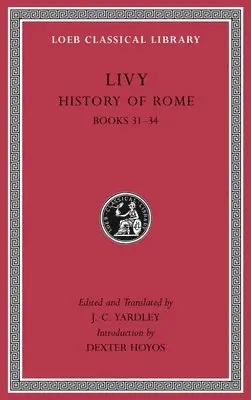
Rome, from the beginning.Livy (Titus Livius), the great Roman historian, was born at Patavium (Padua) in 64 or 59 BC, where after years in Rome he died in AD 12 or 17.Livy’s history, composed as the imperial autocracy of Augustus was replacing the republican system that had stood for over five hundred years, presents in splendid style a vivid narrative of Rome’s rise from the traditional foundation of the city in 753 or 751 BC to 9 BC and illustrates the collective and individual virtues necessary to achieve and maintain such greatness.Of its 142 books, conventionally divided into pentads and decades, we have 1–10 and 21–45 complete, and short summaries (periochae) of all the rest except 41 and 43–45; 11–20 are lost, and of the rest only fragments and the summaries remain.The fourth decade comprises two recognizable pentads: Books 31–35 narrate the Second Macedonian War (200–196) and its aftermath (Rome’s growing hegemony over Greece and tension with Antiochus III, the Seleucid ruler of the Near East), then Books 36–40 the years from 191 to 180, when Rome crushed and shrank Antiochus’ empire to extend and consolidate her mastery over the Hellenistic states. Also included are detailed narratives of Rome’s domestic politics and society, and of her western wars.This edition of the fourth decade, which replaces the original Loeb edition by Evan T. Sage, offers a text based on Briscoe’s edition, a fresh translation, and ample annotation fully current with modern scholarship.
350 kr
Skickas inom 7-10 vardagar
Rome, from the beginning.Livy (Titus Livius), the great Roman historian, was born at Patavium (Padua) in 64 or 59 BC, where after years in Rome he died in AD 12 or 17.Livy’s history, composed as the imperial autocracy of Augustus was replacing the republican system that had stood for over five hundred years, presents in splendid style a vivid narrative of Rome’s rise from the traditional foundation of the city in 753 or 751 BC to 9 BC and illustrates the collective and individual virtues necessary to achieve and maintain such greatness.Of its 142 books, conventionally divided into pentads and decades, we have 1–10 and 21–45 complete, and short summaries (periochae) of all the rest except 41 and 43–45; 11–20 are lost, and of the rest only fragments and the summaries remain.The fourth decade comprises two recognizable pentads: Books 31–35 narrate the Second Macedonian War (200–196) and its aftermath (Rome’s growing hegemony over Greece and tension with Antiochus III, the Seleucid ruler of the Near East), then Books 36–40 the years from 191 to 180, when Rome crushed and shrank Antiochus’ empire to extend and consolidate her mastery over the Hellenistic states. Also included are detailed narratives of Rome’s domestic politics and society, and of her western wars.This edition of the fourth decade, which replaces the original Loeb edition by Evan T. Sage, offers a text based on Briscoe’s edition, a fresh translation, and ample annotation fully current with modern scholarship.
350 kr
Skickas inom 7-10 vardagar
Rome, from the beginning.Livy (Titus Livius), the great Roman historian, was born at Patavium (Padua) in 64 or 59 BC, where after years in Rome he died in AD 12 or 17.Livy’s history, composed as the imperial autocracy of Augustus was replacing the republican system that had stood for over five hundred years, presents in splendid style a vivid narrative of Rome’s rise from the traditional foundation of the city in 753 or 751 BC to 9 BC and illustrates the collective and individual virtues necessary to achieve and maintain such greatness.Of its 142 books, conventionally divided into pentads and decades, we have 1–10 and 21–45 complete, and short summaries (periochae) of all the rest except 41 and 43–45; 11–20 are lost, and of the rest only fragments and the summaries remain.The fourth decade comprises two recognizable pentads: Books 31–35 narrate the Second Macedonian War (200–196) and its aftermath (Rome’s growing hegemony over Greece and tension with Antiochus III, the Seleucid ruler of the Near East), then Books 36–40 the years from 191 to 180, when Rome crushed and shrank Antiochus’ empire to extend and consolidate her mastery over the Hellenistic states. Also included are detailed narratives of Rome’s domestic politics and society, and of her western wars.This edition of the fourth decade, which replaces the original Loeb edition by Evan T. Sage, offers a text based on Briscoe’s edition, a fresh translation, and ample annotation fully current with modern scholarship.
313 kr
Skickas inom 7-10 vardagar
Rome, from the beginning.Livy (Titus Livius), the great Roman historian, was born at Patavium (Padua) in 64 or 59 BC, where after years in Rome he died in AD 12 or 17. Livy’s history, composed as the imperial autocracy of Augustus was replacing the republican system that had stood for over five hundred years, presents in splendid style a vivid narrative of Rome’s rise from the traditional foundation of the city in 753 or 751 BC to 9 BC and illustrates the collective and individual virtues necessary to achieve and maintain such greatness.Of its 142 books, conventionally divided into pentads and decades, we have 1–10 and 21–45 complete, and short summaries (periochae) of all the rest except 41 and 43–45; 11–20 are lost, and of the rest only fragments and the summaries remain.The third decade constitutes our fullest surviving account of the momentous Second Punic (or Hannibalic) War, featuring a famous gallery of leaders Roman, Carthaginian, and Greek, all memorably drawn. It comprises two recognizable pentads: Books 21–25 narrate the run-up to conflict and Rome’s struggles in its first phase, with Hannibal dominant; Books 26–30 relate Rome’s revival and final victory, as the focus shifts to Scipio Africanus.This edition of the third decade, which replaces the original Loeb editions by B. O. Foster (Books 21–22) and Frank Gardner Moore (Books 23–30), offers a text based on the critical editions by John Briscoe (Books 21–25) and P. G. Walsh (Books 26–30), a fresh translation, and ample annotation fully current with modern scholarship.
350 kr
Skickas inom 7-10 vardagar
Rome, from the beginning.Livy (Titus Livius), the great Roman historian, was born at Patavium (Padua) in 64 or 59 BC, where after years in Rome he died in AD 12 or 17. Livy’s history, composed as the imperial autocracy of Augustus was replacing the republican system that had stood for over five hundred years, presents in splendid style a vivid narrative of Rome’s rise from the traditional foundation of the city in 753 or 751 BC to 9 BC and illustrates the collective and individual virtues necessary to achieve and maintain such greatness.Of its 142 books, conventionally divided into pentads and decades, we have 1–10 and 21–45 complete, and short summaries (periochae) of all the rest except 41 and 43–45; 11–20 are lost, and of the rest only fragments and the summaries remain.The third decade constitutes our fullest surviving account of the momentous Second Punic (or Hannibalic) War, featuring a famous gallery of leaders Roman, Carthaginian, and Greek, all memorably drawn. It comprises two recognizable pentads: Books 21–25 narrate the run-up to conflict and Rome’s struggles in its first phase, with Hannibal dominant; Books 26–30 relate Rome’s revival and final victory, as the focus shifts to Scipio Africanus.This edition of the third decade, which replaces the original Loeb editions by B. O. Foster (Books 21–22) and Frank Gardner Moore (Books 23–30), offers a text based on the critical editions by John Briscoe (Books 21–25) and P. G. Walsh (Books 26–30), a fresh translation, and ample annotation fully current with modern scholarship.
405 kr
Skickas
Rome, from the beginning.Livy (Titus Livius), the great Roman historian, was born at Patavium (Padua) in 64 or 59 BC, where after years in Rome he died in AD 12 or 17. Livy’s history, composed as the imperial autocracy of Augustus was replacing the republican system that had stood for over five hundred years, presents in splendid style a vivid narrative of Rome’s rise from the traditional foundation of the city in 753 or 751 BC to 9 BC and illustrates the collective and individual virtues necessary to achieve and maintain such greatness.Of its 142 books, conventionally divided into pentads and decades, we have 1–10 and 21–45 complete, and short summaries (periochae) of all the rest except 41 and 43–45; 11–20 are lost, and of the rest only fragments and the summaries remain.The third decade constitutes our fullest surviving account of the momentous Second Punic (or Hannibalic) War, featuring a famous gallery of leaders Roman, Carthaginian, and Greek, all memorably drawn. It comprises two recognizable pentads: Books 21–25 narrate the run-up to conflict and Rome’s struggles in its first phase, with Hannibal dominant; Books 26–30 relate Rome’s revival and final victory, as the focus shifts to Scipio Africanus.This edition of the third decade, which replaces the original Loeb editions by B. O. Foster (Books 21–22) and Frank Gardner Moore (Books 23–30), offers a text based on the critical editions by John Briscoe (Books 21–25) and P. G. Walsh (Books 26–30), a fresh translation, and ample annotation fully current with modern scholarship.
Del 557 - Loeb Classical Library
Epitome of Pompeius Trogus, Volume I
Books 1–20
Inbunden, Engelska, 2024
350 kr
Skickas inom 7-10 vardagar
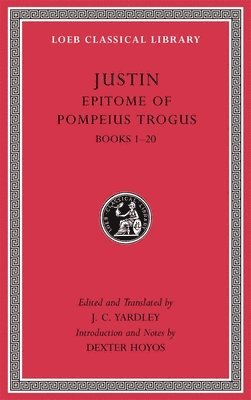
A condensed Roman history of non-Roman civilizations.To Justin (Marcus Junian(i)us Justinus), otherwise unknown, is attributed our abbreviated version of the lost Philippic History by (Gnaeus?) Pompeius Trogus, a massive account, in forty-four books, of the non-Roman world and its civilizations, from mythic beginnings through Alexander the Great, the Hellenistic kingdoms, and Parthia. Trogus’ work thus complemented the monumental history of Rome by his Augustan contemporary, Livy, and in high style traced similar moral themes: rulers and states that lack such virtues as moderation, justice, and piety bring harm or ruin on themselves, and often on their realms as well.Justin, working at some time in the late second to the late fourth century AD, did not produce a strict epitome or summary but what he calls “a brief anthology”: not unlike Florus (LCL 231), who used Livy’s history as the primary source for a brief but original military history of Rome, Justin freely selected what suited his own purposes, favoring “what makes pleasurable reading or serves to provide a moral,” with an eye to the kind of emotive anecdotes that might be useful to orators. He also blends Trogus’ language with borrowings from literature of subsequent generations. Justin’s anthology became one of the most widely read and influential books in the Middle Ages and Renaissance, indeed the main authority on world history other than Roman, surviving in more than 200 manuscripts.Also included in this edition are the “Prologues,” summaries of Trogus by some other compiler, which preserve many details that Justin omits or reports differently.
Del 558 - Loeb Classical Library
Epitome of Pompeius Trogus, Volume II
Books 21–44
Inbunden, Engelska, 2024
350 kr
Skickas inom 7-10 vardagar
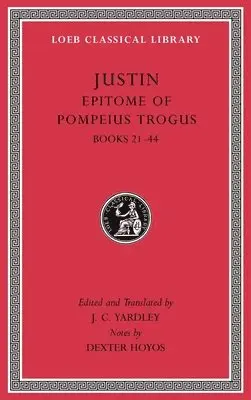
A condensed Roman history of non-Roman civilizations.To Justin (Marcus Junian(i)us Justinus), otherwise unknown, is attributed our abbreviated version of the lost Philippic History by (Gnaeus?) Pompeius Trogus, a massive account, in forty-four books, of the non-Roman world and its civilizations, from mythic beginnings through Alexander the Great, the Hellenistic kingdoms, and Parthia. Trogus’ work thus complemented the monumental history of Rome by his Augustan contemporary, Livy, and in high style traced similar moral themes: rulers and states that lack such virtues as moderation, justice, and piety bring harm or ruin on themselves, and often on their realms as well.Justin, working at some time in the late second to the late fourth century AD, did not produce a strict epitome or summary but what he calls “a brief anthology”: not unlike Florus (LCL 231), who used Livy’s history as the primary source for a brief but original military history of Rome, Justin freely selected what suited his own purposes, favoring “what makes pleasurable reading or serves to provide a moral,” with an eye to the kind of emotive anecdotes that might be useful to orators. He also blends Trogus’ language with borrowings from literature of subsequent generations. Justin’s anthology became one of the most widely read and influential books in the Middle Ages and Renaissance, indeed the main authority on world history other than Roman, surviving in more than 200 manuscripts.Also included in this edition are the “Prologues,” summaries of Trogus by some other compiler, which preserve many details that Justin omits or reports differently.