J. Cale Johnson - Böcker
Visar alla böcker från författaren J. Cale Johnson. Handla med fri frakt och snabb leverans.
4 produkter
4 produkter
Del 3 - Science, Technology, and Medicine in Ancient Cultures
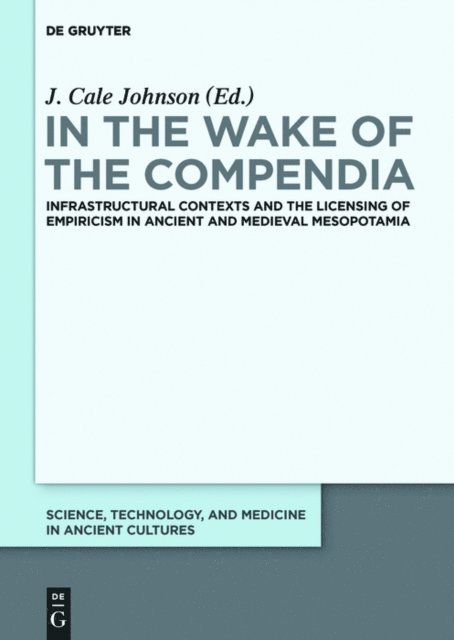
In the Wake of the Compendia
Infrastructural Contexts and the Licensing of Empiricism in Ancient and Medieval Mesopotamia
Inbunden, Engelska, 2015
1 788 kr
Skickas inom 5-8 vardagar
In the Wake of the Compendia presents papers that examine the history of technical compendia as they moved between institutions and societies in ancient and medieval Mesopotamia.This volume offers new perspectives on the development and transmission of technical compilations, looking especially at the relationship between empirical knowledge and textual transmission in early scientific thinking. The eleven contributions to the volume derive from a panel held at the American Oriental Society in 2013 and cover more than three millennia of historical development, ranging from Babylonian medicine and astronomy to the persistence of Mesopotamian lore in Syriac and Arabic meditations on the properties of animals. The volume also includes major contributions on the history of Mesopotamian “rationality,” epistemic labels for tested and tried remedies, and the development of depersonalized case histories in Babylonian therapeutic compendia. Together, these studies offer an overview of several important moments in the development of non-Western scientific thinking and a significant contribution to our understanding of how traditions of technical knowledge were produced and transmitted in the ancient world.
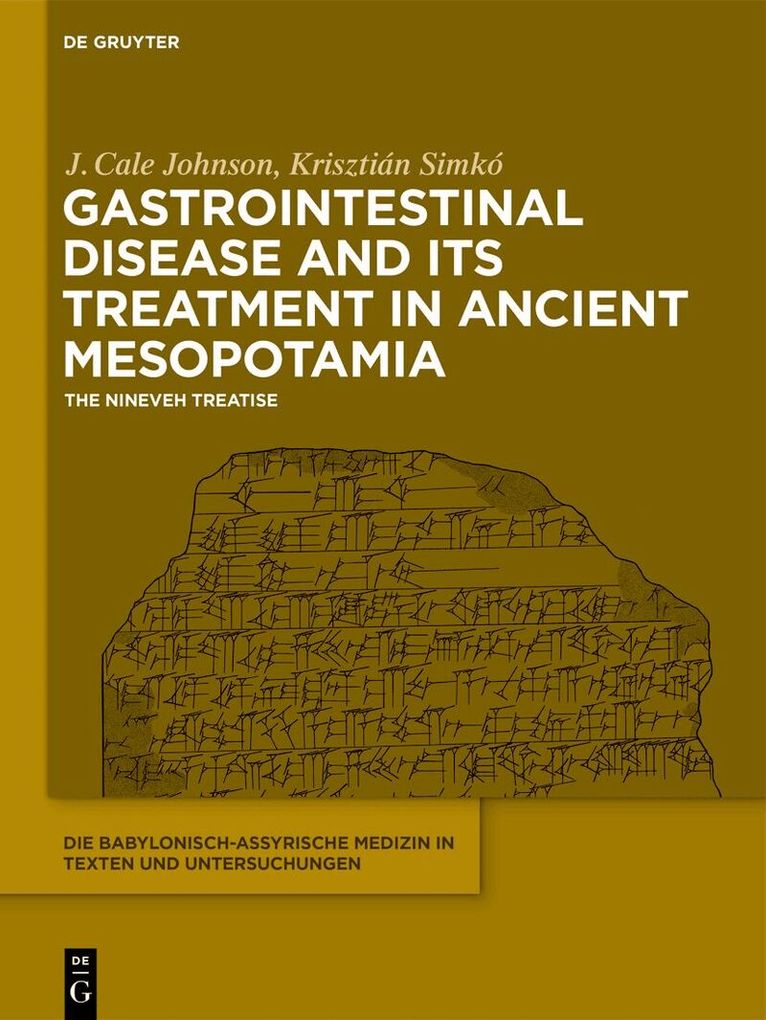
Gastrointestinal Disease and Its Treatment in Ancient Mesopotamia
The Nineveh Treatise
Inbunden, Engelska, 2024
2 997 kr
Skickas inom 3-6 vardagar
This volume contains the first comprehensive edition of the most important medical compendium on gastrointestinal ailments, bile-induced diseases, and fever from ancient Mesopotamia: the Stomach Treatise from Ashurbanipal’s royal library at Nineveh. Assembled three millennia ago from symptom descriptions, drug recipes, incantations, and healing rituals, this treatise formed part of the only authoritative source of knowledge on therapeutic medicine at the time, the Nineveh Medical Encyclopaedia. With numerous textual improvements based on first-hand examinations of the manuscripts and more than a dozen new joins, the Stomach Treatise now finds its rightful place alongside the Ebers Papyrus and the Greco-Roman medical traditions as one of the key representatives of ancient medical thought.
Patients and Performative Identities
At the Intersection of the Mesopotamian Technical Disciplines and Their Clients
Inbunden, Engelska, 2020
1 917 kr
Skickas inom 5-8 vardagar
The missing piece in so many histories of Mesopotamian technical disciplines is the client, who often goes unnoticed by present-day scholars seeking to reconstruct ancient disciplines in the Near East over millennia. The contributions to this volume investigate how Mesopotamian medical specialists interacted with their patients and, in doing so, forged their social and professional identities. The chapters in this book explore rituals for success at court, the social classes who made use of such rituals, and depictions of technical specialists on seal impressions and in later Greco-Roman iconography. Several essays focus on Egalkura: rituals of entering the court, meant to invoke a favorable impression from the sovereign. These include detailed surveys and comparative studies of the genre and its roots in the emergent astrological paradigm of the late first millennium BC. The different media and modalities of interaction between technical specialists and their clients are also a central theme explored in detailed studies of the sickbed scene in the iconography of Mesopotamian cylinder seals and the transmission of specialized pharmaceutical knowledge from the Mesopotamian to the Greco-Roman world. Offering an encyclopedic survey of ritual clients attested in the cuneiform textual record, this volume outlines both the Mesopotamian and the Greco-Roman social contexts in which these rituals were used. It will be of interest to students of the history of medicine, as well as to students and scholars of ancient Mesopotamia.In addition to the editor, the contributors include Netanel Anor, Siam Bhayro, Strahil V. Panayotov, Maddalena Rumor, Marvin Schreiber, JoAnn Scurlock, and Ulrike Steinert.
Visualizing the invisible with the human body
Physiognomy and ekphrasis in the ancient world
Inbunden, Engelska, 2019
1 865 kr
Skickas inom 5-8 vardagar
Physiognomy and ekphrasis are two of the most important modes of description in antiquity and represent the necessary precursors of scientific description. The primary way of divining the characteristics and fate of an individual, whether inborn or acquired, was to observe the patient’s external characteristics and behaviour. This volume focuses initially on two types of descriptive literature in Mesopotamia: physiognomic omens and what we might call ekphrastic description. These modalities are traced through ancient India, Ugaritic and the Hebrew Bible, before arriving at the physiognomic features of famous historical figures such as Themistocles, Socrates or Augustus in the Graeco-Roman world, where physiognomic discussions become intertwined with typological analyses of human characters. The Arabic compendial culture absorbed and remade these different physiognomic and ekphrastic traditions, incorporating both Mesopotamian links between physiognomy and medicine and the interest in characterological ‘types’ that had emerged in the Hellenistic period.This volume offer the first wide-ranging picture of these modalities of description in antiquity.