J. Michelle Molina - Böcker
Visar alla böcker från författaren J. Michelle Molina. Handla med fri frakt och snabb leverans.
4 produkter
4 produkter
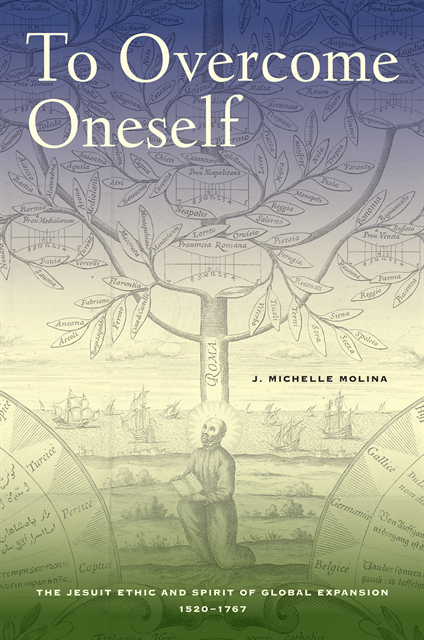
To Overcome Oneself
The Jesuit Ethic and Spirit of Global Expansion, 1520–1767
Inbunden, Engelska, 2013
1 323 kr
Skickas inom 3-6 vardagar
To Overcome Oneself offers a novel retelling of the emergence of the Western concept of "modern self," demonstrating how the struggle to forge a self was enmeshed in early modern Catholic missionary expansion. Examining the practices of Catholics in Europe and New Spain from the 1520s through the 1760s, the book treats Jesuit techniques of self-formation, namely spiritual exercises and confessional practices, and the relationships between spiritual directors and their subjects. Catholics on both sides of the Atlantic were folded into a dynamic that shaped new concepts of self and, in the process, fueled the global Catholic missionary movement. Molina historicizes Jesuit meditation and narrative self-reflection as modes of self-formation that would ultimately contribute to a new understanding of religion as something private and personal, thereby overturning long-held concepts of personhood, time, space, and social reality. To Overcome Oneself demonstrates that it was through embodied processes that humans have come to experience themselves as split into mind and body.Notwithstanding the self-congratulatory role assigned to "consciousness" in the Western intellectual tradition, early moderns did not think themselves into thinking selves. Rather, "the self" was forged from embodied efforts to transcend self. Yet despite a discourse that situates self as interior, the actual fuel for continued self-transformation required an object-cum-subject - someone else to transform. Two constant questions throughout the book are: Why does the effort to know and transcend self require so many others? And what can we learn about the inherent intersubjectivity of missionary colonialism?
133 kr
Skickas inom 7-10 vardagar
In our globalized world, differing conceptions of human nature and human values raise questions as to whether universal and partisan claims and perspectives can be reconciled, whether interreligious and intercultural conversations can help build human community, and whether a pluralistic ethos can transcend uncompromising notions as to what is true, good, and just.In this volume, world-class scholars from religious studies, the humanities, and the social sciences explore what it means to be human through a multiplicity of lives in time and place as different as fourth-century BCE China and the world of an Alzheimer’s patient today. Refusing the binary, these essays go beyond description to theories of aging and acceptance, ethics in caregiving, and the role of ritual in healing the inevitable divide between the human and the ideal.
1 341 kr
Skickas inom 10-15 vardagar
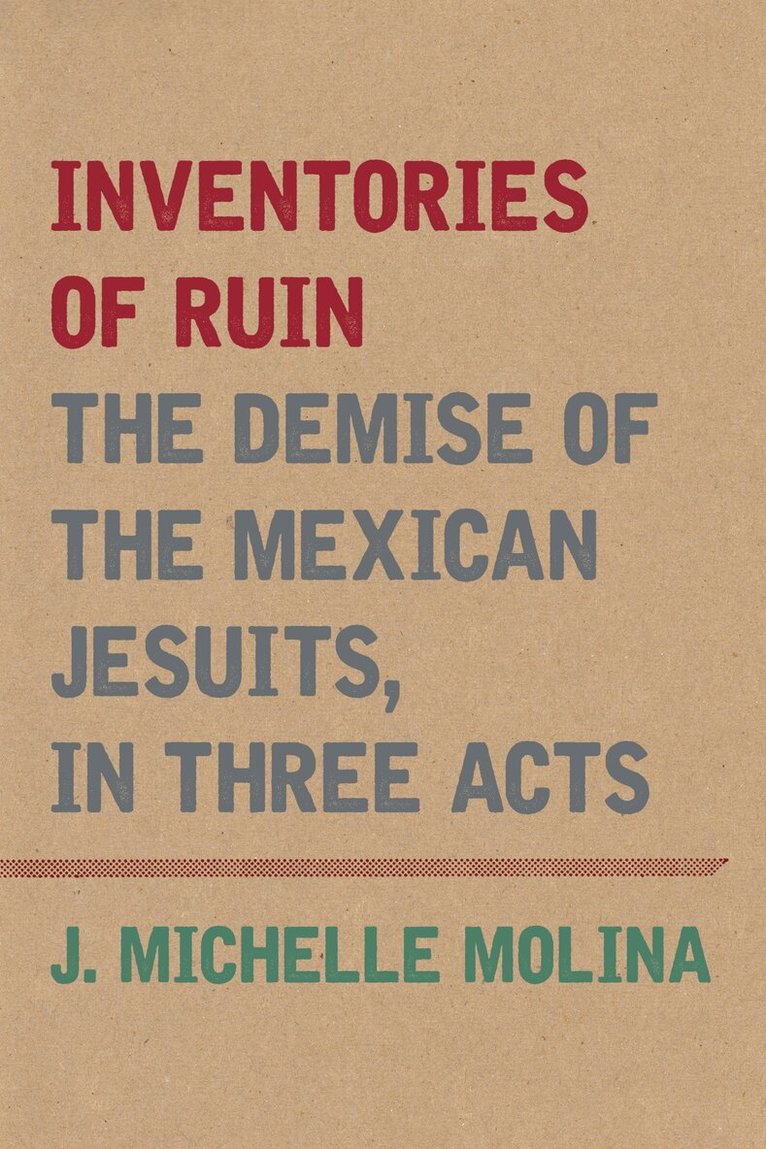
An innovative historical analysis that draws upon performance and theatre studies to stage the ruination and demise of the eighteenth-century Mexican Jesuits Inventories of Ruin dramatizes the ruination of the Mexican Province of the Society of Jesus as their power and influence waned over a period of approximately fifty years in the eighteenth-century Spanish Atlantic world. To tell the story of the arrest, migration, and ultimate dissolution of this powerful organization of missionary men, three sets of "inventories" are juxtaposed. The first is composed by notaries, who record the objects left behind by the Jesuits at a college in Puebla de Los Angeles when they were arrested on June 25, 1767. The second is an "inventory of the self," a conversion narrative composed by a Swedish convert who encounters the Jesuit refugees while shipboard on the Mediterranean Sea. The last is an inventory of the dead written by an exiled ex-Jesuit in Bologna, Italy, whose necrology memorializes the life and death of his brethren from the now defunct Mexican province. Inventories of Ruin is about the ruination and disappearance of Jesuit ways of being that counters Jesuit historiography’s framing of this period as a moment of "suppression." At the same time, Inventories of Ruin is about how this story of ruination appears in the archives. The book studies the epistemological drama of inventorying, as writers labor to uproot religious power, to locate and secure a religious self, and to capture religious histories. What weighs upon these texts is a sense of anxiety because the question of what will be found animates authors whose literary exertions appear as historiographical struggles to have a say over what appears and what vanishes before leaving the stage, or before pushing others toward the exit.
347 kr
Skickas
An innovative historical analysis that draws upon performance and theatre studies to stage the ruination and demise of the eighteenth-century Mexican Jesuits Inventories of Ruin dramatizes the ruination of the Mexican Province of the Society of Jesus as their power and influence waned over a period of approximately fifty years in the eighteenth-century Spanish Atlantic world. To tell the story of the arrest, migration, and ultimate dissolution of this powerful organization of missionary men, three sets of "inventories" are juxtaposed. The first is composed by notaries, who record the objects left behind by the Jesuits at a college in Puebla de Los Angeles when they were arrested on June 25, 1767. The second is an "inventory of the self," a conversion narrative composed by a Swedish convert who encounters the Jesuit refugees while shipboard on the Mediterranean Sea. The last is an inventory of the dead written by an exiled ex-Jesuit in Bologna, Italy, whose necrology memorializes the life and death of his brethren from the now defunct Mexican province. Inventories of Ruin is about the ruination and disappearance of Jesuit ways of being that counters Jesuit historiography’s framing of this period as a moment of "suppression." At the same time, Inventories of Ruin is about how this story of ruination appears in the archives. The book studies the epistemological drama of inventorying, as writers labor to uproot religious power, to locate and secure a religious self, and to capture religious histories. What weighs upon these texts is a sense of anxiety because the question of what will be found animates authors whose literary exertions appear as historiographical struggles to have a say over what appears and what vanishes before leaving the stage, or before pushing others toward the exit.