J. Richard Andrews - Böcker
Visar alla böcker från författaren J. Richard Andrews. Handla med fri frakt och snabb leverans.
4 produkter
4 produkter
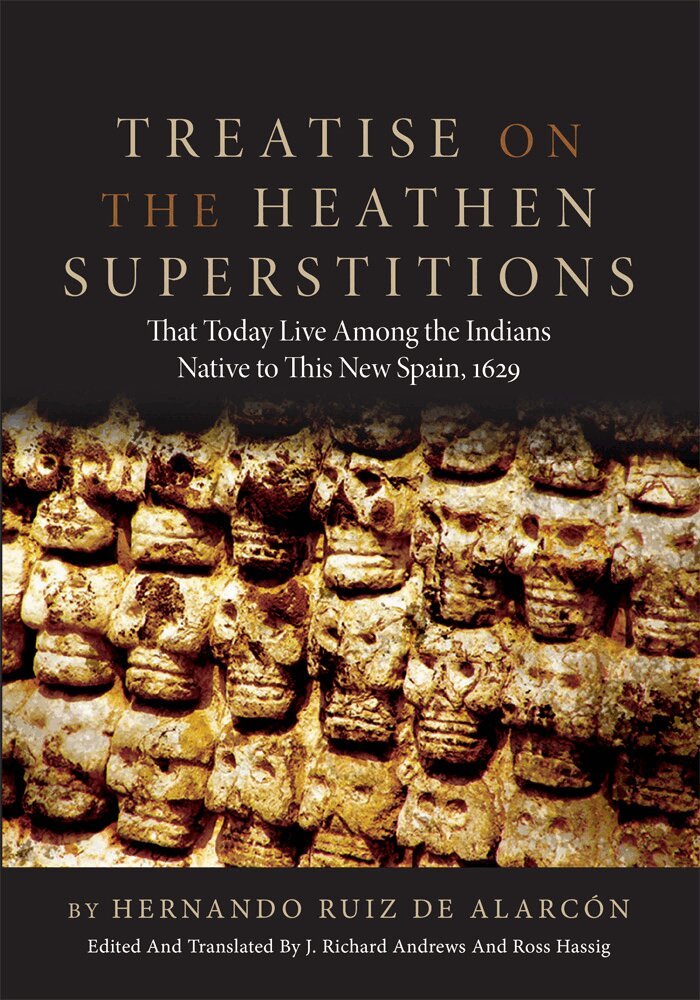
Treatise on the Heathen Superstitions
That Today Live Among the Indians Native to This New Spain, 1629
Häftad, Engelska, 1987
434 kr
Skickas inom 10-15 vardagar
The Treatise of Hernando Ruiz de Alarcón is one of the most important surviving documents of early colonial Mexico. It was written in 1629 as an aid to Roman Catholic churchmen in their efforts to root out the vestiges of pre-Columbian Aztec religious beliefs and practices. For the student of Aztec religion and culture is a valuable source of information.Hernando Ruiz de Alarcón was born in Taxco, Guerrero, Mexico, in the latter part of the sixteenth century. He attended the University of Mexico and later took holy orders. Sometime after he was assigned to the parish of Atenango, he began writing the Treatise for his fellow priests and church superiors to use as a guide in suppressing native ""heresy.""With great care and attention to detail Ruiz de Alarcón collected and recorded Aztec religious practices and incantations that had survived a century of Spanish domination (sometimes in his zeal extracting information from his informants through force and guile). He wrote down the incantations in Nahuatl and translated them into Spanish for his readers. He recorded rites for such everyday activities as woodcutting, traveling, hunting, fishing, farming, harvesting, fortune telling, lovemaking, and the curing of many diseases, from toothache to scorpion stings. Although Ruiz de Alarcón was scornful of native medical practices, we know now that in many aspects of medicine the Aztec curers were far ahead of their European counterparts.
838 kr
Skickas inom 10-15 vardagar
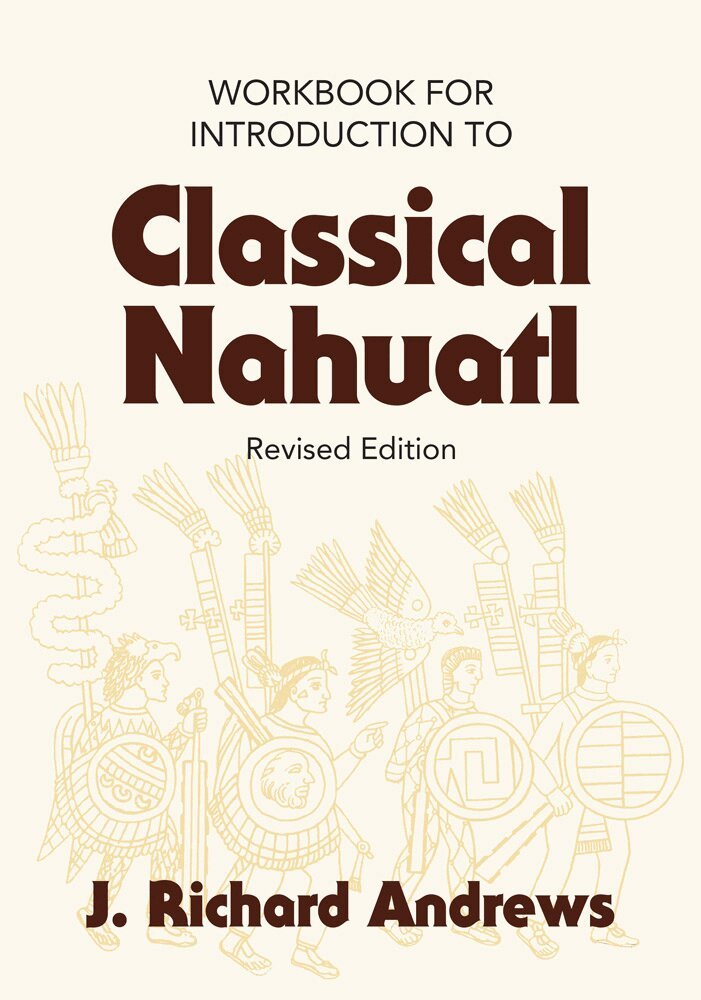
For many years, J. Richard Andrews's Introduction to Classical Nahuatl has been the standard reference work for scholars and students of Nahuatl, the language used by the ancient Aztecs and the Nahua Indians of Central Mexico. Andrews's work was the first book to make Nahuatl accessible as a coherent language system and to recognize such crucial linguistic features as vowel length and the glottal stop. Accompanied by a workbook, this long-awaited new edition is extensively revised, enlarged, and updated with the latest research.The revised edition is guided by the same intentions as those behind the first. Andrews's approach is ""anthropological,"" teaching us to understand Nahuatl according to its own distinctive grammar and to reject translationalist descriptions based on English or Spanish notions of grammar. In particular, Andrews emphasizes the nonexistence of words in Nahuatl (except for the few so-called particles) and stresses the nuclear clause as the basis for Nahuatl linguistic organization. Besides an increase in the number of chapters (from forty-eight to fifty-seven, including a more detailed treatment of place names), the new edition contains an innovative approach to personal names and the introduction of the square zero to indicate irregular morphological silence. The accompanying workbook provides exercises linked to the text, a key to the exercises, and an extensive vocabulary list.
607 kr
Skickas inom 5-8 vardagar
For many years, J. Richard Andrews's Introduction to Classical Nahuatl has been the standard reference work for scholars and students of Nahuatl, the language used by the ancient Aztecs and the Nahua Indians of Central Mexico. Andrews's work was the first book to make Nahuatl accessible as a coherent language system and to recognize such crucial linguistic features as vowel length and the glottal stop. Accompanied by a workbook, this long-awaited new edition is extensively revised, enlarged, and updated with the latest research.The revised edition is guided by the same intentions as those behind the first. Andrews's approach is ""anthropological,"" teaching us to understand Nahuatl according to its own distinctive grammar and to reject translationalist descriptions based on English or Spanish notions of grammar. In particular, Andrews emphasizes the nonexistence of words in Nahuatl (except for the few so-called particles) and stresses the nuclear clause as the basis for Nahuatl linguistic organization. Besides an increase in the number of chapters (from forty-eight to fifty-seven, including a more detailed treatment of place names), the new edition contains an innovative approach to personal names and the introduction of the square zero to indicate irregular morphological silence. The accompanying workbook provides exercises linked to the text, a key to the exercises, and an extensive vocabulary list.
489 kr
Skickas inom 10-15 vardagar
For many years, J. Richard Andrews's Introduction to Classical Nahuatl has been the standard reference work for scholars and students of Nahuatl, the language used by the ancient Aztecs and the Nahua Indians of Central Mexico. Andrews's work was the first book to make Nahuatl accessible as a coherent language system and to recognize such crucial linguistic features as vowel length and the glottal stop. Accompanied by a workbook, this long-awaited new edition is extensively revised, enlarged, and updated with the latest research.The revised edition is guided by the same intentions as those behind the first. Andrews's approach is "anthropological," teaching us to understand Nahuatl according to its own distinctive grammar and to reject translationalist descriptions based on English or Spanish notions of grammar. In particular, Andrews emphasizes the nonexistence of words in Nahuatl (except for the few so-called particles) and stresses the nuclear clause as the basis for Nahuatl linguistic organization. Besides an increase in the number of chapters (from forty-eight to fifty-seven, including a more detailed treatment of place names), the new edition contains an innovative approach to personal names and the introduction of the square zero to indicate irregular morphological silence. The accompanying workbook provides exercises linked to the text, a key to the exercises, and an extensive vocabulary list.