Jack Minker - Böcker
Visar alla böcker från författaren Jack Minker. Handla med fri frakt och snabb leverans.
5 produkter
5 produkter
2 499 kr
Skickas inom 10-15 vardagar
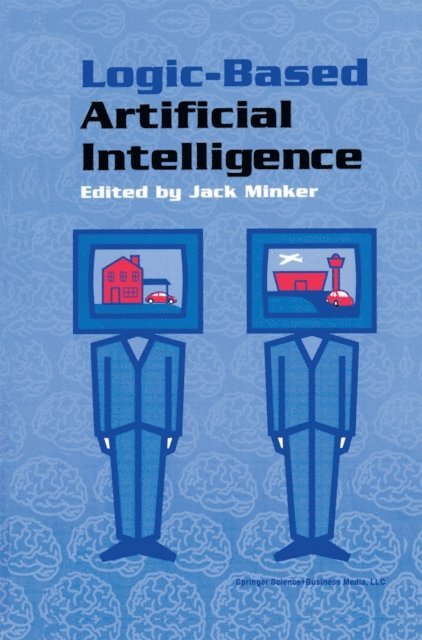
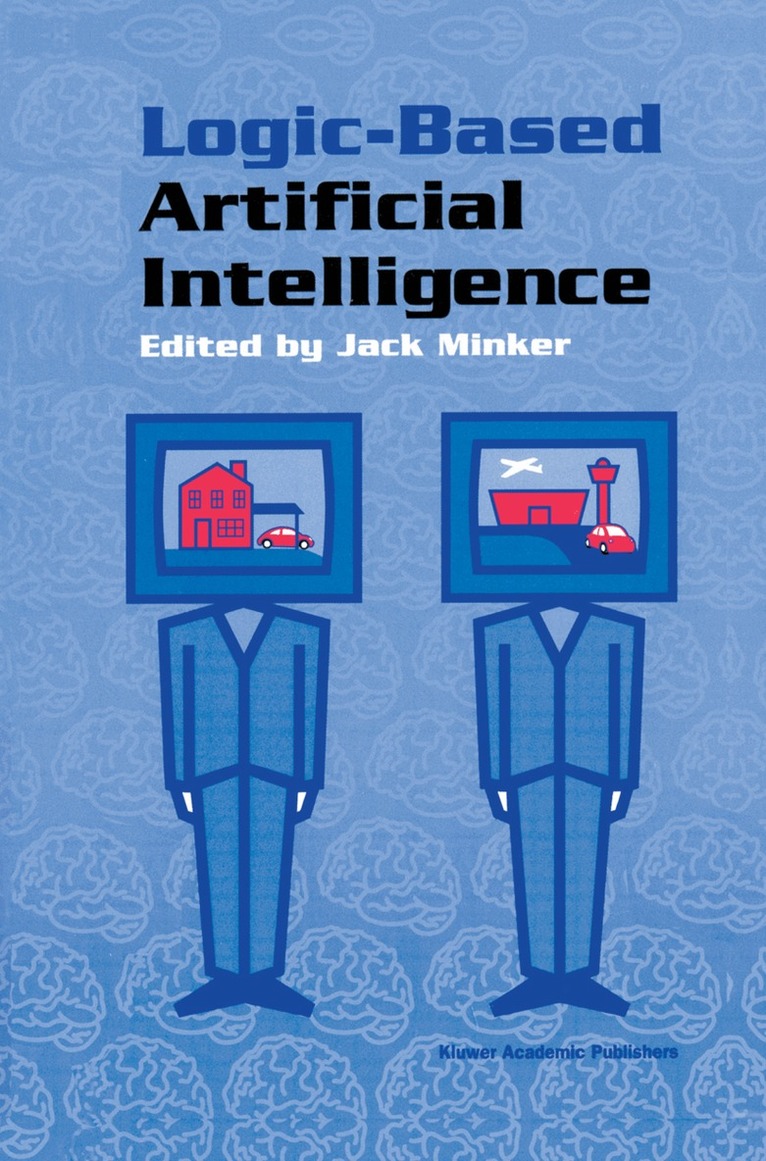
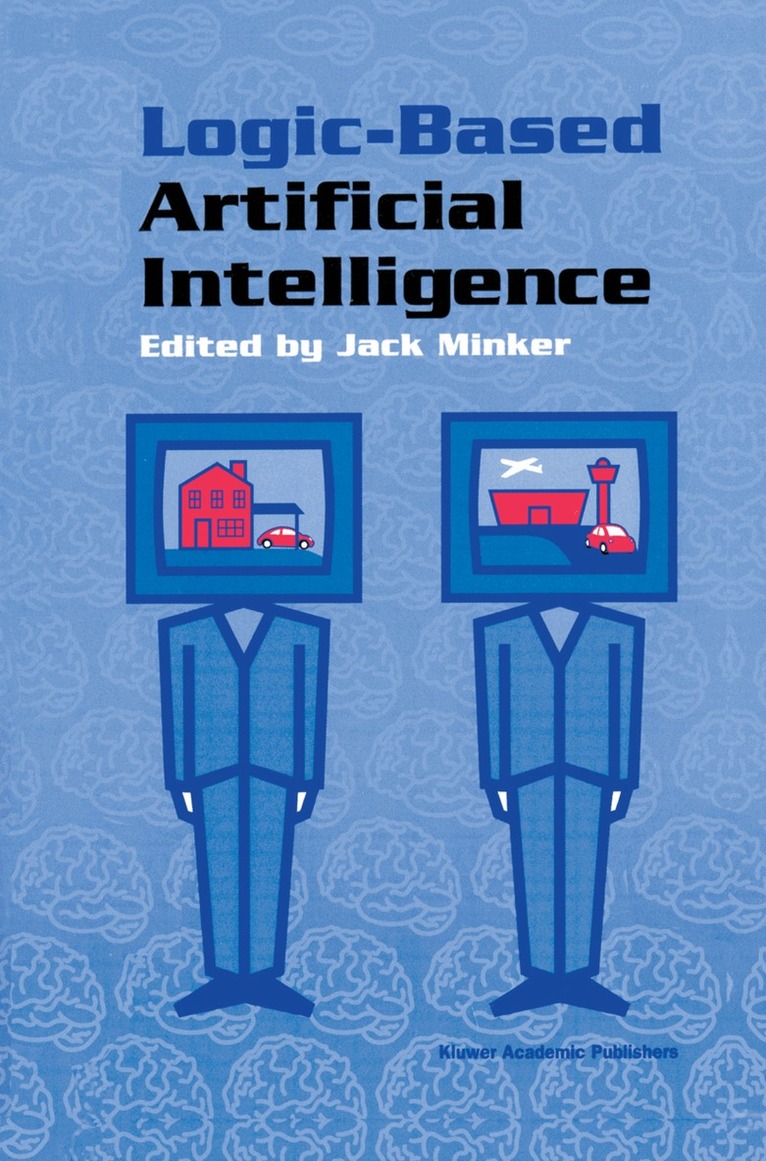
This volume represents the culmination of over 40 years of research in the use of logic as a basis for representing and manipulating problems in the field of artificial intelligence. The use of logic as a basis for commonsense reasoning was started by John McCarthy in 1959. The collection consists of both original research and surveys of almost every subject that uses logic in AI, contributed by leading scientists, and grew out of preliminary work presented at the Workshop on Logic-Based Artificial Intelligence held in Washington, DC, June 1999. All papers have been extensively refereed and revised. The introductory article presents background on research that has transpired since 1959 and discusses the significance of each chapter in this context. The topics covered in the book are commonsense reasoning, knowledge representation, nonmonotonic reasoning, logic for causation and actions, planning and problem solving, cognitive robotics, logic for agents and actions, inductive reasoning, possibilistic logic, logic and beliefs, logic and language, computational logic, knowledge base system implementations, and applications of theorem proving and logic programming.
2 427 kr
Skickas inom 10-15 vardagar
The use of mathematical logic as a formalism for artificial intelligence was recognized by John McCarthy in 1959 in his paper on Programs with Common Sense. In a series of papers in the 1960's he expanded upon these ideas and continues to do so to this date. It is now 41 years since the idea of using a formal mechanism for AI arose. It is therefore appropriate to consider some of the research, applications and implementations that have resulted from this idea. In early 1995 John McCarthy suggested to me that we have a workshop on Logic-Based Artificial Intelligence (LBAI). In June 1999, the Workshop on Logic-Based Artificial Intelligence was held as a consequence of McCarthy's suggestion. The workshop came about with the support of Ephraim Glinert of the National Science Foundation (IIS-9S2013S), the American Association for Artificial Intelligence who provided support for graduate students to attend, and Joseph JaJa, Director of the University of Maryland Institute for Advanced Computer Studies who provided both manpower and financial support, and the Department of Computer Science. We are grateful for their support. This book consists of refereed papers based on presentations made at the Workshop. Not all of the Workshop participants were able to contribute papers for the book. The common theme of papers at the workshop and in this book is the use of logic as a formalism to solve problems in AI.
549 kr
Skickas inom 10-15 vardagar
During the 1970's a theory of data ~ases began to evolve pro- viding a foundation for some existing tools and techniques. The significance of this theory is beginning to have an impact particu- larly with respect to the design and implementation of the relational model of data bases. To further the state of the art in the theory of data bases, a workshop was held in TOulouse, France on December 12-14, 1979. The workshop was a sequel to one held two years previously and entitled, "Logic and Data Base Workshop". As with the earlier work- shop, the meetings were conducted at the centre d'Etudes et de Recherches de l'Ecole Nationale Superieure de l'Aeronautique et de l'Espace de Toulouse (C.E.R.T). We are pleased to acknowledge the financial support received from the Direction des Recherches, Etudes et Techniques d'Armement (D.R.E.T.), and from C.E.R.T. that made the workshop possible.
549 kr
Skickas inom 10-15 vardagar
This is the third book devoted to theoretical issues in data bases that we have edited. Each book has been the outgrowth of papers held at a workshop in Toulouse, France. The first workshop, held in 1977 focused primarily on the important topic of logic and databases. The book, Logic and Databases was the result of this effort. The diverse uses of logic for databases such as its use as a theoretical basis for databases, for deduction and for integ rity constraints formulation and checking was described in the chapters of the book. The interest generated by the first workshop led to the deci sion to conduct other workshops focused on theoretical issues in databases. In addition to logic and databases the types of papers were expanded to include other important theoretical issues such as dependency theory which, although it sometimes uses logic as a basis, does not fit with our intended meaning of logic and databases explored at the first workshop. Because of the broader coverage, and because we anticipated further workshops, the second book was entitled, Advances in Database Theory - Volume 1. The book "Logic and Databases" should be considered Volume 0 of this series.
549 kr
Skickas inom 10-15 vardagar
Mathematical logic provides a conceptual framework for many different areas of science. It has been recognized recently that logic is also significant for data bases. To focus on this impor- tant topic, a group of researchers met at a workshop in Toulouse, France on November 16-18, 1977. The workshop was held at the Centre d'Etudes et de Recherches de L'Ecole Nationale Superieure de L'Aeronautique et de L'Espace de Toulouse (C. E. R. T. ). We are pleased to acknowledge the financial support received from the Direction des Recherches, Etudes et Techniques d'Armenent (D. R. E. T) and from C. E. R. T. Without this support the workshop would not have been possible. We particularly wish to thank our friend and colleague Jean Marie Nicolas for handling much of the organi- zation of the workshop. This book is a collection of substantially revised versions of the majority of the papers presented at the workshop. Every paper was reviewed carefully by at least two reviewers. Many thanks are due to our reviewers for their detailed reading of the papers and their constructive comments.The book provides, for the first time, a comprehensive descrip- tion of the interaction between logic and data bases.