Jacob P. B. Mortensen – författare
Visar alla böcker från författaren Jacob P. B. Mortensen. Handla med fri frakt och snabb leverans.
6 produkter
6 produkter
Inbunden, Engelska, 2016
1 357 kr
Skickas inom 11-20 vardagar
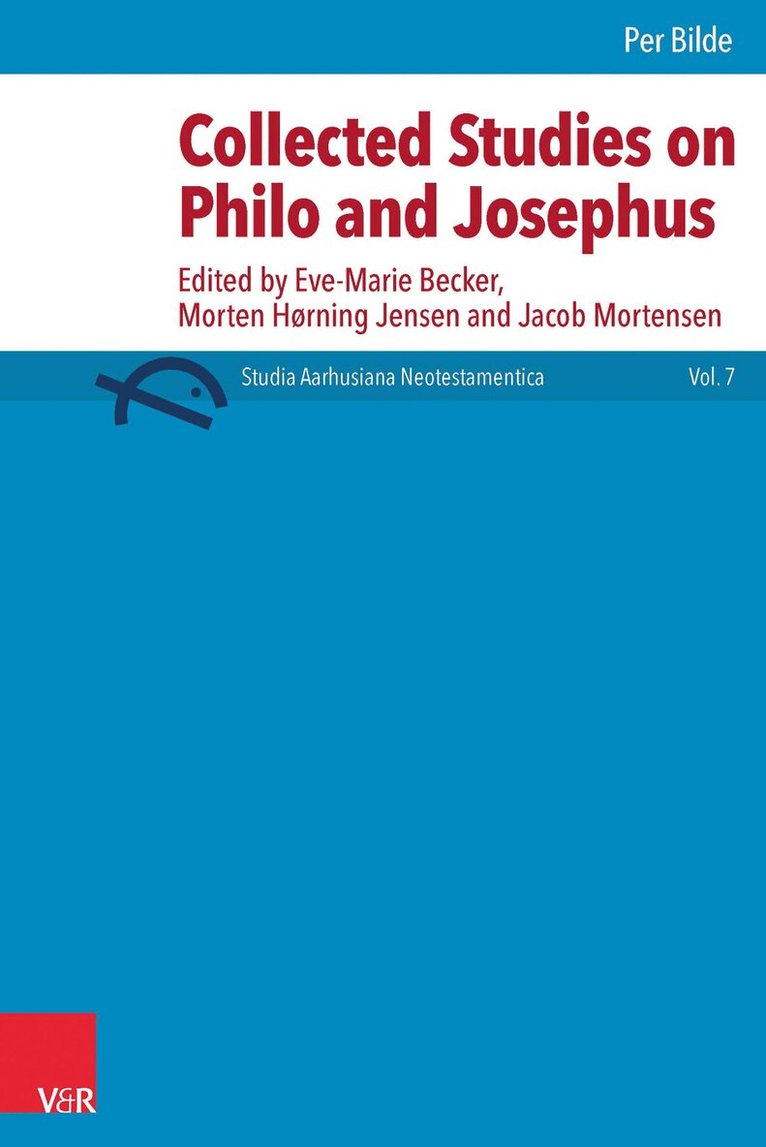
Philo of Alexandria and Flavius Josephus are amongst the most influential ancient writers. In his long scholarly career, Per Bilde (1939–2014) published various essays, studies and articles examining early Judaism and the historical Jesus from the angle of the work of Philo and Josephus. Many of the articles contain in-depth treatment of primary sources, and thus are of great value for scholars to come. The studies in this volume have yet been compiled by Per Bilde himself. They are now edited posthumously with contributions from Steve Mason (Groningen) and Mogens Müller (Copenhagen) responding to Bilde's work.
Inbunden, Engelska, 2018
1 268 kr
Skickas inom 11-20 vardagar
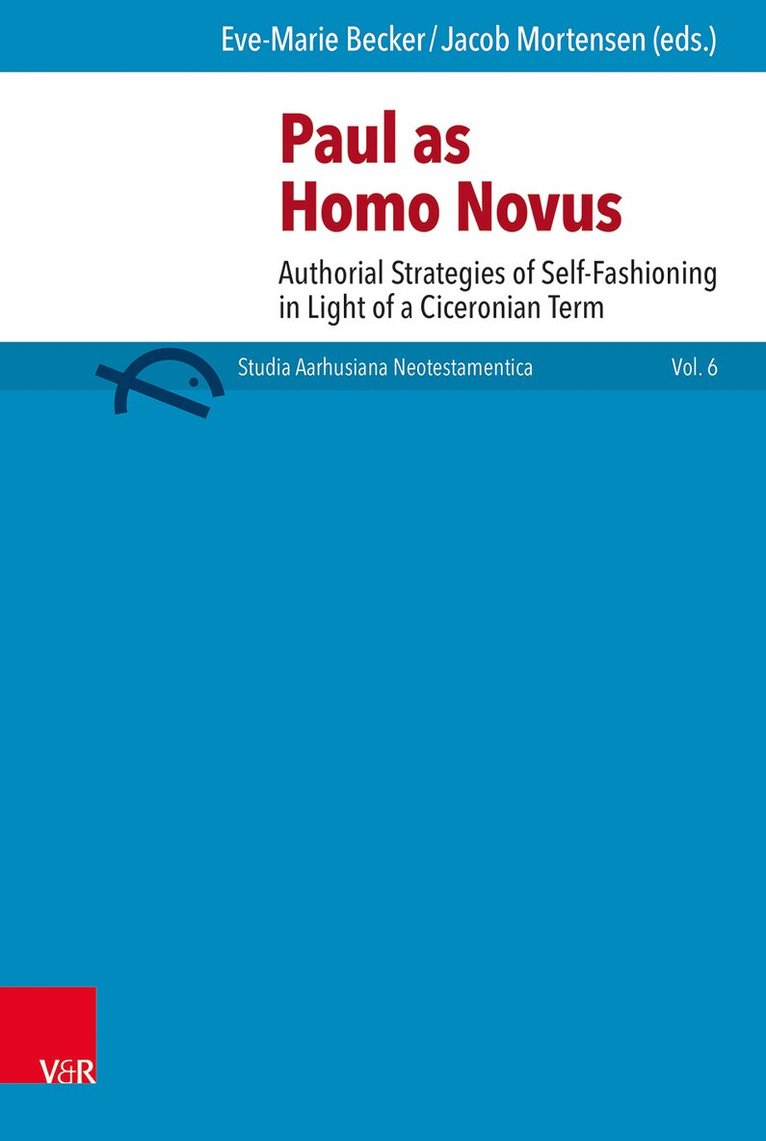
20ths century research in St. Paul is widely impacted by Adolf Deissmann’s prominent view on the apostle as a “homo novus” (1911). But where does this concept originate from, and what does it imply? This collection of articles does not only re-evaluate Deissmann’s concept by tracing it back to its historical and socio-political origins in Cicero and exploring how authors from (early) Imperial Time perceive and transform the homo novus paradigm by diverse modes and strategies of literary self-fashioning. Scholars ranging the fields of New Testament Studies, Greek and Latin Philology, Ancient History, Patristics, and Comparative Literature also examine how the Ciceronian paradigm was early on transformed, disseminated, and applied as a literary concept and an authorial topos of self-molding. One of the leading questions throughout the volume thus is: How do authors like Cicero, Horace, Paul, Tacitus, Seneca, Athanasius, and Augustine fashion themselves in accordance to or in difference from the idea of being a “new man”? It is argued that by means of literary self-configuration, indeed, some of these writers – such as Paul and Augustine – want to appear as “new men” by either altering traditional social, moral, religious, or political roles, or by creating new patterns of social behavior and religious self-understanding.
Inbunden, Engelska, 2022
1 846 kr
Skickas inom 11-20 vardagar
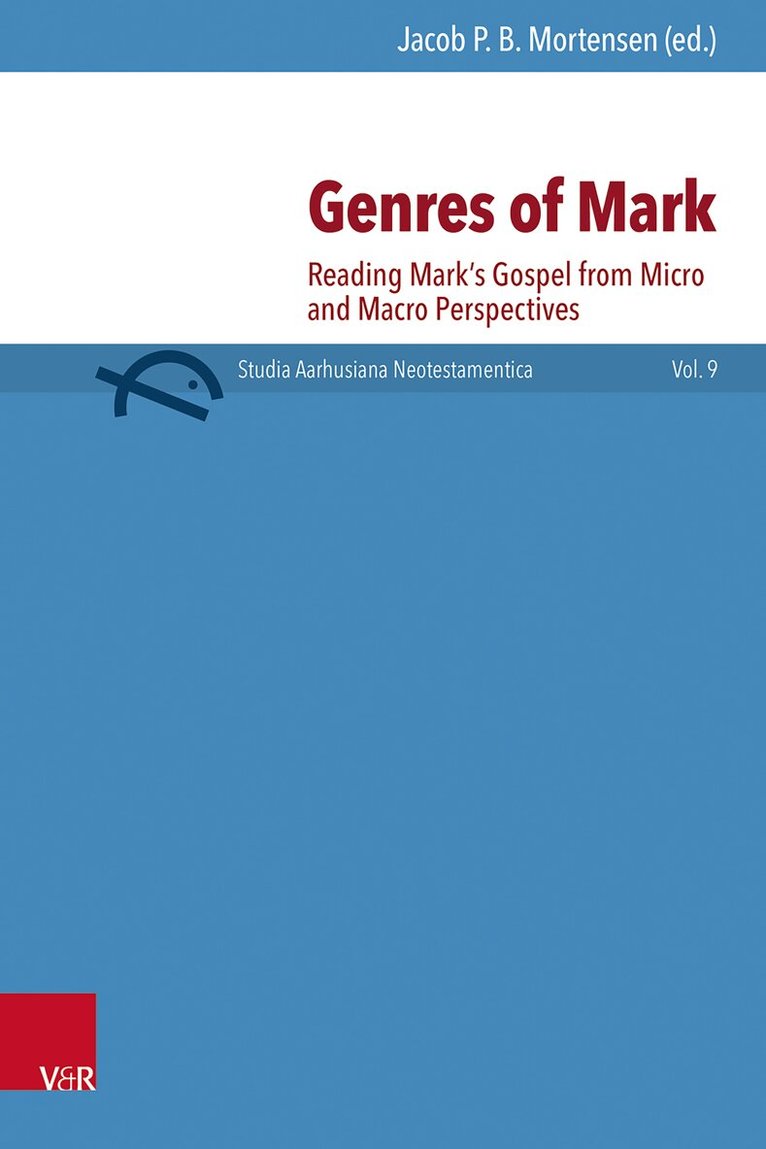
One of the most fundamental questions when reading and trying to understand New Testament texts is the question of genre. It is impossible to understand a text, its meaning and intention, in its proper historical setting if one does not understand its genre: As an example, interpreting a satirical text without understanding the genre would no doubt lead to grave misunderstandings. The same logic applies to texts from the New Testament, and the matter is complicated even further by the immense historical gap between the time of the genesis of the New Testament canon and now. The problem of the New Testament texts’ genre(s) is therefore a vital area of scholarly discussion within international New Testament scholarship. The current volume utilizes the newest insights from current research on the New Testament to cast new light on the question of the genre of Mark’s Gospel. Here, prominent international New Testament scholars discuss how we should understand the genre(s) of Mark’s Gospel, thus making an important contribution to international scholarship on the Gospel of Mark as well as the Gospel genre in general.
E-bok
PDF, Engelska, 20221 372 kr
Läs direkt efter köp
One of the most fundamental questions when reading and trying to understand New Testament texts is the question of genre. It is impossible to understand a text, its meaning and intention, in its proper historical setting if one does not understand its genre: As an example, interpreting a satirical text without understanding the genre would no doubt lead to grave misunderstandings. The same logic applies to texts from the New Testament, and the matter is complicated even further by the immense historical gap between the time of the genesis of the New Testament canon and now. The problem of the New Testament texts'' genre(s) is therefore a vital area of scholarly discussion within international New Testament scholarship.The current volume utilizes the newest insights from current research on the New Testament to cast new light on the question of the genre of Mark''s Gospel. Here, prominent international New Testament scholars discuss how we should understand the genre(s) of Mark''s Gospel, thus making an important contribution to international scholarship on the Gospel of Mark as well as the Gospel genre in general.
E-bok
Engelska, 2018707 kr
Läs direkt efter köp
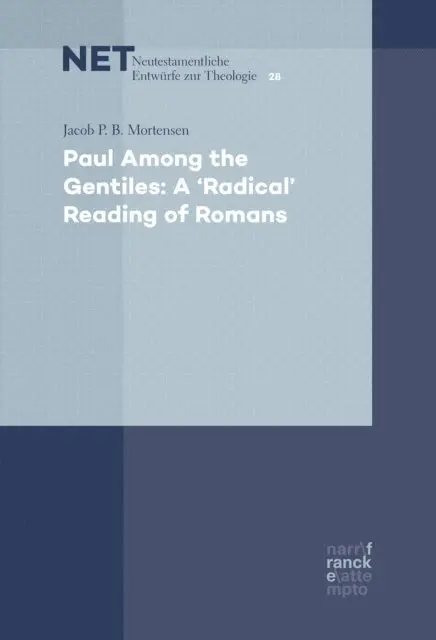
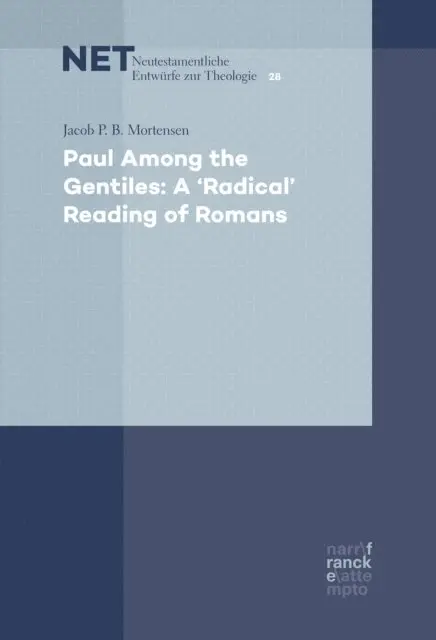
This exciting new interpretation of Paul''s Letter to the Romans approaches Paul''s most famous letter from one of the newest scholarly positions within Pauline Studies: The Radical New Perspective on Paul (also known as Paul within Judaism). As a point of departure, the author takes Paul''s self-designation in 11:13 as "apostle to the gentiles" as so determining for Paul''s mission that the audience of the letter is perceived to be exclusively gentile. The study finds confirmation of this reading-strategy in the letter''s construction of the interlocutor from chapter 2 onwards. Even in 2:17, where Paul describes the interlocutor as someone who "calls himself a Jew," it requests to perceive this person as a gentile who presents himself as a Jew and not an ethnic Jew. If the interlocutor is perceived in this way throughout the letter, the dialogue between Paul and the interlocutor can be perceived as a continuous, unified and developing dialogue. In this way, this interpretation of Romans sketches out a position against a more disparate and fragmentary interpretation of Romans.
E-bok
PDF, Engelska, 2018707 kr
Läs direkt efter köp
This exciting new interpretation of Paul''s Letter to the Romans approaches Paul''s most famous letter from one of the newest scholarly positions within Pauline Studies: The Radical New Perspective on Paul (also known as Paul within Judaism). As a point of departure, the author takes Paul''s self-designation in 11:13 as "apostle to the gentiles" as so determining for Paul''s mission that the audience of the letter is perceived to be exclusively gentile. The study finds confirmation of this reading-strategy in the letter''s construction of the interlocutor from chapter 2 onwards. Even in 2:17, where Paul describes the interlocutor as someone who "calls himself a Jew," it requests to perceive this person as a gentile who presents himself as a Jew and not an ethnic Jew. If the interlocutor is perceived in this way throughout the letter, the dialogue between Paul and the interlocutor can be perceived as a continuous, unified and developing dialogue. In this way, this interpretation of Romans sketches out a position against a more disparate and fragmentary interpretation of Romans.