Jacqueline Boultwood - Böcker
Visar alla böcker från författaren Jacqueline Boultwood. Handla med fri frakt och snabb leverans.
4 produkter
4 produkter
1 578 kr
Skickas inom 10-15 vardagar
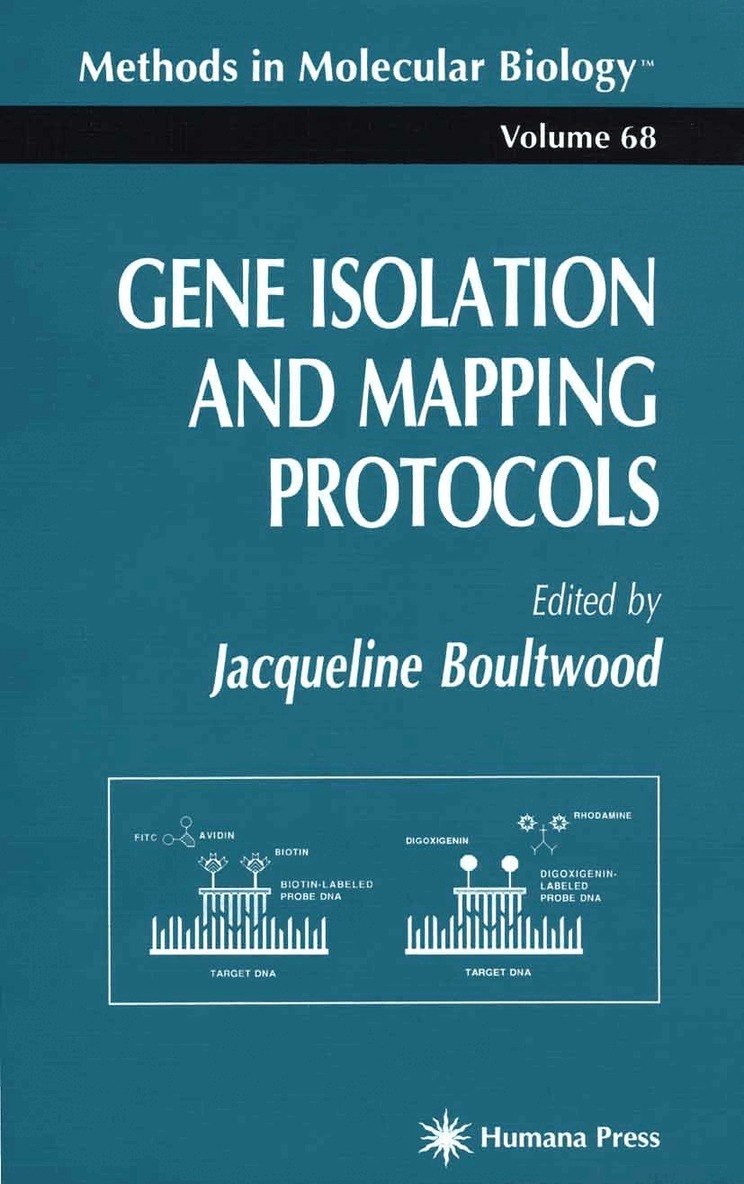
Over the past 10 years great progress has been made in the development of efficient techniques for both gene isolation and mapping. The identifica- tion and isolation of transcribed sequences from large chromosomal regions are central to the human genome mapping project. Techniques for isolating novel cDNAs have applications both in the overall construction and integra- tion of long-range physical and transcription maps and in the identification of disease genes. A number of different techniques for the isolation of cDNAs from mam- malian genomes have been developed, including screening "zoo" blots, the use of large genomic clones (YACs or cosmids) for hybridization against cDNA libraries, and CpG island mapping. More recently two highly efficient tech- niques have been introduced: exon trapping, based on the presence of exon splice sites, and direct selection, based on the enrichment of selected cDNAs using immobilized YACs or cosmids. Leading researchers in the field have contributed chapters detailing the practical procedures for these and other widely used methods.The most rapid progress presently being made in the field of gene isolation concerns the partial sequencing of cDNA clones from one or both ends to produce expressed sequence tags (ESTs). Indeed, by Octo- ber 1995, the EST division of Genbank (dbEST) contained a total of approxi- mately 270,000 human EST sequences accounting for almost half the number of sequence entries in Genbank.
1 578 kr
Skickas inom 10-15 vardagar
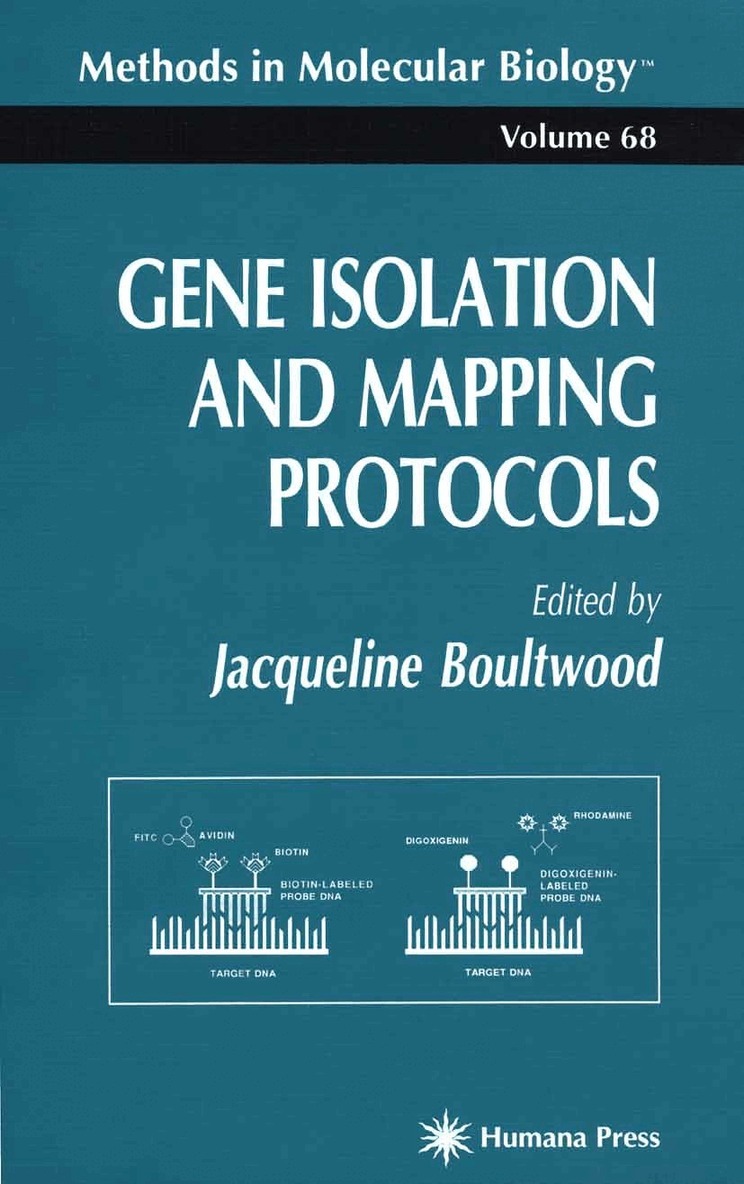
Over the past 10 years great progress has been made in the development of efficient techniques for both gene isolation and mapping. The identifica- tion and isolation of transcribed sequences from large chromosomal regions are central to the human genome mapping project. Techniques for isolating novel cDNAs have applications both in the overall construction and integra- tion of long-range physical and transcription maps and in the identification of disease genes. A number of different techniques for the isolation of cDNAs from mam- malian genomes have been developed, including screening "zoo" blots, the use of large genomic clones (YACs or cosmids) for hybridization against cDNA libraries, and CpG island mapping. More recently two highly efficient tech- niques have been introduced: exon trapping, based on the presence of exon splice sites, and direct selection, based on the enrichment of selected cDNAs using immobilized YACs or cosmids. Leading researchers in the field have contributed chapters detailing the practical procedures for these and other widely used methods.The most rapid progress presently being made in the field of gene isolation concerns the partial sequencing of cDNA clones from one or both ends to produce expressed sequence tags (ESTs). Indeed, by Octo- ber 1995, the EST division of Genbank (dbEST) contained a total of approxi- mately 270,000 human EST sequences accounting for almost half the number of sequence entries in Genbank.
1 625 kr
Skickas inom 10-15 vardagar
Leading researchers describe in step-by-step detail their best state-of-the art molecular techniques for elucidating the biochemical processes associated with human cancer. Among the techniques presented for identifying chromosomal rearrangements are fluorescent in situ hybridization (FISH), spectral karyotyping (SKY), comparative genomic hybridization (CGH), microsatellite analysis, PCR and RT-PCR, and DNA fingerprinting. Additional methods include SSCP, DGGE, the nonisotopic RNase cleavage assay, and the protein truncation assay and DNA sequencing for identifying mutations.
1 205 kr
Skickas inom 10-15 vardagar
Leading researchers describe in step-by-step detail their best state-of-the art molecular techniques for elucidating the biochemical processes associated with human cancer. Among the techniques presented for identifying chromosomal rearrangements are fluorescent in situ hybridization (FISH), spectral karyotyping (SKY), comparative genomic hybridization (CGH), microsatellite analysis, PCR and RT-PCR, and DNA fingerprinting. Additional methods include SSCP, DGGE, the nonisotopic RNase cleavage assay, and the protein truncation assay and DNA sequencing for identifying mutations.