Jacqueline Broad - Böcker
Visar alla böcker från författaren Jacqueline Broad. Handla med fri frakt och snabb leverans.
13 produkter
13 produkter
1 252 kr
Skickas inom 5-8 vardagar
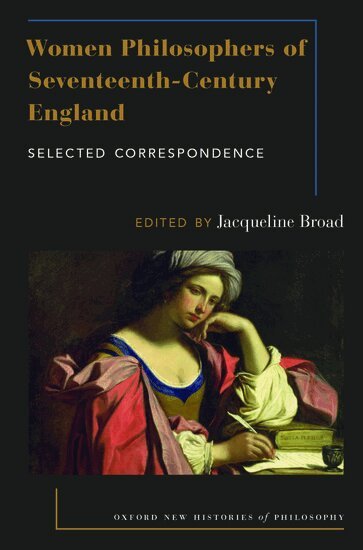
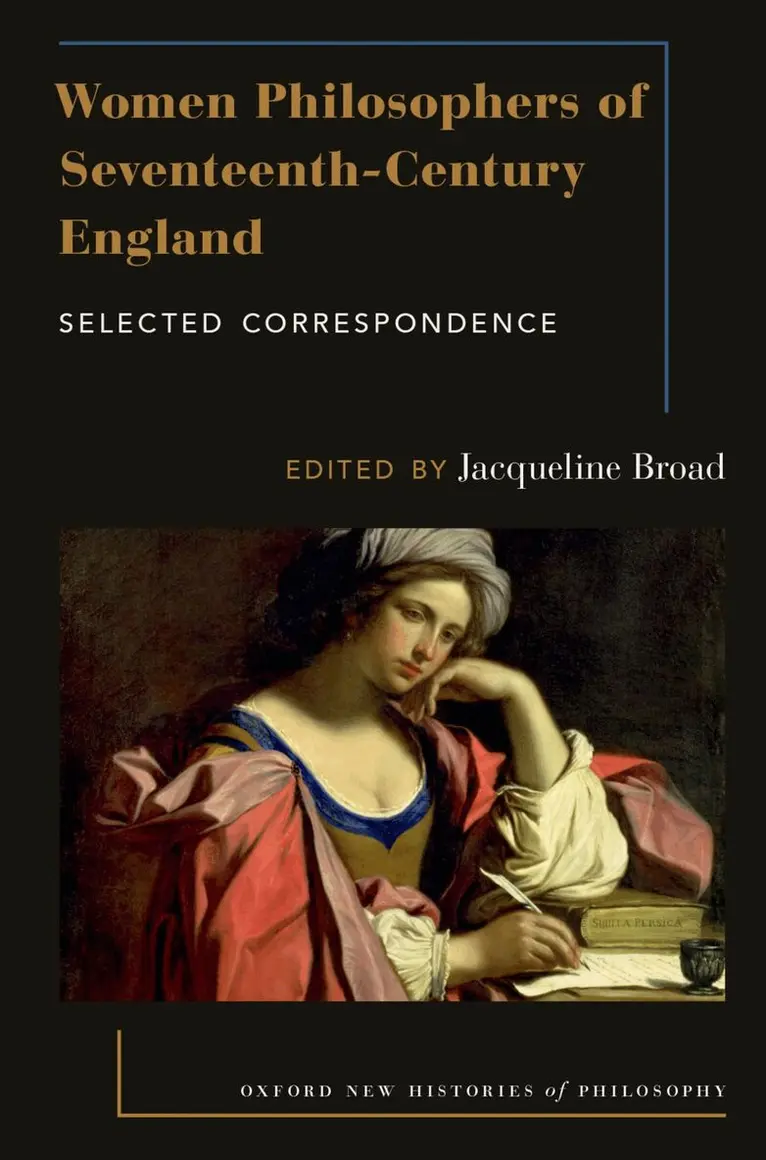
This volume collects the private letters and published epistles of English women philosophers of the early modern period (c. 1650-1700). It includes the correspondences of Margaret Cavendish, Anne Conway, Damaris Cudworth Masham, and Elizabeth Berkeley Burnet. These women were the interlocutors of some of the best-known intellectuals of their era, including Constantijn Huygens, Walter Charleton, Henry More, Joseph Glanvill, John Locke, Jean Le Clerc, and Gottfried Wilhelm Leibniz. Their epistolary exchanges range over a wide variety of philosophical subjects, from religion, moral theology, and ethics to epistemology, metaphysics, and natural philosophy. For the first time in one collection, the philosophical correspondences of these women have been brought together to be appreciated as a whole. Women Philosophers of Seventeenth-Century England is an invaluable primary resource for students and scholars of these neglected women thinkers. It includes original introductory essays for each woman philosopher, demonstrating how her correspondences contributed to the formation of her own views as well as those of her better-known contemporaries. It also provides detailed scholarly annotations to the letters and epistles, explaining unfamiliar philosophical ideas and defining obscure terminology to help make the texts accessible and comprehensible to the modern reader. This collection and its companion volume, Women Philosophers of Eighteenth-Century England (forthcoming), provide valuable historical evidence that women made substantial contributions to the formation and development of early modern thought and reflect the intensely collaborative and gender-inclusive nature of philosophical discussion in the early modern period.
371 kr
Skickas inom 5-8 vardagar
This volume collects the private letters and published epistles of English women philosophers of the early modern period (c. 1650-1700). It includes the correspondences of Margaret Cavendish, Anne Conway, Damaris Cudworth Masham, and Elizabeth Berkeley Burnet. These women were the interlocutors of some of the best-known intellectuals of their era, including Constantijn Huygens, Walter Charleton, Henry More, Joseph Glanvill, John Locke, Jean Le Clerc, and Gottfried Wilhelm Leibniz. Their epistolary exchanges range over a wide variety of philosophical subjects, from religion, moral theology, and ethics to epistemology, metaphysics, and natural philosophy. For the first time in one collection, the philosophical correspondences of these women have been brought together to be appreciated as a whole. Women Philosophers of Seventeenth-Century England is an invaluable primary resource for students and scholars of these neglected women thinkers. It includes original introductory essays for each woman philosopher, demonstrating how her correspondences contributed to the formation of her own views as well as those of her better-known contemporaries. It also provides detailed scholarly annotations to the letters and epistles, explaining unfamiliar philosophical ideas and defining obscure terminology to help make the texts accessible and comprehensible to the modern reader. This collection and its companion volume, Women Philosophers of Eighteenth-Century England (forthcoming), provide valuable historical evidence that women made substantial contributions to the formation and development of early modern thought and reflect the intensely collaborative and gender-inclusive nature of philosophical discussion in the early modern period.
1 130 kr
Skickas inom 5-8 vardagar
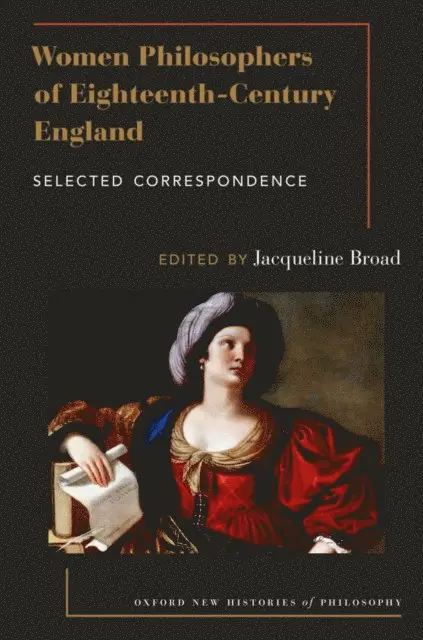
This is the second of two collections of correspondence written by early modern English women philosophers. In this volume, Jacqueline Broad presents letters from three influential thinkers of the eighteenth century: Mary Astell, Elizabeth Thomas, and Catharine Trotter Cockburn. Broad provides introductory essays for each figure and explanatory annotations to clarify unfamiliar language, content, and historical context for the modern reader. Her selections make available many letters that have never been published before or that live scattered in various archives, obscure manuscripts, and rare books. The discussions range in subject from moral theology and ethics to epistemology and metaphysics; they involve some well-known thinkers of the period, such as John Norris, George Hickes, Mary Chudleigh, John Locke, and Edmund Law. By centering epistolary correspondence, Broad's anthology works to reframe early modern philosophy, the foundation for so much of twentieth-century philosophy, as consisting of collaborative debates that women actively participated in and shaped. Together with its companion volume, Women Philosophers of Eighteenth-Century England: Selected Correspondence is an invaluable primary resource for students, scholars, and those undertaking further research in the history of women's contributions to the formation and development of early modern thought.
415 kr
Skickas inom 5-8 vardagar
This is the second of two collections of correspondence written by early modern English women philosophers. In this volume, Jacqueline Broad presents letters from three influential thinkers of the eighteenth century: Mary Astell, Elizabeth Thomas, and Catharine Trotter Cockburn. Broad provides introductory essays for each figure and explanatory annotations to clarify unfamiliar language, content, and historical context for the modern reader. Her selections make available many letters that have never been published before or that live scattered in various archives, obscure manuscripts, and rare books. The discussions range in subject from moral theology and ethics to epistemology and metaphysics; they involve some well-known thinkers of the period, such as John Norris, George Hickes, Mary Chudleigh, John Locke, and Edmund Law. By centering epistolary correspondence, Broad's anthology works to reframe early modern philosophy, the foundation for so much of twentieth-century philosophy, as consisting of collaborative debates that women actively participated in and shaped. Together with its companion volume, Women Philosophers of Eighteenth-Century England: Selected Correspondence is an invaluable primary resource for students, scholars, and those undertaking further research in the history of women's contributions to the formation and development of early modern thought.
1 118 kr
Skickas inom 7-10 vardagar
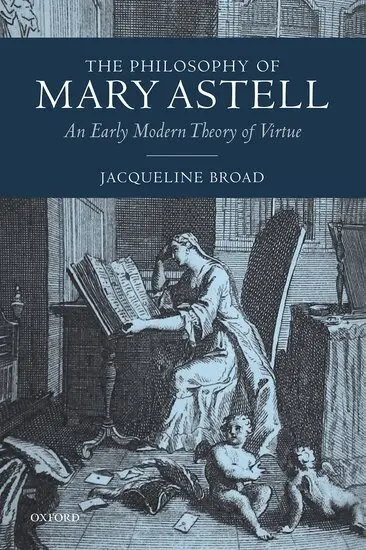
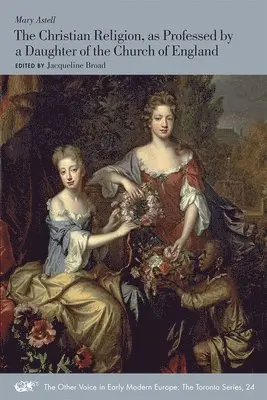
Mary Astell (1666-1731) is best known today as one of the earliest English feminists. She is also known as a Tory political pamphleteer, an Anglican apologist, an eloquent rhetorician, and an educational theorist. In this book, Jacqueline Broad interprets Astell first and foremost as a moral philosopher, or as someone committed to providing guidance on how best to live and how to attain happiness. The central claim of this work is that all the different strands of Astell's thought--her theory of knowledge, her metaphysics, her philosophy of the passions, her feminist vision, and her conservative political views--are best understood in light of her ethical objectives. To demonstrate this, Broad examines Astell's major writings and traces her programme to bring about a moral transformation of character in her fellow women. This programme draws on several key aspects of seventeenth-century philosophy, including Cartesian and Neoplatonist epistemologies, proofs for the existence of God, arguments for the immaterial soul, and theories about how to regulate the passions in accordance with reason. At the heart of Astell's philosophy, it is argued, lies a theory of virtue and guidelines on how to cultivate generosity of character, a benevolent disposition toward other people, and the virtue of moderation.This book will help readers to see Astell's feminist, political, and religious views in the context of her wider philosophical vision. It provides a rich and illuminating account of a unique female-centred contribution to the philosophy of the early modern period. It will appeal to students and scholars in philosophy, history of ideas, and gender studies.
1 322 kr
Skickas inom 5-8 vardagar
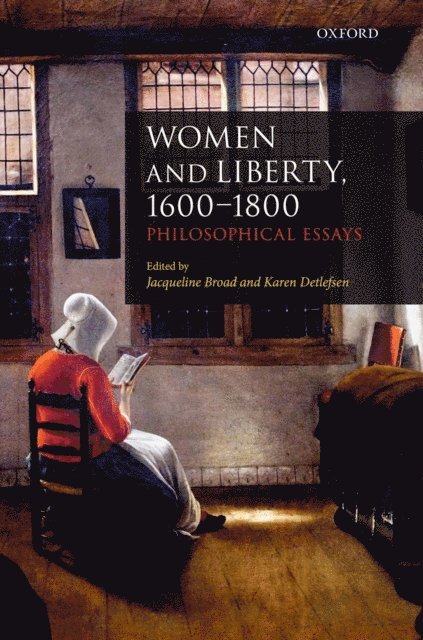
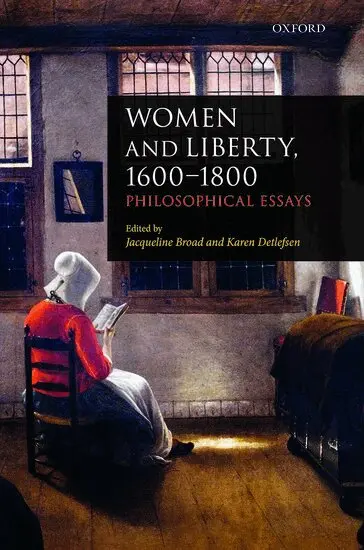
There have been many different historical-intellectual accounts of the shaping and development of concepts of liberty in pre-Enlightenment Europe. This volume is unique for addressing the subject of liberty principally as it is discussed in the writings of women philosophers, and as it is theorized with respect to women and their lives, during this period. The volume covers ethical, political, metaphysical, and religious notions of liberty, with some chapters discussing women's ideas about the metaphysics of free will, and others examining the topic of women's freedom (or lack thereof) in their moral and personal lives as well as in the public socio-political domain. In some cases, these topics are situated in relation to the emergence of the concept of autonomy in the late eighteenth century, and in others, with respect to recent feminist theorizing about relational autonomy and internalized oppression. Many of the chapters draw upon a wide range of genres, including polemical texts, poetry, plays, and other forms of fiction, as well as standard philosophical treatises. Taken as a whole, this volume shows how crucial it is to recover the too-long forgotten views of female and women-friendly male philosophers of the seventeenth and eighteenth centuries. In the process of recovering these voices, our understanding of philosophy in the early modern period is not only expanded, but also significantly enhanced, toward a more accurate and gender-inclusive history of our discipline.
644 kr
Skickas inom 7-10 vardagar
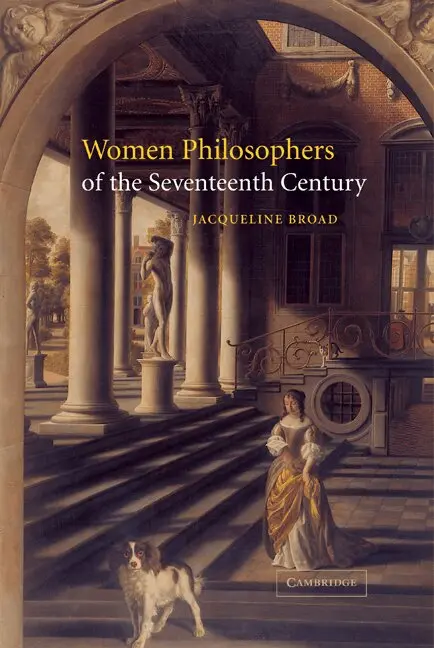
In this rich and detailed study of early modern women's thought, Jacqueline Broad explores the complexity of women's responses to Cartesian philosophy and its intellectual legacy in England and Europe. She examines the work of thinkers such as Mary Astell, Elisabeth of Bohemia, Margaret Cavendish, Anne Conway and Damaris Masham, who were active participants in the intellectual life of their time and were also the respected colleagues of philosophers such as Descartes, Leibniz and Locke. She also illuminates the continuities between early modern women's thought and the anti-dualism of more recent feminist thinkers. The result is a more gender-balanced account of early modern thought than has hitherto been available. Broad's clear and accessible exploration of this still-unfamiliar area will have a strong appeal to both students and scholars in the history of philosophy, women's studies and the history of ideas.
1 431 kr
Skickas inom 7-10 vardagar
In this rich and detailed study of early modern women's thought, Jacqueline Broad explores the complexity of women's responses to Cartesian philosophy and its intellectual legacy in England and Europe. She examines the work of thinkers such as Mary Astell, Elisabeth of Bohemia, Margaret Cavendish, Anne Conway and Damaris Masham, who were active participants in the intellectual life of their time and were also the respected colleagues of philosophers such as Descartes, Leibniz and Locke. She also illuminates the continuities between early modern women's thought and the anti-dualism of more recent feminist thinkers. The result is a more gender-balanced account of early modern thought than has hitherto been available. Broad's clear and accessible exploration of this still-unfamiliar area will have a strong appeal to both students and scholars in the history of philosophy, women's studies and the history of ideas.
1 118 kr
Skickas inom 7-10 vardagar
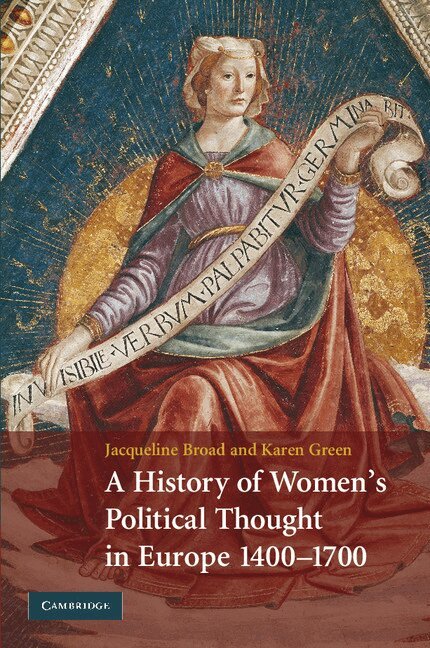
This ground-breaking book surveys the history of women's political thought in Europe from the late medieval period to the early modern era. The authors examine women's ideas about topics such as the basis of political authority, the best form of political organisation, justifications of obedience and resistance, and concepts of liberty, toleration, sociability, equality, and self-preservation. Women's ideas concerning relations between the sexes are discussed in tandem with their broader political outlooks; and the authors demonstrate that the development of a distinctively sexual politics is reflected in women's critiques of marriage, the double standard, and women's exclusion from government. Women writers are also shown to be indebted to the ancient idea of political virtue, and to be acutely aware of being part of a long tradition of female political commentary. This work will be of tremendous interest to political philosophers, historians of ideas, and feminist scholars alike.
321 kr
Skickas inom 7-10 vardagar
This book is the most mature and comprehensive statement of Mary Astell’s religious and philosophical views. It also represents the culmination of Astell’s feminist project to teach her fellow women how to lead useful lives of virtue and wisdom. The main purpose of this work is to instruct women about the ultimate nature of reality, the true source of happiness, their duties and obligations to God, and about “how best to live” and how to treat other people. This volume offers the first complete modern version of the 1717 second edition. It provides a fully modernized text, a scholarly introduction, biographical and bibliographical information, general historical-intellectual background, and definitions of obscure and archaic terms.
360 kr
Skickas inom 7-10 vardagar
This ground-breaking book surveys the history of women's political thought in Europe from the late medieval period to the early modern era. The authors examine women's ideas about topics such as the basis of political authority, the best form of political organisation, justifications of obedience and resistance, and concepts of liberty, toleration, sociability, equality, and self-preservation. Women's ideas concerning relations between the sexes are discussed in tandem with their broader political outlooks; and the authors demonstrate that the development of a distinctively sexual politics is reflected in women's critiques of marriage, the double standard, and women's exclusion from government. Women writers are also shown to be indebted to the ancient idea of political virtue, and to be acutely aware of being part of a long tradition of female political commentary. This work will be of tremendous interest to political philosophers, historians of ideas, and feminist scholars alike.
1 095 kr
Skickas inom 10-15 vardagar
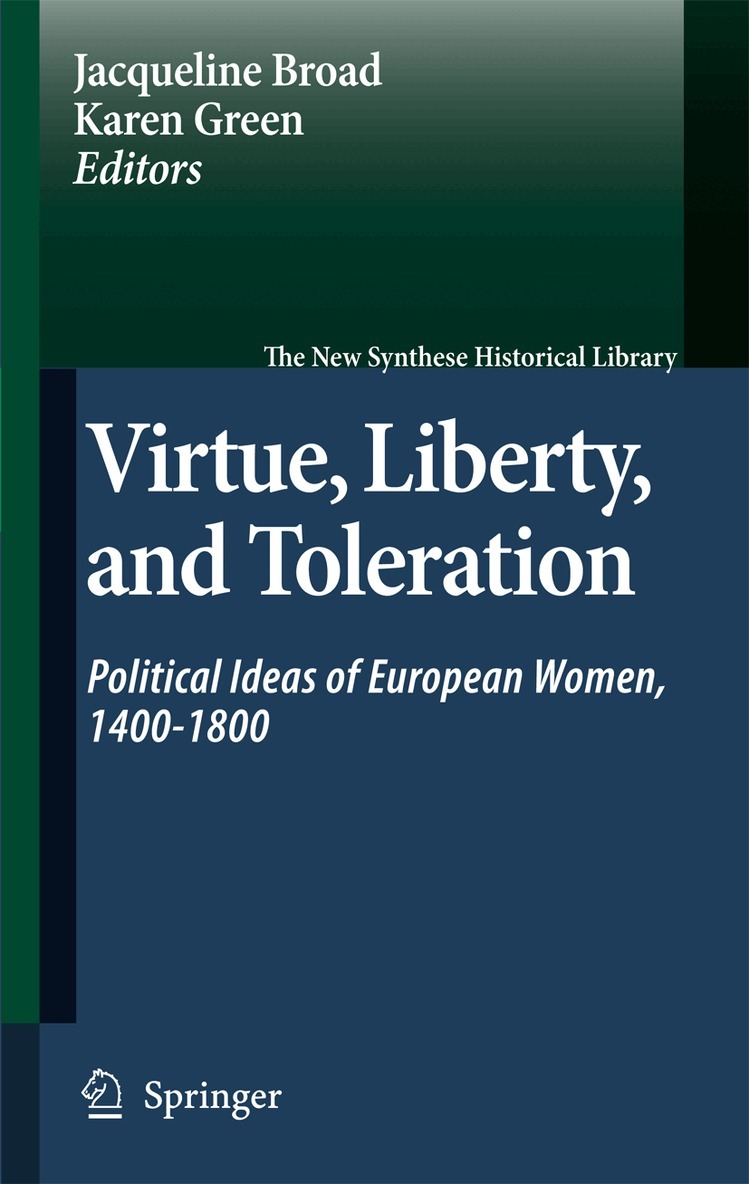
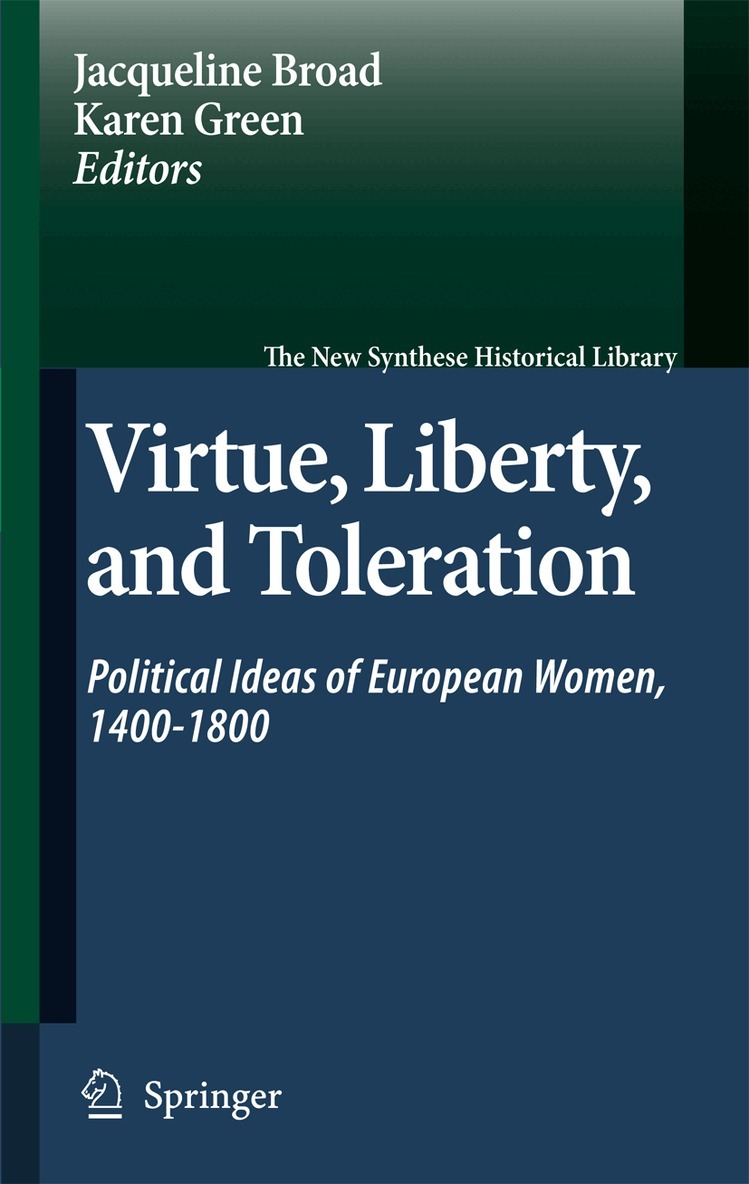
This volume serves as an introduction to a rich and as yet under-explored period in the history of women's ideas. The volume provides a partial insight into the richness and complexity of women's political ideas in the centuries prior to the French Revolution. The essays in this collection examine women's political writings with particular reference to the themes of virtue (especially the virtue of phronesis or prudence), liberty, and toleration.
Del 63 - New Synthese Historical Library
Virtue, Liberty, and Toleration
Political Ideas of European Women, 1400-1800
Häftad, Engelska, 2010
1 064 kr
Skickas inom 10-15 vardagar
This volume serves as an introduction to a rich and as yet under-explored period in the history of women's ideas. The volume provides a partial insight into the richness and complexity of women's political ideas in the centuries prior to the French Revolution. The essays in this collection examine women's political writings with particular reference to the themes of virtue (especially the virtue of phronesis or prudence), liberty, and toleration.