Jacqueline Cerquiglini-Toulet - Böcker
Visar alla böcker från författaren Jacqueline Cerquiglini-Toulet. Handla med fri frakt och snabb leverans.
3 produkter
3 produkter
861 kr
Skickas inom 7-10 vardagar
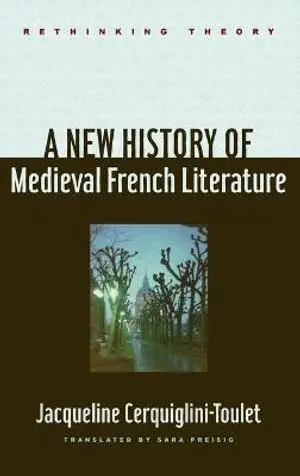
Is it legitimate to conceive of and write a history of medieval French literature when the term "literature" as we know it today did not appear until the very end of the Middle Ages? In this novel introduction to French literature of the period, Jacqueline Cerquiglini-Toulet says yes, arguing that a profound literary consciousness did exist at the time. Cerquiglini-Toulet challenges the standard ways of reading and evaluating literature, considering medieval literature not as separate from that in other eras but as part of the broader tradition of world literature. Her vast and learned readings of both canonical and lesser-known works pose crucial questions about, among other things, the notion of otherness, the meaning of change and stability, and the relationship of medieval literature with theology. Part history of literature, part theoretical criticism, this book reshapes the language and content of medieval works.By weaving together topics such as the origin of epic and lyric poetry, Latin-French bilingualism, women's writing, grammar, authorship, and more, Cerquiglini-Toulet does nothing less than redefine both philosophical and literary approaches to medieval French literature. Her book is a history of the literary act, a history of words, a history of ideas and works-monuments rather than documents-that calls into question modern concepts of literature.
825 kr
Skickas inom 7-10 vardagar
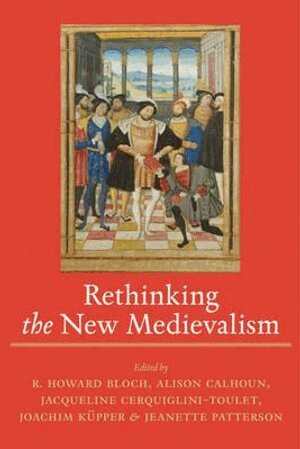
In the early 1990s, Stephen Nichols introduced the term "new medievalism" to describe an alternative to the traditional philological approach to the study of the romantic texts in the medieval period. While the old approach focused on formal aspects of language, this new approach was historicist and moved beyond a narrow focus on language to examine the broader social and cultural contexts in which literary works were composed and disseminated. Within the field, this transformation of medieval studies was as important as the genetic revolution to the study of biology and has had an enormous influence on the study of medieval literature. Rethinking the New Medievalism offers both a historical account of the movement and its achievements while indicating - in Nichols' innovative spirit - still newer directions for medieval studies. The essays deal with questions of authorship, theology, and material philology and are written by members of a wide philological and critical circle that Nichols nourished for forty years. Daniel Heller-Roazen's essay, for example, demonstrates the conjunction of the old philology and the new.In a close examination of the history of the words used for maritime raiders from Ancient Greece to the present (pirate, plunderer, bandit), Roazen draws a fine line between lawlessness and lawfulness, between judicial action and war, between war and public policy. Other contributors include Jack Abecassis, Marina Brownlee, Jacqueline Cerquiglini-Toulet, Andreas Kablitz, and Ursula Peters.
404 kr
Skickas inom 7-10 vardagar
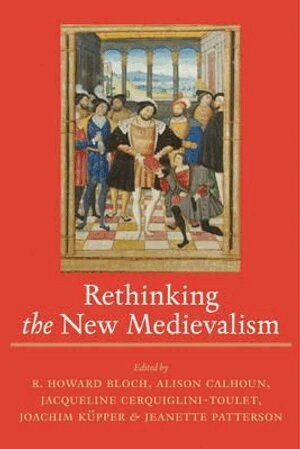
In the early 1990s, Stephen Nichols introduced the term "new medievalism" to describe an alternative to the traditional philological approach to the study of the romantic texts in the medieval period. While the old approach focused on formal aspects of language, this new approach was historicist and moved beyond a narrow focus on language to examine the broader social and cultural contexts in which literary works were composed and disseminated. Within the field, this transformation of medieval studies was as important as the genetic revolution to the study of biology and has had an enormous influence on the study of medieval literature. Rethinking the New Medievalism offers both a historical account of the movement and its achievements while indicating - in Nichols' innovative spirit - still newer directions for medieval studies. The essays deal with questions of authorship, theology, and material philology and are written by members of a wide philological and critical circle that Nichols nourished for forty years. Daniel Heller-Roazen's essay, for example, demonstrates the conjunction of the old philology and the new.In a close examination of the history of the words used for maritime raiders from Ancient Greece to the present (pirate, plunderer, bandit), Roazen draws a fine line between lawlessness and lawfulness, between judicial action and war, between war and public policy. Other contributors include Jack Abecassis, Marina Brownlee, Jacqueline Cerquiglini-Toulet, Andreas Kablitz, and Ursula Peters.