Jagdish Bhagwati - Böcker
Visar alla böcker från författaren Jagdish Bhagwati. Handla med fri frakt och snabb leverans.
13 produkter
13 produkter
201 kr
Skickas inom 5-8 vardagar
In the passionate debate that currently rages over globalization, critics have been heard blaming it for a host of ills afflicting poorer nations, everything from child labor to environmental degradation and cultural homogenization. Now Jagdish Bhagwati, the internationally renowned economist, takes on the critics, revealing that globalization, when properly governed, is in fact the most powerful force for social good in the world today. Drawing on his unparalleled knowledge of international and development economics, Bhagwati explains why the "gotcha" examples of the critics are often not as compelling as they seem. With the wit and wisdom for which he is renowned, Bhagwati convincingly shows that globalization is part of the solution, not part of the problem.This edition features a new afterword by the author, in which he counters recent writings by prominent journalist Thomas Friedman and the Nobel Laureate economist Paul Samuelson and argues that current anxieties about the economic implications of globalization are just as unfounded as were the concerns about its social effects.
Termites in the Trading System
How Preferential Agreements Undermine Free Trade
Inbunden, Engelska, 2008
422 kr
Skickas inom 5-8 vardagar
Jagdish Bhagwati, an internationally renowned economist known for his insightful analyses and elegant writing, here shines a critical light on Preferential Trade Agreements, revealing how the rapid spread of PTAs endangers the world trading system.Preferential Trade Agreements, many taking the form of Free Trade Agreements, now number over 300 and are rapidly increasing. Bhagwati reveals how these agreements have recreated the unhappy situation of the protectionist 1930s, when world trade was undermined by discriminatory practices (today, ironically, as a result of a misdirected pursuit of free trade). The world trading system is definitely at risk again, the author argues, and the danger is palpable. Indeed, PTAs have created a chaotic system of preferences that has destroyed the principle of non-discrimination in trade. The trading system today is characterized by a blizzard of discriminatory barriers, each designed to favor some specific trading partner, so that we have what Bhagwati has called the "spaghetti bowl" problem. And while the big firms in the big countries can cope with the chaos, though at a cost, the author shows that small countries and small exporters are seriously handicapped. He also examines how FTAs are typically tied to extraneous issues such as openness to capital flows and inappropriate labor standards, so that the weaker nations, negotiating one-on-one with stronger nations, are forced to accept harmful demands unrelated to trade. Finally, the book warns that getting to multilateral free trade from the morass of PTAs will be almost an impossible task--like building a mansion from different-sized bricks. Preferential trade agreements, Bhagwati concludes, are not building blocks but stumbling blocks on the road of free trade. In Termites in the Trading System, he illuminates this growing threat to the world trading system. Acclaim for In Defense of Globalization:"If Mr. Bhagwati doesn't get a much deserved Nobel Prize for economics, he should get one for literature. His writing sparkles with anecdotes and delightful verbal pictures."--New York Sun "One of the world's leading international trade theorists.... Accessible and clearly argued. There is, one might say, a wealth of material on every page."--The Wall Street Journal"An outstandingly effective book.... Until further notice In Defense of Globalization becomes the standard general-interest reference, the intelligent layman's handbook, on global economic integration."--The Economist
973 kr
Skickas inom 5-8 vardagar
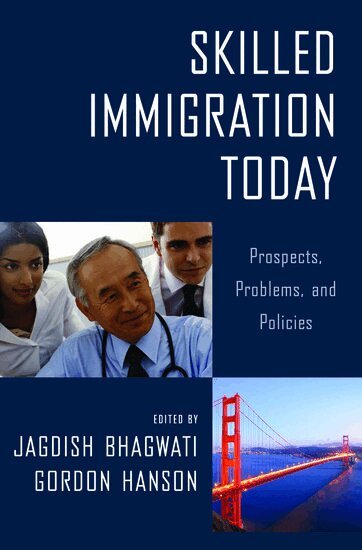
Skilled immigration into rich countries and competition for talent and professional skills are of major concern among nations today. Comprehensive immigration reform addressed to illegal immigration predictably foundered in Congress last year. This revived the question of skilled immigration and was hastily added to the proposed reform agenda in the hope that it would bring more pro-immigration troops into battle. Immigration reform still failed but it will not die. The specific issue of skilled immigration, and how to redesign it, will remain one of the central issues before the world community as well. How important is this phenomenon? How do the legal-immigration systems of rich countries address this need? How do professional associations that may find such inflows a threat to their members' earnings seek to curtail these flows? What are the implications on the sending countries, which are generally less developed, when rich countries admit skilled professionals from them? Is it correct to object that the rich countries are depriving the poor ones of badly needed professionals (especially in Africa)? What should our immigration policies be in this regard? How should tax policy, for example, be changed in light of the growing phenomenon of skilled migrant flows? These and a host of related policy questions are addressed uniquely in Skilled Immigration Today. Bhagwati and Hanson present an informed awareness of the rich historical analysis of the phenomenon and several policy initiatives already attempted with sophisticated theoretical analysis. The essays, with an overview that ties them together, are written by today's foremost immigration experts.
698 kr
Skickas inom 3-6 vardagar
Jagdish Bhagwati, one of the world's leading economists, offers a fascinating overview of the policies that produced India's sorry economic performance over a third of a century.His analysis puts into sharp focus the crippling effects of the inward-looking, bureaucratic regime that grew to Kafkaesque dimensions, starting in the early 1950s. It provides therefore a coherent and convincing rationale for the economic reforms begun in June 1991 by the new government of Prime Minister Rao. These reforms, also discussed by Professor Bhagwati, are thus set into historical and analytical perspective.Written with wit and elegance, this text of the 1992 Radhakrishnan Lectures at Oxford is readily accessible to a wide readership.
576 kr
Skickas inom 7-10 vardagar
Jagdish Bhagwati, one of the world's leading economists, offers a fascinating overview of the policies that produced India's sorry economic performance over a third of a century. His analysis puts into sharp focus the crippling effects of the inward-looking, bureaucratic regime that grew to Kafkaesque dimensions, starting in the early 1950s. It provides a coherent and convincing rationale for the economic reforms begun in June 1991 by the new government of Prime Minister Rao. These reforms, also discussed by Professor Bhagwati, are thus set into historical and analytical perspective. Written with wit and elegance, this text of the 1992 Radhakrishnan Lectures at Oxford has quickly gained a wide readership.
850 kr
Skickas inom 5-8 vardagar
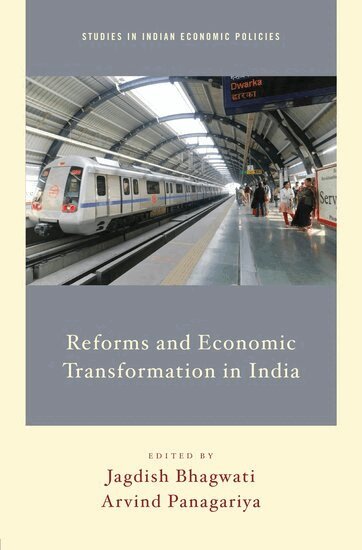
When India embraced systematic economic reforms in 1991 and began opening its economy to both domestic and foreign competition, critics argued that they had contributed little to the acceleration of economic growth. Their argument had rested on the claim that growth in the 1990s was no faster than in the 1980s. This claim was quickly refuted on the grounds that when properly evaluated, growth had indeed accelerated in the 1990s and, more importantly, while reforms had been made systematic in 1991, they had actually begun much earlier in the late 1970s. Subsequently, the reforms of the late 1990s and early 2000s have led to a jump in the growth rate from six percent in the 1990s to eight to nine percent beginning in 2003. The reforms have also led to a major structural change in the economy: the trade to GDP ratio tripled since 1991, there has been a gigantic expansion of foreign investment in India, and sectors such as telecommunications, airlines, and automobiles have expanded at rates much higher than those observed any time in the past. This dramatic turn-around has led the critics to shift ground. They now argue that opening the economy to trade has hurt the poor; that rapid growth is leaving the socially disadvantaged groups behind; and that the reforms have led to increased inequality. They also argue that people themselves do not feel that their fortunes are improving.The five original essays in this volume, topped by a substantial introductory essay summarizing their findings, take these challenges head on. They use large-scale sample surveys and other data to systematically address each of these arguments. They show that trade openness has indeed helped reduce poverty not just in general but also among the socially disadvantaged groups. The contributors to the volume find no evidence whatsoever in favor of a negative impact of trade openness on poverty on any groups. The essays also show that inequality shows no clear trend and is unrelated to trade openness. Peoples responses have also now turned grossly in favor of reforms. Thus, when asked how they feel about the change in their fortunes in the recent past, an overwhelmingly large proportion of individuals from every conceivable group report improvements. Moreover, systematic analysis of the 2009 parliamentary elections show that people now reward the Chief Ministers in states in which they deliver superior growth outcomes and punish those that do not.This book is the first volume in the series Studies in Indian Economic Policies edited by Jagdish Bhagwati and Arvind Panagariya and published by OUP. It contains the first set of five original papers produced under the auspices of the Columbia Program on Indian Economic Policies housed in the School of International and Public Affairs (SIPA) and the Institute for Social and Economic Research and Policy (ISERP).
850 kr
Skickas inom 5-8 vardagar
Reforms and Economic Transformation in India is the second volume in the series Studies in Indian Economic Policies. The first volume, India's Reforms: How They Produced Inclusive Growth (OUP, 2012), systematically demonstrated that reforms-led growth in India led to reduced poverty among all social groups. They also led to shifts in attitudes whereby citizens overwhelmingly acknowledge the benefits that accelerated growth has brought them and as voters, they now reward the governments that deliver superior economic outcomes and punish those that fail to do so. This latest volume takes as its starting point the fact that while reforms have undoubtedly delivered in terms of poverty reduction and associated social objectives, the impact has not been as substantial as seen in other reform-oriented economies such as South Korea and Taiwan in the 1960s and 1970s, and more recently, in China. The overarching hypothesis of the volume is that the smaller reduction in poverty has been the result of slower transformation of the economy from a primarily agrarian to a modern, industrial one. Even as the GDP share of agriculture has seen rapid decline, its employment share has declined very gradually. More than half of the workforce in India still remains in agriculture. In addition, non-farm workers are overwhelmingly in the informal sector. Against this background, the nine original essays by eminent economists pursue three broad themes using firm level data in both industry and services. The papers in part I ask why the transformation in India has been slow in terms of the movement of workers out of agriculture, into industry and services, and from informal to formal employment. They address what India needs to do to speed up this transformation. They specifically show that severe labor-market distortions and policy bias against large firms has been a key factor behind the slow transformation. The papers in part II analyze the transformation that reforms have brought about within and across enterprises. For example, they investigate the impact of privatization on enterprise profitability. Part III addresses the manner in which the reforms have helped promote social transformation. Here the papers analyze the impact the reforms have had on the fortunes of the socially disadvantaged groups in terms of wage and education outcomes and as entrepreneurs.
2 171 kr
Skickas inom 10-15 vardagar
First published in 1972, this is a book of essays offered in honour of Paul Rosenstein-Rodan, the distinguished economist whose career started in mid-1920s Vienna and subsequently spanned Europe, Britain, the USA and many of the less developed countries of the world.The book includes reviews of past developments, chapters on development trade and value theory, an assessment of contemporary emerging economic patterns, development and trade policy, and investment policy. Further essays cover the intellectual history of development economics, general aspects of growth and economic policy in underdeveloped countries and the problems of income distribution and sectoral and regional development.
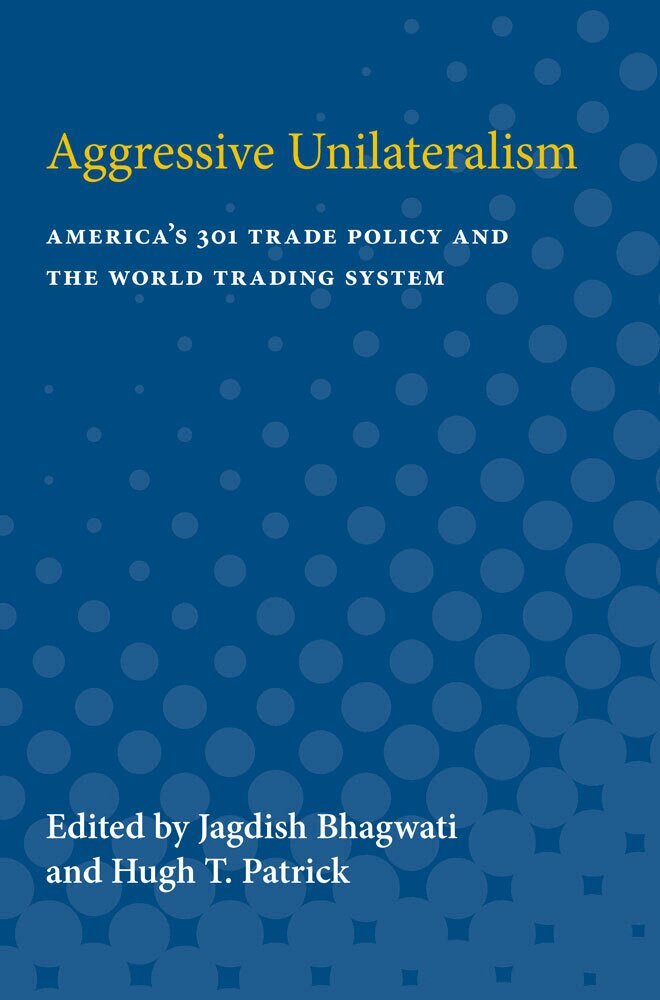
Aggressive Unilateralism
America's 301 Trade Policy and the World Trading System
Häftad, Engelska, 1991
268 kr
Skickas inom 7-10 vardagar
United States trade policy has moved in recent years toward aggressive unilateralism. This volume provides the most comprehensive, coherent, and insightful analysis of this dramatic development. The essays collected here explain the legislative history of this policy as expressed in Section 301 and the more recent Super 301 and explore the political forces driving their adoption on Capitol Hill. The targeting of Japan, India, and Brazil by the administration using Super 301 powers is discussed, as are the reactions of those countries to this targeting. These American actions raise questions about the legality of such tariff retaliation under GATT rules and about America’s simultaneous support of multilateral talks at the Uruguay Round intended to reconstitute and revitalize the GATT.
671 kr
Skickas inom 10-15 vardagar
First published in 1972, this is a book of essays offered in honour of Paul Rosenstein-Rodan, the distinguished economist whose career started in mid-1920s Vienna and subsequently spanned Europe, Britain, the USA and many of the less developed countries of the world.The book includes reviews of past developments, chapters on development trade and value theory, an assessment of contemporary emerging economic patterns, development and trade policy, and investment policy. Further essays cover the intellectual history of development economics, general aspects of growth and economic policy in underdeveloped countries and the problems of income distribution and sectoral and regional development.
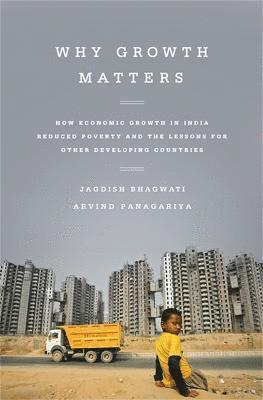
Why Growth Matters
How Economic Growth in India Reduced Poverty and the Lessons for Other Developing Countries
Häftad, Engelska, 2014
202 kr
Skickas inom 10-15 vardagar
In its history since Independence, India has seen widely different economic experiments: from Jawharlal Nehru's pragmatism to the rigid state socialism of Indira Gandhi to the brisk liberalization of the 1990s. So which strategy best addresses India's, and by extension the world's, greatest moral challenge: lifting a great number of extremely poor people out of poverty?Bhagwati and Panagariya argue forcefully that only one strategy will help the poor to any significant effect: economic growth, led by markets overseen and encouraged by liberal state policies. Their radical message has huge consequences for economists, development NGOs and anti-poverty campaigners worldwide. There are vital lessons here not only for Southeast Asia, but for Africa, Eastern Europe, and anyone who cares that the effort to eradicate poverty is more than just good intentions. If you want it to work, you need growth. With all that implies.
552 kr
Skickas inom 10-15 vardagar
This collection of essays is dedicated to Arthur Dunkel who presided over the General Agreement on Tariffs and Trade (GATT) between 1980 und 1993.
166 kr
Tillfälligt slut
Den orädde debattören är en vänbok till Bo Södersten på 80-årsdagen. Han är mest känd som nationalekonom, framför allt som författare till standardboken International Economics. Han var i tur och ordning professor i nationalekonomi i Göteborg, i internationell ekonomi i Lund och i nationalekonomi med särskild inriktning mot internationell ekonomi i Jönköping från början av 1970-talet till början av 2000-talet. Under skoltiden blev Bo Södersten politiskt intresserad. Han var riksdagsman för Socialdemokraterna 1979-1988 och satt bland annat i finansutskottet. När han kom tillbaka till universitetslivet kom han alltmer att engagera sig i fackliga akademiska frågor. Bo Södersten var under en period på 1990-talet ordförande i SULF (Sveriges universitetslärarförbund). Uppsatserna i Den orädde debattören spänner över de flesta av Bo Söderstens intresseområden. Den innehåller en handfull personliga porträtt av honom, speglar hans intresse för idéhistoria, svensk och internationell ekonomi, utvecklingsfrågor, rättighetsproblem och, sist men inte minst, hans debattvilja. Bo Södersten har aldrig varit riktigt politiskt opportun. Han kunde ta steget från Den hierarkiska välfärden till Kapitalismen byggde landet. Bo Södersten har drivit sina egna frågor, eldad av sin övertygelse, i bland annat Tiden, Aftonbladet, Svenska Dagbladet, Dagens Nyheter och Sydsvenska Dagbladet. I boken medverkar Mats Bergstrand, Jagdish Bhagwati, Yves Bourdet, Fredrik Braconier, Henrik Braconier, Karolina Ekholm, Gunnar Eriksson, Ronald Findlay, Gunnar Fredriksson, Birgit Friggebo, Stig Gustafsson, Göte Hansson, Erik Jonasson, Ronald W Jones, Dale W Jorgenson, Peter Kindlund, Mats Lundahl, Nils Lundgren, Johan Lönnroth, Anders Milton, Svante Nycander, Inga Persson, Lennart Petersson, Gunnar Petri, Lars Pettersson, Nils-Eric Sandberg, Bo Sandelin, Fredrik Sjöholm, Birgitta Strömbom och Hans Tson Söderström. Den orädde debattören har redigerats av Mats Lundahl.