Jake Kosek - Böcker
Visar alla böcker från författaren Jake Kosek. Handla med fri frakt och snabb leverans.
5 produkter
5 produkter
415 kr
Skickas inom 7-10 vardagar
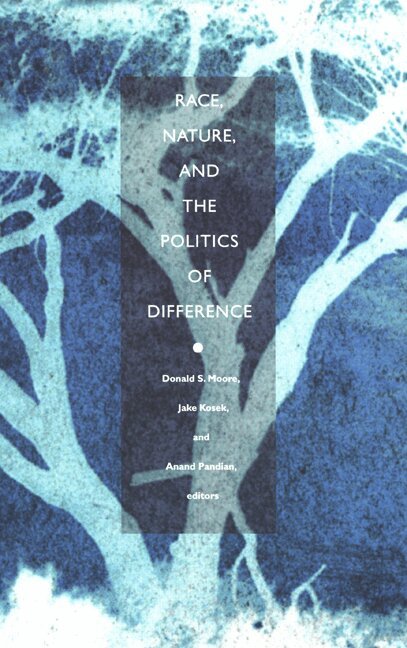
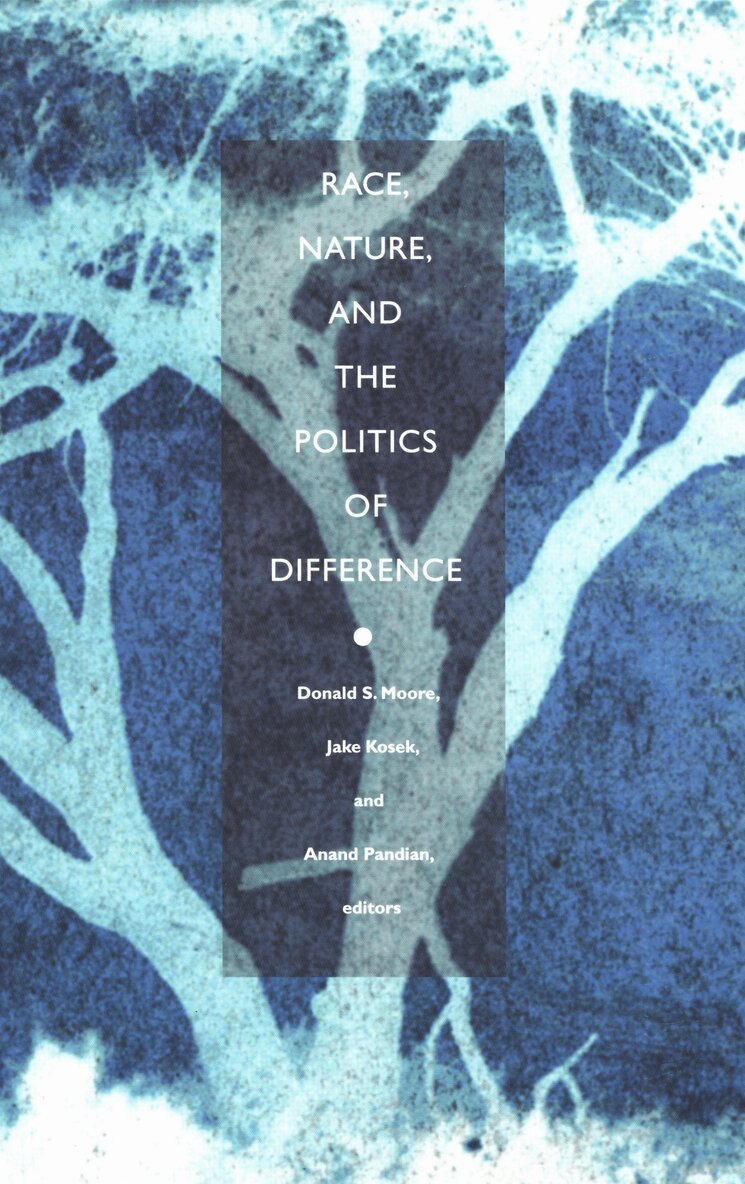
How do race and nature work as terrains of power? From eighteenth-century claims that climate determined character to twentieth-century medical debates about the racial dimensions of genetic disease, concepts of race and nature are integrally connected, woven into notions of body, landscape, and nation. Yet rarely are these complex entanglements explored in relation to the contemporary cultural politics of difference. This volume takes up that challenge. Distinguished contributors chart the traffic between race and nature across sites including rainforests, colonies, and courtrooms.Synthesizing a number of fields-anthropology, cultural studies, and critical race, feminist, and postcolonial theory-this collection analyzes diverse historical, cultural, and spatial locations. Contributors draw on thinkers such as Fanon, Foucault, and Gramsci to investigate themes ranging from exclusionary notions of whiteness and wilderness in North America to linguistic purity in Germany. Some essayists focus on the racialized violence of imperial rule and evolutionary science and the biopolitics of race and class in the Guatemalan civil war. Others examine how race and nature are fused in biogenetic discourse-in the emergence of “racial diseases” such as sickle cell anemia, in a case of mistaken in vitro fertilization in which a white couple gave birth to a black child, and even in the world of North American dog breeding. Several essays tackle the politics of representation surrounding environmental justice movements, transnational sex tourism, and indigenous struggles for land and resource rights in Indonesia and Brazil.Contributors. Bruce Braun, Giovanna Di Chiro, Paul Gilroy, Steven Gregory, Donna Haraway, Jake Kosek, Tania Murray Li, Uli Linke, Zine Magubane, Donald S. Moore, Diane Nelson, Anand Pandian, Alcida Rita Ramos, Keith Wailoo, Robyn Wiegman
1 217 kr
Skickas inom 7-10 vardagar
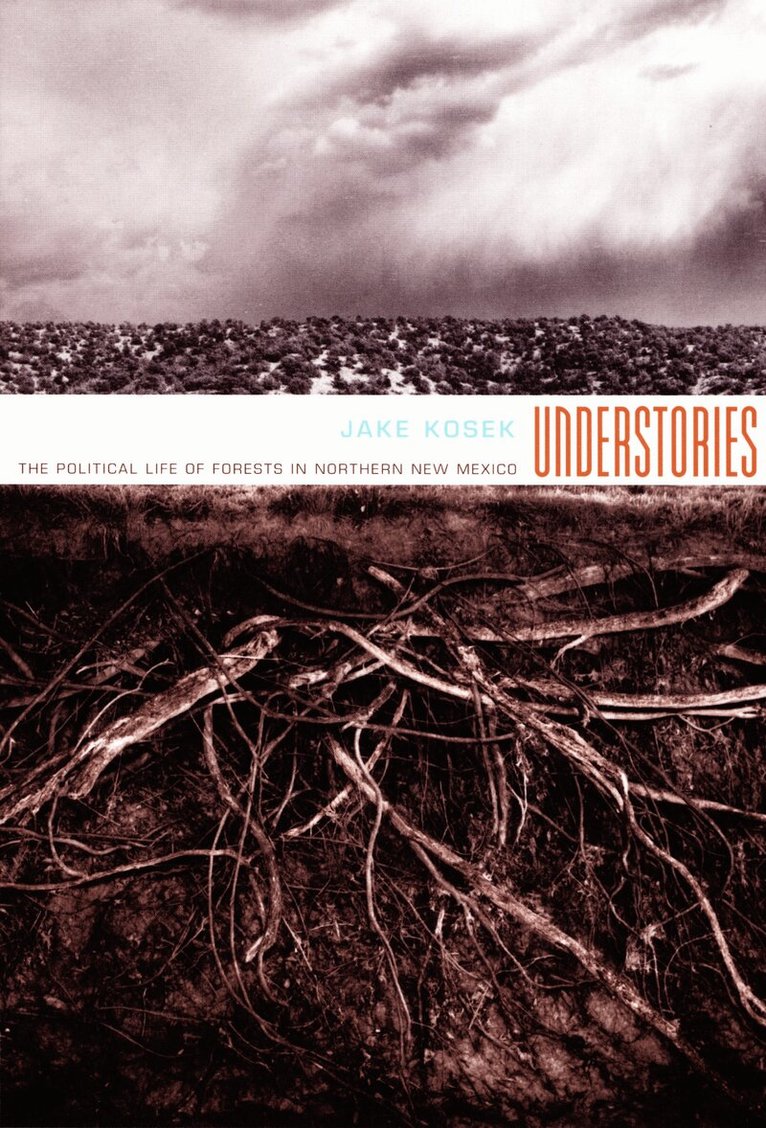
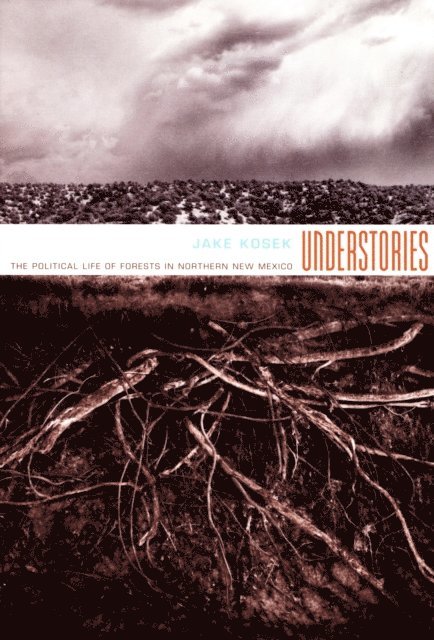
Through lively, engaging narrative, Understories demonstrates how volatile politics of race, class, and nation animate the notoriously violent struggles over forests in the southwestern United States. Rather than reproduce traditional understandings of nature and environment, Jake Kosek shifts the focus toward material and symbolic “natures,” seemingly unchangeable essences central to formations of race, class, and nation that are being remade not just through conflicts over resources but also through everyday practices by Chicano activists, white environmentalists, and state officials as well as nuclear scientists, heroin addicts, and health workers. Drawing on two years of ethnographic fieldwork and extensive archival research, he shows how these contentious natures are integral both to environmental politics and the formation of racialized citizens, politicized landscapes, and modern regimes of rule.Kosek traces the histories of forest extraction and labor exploitation in northern New Mexico, where Hispano residents have forged passionate attachments to place. He describes how their sentiments of dispossession emerged through land tenure systems and federal management programs that remade forest landscapes as exclusionary sites of national and racial purity. Fusing fine-grained ethnography with insights gleaned from cultural studies and science studies, Kosek shows how the nationally beloved Smokey the Bear became a symbol of white racist colonialism for many Hispanos in the region, while Los Alamos National Laboratory, at once revered and reviled, remade regional ecologies and economies. Understories offers an innovative vision of environmental politics, one that challenges scholars as well as activists to radically rework their understandings of relations between nature, justice, and identity.
323 kr
Skickas inom 7-10 vardagar
Through lively, engaging narrative, Understories demonstrates how volatile politics of race, class, and nation animate the notoriously violent struggles over forests in the southwestern United States. Rather than reproduce traditional understandings of nature and environment, Jake Kosek shifts the focus toward material and symbolic “natures,” seemingly unchangeable essences central to formations of race, class, and nation that are being remade not just through conflicts over resources but also through everyday practices by Chicano activists, white environmentalists, and state officials as well as nuclear scientists, heroin addicts, and health workers. Drawing on two years of ethnographic fieldwork and extensive archival research, he shows how these contentious natures are integral both to environmental politics and the formation of racialized citizens, politicized landscapes, and modern regimes of rule.Kosek traces the histories of forest extraction and labor exploitation in northern New Mexico, where Hispano residents have forged passionate attachments to place. He describes how their sentiments of dispossession emerged through land tenure systems and federal management programs that remade forest landscapes as exclusionary sites of national and racial purity. Fusing fine-grained ethnography with insights gleaned from cultural studies and science studies, Kosek shows how the nationally beloved Smokey the Bear became a symbol of white racist colonialism for many Hispanos in the region, while Los Alamos National Laboratory, at once revered and reviled, remade regional ecologies and economies. Understories offers an innovative vision of environmental politics, one that challenges scholars as well as activists to radically rework their understandings of relations between nature, justice, and identity.
1 099 kr
Skickas inom 7-10 vardagar
Fear of a Dead White Planet asks: how does one study when the planet is on fire? The More Worlds Collective challenges the contemporary rush to planetary technofixes for environmental emergency. Instead they track how such planetary science frames are enmeshed in the longstanding projects of white supremacy, settler colonialism, and epistemological violence. Calling for unlearning and joined-up study, the collective reclaims terraforming from off-earth engineering schemes to instead think through how our more modest efforts to study differently are also world-making and world-breaking. In orienting toward terra and formation, the collective commits to a place-based, non-universal study scaled at levels both intimate and massive. Through its serious but unruly methods, Fear of a Dead White Planet invites readers to recognize and conjure alternate worlds in and around the university.
244 kr
Skickas inom 7-10 vardagar
Fear of a Dead White Planet asks: how does one study when the planet is on fire? The More Worlds Collective challenges the contemporary rush to planetary technofixes for environmental emergency. Instead they track how such planetary science frames are enmeshed in the longstanding projects of white supremacy, settler colonialism, and epistemological violence. Calling for unlearning and joined-up study, the collective reclaims terraforming from off-earth engineering schemes to instead think through how our more modest efforts to study differently are also world-making and world-breaking. In orienting toward terra and formation, the collective commits to a place-based, non-universal study scaled at levels both intimate and massive. Through its serious but unruly methods, Fear of a Dead White Planet invites readers to recognize and conjure alternate worlds in and around the university.