James C. Spohrer - Böcker
Visar alla böcker från författaren James C. Spohrer. Handla med fri frakt och snabb leverans.
15 produkter
15 produkter
956 kr
Skickas inom 10-15 vardagar
If there is any one element to the engineering of service systems that is unique, it is the extent to which the suitability of the system for human use, human service, and excellent human experience has been and must always be considered. An exploration of this emerging area of research and practice, Advances in the Human Side of Service Engineering covers a broad spectrum of ergonomics and human factors issues highlighting the design of contemporary manufacturing systems. Topics include: Adoption of health information technology (HIT)Aging society: the impact of age on traditional service system constructs Anthropology in service science Applying service design techniques to healthcare Co-creating value Cognitive systems modeling of service systems Context-related service: the human aspect of service systemsDesigning services for underserved populationsEthics dividend in services: how it may be cultivated, grown, and measuredGovernance of service systems Human aspects of change when applying Lean Six Sigma methods and toolsHuman side of service dominant logic in B2B settingsHuman-computer interaction and HF in software technologiesService network configuration impacts on customer experience Simulating employees and customers in service systems Systems design and the customer experienceUsability and human side of electronic financial services The book also discusses issues that arise in shop floor and office environments in the quest for manufacturing agility, i.e. enhancement and integration of human skills with hardware performance for improved market competitiveness, management of change, product and process quality, and human-system reliability. It provides a foundation upon which researchers and practitioners can contri
363 kr
Tillfälligt slut
This volume describes a cognitive model of student programmers, and an implementation of that model that allows student programmers to be simulated. The focus of the model is on the problem solving that students perform to generate both correct and buggy programs as well as on the individual differences that cause different students to generate different programs for the same programming task. By developing a taxonomy of student programmer knowledge; a model of student program generation; and a preliminary model of individual differences, this research contributes to a better understanding of four areas of the study of student programmers. The most important claim is that a cognitive model of student program generation fits within a properly "fleshed out" generate test-and-debug (GTD) problem solving architecture in which impasse/repair knowledge plays a key role. This research is important theoretically because it explores the use of a GTD impasse/repair problem solving architecture in a new domain, and important practically because of its educational implications for programming instructions.
2 357 kr
Skickas inom 7-10 vardagar
If there is any one element to the engineering of service systems that is unique, it is the extent to which the suitability of the system for human use, human service, and excellent human experience has been and must always be considered. An exploration of this emerging area of research and practice, Advances in the Human Side of Service Engineering covers a broad spectrum of ergonomics and human factors issues highlighting the design of contemporary manufacturing systems. Topics include: Adoption of health information technology (HIT)Aging society: the impact of age on traditional service system constructs Anthropology in service science Applying service design techniques to healthcare Co-creating value Cognitive systems modeling of service systems Context-related service: the human aspect of service systemsDesigning services for underserved populationsEthics dividend in services: how it may be cultivated, grown, and measuredGovernance of service systems Human aspects of change when applying Lean Six Sigma methods and toolsHuman side of service dominant logic in B2B settingsHuman-computer interaction and HF in software technologiesService network configuration impacts on customer experience Simulating employees and customers in service systems Systems design and the customer experienceUsability and human side of electronic financial services The book also discusses issues that arise in shop floor and office environments in the quest for manufacturing agility, i.e. enhancement and integration of human skills with hardware performance for improved market competitiveness, management of change, product and process quality, and human-system reliability. It provides a foundation upon which researchers and practitioners can contri
2 488 kr
Skickas inom 10-15 vardagar
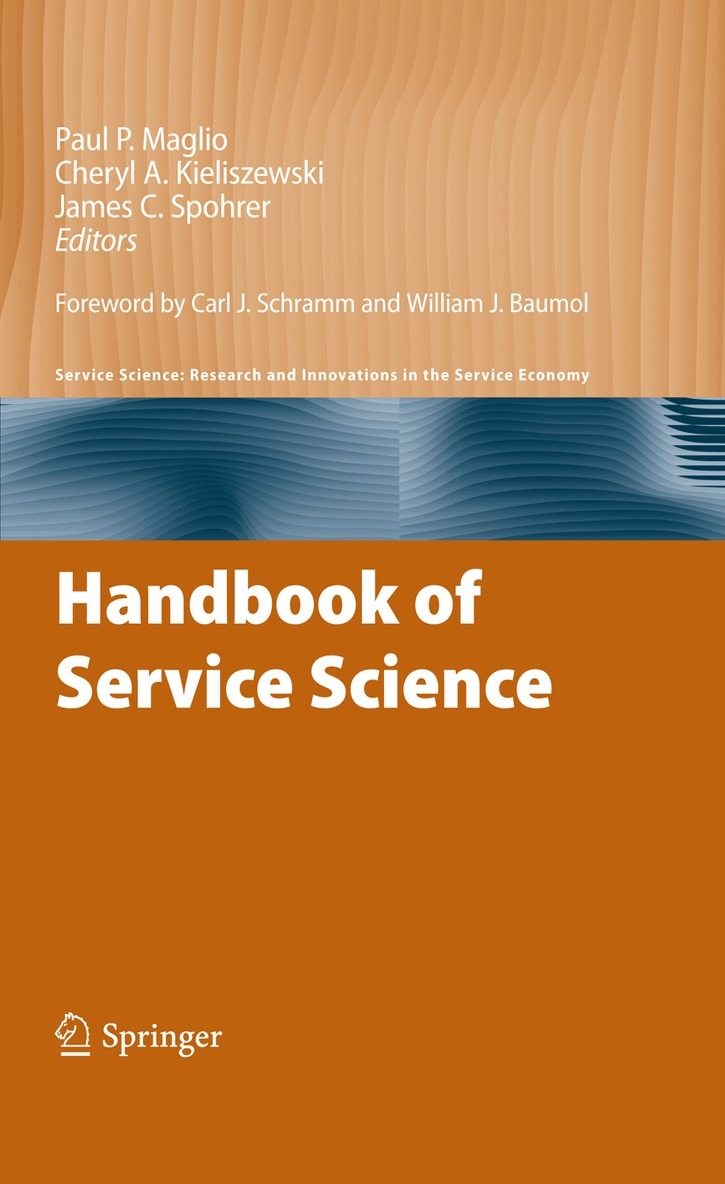
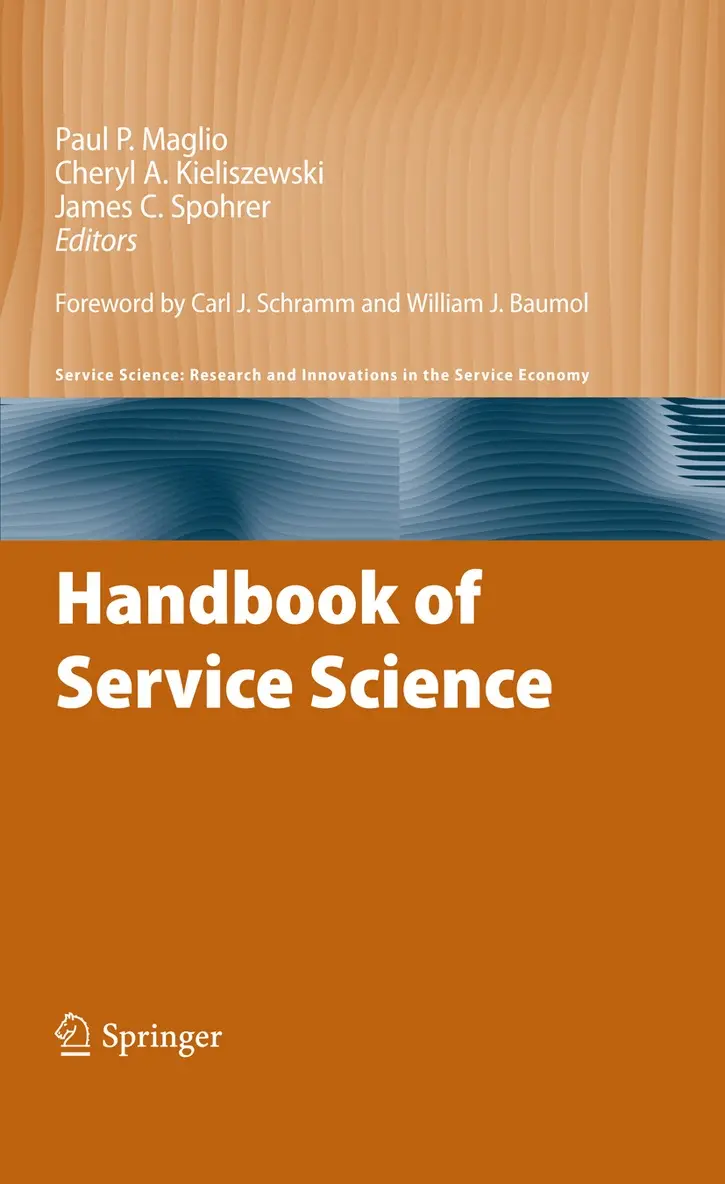
As the service sector expands into the global economy, a new science of service is emerging, one that is dedicated to encouraging service innovation by applying scientific understanding, engineering discipline, and management practice to designing, improving, and scaling service systems.Handbook of Service Science takes the first major steps to clarifying the definition, role, and future of this nascent field. Incorporating work by scholars from across the spectrum of service research, the volume presents multidisciplinary perspectives on the nature and theory of service, on current research and practice in design, operations, delivery, and innovation of service, and on future opportunities and potential of service research.Handbook of Service Science provides a comprehensive reference suitable for a wide-reaching audience including researchers, practitioners, managers, and students who aspire to learn about or to create a deeper scientific foundation for service design and engineering, service experience and marketing, and service management and innovation.
1 096 kr
Skickas inom 10-15 vardagar
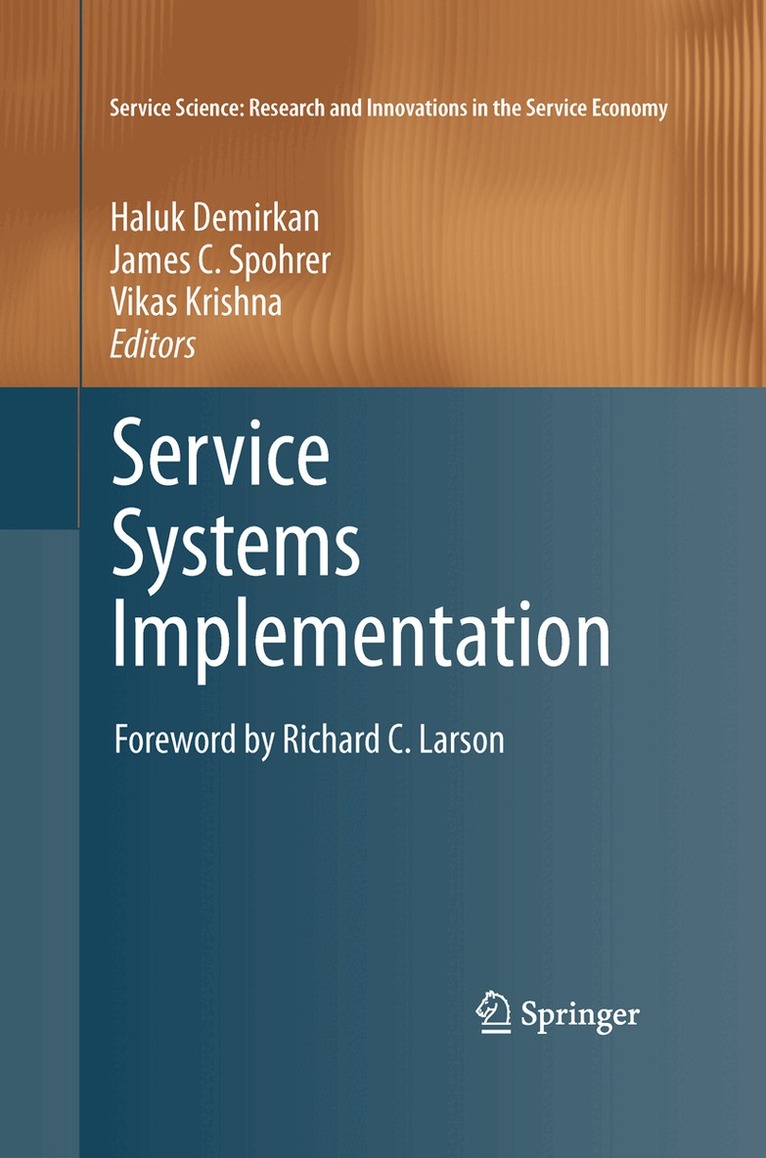
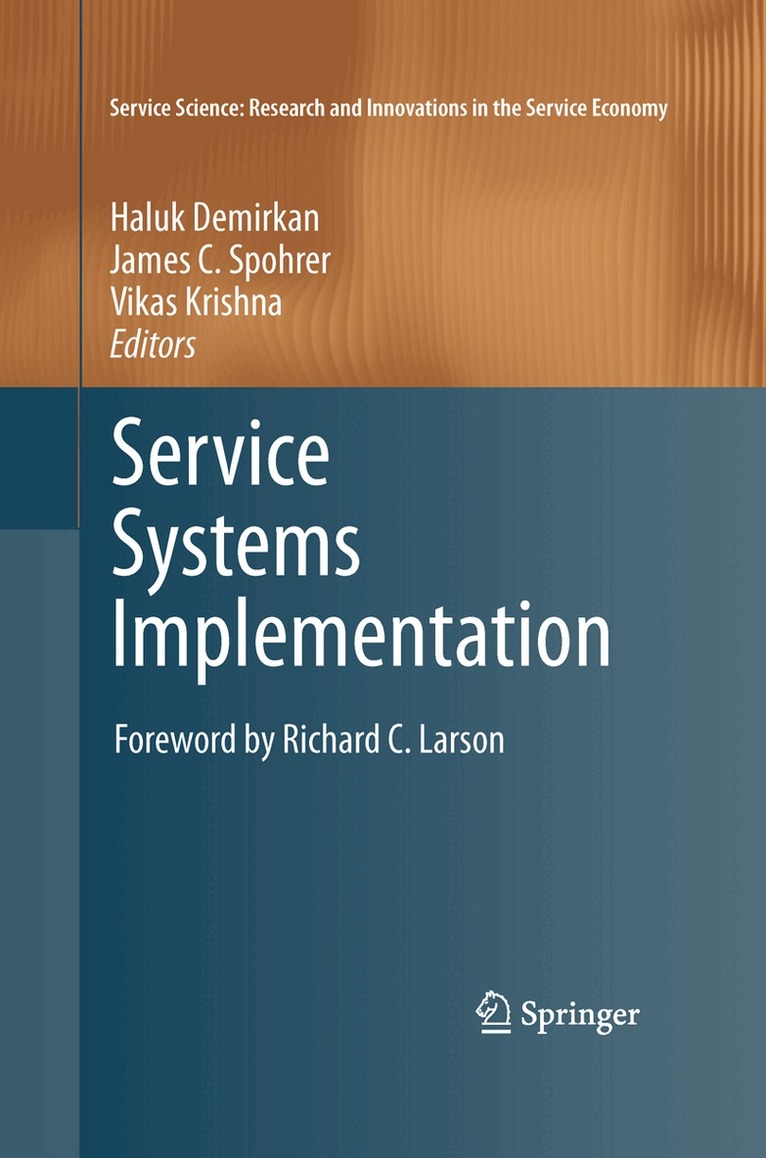
Service Systems Implementation provides the latest applications and practices aimed at improving the key performance indicators of service systems, especially those related to service quality, service productivity, regulatory compliance, and sustainable service innovation. The book presents action-oriented, application-oriented, design science-oriented (artifacts building: constructs, models, methods and instantiations) and case study-oriented research with actionable results by illustrating techniques that can be employed in large scale, real world examples. The case studies will help visualize service systems along the four key dimensions of people, information, technology and value propositions which can help enable better integration between them towards higher value propositions.The chapters, written by leading experts in the field, examine a wide range of substantive issues and implementations related to service science in various industries. These contributions also showcase the application of an array of research methods, including surveys, experiments, design science, case studies and frameworks, providing the reader with insights and guidelines to assist in building their own service systems, and thus, moving toward a more favorable service customer and provider experience.Service Systems Implementation, along with its companion text, The Science of Service Systems, is designed to present multidisciplinary and multisectoral perspectives on the nature of service systems, on research and practice in service, and on the future directions to advance service science. These two volumes compose a collection of articles from those involved in the emerging area known as service science.
1 096 kr
Skickas inom 10-15 vardagar
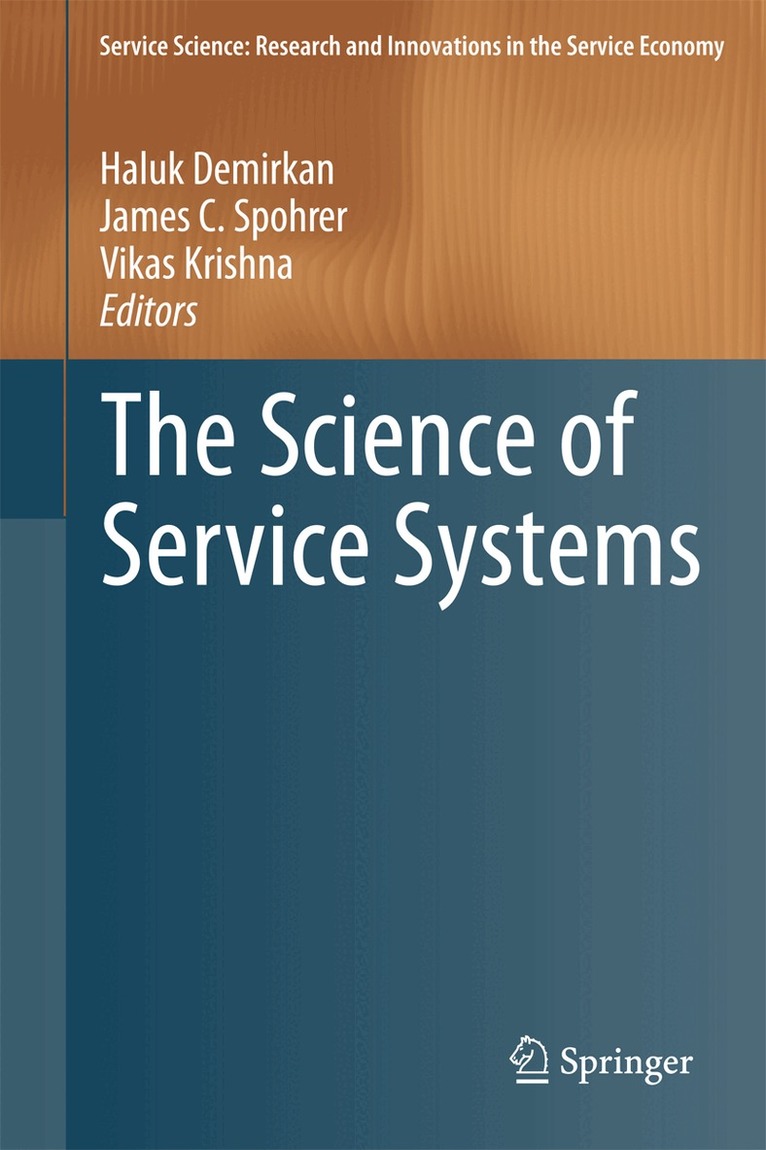
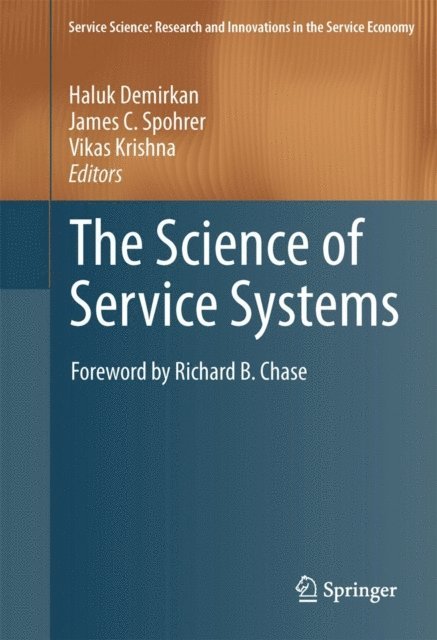
The Science of Service Systems intends to stimulate discussion and understanding by presenting theory-based research with actionable results. Most of the articles focus on formalizing the theoretical foundations for a science of service systems, examining a wide range of substantive issues and implementations related to service science from various perspectives. From the formal (ontologies, representation specifications, decision-making and maturity models) to the informal (analysis frameworks, design heuristics, anecdotal observations), these contributions provide a snapshot in time of the gradually emerging scientific understanding of service systems. The Science of Service Systems, along with its companion text, Service Systems Implementation, is designed to present multidisciplinary and multisectoral perspectives on the nature of service systems, on research and practice in service, and on the future directions to advance service science. These two volumes compose a collection of articles from those involved in the emerging area known as service science.
2 488 kr
Skickas inom 10-15 vardagar
As the service sector expands into the global economy, a new science of service is emerging, one that is dedicated to encouraging service innovation by applying scientific understanding, engineering discipline, and management practice to designing, improving, and scaling service systems.Handbook of Service Science takes the first major steps to clarifying the definition, role, and future of this nascent field. Incorporating work by scholars from across the spectrum of service research, the volume presents multidisciplinary perspectives on the nature and theory of service, on current research and practice in design, operations, delivery, and innovation of service, and on future opportunities and potential of service research.Handbook of Service Science provides a comprehensive reference suitable for a wide-reaching audience including researchers, practitioners, managers, and students who aspire to learn about or to create a deeper scientific foundation for service design and engineering, service experience and marketing, and service management and innovation.
1 096 kr
Skickas inom 10-15 vardagar
Service Systems Implementation provides the latest applications and practices aimed at improving the key performance indicators of service systems, especially those related to service quality, service productivity, regulatory compliance, and sustainable service innovation. The book presents action-oriented, application-oriented, design science-oriented (artifacts building: constructs, models, methods and instantiations) and case study-oriented research with actionable results by illustrating techniques that can be employed in large scale, real world examples. The case studies will help visualize service systems along the four key dimensions of people, information, technology and value propositions which can help enable better integration between them towards higher value propositions.The chapters, written by leading experts in the field, examine a wide range of substantive issues and implementations related to service science in various industries. These contributions also showcase the application of an array of research methods, including surveys, experiments, design science, case studies and frameworks, providing the reader with insights and guidelines to assist in building their own service systems, and thus, moving toward a more favorable service customer and provider experience.Service Systems Implementation, along with its companion text, The Science of Service Systems, is designed to present multidisciplinary and multisectoral perspectives on the nature of service systems, on research and practice in service, and on the future directions to advance service science. These two volumes compose a collection of articles from those involved in the emerging area known as service science.
1 314 kr
Skickas inom 10-15 vardagar
The Science of Service Systems intends to stimulate discussion and understanding by presenting theory-based research with actionable results. Most of the articles focus on formalizing the theoretical foundations for a science of service systems, examining a wide range of substantive issues and implementations related to service science from various perspectives. From the formal (ontologies, representation specifications, decision-making and maturity models) to the informal (analysis frameworks, design heuristics, anecdotal observations), these contributions provide a snapshot in time of the gradually emerging scientific understanding of service systems. The Science of Service Systems, along with its companion text, Service Systems Implementation, is designed to present multidisciplinary and multisectoral perspectives on the nature of service systems, on research and practice in service, and on the future directions to advance service science. These two volumes compose a collection of articles from those involved in the emerging area known as service science.
1 096 kr
Skickas inom 10-15 vardagar
This contributed volume presents the experiences, challenges, trends, and advances in Service Science from Japan’s perspective. As the global economy becomes more connected and competitive, many economies depend the service sector on for growth and prosperity. A multi-disciplinary approach to Service Science can potentially transform service industries through research, education, and practice. Offering a forum for best practices in Service Science within Japan, the volume benefits its audience by sharing viewpoints from a wide range of geographical regions and economies. The book is organized as follows:• Foundations of Service Science and the service industry sector• Public/Private sector partnerships, policies, trade in services, future prospects• Contributions from science, social science, management, engineering, design as well as industry sector perspectives• Road-maps, methodology, business development, strategiesand innovative models, application of information technology, performance measures, and service system design• Education and workforce development• Case studies from practice, research and educational community• Future Directions in JapanThis book includes three Forewords written by key leaders in Service Science:• Takayuki Aso (Ministry of Education, Culture, Sports, Science & Technology in Japan)• Yasuhiro Maeda (Director, Service Affairs Policy Division METI)• Norihisa Doi (Professor Emeritus, Keio University and Service Science, Solutions and Foundation Integrated Research (S3FIRE) Program Officer, JST/RISTEX)
1 929 kr
Skickas inom 5-8 vardagar
This contributed volume presents the experiences, challenges, trends, and advances in Service Science from Japan’s perspective. As the global economy becomes more connected and competitive, many economies depend the service sector on for growth and prosperity. A multi-disciplinary approach to Service Science can potentially transform service industries through research, education, and practice. Offering a forum for best practices in Service Science within Japan, the volume benefits its audience by sharing viewpoints from a wide range of geographical regions and economies. The book is organized as follows:• Foundations of Service Science and the service industry sector• Public/Private sector partnerships, policies, trade in services, future prospects• Contributions from science, social science, management, engineering, design as well as industry sector perspectives• Road-maps, methodology, business development, strategiesand innovative models, application of information technology, performance measures, and service system design• Education and workforce development• Case studies from practice, research and educational community• Future Directions in JapanThis book includes three Forewords written by key leaders in Service Science:• Takayuki Aso (Ministry of Education, Culture, Sports, Science & Technology in Japan)• Yasuhiro Maeda (Director, Service Affairs Policy Division METI)• Norihisa Doi (Professor Emeritus, Keio University and Service Science, Solutions and Foundation Integrated Research (S3FIRE) Program Officer, JST/RISTEX)
363 kr
Tillfälligt slut
This volume looks at the obvious trend in the computing evolution from studies of student programmers and toward studies of "real programmers" performing real programming tasks. The percentage of student and professional programmers in the studies reported in papers presented at ESP 1 and ESP 5 has nearly flip-flopped. There is now an emphasis on the practical application of the research results both in industry and in academia. The papers and posters of this workshop include a range of programming language paradigms beyond the procedural paradigm: functional, logic, visual, object oriented and concurrent programming. This appears to be an indication of the maturation of the field. No longer is it a question of whether to study programmers, but more a question of which apsects of the porgramming that make it an important area of study.
262 kr
Tillfälligt slut
This volume looks at the obvious trend in the computing evolution from studies of student programmers and toward studies of "real programmers" performing real programming tasks. The percentage of student and professional programmers in the studies reported in papers presented at ESP 1 and ESP 5 has nearly flip-flopped. There is now an emphasis on the practical application of the research results both in industry and in academia. The papers and posters of this workshop include a range of programming language paradigms beyond the procedural paradigm: functional, logic, visual, object oriented and concurrent programming. This appears to be an indication of the maturation of the field. No longer is it a question of whether to study programmers, but more a question of which apsects of the porgramming that make it an important area of study.
2 703 kr
Skickas inom 10-15 vardagar
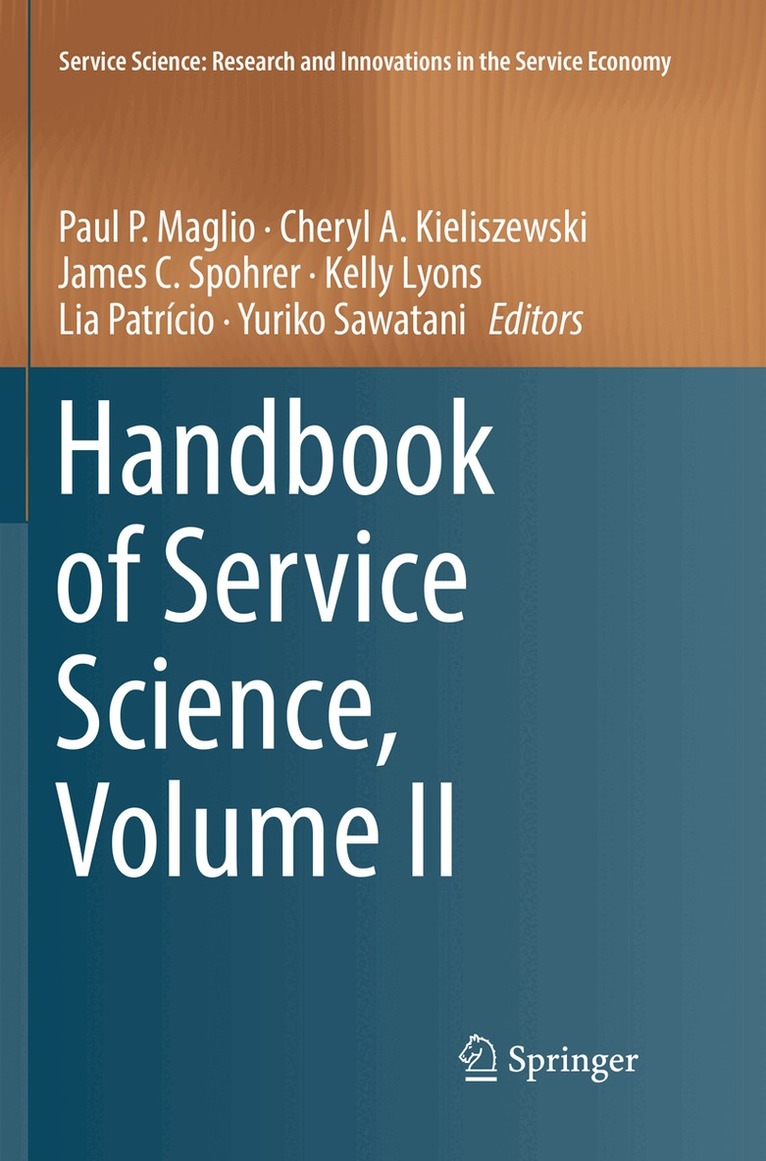
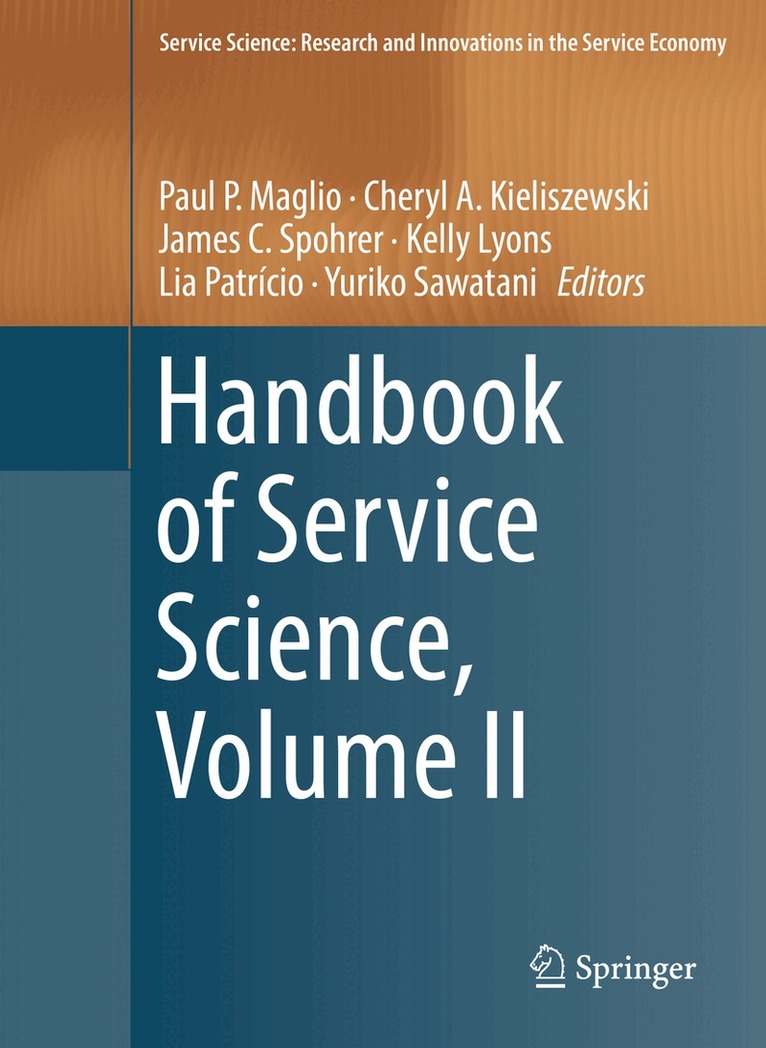
The second volume of this successful handbook represents varied perspectives on the fast-expanding field of Service Science. The novel work collected in these chapters is drawn from both new researchers who have grown-up with Service Science, as well as established researchers who are adapting their frames for the modern service context. The first Handbook of Service Science marked the emergence of Service Science when disciplinary studies of business-to-customer service systems intertwined to meet the needs of a new era of business-to-business and global service ecosystems. Today, the evolving discipline of Service Science involves advanced technologies, such as smartphones, cloud, social platforms, big data analytics, and artificial intelligence. These technologies are reshaping the service landscape, transforming both business models and public policy, ranging from retail and hospitality to transportation and communications. By looking through the eyes of today’s new Service Scientists, it is anticipated that value and grand challenges will emerge from the integration of theories, methods, and techniques brought together in the first volume, but which are now rooted more deeply in service-dominant logic and systems thinking in this second volume.The handbook is divided into four parts: 1) Service Experience--On the Human-centered Nature of Service; 2) Service Systems–On the Nature of Service Interactions; 3) Service Ecosystems–On the Broad Context of Service; 4) Challenges–On Rethinking the Theory and Foundations of Service Science. The chapters add clarity on how to identify, enable, and measure service, thus allowing for new ideas and connections made to physics, design, computer science, and data science and analytics for advancing service innovation and the welfare of society.Handbook of Service Science, Volume II offers a thorough reference suitablefor a wide-reaching audience including researchers, practitioners, managers, and students who aspire to learn about or to create a deeper scientific foundation for service design and engineering, service experience and marketing, and service management and innovation.
2 703 kr
Skickas inom 10-15 vardagar
The second volume of this successful handbook represents varied perspectives on the fast-expanding field of Service Science. The novel work collected in these chapters is drawn from both new researchers who have grown-up with Service Science, as well as established researchers who are adapting their frames for the modern service context. The first Handbook of Service Science marked the emergence of Service Science when disciplinary studies of business-to-customer service systems intertwined to meet the needs of a new era of business-to-business and global service ecosystems. Today, the evolving discipline of Service Science involves advanced technologies, such as smartphones, cloud, social platforms, big data analytics, and artificial intelligence. These technologies are reshaping the service landscape, transforming both business models and public policy, ranging from retail and hospitality to transportation and communications. By looking through the eyes of today’s new Service Scientists, it is anticipated that value and grand challenges will emerge from the integration of theories, methods, and techniques brought together in the first volume, but which are now rooted more deeply in service-dominant logic and systems thinking in this second volume.The handbook is divided into four parts: 1) Service Experience--On the Human-centered Nature of Service; 2) Service Systems–On the Nature of Service Interactions; 3) Service Ecosystems–On the Broad Context of Service; 4) Challenges–On Rethinking the Theory and Foundations of Service Science. The chapters add clarity on how to identify, enable, and measure service, thus allowing for new ideas and connections made to physics, design, computer science, and data science and analytics for advancing service innovation and the welfare of society.Handbook of Service Science, Volume II offers a thorough reference suitablefor a wide-reaching audience including researchers, practitioners, managers, and students who aspire to learn about or to create a deeper scientific foundation for service design and engineering, service experience and marketing, and service management and innovation.